Posted in Challenges

The Project of Writing a Novel – #SoCS 3/4/2017

img_0319

I’ve mentioned in these stream of consciousness posts that I’m writing a novel. I suspect it is a little like giving birth. This project is the hardest thing I’ve ever done, but one of the most fulfilling.

I changed careers in the middle of my life. I finished a career as a college professor after 27 years. I still felt young and strong and interested in the world around me. I wasn’t ready to quit work and retire to my rocking chair. I have been writing since I was a child. My first story was published in the Highlights for Children publication. Then, during my teaching career, I published many academic writings. Near the end of that career, I started writing for a financial brokerage and was writing for them, when I wasn’t at school, on 9/11. Writing about 9/11 gave me some serious writing chops. I was hired to write for the New York Times division, About.com. I was their Subject Matter Expert on finance and wrote, edited, and became the webmaster for their Business Finance website. I held that gig for five years. That gave way to writing for corporations, usually online learning materials for their executives. I also wrote many non-fiction articles for online and offline magazines.

So here I am. With my own blog where I started out writing well-researched non-fiction and I still write some of that. I took some writing classes through Udemy and read authors like Stephen King and Rayne Hall. I’ve studied writing extensively. I, then, started writing some of the fiction challenges here on WordPress which have helped me enormously and I decided to try my hand at my first novel. I knew the story I wanted to tell. I just had to figure out how to tell it, which is a daily process.

A good novel that you plan to hand to a publisher is about 80,000 words. That is long and hard and requires that you study all elements of writing fiction. I’m closing in on the first of three parts of this novel which is a psychological thriller. The first part, indeed all three parts, will be 26,000 words or thereabouts. It’s exhausting and very satisfying work. If you are interested in writing a novel, I’d recommend you read Stephen King’s book “On Writing” first.

I’d love to hear any comment you want to make or any advice! I’m a novice and still have a lot to learn!

SoCS 3/4/2017

Posted in Fiction

Rebecca’s Tragedy

When Rebecca was a teenager, a tragedy befell her. I’m only talking about the tragedy now because I’m telling her story in a book I’m writing and this chapter is necessary in order for you to understand her. It’s part of Rebecca’s backstory. Her tragedy is a nightmare that every parent fears and an event that would mark any teenage girl for life. It marked Rebecca and changed her and her life forever. I’m spending some time working on the backstory here on my blog. All of you writers and readers out there, I’d love your constructive criticism!

When Rebecca was a young teenager, her relationship with her mother was very dysfunctional. Her mom was a woman who was probably clinically depressed, though that was not a diagnosis typically made in the 1960s. She was very reclusive and laser-focused on Rebecca. She wanted Rebecca to study and make good grades. She didn’t want Rebecca to see her friends. Instead, Rebecca went to school and came home. She received constant warnings from her mom about what a bad influence her friends were on her, along with how she should not ever be around boys. When Rebecca was fifteen, her mother and dad had finally decided to let her go to selected places with her friends. She could never go anywhere like a school dance, but she could go to her friends’ houses, a drive-in restaurant, or a ballgame. Her dad would take her and come pick her up. Then something happened when sixteen was right around the corner.

Rebecca went to a basketball game with some of her girlfriends. SItting near them in the bleachers was a group of boys from the other high school in town. Rebecca didn’t know any of them. She didn’t even notice them. A boy from their group came over during the game and sat down beside Rebecca. They started to talk. She was very shy, but he drew her out and they laughed and talked a little during the game. At its end, he asked Rebecca out on a date. She told him she would have to ask her parents. He said he would call her and asked for her telephone number. Rebecca was thrilled. It was the first time she’d been asked out on a date.

As her dad drove her home that night, he told her that he had seen her talking to T.J. at the ballgame. She was scared to talk to her dad about it, but she knew she had to if she wanted to go out on a date with T.J. She told her dad T.J.’s name and a little about their conversation. A conversation between a shy, young girl and a boy who was a year older and more experienced. A boy who had already had a steady girlfriend. Her dad knew T.J.’s dad. After Rebecca asked if she could go out with T.J., her dad didn’t say anything for a long time. Finally, he gruffly told her she could. Rebecca threw her arms around his neck, even though he was driving. She didn’t see the tears in his eyes.

The tears in her dad’s eyes were not about that particular boy. Not then. They were because he knew he had to let Rebecca grow up. Had he known what would happen because of T.J. McNamara later, he would never have given his permission. He had no way to know.

Somehow, Rebecca’s dad convinced her mother that it was all right for Rebecca to go out with T.J. They never went out on school nights unless there was a ballgame. They dated throughout the end of Rebecca’s sophomore year in high school and through what would have been the first semester of her senior year in high school. Rebecca started college that semester. They became part of each other’s families. They were happy. T.J. had asked Rebecca to marry him.

Then, in the spring semester of Rebecca’s senior year, T.J. suddenly told her that he wanted to date other people. It was out of the blue. There was nothing she could do about it, and she and T.J. went their separate ways. Rebecca cried a million tears. One night, not very long after that, Rebecca went out with a group of kids in their car to the local drive-in restaurant. She didn’t even see T.J.’s car pull in, but before she knew it, T.J. jerked open the door of the car in which she was in and yanked her out of the car. Her friends started screaming for him to let her go, but he shoved her into his car and roared away. No one could possibly have caught him.

Rebecca doesn’t remember what words passed between them. As they pulled out of the restaurant’s parking lot, they turned toward the outskirts of the small town. The first thing Rebecca felt was T.J. hitting her in the face with his fist. He had never raised a hand to her during their years of dating. Things got fuzzy for Rebecca after that first blow. All she remembers is that he kept hitting her in the eye and face as he drove. She finally passed out. When she awoke, he was beating her in the abdomen, still driving the car, and she passed out again.

The next thing Rebecca remembered was being in T.J.’s car on the shoulder of the road leading to his parent’s house. He was talking to her even though she had been unconscious. He was asking her how they could cover up what he had done. She doesn’t remember answering. She was in a stupor. Not exactly unconscious, but not conscious either. He drove her to his parent’s farm which was a number of miles out of town. She remembers T.J.’s mother sitting down in shock when she saw them walk in and thinking she must look bad. The only other thing she remembers about that visit is T.J.’s parents telling him to take her home.

Rebecca doesn’t remember the drive home. All she remembers is waking up in a heap in her driveway and thinking that it was dark and she hurt and was alone. She supposed that T.J. just pushed her out of the car instead of face her parents. She was too weak to get up. She just laid there and cried for her dad. Somehow, her dad heard her or heard something and came to investigate. She remembers that he snatched her up, crying, and took her inside and laid her on the couch. She remembers thinking she’d ruin her mother’s couch with blood. He and her mother tried to get her to talk to them and tell them what happened. She doesn’t remember talking, but she must have mentioned T.J. Her dad put she and her mother in the car and drove them to the Emergency Room. Then he left, although Rebecca didn’t know until weeks later that he went to T.J.’s parent’s farm and tried to kill him with a 2’X4′ piece of lumber. His dad stopped him.

Rebecca was in the hospital for several days. Her eye was damaged with all the blood vessels broken. The bones in her eye socket were bruised and her jaw on the right side was cracked. The facial bruising was severe as was the bruising on her abdomen. She had broken ribs. Rebecca’s parents told her later that she didn’t speak to them or to the doctor’s the entire time she was in the hospital. She went home at the end of those few days, but she never went back to high school again. She did eventually continue on in college when she had healed. Physically. Rebecca didn’t ever emotionally heal. Not really.

Rebecca never talked to T.J. again. She never knew what caused him to do what he did. He was obviously an abuser. She didn’t even see him again for many years. When she did, there was no remorse on his face. Instead, there was a sneer. Many years later, physical damage from that terrible beating came back to haunt Rebecca.

The emotional and mental injuries were, by far, the worst. It was years before she went out on another date. She finished college quickly in that small town in eastern Tennessee. She did have many friends, but she didn’t see her high school friends. She left as quickly as she was finished with college and moved to the city. Except for coming back and visiting her parents, it was years before she ever spent time in her hometown again.

There was no doubt that Rebecca needed psychological counseling after the incident with T.J., but that kind of therapy was not widely available during the 1960s and 1970s. Instead, she buried that incident in her psyche and didn’t think about it for years at a time. Later in Rebecca’s life, she realized that it had shaped her relationships for all of her life. It was too late now.


Posted in Flash Fiction

Siblings of the Heart

img_0554

Mary lived in the country, outside a small town. Ben’s family moved next door. She was ten and he was six. Ben’s sister, Dina, was one year old.

In the summer, they played outside. Boy games. Baseball. They camped in a tent in Mary’s backyard. They were imaginative like kids are. They would have been lonely without each other.

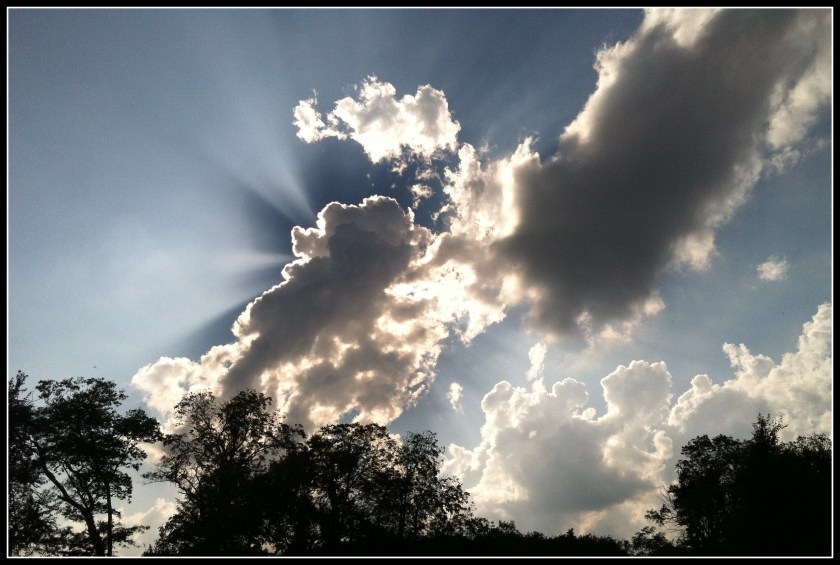
They would lie on a blanket on a hill in the yard and watch the clouds overhead and name their shapes.

They grew up and drifted apart. Much later in life, they all found each other again. Siblings of the heart.

Posted in Flash Fiction

The Windfall

img_0553

“It’s impossible to get a good price for cattle nowdays, Desiree,” Clint said as he passed through the kitchen.

“What’s wrong, honey?” she replied.

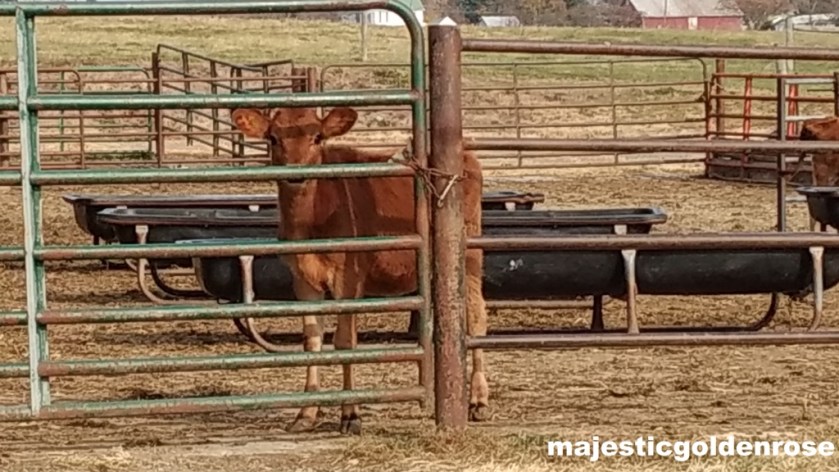
“I’ve taken all the cattle to Ed Davenport to be evaluated and priced except that one calf that’s too young. The price of cattle is pretty low. I’m just afraid we won’t get the price we need to change our business model.”

Clint and Desiree had inherited Clint’s father’s ranch and were looking to start a large organic farming operation in place of raising cattle. They had environmental concerns. One was the bee population in their area of the U.S.

The phone rang. It was Ed. The price he gave Clint for the cattle would more than give them the startup capital for their dream. They danced around the kitchen, celebrating.

FFfAW

Posted in Challenges

Desolation

don't bother knocking

Photo credit to courtney065 flikr

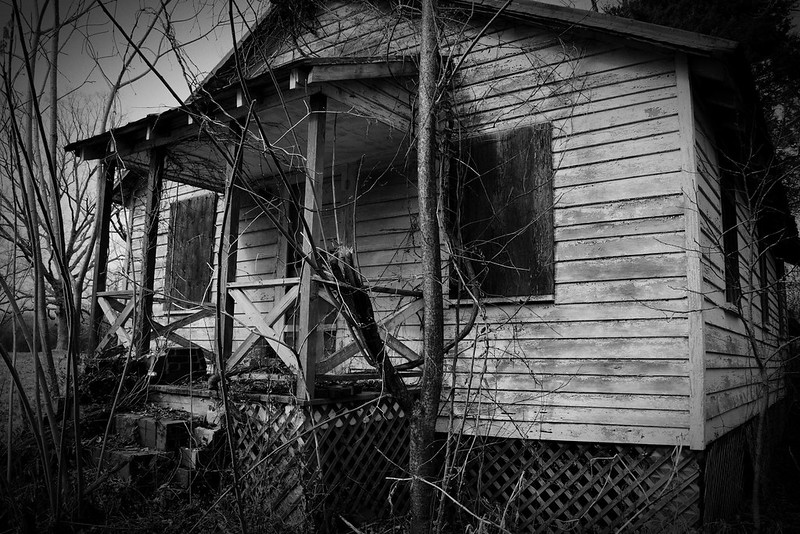
Callie knew she shouldn’t have come here. She was glad her cousin, Daniel, was with her. She had been gone from Kentucky, the state where she had grown up and lived most of her adult life, for five years now. It had been at least ten years since she had been to the old homeplace deep in the heart of the eastern part of the state. Deep in the heart of Appalachia. If her uncle’s old house on the farm looked like this, she wasn’t sure she wanted to see the main house, her grandparent’s old home. The home she had spent so much time at as a child and teenager.

Eastern Kentucky was decimated. It had been sliding downhill for years. When coal mining started to decline way back in the 1980s, the whole region started to decline. The farming that was secondary to mining also declined when the subsidies on growing tobacco were stopped. There used to be tobacco bases everywhere you looked around here. Her grandparents lived on tobacco and oil money. There wasn’t a tobacco base to be found now. All the tobacco was grown overseas.

As Callie and Daniel drove around Eastern Kentucky, where their mothers grew up, she thought of what could be done for these poor people who loved their culture and their way of life but had very little means to support themselves. Coal mining would never come back in any big way. There was a bit more mining going on under President Trump because he had done away with most of the mining regulations. All that did was make an unsafe working environment for the miners and pollute the environment. It would only last until the first big mine disaster.

The obvious solution to the job problem in this area is to let the people grow marijuana. At the very least medicinal marijuana and, in Callie’s opinion, recreational marijuana. This was the marijuana capital of the United States anyway. Why not let them grow it legally? It was used medicinally for so many good things. Regulate it if they want. President Trump was trying to do away with laws in the states that allowed legal marijuana purchases, even for medicinal marijuana. Callie and Daniel both thought that was criminal. It was a pain reliever for cancer patients. It could be used as a pain reliever for so many things, even the crippling rheumatoid arthritis like her mother had.

Letting these people in Eastern Kentucky grow marijuana legally would be such a good thing for this area. It would bring it back from the desolate state it was in. Eastern Kentucky was known, now, for its high drug use. Mostly prescription drugs but heroin had crept into the picture. Drug use was high because the unemployment rate in many areas approached 40 percent. The people felt hopeless and helpless. Give them a cash crop to grow in the valleys between these mountains and make them feel a useful member of society. The drug problem, in Callie’s opinion, would drop.

Hemp was another cash crop that these people could grow. It had been grown on an experimental basis on the University of Kentucky farm. It could be used to make clothes and other products. Trump had promised to bring back manufacturing to the United States. If he kept that promise, hemp could be used in manufacturing. Just like the Eastern Kentucky area was a prime area for growing marijuana, it was also a prime area for growing hemp.

Before Trump became President, there was progress being made on the legalization of marijuana and hemp production that would have helped Appalachia so much. Any progress made had been rolled back under his administration. He seemed to want to take us back to the days of his youth. The people she knew were in one camp or another. Either they were still Trump supporters or they were scared to death he was leading the country straight into Fascism. She was in the latter camp as was Daniel.

People seemed to be trying to go on with their lives. That’s why she and Daniel were taking this tour of the land where their mother’s grew up. The only relatives they had here now were very distant cousins who they didn’t even know. So they were visiting the places familiar to them, taking stock of the changes, probably for the last time. Callie had come to Kentucky for a visit and she and Daniel had decided to do this on a whim.

There was her grandfather’s house! Just as rundown as the shack her uncle used to live in. She could see the oil wells behind it in the same place they were when she was a child. They were pumping. She had noticed that her oil royalties had gotten a little better recently, but she was sure it was a short-term thing. She and Daniel and the rest of the cousins feared the wells were just about dry.

Oil, health care, and education were just about the only jobs left in this area. A few oil workers were needed as were primary and secondary teachers. A lot of health care workers were needed but they were hard to attract to the area unless they had family here. There was a lot of illness. President Trump’s immigration policy had swept all the foreign physicians out of Eastern Kentucky and they had been the backbone of the health care system.

As Callie and Daniel started home, depression hovered over them like a cloud. It used to be so beautiful here. If the federal government would provide the right kind of help, it could be again. As long as Donald Trump, or anyone like him was President, they knew it would never happen. Callie knew she would go back to her home in Florida now and would never look back. She had worried about this area and looked back too long. Time to move on.

Posted in Uncategorized

Read Posts on Facebook

Hi Everyone!

If it’s more convenient for you to read my blog posts on Facebook, I have an author page there. Here is the address:

https://m.facebook.com/RCarlsonAuthor52/

Thanks!

Rosemary


Posted in Challenges

Song Lyric Sunday – 2/26/2017

img_0448

The theme for this week’s Song Lyric Sunday is losing someone you love. This song, A Song for You, by Ray Charles, is a song that reminds me, personally, of someone I loved and lost.

A Song for You

by Ray Charles

I’ve been so many places in my life and time
I’ve sung a lot of songs, I’ve made some bad rhyme
I’ve acted out my life in stages
With ten thousand people watching
But we’re alone now and I’m singin’ this song for you
I know your image of me is what I hope to be, baby
I’ve treated you unkindly but girl can’t you see
There’s no one more important to me
So darling can’t you please see through me
’cause we’re alone now and I’m singin’ my song for you
You taught me precious secrets of the truth, withholdin’ nothin’
You came out in front and I was hiding
But now I’m so much better so if my words don’t come together
Listen to the melody cause my love’s in there hiding
I love you in a place where there’s no space or time
I love you for my life, ’cause you’re a friend of mine
And when my life is over, remember when we were together
We were alone and I was singin’ my song for you
I love you in a place where there’s no space or time
I’ve loved you for my life, yes, you’re a friend of mine
And when my life is over, remember when we were together
We were alone and I was singin’ my song for you, yes
We were alone and I was singin’ this song for you, baby
We were alone and I was singin’ my song,
Singin’ my song, singin’ my song, singin’ my song
Singin’ my song

Song Lyric Sunday


Posted in #weekendcoffeeshare

#weekendcoffeeshare – 2/25/2017

img_0373

Good morning! It’s nice to see you. I can offer you coffee and tea this morning. I have some wonderful green tea, if you’re brave, and some Jamaician coffee which can’t be beat. Besides that, I have morning blend coffee and English Breakfast tea. Please help yourself. We’ll be meeting in my writing studio.

I’m so glad you’ve come this morning. I enjoy our #weekendcoffeeshares so very much! Can you believe our weather? Yesterday, we had record heat. Here, at my house, it was 78F degrees in February! Then the storm last night. Right now, it’s 47 degrees here and it’s supposed to freeze tonight! That’s Kentucky, I guess. If you don’t like the weather, wait a minute!

If we were having coffee, I would tell you that I would love to hear how your writing is going? After taking what amounted to a writing break, I’m trying to get back into the swing of things. I’m writing a little on my novel every day. I have a paid writing gig that I’m working on – a guest blog post for a very interesting website. I’m also trying to keep up here, with my blog. I would like to find a few more challenges here on WordPress. If any of you know of some challenges that involve writing longer pieces than flash fiction, please clue me in.

If we were having coffee, I would tell you that I’m trying to learn to use Twitter to find writing resources and grow my business. Do any of you make use of Twitter? One thing I’ve found is that there is a vast array of writing resources out there in the ether! So many resources there is no way I can keep up but I’m making use of the ones I find as I can.

If we were having coffee, I would let you know that I’m getting ready to go back to Florida in a month and take possession of the little home I bought there. I have so much to do before I can do that like do my income taxes! It’s that time of year and I’m always late getting started. I’m gathering my material together now. I have to take household items with me to Florida this time for my home there along with clothes that I want to leave there. I’m planning on staying a couple of months and then coming back to Kentucky for the summer. No summers in South Florida!! At least not yet. I’ll go back for the winter in October or November.

If we were having coffee, I would tell you that my writing goal is to write 10,000 words on my novel while I am in Florida. It is not an unrealistic goal and it will not stress me too much. I feel like traveling enriches writing and even though the story for my novel is in my head, perhaps I can use my travels to enrich my novel. My guest blog post will also be due during the time I’m there. It will be a challenge to get my home in good shape and meet my writing goals at the same time while I’m in Florida.

If we were having coffee, I would tell you about an author, Rayne Hall, who I encountered on Twitter. He has written some very helpful books on writing. They are short, to the point. They are on topics like finding your voice, characterization, and more. I’ve found them helpful. Check him out. I found his books on amazon.

If we were having coffee, I would remind you that I like science so I’ve been really excited by the discovery of the fairly nearby Earth-like planets that scientists just discovered. The planets orbiting the star called TRAPPIST-1, in the Constellation Aquarius. I think the fact that these planets lie in the Aquarius Constellation is pretty cool, considering I’m a former flower child. 🙂 Back to the discovery! The planets are a mere 40 light years away, which is very far. Three of them, scientists say, could be ready for habitation within 10 years. The challenge for scientists is to find out if any of the planets are, indeed, habitable. For example, is there enough oxygen in their atmosphere? That’s only one question they have to answer. I’ll be following this story!

I’ll have to tell you goodbye for today. I must get to work! I’d love to hear about your writing and anything else that’s important to you in the comments! I look forward to reading your #weekendcoffeeshare!

Posted in Challenges

#SoCS – 02/25/2017

img_0319

Taxes, Moving, Reading, and Writing…and Weather!

How is it that it is already time for me to do my taxes this spring? Every year, about this time, it suddenly dawns on me that I really do have to settle up with the feds and that I need to start working on it. This year, my timetable is even more compressed since I’ll be heading back to South Florida in just one month. My federal and state taxes have to be signed, sealed, and delivered by the time I leave.

I don’t have much on my mind today except the preparations to go back to Florida and get my home set up. I’ll stay there just for a couple of months this spring. Then I won’t go back during the hot summer. I’ll wait and spend the winter there. The people from whom I bought my little Florida home vacate it on March 31. I will use the months of April and May to get it in shape to live in beginning in October or November for about six months. I’m looking forward to my spring stay even though it will mean lots of work putting it all together. Most of the furniture stays, but I’ll supply the rest of it. I’ll also move clothes when I go this spring.

Since I can’t work on the house 24/7, and don’t want to, my second priority is to spend several hours each day/night writing. My goal is to write 10,000 words during April and May on my novel. That is not a lofty goal but one I should be able to meet. I didn’t want to set a high goal and just frustrate myself. I have some paid writing gigs and, of course, my blog to keep up with as well.

Every night, I try to read just to relax. There is an author who I’m sure many of you have read but I’ll share her name with you anyway — Sarah Jio. I have enjoyed all her books.

It’s thundering outdoors right now and I’m almost glad to hear it. It’s been so very unseasonably warm here for February. We’re supposed to have a brief change in the weather pattern and the temperature should drop into the 40sF during the day. That won’t last and it seems the end of February and first of March will continue this as this unusually warm winter in the Ohio Valley. I love the hot temperatures where I go in Florida as it’s supposed to be that way at this time of year but not here. Quite the opposite. Makes me worry about things like climate change and the possibilities of global warming.

I look forward to reading your posts!

This post is part of #SoCS

Posted in Fiction

Censorship and the Bookstore on the Corner

The little bookstore used to be one of the gathering places in the small village. The front of the bookstore had the current bestsellers and also some books that were worthy but that had not caught the eye of the public. As you walked toward the back of the bookstore, the books got older and more were in paperback. All were carefully vetted by the owner, Pete Turner. All he wanted was high quality literature in his store.

This was before the federal government stepped in and started banning books. There were always sectors of society that banned books. Public schools. Libraries. They usually banned them because they contained sex, violence, profanity. Pete bought books for literary value. That was in the past. Before the federal government, beginning in 2017, sent out squads of soldiers to pull books off the shelf that were on their banned book lists.

It was hypocrisy. The Holy Bible was always on the banned book list. That was the only banned book the soldiers left intact on the shelves.

What the squads of soldiers didn’t know is that Pete kept shelves of banned books hidden in the basement of his bookstore. He had put book jackets on the banned books that were fake. The jackets from other books that were on the government’s approved list.

In 2017, the federal government decided to try to control the American people’s reading material. They were relentless. They went into libraries and schools and stripped the shelves of any book on the list and even some that weren’t. Bookstores were hit especially hard. They even pulled the Harry Potter series off the shelves. It had been on the banned book list off and on and so many children had enjoyed it. Harry Potter was the number one banned book between 2000-2009 according to the information Pete had. After they pulled the books off shelves, they piled them in the street and burned them.

People were afraid to gather in Pete’s bookstore now. His business had dropped by half. He owned his store fair and square. There was no mortgage on it. That was the only way he was staying in business at all. Many bookstores were going out of business.

The people who were in favor of the actions of the federal government with regard to banning books didn’t see the problem. Some thought it was a good thing that these books that talked about issues that made them uneasy and afraid were being burned in  the streets. The others, the ones who thought the federal government was overstepping, brought up the First Amendment and freedom of speech. They said that banning books and burning them in the streets was a violation of the First Amendment. Banning books and burning them in the street was the ultimate in censorship.

Just recently, Pete had learned through his distributors of books, that the federal government had ordered that production be stopped of the books on the banned book list by the book publishers. These publishers were high-profile. Pete had also learned through his contacts that smaller publishers had started producing these banned books under the radar. They were booklegging. Producing banned books illicitly. Otherwise, these wonderful books would be lost forever. Books like “Of Mice and Men” by John Steinbeck; “The Adventures of Huckleberry Finn” by Mark Twain; “To Kill a Mockingbird” by Harper Lee; “Brave New World” by Aldous Huxley; and many, many more. If these small publishers were discovered, there would be terrible consequences compliments of the federal government.

Pete’s bookstore had a supply of many of the banned books camouflaged in his basement. He was essentially running a library out of his basement and loaned them to people who wanted to read them. Pete, himself, would suffer consequences if he was discovered. Even though many people now avoided his bookstore, there was a core group of readers that still came in, had coffee and tea, and browsed. They were defiant of the federal government. Pete was so glad to see them. These people recognized censorship for what it was.

Pete had been able to obtain and keep some history books that detailed what had happened in the Fascist regime in Germany. If the soldiers found these books, they would take them and burn them, but Pete tried to keep them available for all his patrons to read. In 1933, Hitler’s regime burned 25,000 books supposedly to remove the Jewish influence from Nazi Germany. Books from scholars such as Freud and Einstein were among these books and some were irreplaceable. Censorship through book burning was a hallmark of the German Fascist regime. Pete wanted history books available for his patrons so they could read about this movement. He was afraid he would be found out. In Germany, booklegging became popular but was shut down.

Pete spent his days as proprietor of his bookstore trying to keep a low profile while encouraging the people of the village to frequent his bookstore. It was a fine line to walk. The squads of soldiers appeared at his door on a regular basis but they found fewer and fewer books to burn. All his banned books were camouflaged and hidden. Pete is noticing that more people in the village, people who are surprising to him, are coming in to have coffee and talk with him. They carefully ask to see his history books and occasionally, the banned books. This gives Pete hope, for his business and for his country.

Pete’s little bookstore in the village remains. The story has no ending yet. Pete and at least some of the people in the village have hope that the First Amendment of their Constitution will be respected in the future and censorship and the issue of banned books will become a thing of the past.

amwriting with The Writing Reader