Posted in history, Holidays, Independence Day, Uncategorized

Independence Day

image

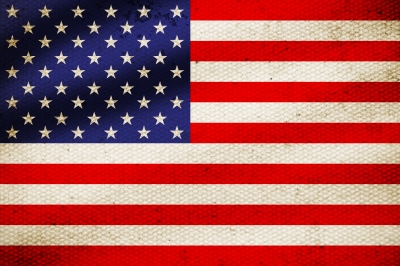
I started to write this blog post about what Independence Day, the Fourth of July, meant to me. But, I changed my mind. Independence Day only means one thing and it should mean the same thing to all of us. This day, the Fourth of July, Independence Day, marks the birth of the United State of America. Our independence from Great Britain in 1776.

When the Founding Fathers signed the Declaration of Independence, written by Thomas Jefferson, in Philadelphia, they knew that Great Britain would certainly take issue with the American colonies breaking away from their mother country. They knew they were effectively declaring war. They knew that the American colonies did not have the numbers of people or weapons to fight off the British. They had faith that they would, somehow, prevail.

Four days later, the real celebration began. The Continental Congress was still meeting. The Declaration of Independence was read. The Liberty Bell rang. The coat of arms of the King of England was taken down and the celebration began. The United States of America came to life.

What followed was the American Revolutionary War between the 13 colonies and the British Crown. It lasted through approximately 1783 and was a bitter and bloody battle. The French entered the war in 1778 and assisted the Americans. By 1781, the Americans had basically won their freedom. On September 3, 1783, in France, the British recognized that the Americans had won their freedom in the Treaty of Paris.

Posted in Fourth of July, Holidays, Uncategorized, Wildlife

#weekendcoffeeshare 7/2/2016


image

“Jenn, you’re early for coffee today, but come on in,” I called out as I saw Jenn walking toward my side door. I was glad to see her as I always am when she stops by for coffee. “Rosemary, it’s the Fourth of July weekend. I was afraid you wouldn’t be home,” Jenn said. I replied to Jenn that I had been gone earlier in the week but planned to stay home for the Fourth. My little dog, Betsy, is sometimes scared of the noise of fireworks so I wanted to be with her. She helped me finish the coffee and tea and we went out back to sit on the deck. We wanted to have a nice, long chat and morning brew.

“You’ll never believe what I saw as I drove up your mountain road,” Jenn said. “I saw a bald eagle sitting in the top of a tree along the road! The road rose up right at that spot and I was almost as high as the eagle and got a really good look. I didn’t think many bald eagles were around any more.”

“Oh, Jenn,” I said. “There are a few bald eagles around here now and many across the country.” That’s the way our #weekendcoffeeshare chat started today.

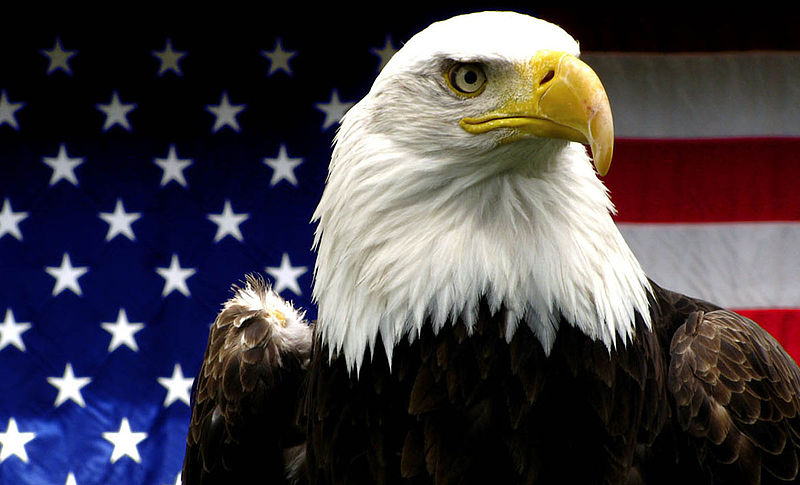
There is a big, wild lake close by where I live and nesting pairs of bald eagles have been spotted there. I told Jenn that there is one tree, probably the one she saw, along our mountain road, where I have also seen a bald eagle, probably one of those nesting pairs of birds. The bald eagle is a success story because it has been brought back from near extinction. By 2007, it was actually taken off the endangered species list.

It’s appropriate to talk about the bald eagle this Fourth of July weekend since it is America’s national bird. “Jenn, I said,” “Bald eagles are the only eagle that exists only in North America. But, we almost killed them off largely because we used DDT, an insecticide. This chemical caused damage to the eggs of the eagle. The eagle’s habitat was also damaged when the original forests were removed. The birds that the bald eagle eats were hunted and killed off. They had no food supply. Bald eagles were even shot because farmers thought they threatened their livestock.”

Jenn asked,”So, what happened to save the bald eagle?”

I replied, “First, we banned the DDT insecticide which went a long way toward protecting the bald eagle. Shooting them was also banned. When they were considered an endangered species, we protected their nesting sites and, in most places, still do. Their nests are used year after year by the eagles and weigh, sometimes, up to 4,000 pounds. As our pollution control laws took effect and our water quality improved, we started seeing more bald eagles. By 2007, there were enough so they were taken off the endangered species list. They are still protected under the Bald and Golden Eagle Protection Act and the MIgratory Bird Treaty Act.”

Jenn said, “I’ve heard of bald eagles sometimes nesting in suburban neighborhoods.” “Yes,” I said. “From what I understand, there are so many now, they are competing for territory. The U.S. Department of Fish and Wildlife sometimes find them injured by other bald eagles because of this problem. In 1963, there were only 487 nesting pairs of bald eagles in the U.S. By 2006, there were over 9700.”

I said to Jenn, “Many people don’t realize that bald eagles are powerful, big, and that they are birds of prey. They are meat-eating birds. They usually live near lakes. They fish, eat roadkill, and steal the kills of other birds. Bald eagles can weigh up to about 14 pounds with a wing span of six to eight feet. They have been known to swoop down and pick up small dogs and cats out of backyards.”

The bald eagle has been America’s national symbol since 1782. The bald eagle had been seen as a sign of strength since ancient Rome. It started appearing on flags, documents, and gradually became associated with America and its spirit and strength.

Happy Fourth of July, everyone! I hope you get to see a bald eagle! #writing #amwriting #blogging #FourthofJuly

*Image provide by therightclicks at Creative Commons



Posted in Appalachia, Uncategorized

Appalachian Cultural Stereotypes: TV Show “Outsiders”

Friday Fare to Appalachia

Outsiders

There have always been television shows and movies that supposedly portray Appalachian or hillbilly culture. The newest one on the scene is a show on the WGN station called Outsiders. Set in the present time and in a county in Eastern Kentucky, Outsiders has now run two seasons and has been renewed for a third. It is about a large, extended family, living on the top of one of the high Eastern Kentucky mountains called (fictitiously) Shay Mountain.

The Farrell Clan has lived on Shay Mountain for 200 years. They have lived “off the grid” and outside the bounds of society, adhering to many of the “old” ways of Appalachia and making up a few “ways” of their own. No one from the town at the foot of the mountain bothers them. They make “Farrell wine” which is moonshine and a few of the retail establishments in town sell it. Under the counter, of course.

The Farrell’s steal food, guns, and other supplies from the town below them. The Sheriff’s Department ignores them, knowing that to challenge them is asking for more problems than they can handle. They make their own clothing, their medicine from herbs, and build their own shacks. One member of the clan has tried to join town society but has been cast out and cast out of the Farrell society as well.

A coal company has come into the town and they want to strip mine the mountain under a state order, forcing the eviction of the Farrell Clan. The Farrell’s are determined to hold on to their land by any means possible including violence.

This show has adult content with considerable sex and violence.

Review: If you want a rather over-the-top view of parts of current day Appalachia, the Outsiders is certainly entertaining. The zap2it.com website calls it a cross between Sons of Anarchy and Justified. This writer would say that it comes down more on the Sons of Anarchy side with Justified being pretty tame as compared to Outsiders. If people unfamiliar with Appalachia want to see all of the bad and very little of the good about the region, watch Outsiders. On the other hand, the show does depict some of the “old” ways of the people and, if you can tolerate the violence, can be pretty entertaining.

The rottentomatoes.com site recommends it, particularly with regard to the very good acting. It is a sweeping drama with a huge cast of characters. Once you get to know them all, it is an interesting television show, particularly if you understand Appalachia and maybe even if you want to understand it.

Enjoy the trailer!


Posted in Flash Fiction

The Neighbor

image

The last time Pat saw her neighbor, they argued. That was almost a year ago. The last time they spoke, they discussed, but it was a really an argument. Even a veiled threat from him.

Then, there was an emergency. A little boy was lost in their farming neighborhood.  Everyone pitched in to help look for the little boy. He helped too. His children were with him. Pat assured him she would watch them. She had always loved them.

He walked over and hugged her. Pat still doesn’t understand. He didn’t like her anymore.

They found the little boy in the field behind the old scarecrow. Hiding. Pat considered hiding from the neighbor.

FFfaw Challenge

*Photo compliments of Louise at The Storyteller’s Abode


Posted in Diabetes, Travel, Uncategorized

Traveling with Insulin-Dependent Diabetes: Your Insulin Supplies

image

Can you travel, comfortably, when you have diabetes and have to take insulin? That was a question I had many years ago when I first had to start taking insulin for diabetes. I wrote about my diabetes odyssey in My Life with Diabetes, but I did not address the issue of traveling. There are two major issues associated with traveling with insulin-dependent diabetes: how to carry your insulin supplies and how to eat while you are traveling. This blog post addresses how to carry your insulin supplies.

For those of you who are diabetic and take insulin, you already know you have to plan ahead to travel with your insulin supplies. You may be wondering how you’re ever going to do it. For others, you may have figured out your plan. I like things simple. I like to be a normal person. I want to walk through the world and not think about diabetes. I also like to travel. So, I’m going to share my plan with you. Traveling with insulin-dependent diabetes does require a plan. But, it doesn’t have to be daunting.

I use insulin pens to take my insulin. They make taking insulin simple. You dial up your dose, screw on a pen needle, and stab yourself. Doesn’t hurt. Over and done with. You can take your insulin virtually anywhere. I take two types of insulin, so I carry two pens with me and enough pen needles to last several days. If I am going to be gone longer than that, more needles go in my luggage. The insulin pens will last 30 days without refrigeration.

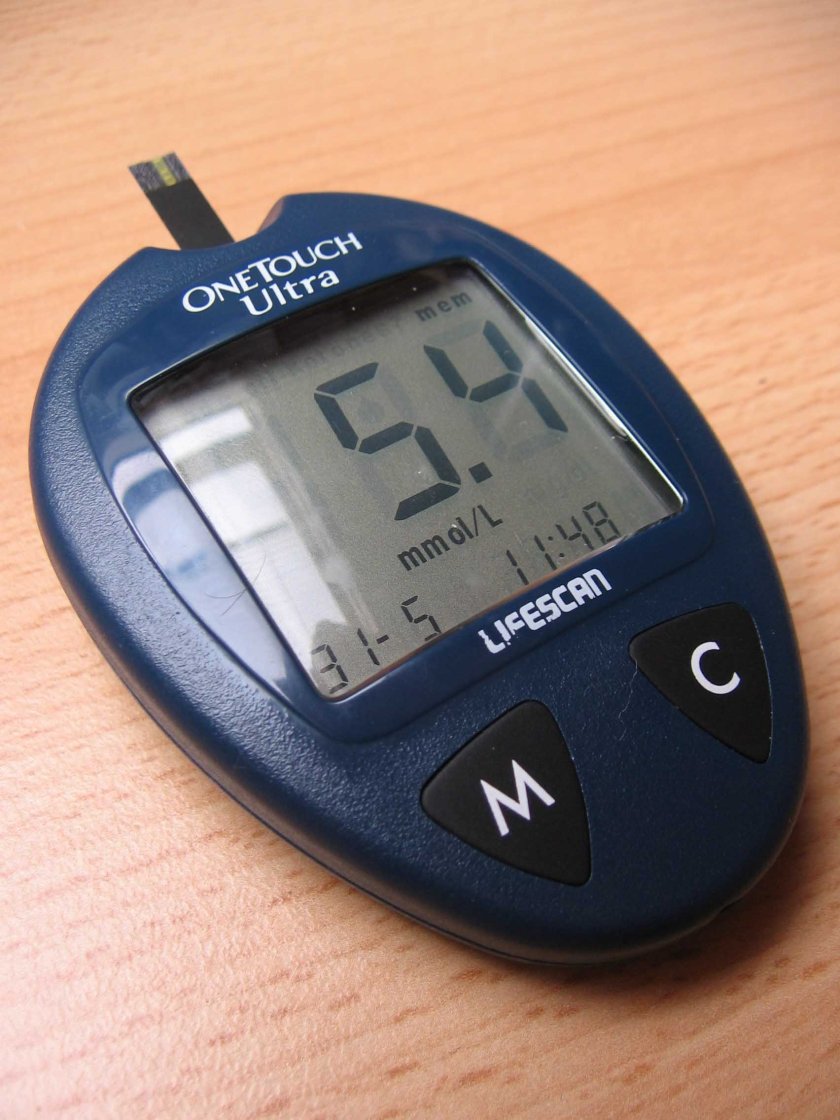
You also have to carry your blood sugar meter, the lancet holder you use to prick your finger to test your blood sugar, and enough test strips to test your blood sugar the required number of times per day. You also may want to keep a few extra lancets with you to use to prick your finger.

We’re not finished yet! Always have something with you to eat, discreetly, if you feel your blood sugar dropping. If you’re engaging in more physical activity than usual, such as walking around and being a tourist, you may have instances where your blood sugar drops. Being out in the heat also causes many diabetics to have blood sugar lows. Keep a few lifesavers in your pocket or purse. They will get you by until you can have a meal. If it is going to be awhile before you have a meal, keep something like Nabs or some kind of cracker with you.

If you take insulin using a vial of the drug and a needle (syringe), then put those in your kit instead of the insulin pens and pen needles. They take up a little more space, but just keep your extra needles in your luggage. Most vials of insulin also last 30 days without refrigeration. If you are staying in a hotel, you can always ask for a room with a mini-refrigerator.

Now, we’re ready to put all this together. I have a very nondescript little black pouch that I use for my insulin supplies and I fill it up and stick it in my purse. Here are the contents of my insulin supply kit:

2 insulin pens, enough pen needles for three shots per day, blood glucose meter, bottle of test strips, lancet holder, a few extra lancets, a number of lifesavers

Make sure you have enough insulin to meet your needs in your insulin pens or vial and that you have enough pens or vials with you in your luggage, along with extra supplies, if you are going to be gone very long. Due to today’s travel restrictions, if I am going to be flying to my destination, I also carry a letter from my doctor explaining that I am diabetic and require insulin (and needles) for the condition. You never know what you will be asked for at airport security though I have never been questioned and no one has ever asked to see my letter.

Traveling with insulin does not have to be difficult with a little planning, but you do have to think ahead.

Stay tuned for a blog post on eating when traveling, which also can be daunting! #writing #amwriting #blogging #DiabeticConnect #dailyprompt

Posted in Creative Nonfiction Essays, environment, Uncategorized

The Solace of Water

Take a course in good water and air; and in the eternal youth of Nature you may renew your own. Go quietly, alone; no harm will befall you.

— John Muir

image

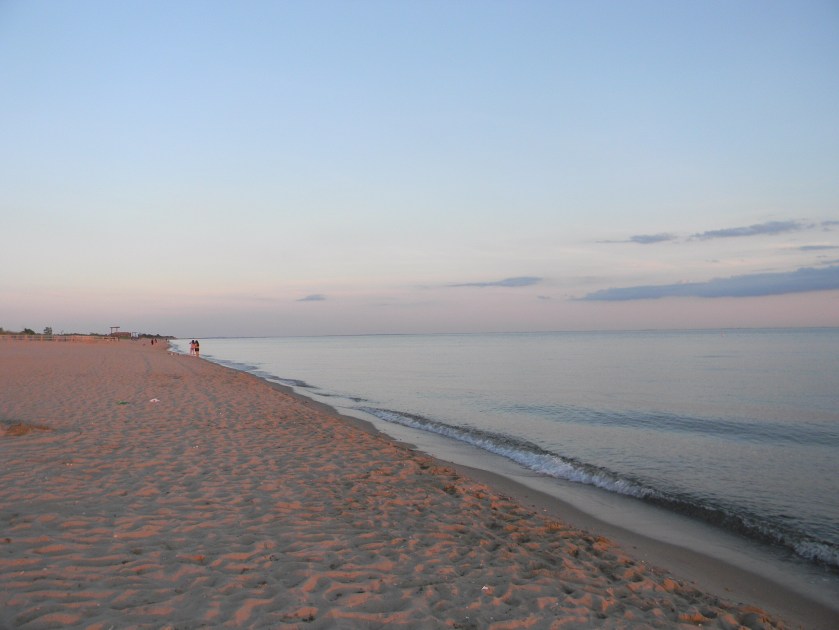
There is nothing that soothes me like the sound of water. A babbling brook, crashing ocean waves, a trickling stream, waves sloshing against the sand at low tide, the rain on the roof. Those water-related sounds of nature. I think they are built into our DNA. They were there in the beginning .They still soothe me like nothing else.

There are many scientific studies that have researched the effect of water on our brains. Some scientists believe that our brains are hardwired to react positively to being around water, that it calms us and even makes us more creative, and puts us in a mild meditative state. One scientist, Walter Nichols, wrote a book entitled, “The Blue Mind,” which discussed how being around water may even be able to heal what is broken in our brains and increase our happiness and satisfaction with life. He says that water gives our brains some downtime, a rest, which most of us need.

When we hear water or are around water, our “blue” mind takes over and puts us in a state of “we” versus “me.” We can stand at the edge of a large lake or look across the ocean and get a sense of vastness and that there is something larger than ourselves. That helps us put life into perspective.

There are physical health benefits from water as well. The more seafood we eat, the better off we are. Most seafood is full of omega-3’s which increase brain growth. The more we eat, the bigger our brains get. Scientists have also discovered that the more fish you eat, the happier you are.

Then there is our body composition. The human body is about 60% water. The brain and heart are around 73% water and the lungs are 83% water. We, as human beings, feel comfortable being around water. A normal sized male needs a little more than a gallon per day of water to survive. A normal sized female needs about one-half gallon. Water has vital functions in our body. It regulates our temperature. It helps metabolize our food in order to move the nutrients into our cells. It lubricants our joints. It flushes out toxins from our bodies. It helps produce saliva. And much more.

No wonder we like to be around water and that water soothes us! It’s part of us.

I crave being near the ocean and, unfortunately, I live in a land-locked state. I’ve been fortunate to be able to travel and spend considerable amounts of time near the ocean. The only ocean I haven’t seen is the Indian Ocean. The wildest ocean I’ve ever experienced is the part of the North Atlantic called the North Sea. The calmest ocean is part of the Atlantic as well – the Gulf of Mexico. No matter which ocean  I’ve been to, those swooshing sounds of the waves relax my brain and body and let me leave myself for just a little while. That’s all I need. #blogging #writing #amwriting #environment #dailyprompt


Posted in Creative Nonfiction Essays, Uncategorized

Clutter and Stuff

image

Clutter. You know. The stuff you have lying around that you think you might need. That you’re sure you will need……some time, some day. Won’t you? What exactly is clutter? Clutter can be defined as anything we don’t need, want, use or anything that takes up space we need, or our time, our energy, or that destroys our serenity. Do you know where I got that definition? From an organization called Clutterers Anonymous! Yes, there is such an organization. I couldn’t believe it either.

I hate clutter and have been systematically going through my life trying to eliminate clutter. Clutter is, of course, items like clothes you can’t wear anymore, gifts you have received and can’t use, things you have bought and don’t like, books and papers you think you might need but don’t, and unnecessary items stuffed in storage bins and facilities. But, that isn’t all clutter is. It is also unfulfilling relationships, activities we don’t enjoy, and other psychological “junk” that we hold on to because we always have. Our minds can become cluttered just like our surroundings. Clutter seems to multiply of its own accord.

Where did this clutter problem start for so many of us? Many say it comes from fear. Instead of buying one of something, we buy two. We think if we need one, we might need two because that one might wear out, break, become unusable. Maybe we were taught in our childhood to fix things that break instead of throwing them away or to save things we buy because someone might need them. Those broken things and possible gifts pile up. If our clutter problem is bad enough, we feel hopeless. We feel we can never get rid of all the clutter. We have forgotten how to organize. Finally, clutter spills out of our drawers and our closets. It becomes embarrassing and overwhelming. Our hopelessness and helplessness over the clutter becomes worse. Clutterers realize they have a problem with their excess possessions.

Not only have I grown to hate clutter in my own life, I am growing to dislike “stuff.” The trappings of life that we feel we have to have in order to live. What “stuff” is differs for all of us though I think it may have similarities within social classes. We, in the U.S., don’t freely admit that we have a social class structure but we do. In Great Britain, they have always had a relatively well-defined social class system, more so in the past than now, but it still exists. They admit it.

The U.S. middle class, at least in my age group, still wants a nice home. Nothing wrong with that. It is the “stuff” that goes into those nice homes that gets out of hand. I’m as guilty of this “stuff” issue as anyone reading this blog post. Most of us want the good furniture, reasonably nice art on the walls, the latest appliances, the most up-to-date everything, as well as the accessories to pull it all together and make it into our idea of home. Outside of our homes, there are two or three cars, maybe a boat or RV. Nice lawns and landscaping. Individually, we want clothes, shoes, handbags, and jewelry for every occasion. I’m particularly guilty of this clothes issue! Everyone is different regarding how much stuff they like and can live with.

Last year, about this time, my house flooded and I lost a great deal of what I had. My stuff. See my Time to Rebuild blog post. It was devastating. I was most devastated by the loss of the interior of my house but the loss of my stuff was almost as bad. Until I started to move back into my house and started going through all the stuff. I realized how much of it I really did not want or need. How much was unnecessary to my life as it was in the present. How much was just old stuff stored in closets in boxes and was meaningless at this point in my life. So I started sorting. Soon, I stopped sorting and started pitching and throwing. It felt liberating. We moved much less back in than we moved out.

Now, I’m careful what I bring back into my home. I’ve found, once again, that I enjoy people more than stuff. I’ve renewed old friendships, old relationships, and those people are so much more valuable to me and enjoyable than “stuff.” My possessions were not giving me joy. The people in my life do, indeed, give me joy. I’m as careful about new relationships as I am about new stuff. New relationships have to be really worth it to be brought into my life. Otherwise, they are just so much stuff.

Our society has become so fractured and many of us have become so fearful that we surround ourselves with stuff instead of people. A problem we need to try to fix if we are to regain our American optimism and happiness.


*Image by Jonathan Billinger at SO3951

Posted in Appalachia, Food, Recipes, Uncategorized, weekendcoffeeshare

#weekendcoffeeshare 6/25/2016

image

If you stopped by for coffee, I would tell you about the apple orchard that is near my home. “Oh, hello Jenn.There you are. I didn’t know if you were stopping by today or not,” I said. My friend, Jenn, just came through my side door. “I’m sorry I’m late, Rosemary. It’s been a crazy, busy week and I’m running behind.” “No problem,” I said. “Would you like a cup of coffee? You can grab the pot off the counter.”

Jenn grabbed the coffee pot and we took our drinks out to the front porch. It was gearing up to be a hot day. “Jenn,” I said, “Do you ever can or freeze food?” “Yes, I do,” Jenn replied. “What have you got in mind?”

So I told Jenn about the apple orchard near my house. I can remember my grandmother and my aunt freezing a little yellow apple that they called June apples. They were a little tart and required some sugar to bring out their flavor. Here, on the fringes of Appalachia, you can still find them if you look really hard. Some farmer’s markets have them, but only for a short period of time. They are ready to pick in late June and early July; thus, their name of June apples. June apples are also delicious when you use them to make fried apples which people in this part of the world love, especially for breakfast.

I went ahead to tell Jenn that the apple orchard near me was a June apple orchard and you could go there and pick all you want. I’m going to do that on Monday. Jenn decided she wanted to go with me and then we will freeze a batch of apples for the winter. June apples are easy to freeze. Here is how you do it:

Freezing June Apples

1. Wash the apples under cold, running water.

2. Peel and core apples. Some people find it easiest to use an apple peeler.

3. Cut the apples into slices. You have to decide what size slice suits your purpose.

4. Get out a cookie sheet and cover it in parchment paper.

5. Brush each apple slice with lemon juice to prevent browning. You can use reconstituted lemon juice or diluted juice from lemons.

6. Place the apple slices on the cookie sheet. Be sure they don’t touch each other so each slice freezes individually.

7. Place the cookie sheet in the freezer for 2-3 hours. Do this for all the apple slices you have.

8. After all the apple slices are frozen individually, remove them from the cookie sheet and place them in separate freezer containers. I recommend freezer-safe plastic bags. Just press all the air out of the bags. This way, you can remove any amount of apple slices you want  to use in a variety of dishes. Fried apples, apple pies, and more.

9. Now you have a supply of apples to last you all winter! Wasn’t that easy?

Jenn was thrilled with her new recipe and now we have plans to visit the apple orchard on Monday. We have really enjoyed our #weekendcoffeeshare this week!

*weekendcoffeeshare is sponsored by parttimemonsterblog.com


Posted in Democracy, Politics

The Brexit Vote: Does it Foretell the American Election

image

Great Britain’s Brexit vote refers to the decision by the populace of Great Britain this week to leave the European Union (EU). A decision with wide-reaching implications not only for Great Britain but for the rest of the 28-nation EU, the United States and perhaps the rest of the world. One of the most important issues of the Brexit referendum was immigration into Great Britain. The U.S., of course, has the same issue that is a hot button for the 2016 Presidential election.

At the risk of over-simplification, the EU stressed freedom of movement among its member states. When Tony Blair was Prime Minister, he embraced the British integration into the EU. When eastern European countries joined the EU, many other European countries put immigration limits in place. Great Britain did not. Since then, three-fourths of the immigrants into Great Britain have not been European at all but of other nationalities. The immigration wave has been massive with the new arrivals stressing Britain’s welfare system, environment, and almost every other resource available to the British people. It should not be lost, however, that not an inconsiderable amount of the hatred of new immigrants had more than a little to do with racism and bigotry.

This begs the question of why wasn’t, under Prime Minister David Cameron, some sort of immigration reform put into place? Was taking the step of withdrawing from the EU actually necessary? It seems like a case of closing the barn door after the horses got out.

Of course, many draw the parallel between the immigration problem in Great Britain and that in the United States. I see a real difference. The United States has immigration laws already on the books. Enforcing them would go a long way toward solving the problem of illegal immigrants in the U.S. just like enacting immigration reform would have done much to help Great Britain.

Along with immigration, Brexit was also a response to globalization. It can be argued that it is a step toward de-globalization or nationalism. Globalization has been a movement in countries like Great Britain and the U.S. since World War II. Globalization involves free trade of goods and services across borders. In the case of Great Britain, that means that trade is tariff-free within the EU. Will the EU still allow tariff-free trade when Great Britain withdraws? We will see. Perhaps not.

Many countries have literally stopped producing many items needed by their people due to globalization. They rely on trade agreements with other nations to provide what their population needs. The United States has such trade agreements with a number of nations. For example, the U.S. no longer has a manufacturing economy. If there is a nationalist President, like Donald Trump, elected that tears down the trade agreements in the U.S., one has to wonder where the manufacturing plants and skilled labor will suddenly come from to produce what the U.S. citizenry need. The same questions can be asked about Great Britain. Will they suddenly be importing everything they need and paying tariffs? One can sense economic disaster.

So what happens now due to Brexit? In the short-run, the world financial markets reacted drastically negative. Manufacturers and financial institutions are threatening to pull out of Great Britain. Scotland will probably have a referendum on freedom from Great Britain and succeed. Other short-term effects are bound to be felt. The world as Europe knows it will change. We have no way to know what the long-term effects will be yet. The same may happen in the United States if Donald Trump, the GOP presumptive nominee, wins the 2016 Presidential election. #Brexit #realDonaldTrump #writing #amwriting #blogging

Posted in Travel, Uncategorized

My Daydream Voyage

image

I take a voyage almost every day. Sometimes several times a day. I’ll drift off from my work or whatever else I’m doing and go somewhere I’ve been before…….or somewhere I’ve never been, but only in my mind. I recall my favorite places and people. Don’t we all do this? Some of my voyages are very private and I won’t recount them here. Others are not as private and I can share them with you. I will tell you a little about one of my favorite places to voyage…….

There is a small island off the coast of Florida. It is not one of those touristy, popular islands like Sanibel Island, for example, although it is near Sanibel. It is not as well-known or as well-traveled. It is a barrier island in the Gulf off the coast of Ft. Myers. At one end of the island is a wonderful Greek community. At the other end, there is a small town made up of island folks and people who live there largely in the winter. There is quite a population that lives there year round in between. Hurricanes seldom plague this part of Florida.

Because this island does not have a large population of tourists, you feel like one of the community when you’re there. I like that feeling when I travel. There is an art gallery, library, grocery, drug store, a couple of cool bars with the best grouper you’ve ever eaten, a great restaurant or two…really all you need. Most people get around on bicycles and there are wide sidewalks just for that purpose. I live on great seafood when I’m there. I’ve even considered moving there, but there is never any real estate for sale. The real estate isn’t as expensive as you might think but it just never goes up for sale. That probably says something about the desirability of living on the island.

I feel safe there. I can walk and bike around and never worry. I can walk my dog. The island has a large population of wood storks, a species a little different from the traditional stork we are all familiar with. They beg for hot dogs, which I do not feed them. Everyone smiles and laughs. It’s a happy place. Sometimes, when I drift off, I think of this island and what a happy place it is and I take a brief,mental voyage there. Suddenly, I’m happy too, just thinking of that jewel of an island sparkling in the Florida sunshine against the blue water of the Gulf of Mexico. How I wish I could be there!  But, I’ve enjoyed the mental voyage I have just taken with you! #blogging #amwriting #writing