Posted in Appalachia, Music, Uncategorized

Bluegrass Musician, Ralph Stanley, Dies

image

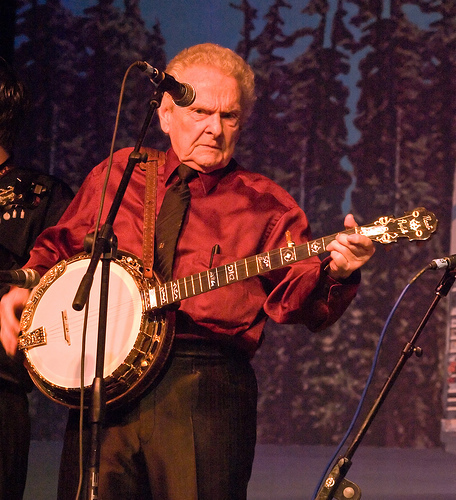
Ralph Stanley, one of the earliest pioneers of traditional bluegrass music, died June 23, 2016 at the age of 89. Dr. Stanley, who received an honorary doctorate of music from Lincoln Memorial University, died of complications from skin cancer.

Stanley, along with his brother, Carter, teamed up with their band, the Clinch Mountain Boys in 1946 and began to develop what is now known as bluegrass music through the adaptation of Appalachian folk music. Ralph Stanley played banjo; Carter Stanley, who passed away at a young age in 1966, played guitar. Stanley continued as a solo artist. He and the Clinch Mountain Boys played for most of the next 50 years. He and his band served as a mentor for such bluegrass artists as Keith Whitley and Ricky Skaggs.

Stanley was a member of the Grand Ole Opry. He was awarded the National Medal of Arts and the Living Legends award. A coup in his career occurred when he appeared on two movie soundtracks, “O Brother, Where Art Thou,” and “Lawless.” He continued touring into his 80s.

Stanley is survived by his wife, three children, and many grandchildren and great grand-children. #RalphStanley #writing #amwriting #blogging

*Image by armadilo60 at Flickr.com 2009

Posted in Appalachia, Food, Recipes, Uncategorized

Appalachia and Food: Potato Pancakes

image

Friday Fare to Appalachia

The Appalachian culture is all about food. Appalachian farmers and truck gardeners worked the land to grow the basics for their family. They had a hard-scrabble existence. Some of the basics among the vegetables were corn, squash, and potatoes. Not much rice was eaten in Central Appalachia even though rice was a daily dish in the south. In the mountain territory, the land was not suitable to grow rice. The people substituted potatoes for rice.

A dish I learned to fix from my mother, and one that everyone loved, is the potato dish featured today. We called them Potato Cakes. Some called them Potato Pancakes. My mother sometimes fixed them for breakfast, sometimes for dinner. They were a favorite. Very filling and somewhat nutritious for people working hard physical labor later in the day. This is a very plain dish enjoyed by plain people. One thing you will notice about many of the Appalachian recipes is that measurements are often either non-existent or approximate. You have to experiment until it tastes the way you want. It isn’t hard, I promise!

Potato Cakes

Leftover Mashed Potatoes – as many as you have!

1 -2 eggs depending on how many potatoes you are using

Skim milk – enough to just wet the potatoes and allow you to stir them

Stir together the first three ingredients. Make sure the consistency is medium thick but stirable.

Add a pinch of salt and pepper.

Regular Flour – Add enough regular flour, a tbsp at a time, to make the potato mixture stick together and to enable you to pat it into cakes.

Pat the mixture into pancake-size cakes.

Prepare a skillet by melting several tbsps of butter (or margarine) in it. Melt it slowly and don’t let it burn.

When the butter/margarine is melted, add as many potato cakes as the skillet will hold. Fry them until they bubble on top. Then turn them with a spatula. Cook until both sides are golden brown.

Remove and place on paper towel-covered plate.

Serve and enjoy!

Copyright Rosemary Carlson 2016

Image by sylvar Flickr 2016


Posted in Second Amendment, Uncategorized

The Second Amendment, State Militias, and Paramilitary Groups

“A well regulated militia being necessary to the security of a free State, the right of the People to keep and bear arms shall not be infringed.”

The above is the text of the Second Amendment of the Constitution. One of the hot button issues of our time. It is interesting to read the Second Amendment. It sounds so simple. The effects have been so wide-ranging in the times in which we find ourselves. I contend that one of the problems with the interpretation of the Second Amendment is that it has two parts. I only want to address the first part of the Second Amendment.

The first part addresses a well-regulated militia being necessary to the security of a free State. Militia does not mean the National Guard although some interpret it in this way. Militia means a policing body in each of the 50 states. The Founding Fathers wrote this into the Constitution in order that the states would have the means to protect themselves in the case of a federal government gone wild. They are under the control of the governor of each state.

image

According to sources, all 50 states do not have active militias. The state militias that are active seem to be a fluid thing so it is difficult to find an accurate list of those that are active at any given point in time. Some define the membership of the state militias as the police forces in the states. That may be true for some states but it is not true for all states. Some states’ militias are composed of general citizenry with police perhaps being a part of the militia. Perhaps not. The members of some state militias are known to the general citizenry. Others prefer not to be known.

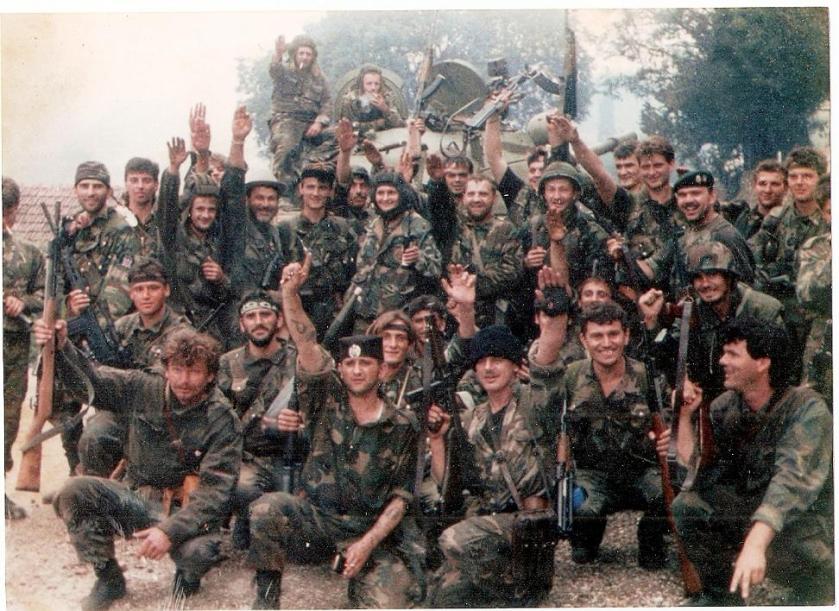
Still other state militias have devolved into paramilitary anti-government groups rather than militias that protect the citizenry in times of crisis. The question is do these anti-government paramilitary groups that call themselves state militias have as their purpose the protection of all the citizenry of their state against the tyranny of the federal government? Do they have another purpose? If they are protecting the citizenry of their state against tyranny, how do they define tyranny? The definition of tyranny according to the Merriam-Webster Dictionary is two-fold. First, it is defined as the cruel and unfair treatment by people with power over others and second, as a government in which all power belongs to one person, the rule or authority of a tyrant. I contend that some of the paramilitary groups practice tyranny themselves.

State militias that are truly state militias and that intend to protect each and every citizen against tyranny should stand up and be counted. They should certainly be well-armed. I do not agree that they no longer have a purpose. I think they will always have a purpose.

But there is another issue. What about the anti-government paramilitary groups that exist that are too cowardly to stand up and be counted and would rather operate in secret and in the dark? Many pretend they are state militias but we all know what they really are and they are not state militias. They are nothing more or less than terrorist groups right here on our own soil. Their purpose is to terrorize at least a group of our citizens. They are a scourge. I have no hope that they can be rooted out. I do have hope that fewer and fewer American citizens will allow themselves to be recruited by such organizations and that more will actively campaign against them. They think they can quietly and secretly take over our country while we aren’t paying attention. I hope they are wrong. #blogging #amwriting #writing


Posted in Creative Nonfiction Essays, Living Life, Uncategorized

Glass Half Empty…..or Half Full?

image

Are you a glass half empty or half full person? I confess. I can often be a glass half-empty person….a bit of a pessimist. Not always. It depends on what we’re talking about. I can also be a crazy glass half-full optimist. This expression is used so often now that it’s often just referred to as the “Optimist/Pessimist saying.”

The glass half-empty saying is an idiom. When you think about it, you realize it is used to illustrate that different people perceive a situation in different ways. Some optimistically. Some not so much. How you perceive a situation is based, to some extent, on your own experiences during your life. Some people have had experiences that have made them more an optimist than a pessimist and vice versa.

The glass half-empty principle really becomes interesting when you think of how attitude affects your health. If you always see the glass half-empty, then you have a pessimistic view of life. Can that possibly be healthy? Of course not! If you are an optimistic person, you wake up every morning and see the day filled with possibilities. You expect positive results from what you do each day. A study done consisting of a group of law students in 2012 found that the law students who were optimistic made more than $30,000 above their pessimistic counterparts. Optimism creates good fortune. If you are a pessimist and expect bad things to happen, it will be a self-fulfilling prophecy.

It’s a tough world out there and you can use the glass half-full/half-empty saying to help yourself out if you are trying to improve your life by…..let’s say……buying a home, getting a job, or something else equally difficult in this world of ours. First, avoid pessimists! They drain your energy and sap your self-confidence. Engage with people like an optimist. Carry yourself well. Don’t slump. Look good. Spiff up your personal hygiene — hair, nails, clothes. Smile and laugh. Laughter really is the best medicine. Think of that half-full glass and feel optimistic and smile. Laughter has all kinds of health benefits such as lowered blood sugar and blood pressure. Plus it makes you look good and feel good. Get some exercise. Take the dog for a walk. Exercise releases all those feel good endorphins.

We live in a world that tends to be a glass half-empty place. Be a glass half-full person  and you will be surprised what you can accomplish. #writing #amwriting #blogging #glass half-full #dailyprompt


Posted in Creative Nonfiction Essays

Map Quest

image

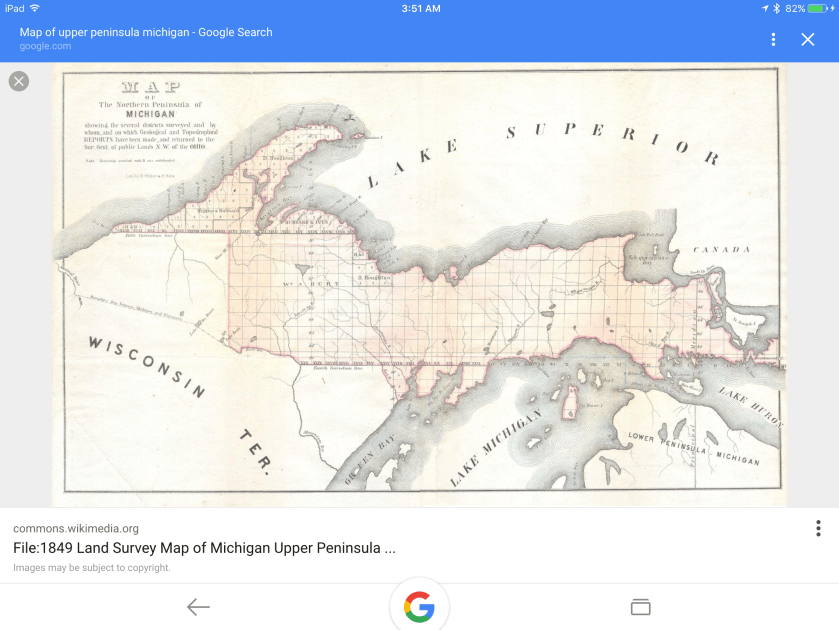
If you want to come see me, follow the map and these directions:

1. From wherever you are, go to Interstate 75 which runs north and south from southern Florida to northern Michigan. Go north on I-75. Be careful. No matter where you are on I-75, the traffic is heavy. It is the most heavily traveled interstate highway in the U.S.

2. Depending on where you get on I-75, you will see lots of beautiful scenery. From the swamps of the Everglades in Florida, through Georgia’s piney forest, to the foothills of the Appalachian Mountains in Tennessee and Kentucky. Next comes the Buckeye State of Ohio where you will find farming and manufacturing and, finally, Michigan, but Lower Michigan.

3. Lower Michigan is the mitten-shaped part of the state. I-75 will take you past Detroit and Flint, where I have relatives, then up through the central part of the state where my aunt and uncle made their home. A couple of more hours of driving and you are at the foot of the Mackinaw Bridge. It’s summer so the big bridge in the sky should be relatively easy to cross. In the winter, that is not always true. Of course, you can always get an escort to drive you across.

4.  When I went to the Upper Peninsula of Michigan for the first time, we took a ferry across the Straits of Mackinaw. The Mackinaw Bridge is the longest suspension bridge between two anchorages (the Lower and Upper Peninsula of Michigan) in the Western Hemisphere and is five miles in length. It carries four lanes of I-75.

5.  Keep going north as you pass St. Ignace on the northern side of the Mackinaw Bridge. Remember that you go north until you run out of I-75 which is at Sault Ste. Marie, MI on Lake Superior. When you get to Sault Ste. Marie, turn west on MI-28, heading toward Marquette, MI at the western end of the Upper Peninsula. You will be treated to a beautiful drive along the southern shoreline of Lake Superior. The lake is wild and the shoreline is rocky. The rocks are the most beautiful you will ever see. Stop and pick up some.

6. Some of the attractions along the southern shore are Pictured Rocks National Seashore, Grand Island, and Munising Waterfalls…..and much more. You can stop or continue on to see me.

7.  You are still on MI-28 but now you are getting close to Marquette, MI. Start watching for an old road on your right which is called Old MI-28. When you see it, turn right onto Old MI-28. You will see a group of log cabins along this road. My cabin is the third  one on the right along the lakeshore. Aren’t the birch logs that it is made out of beautiful? You are in Shelter Bay, MI.

You have found me at this beautiful spot. You’ll know it’s my cabin by the great big rock in Lake Superior right in front of the cabin. See all the cars out back of the cabin? My family is having a party. Come join us. There is just one caveat. You’ve found me, but it’s the six-year old me and the year is around the early 1960’s.

I visited this cabin in Shelter Bay, with my parents, often during my childhood and growing up years. My dad’s family would always rent it and I remember my time there as one  big happy party. My dad’s family believed in having a party and they could throw a good one. All my great aunts and uncles would show up along with most of my dad’s siblings. My mother, who grew up in the Kentucky Bible Belt, was decidedly uncomfortable, but she had to learn to cope.

The cabin front, facing Lake Superior, was glass on three sides with cots around the outside of the room. At six years old, I still remembered a lot. The porcupines that lived under the porch. The fact that there was an outhouse, not a bathroom, took some getting used to since there were black bears roaming at night and the porcupines. In the kitchen, everyone cooked on an awesome wood stove. I can envision my grandfather sitting in a big chair by the fireplace that was used year round.

What I remember most was the love in that cabin when we were all there. There was so much love that I felt enveloped in it. Some days, I wish I could go back to being six years old and in that cabin again. Like today. I’ve lost a dear friend under difficult circumstances. Lake Superior, my family, most of them gone now, and the love in that cabin is calling me. #dailyprompt #writing #amwriting #blogging #everydayinspiration


Posted in Father's Day, Holidays, Uncategorized

Father’s Day in the U.S. And Other Countries

image

My dad has been gone for 33 1/2 years and I miss him as much today as I did when he died. Particularly on Father’s Day, the third Sunday of June in the United States. My dad was a fun, but hard-working parent, never aimless. I miss the twinkle in his eye when he saw me and the spring in his step when he carried me to bed! This poem reminded me of him.

Father’s Day was first celebrated by Sondra Dodd in 1910 in Spokane, Washington. She had lost her mother in childbirth and her father cared for her. She wanted to show her appreciation for him. Sondra’s dad’s birthday was June 5, so Father’s Day unofficially ended up in June. The movement to establish a day to honor father’s grew and in 1924, President Calvin Coolidge became a supporter. He did not declare it an official holiday.

Father’s Day was celebrated in June. In 1966, President Lyndon Johnson declared it an official holiday and designated the third Sunday in June as the official date for Father’s Day. In 1972, President Richard Nixon declared Father’s Day to be a national holiday.

There are some interesting and fun facts about Father’s Day in the U.S.

There are over 70 million fathers in the U.S. And 2 million of them are single. It is the fourth busiest day for sending greeting cards. More than 214,000 men are single fathers.

Other countries also celebrate Father’s Day. Canada celebrates it like the U.S. but unofficially. France celebrates Father’s Day on the third Sunday in June. They used to give their fathers’ Bic lighters but now they substitute other small gifts. Germany celebrates the day on the last day of the Easter holiday.

In Asia, India celebrates Father’s Day much the same way as we do, but Thailand celebrates the day on the birthday of their king and everyone wears yellow. In Australia, Father’s Day is celebrated on the first Sunday of their spring which is September.

Now, I’m going to go and start the dinner I’m preparing tonight in honor of my dad. Happy Father’s Day to all the dad’s out there!


Posted in Music, Uncategorized

Livin’ in the City

image

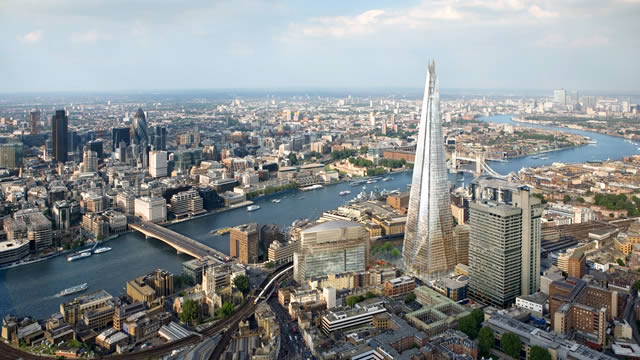
Livin’ in the city! I lived in the city for 25 years and I miss it every day. I love living in my cabin in the woods in the country. When I moved here 18 years ago, I needed to be away from the city. I needed the respite. But, I’ve always missed the city, my city. There is just something about the city, some energy I get from the city, that just doesn’t happen in the country. I can’t put my finger on it, but my head starts buzzing with all kinds of possibilities when I drive into the city, any city.

My favorite big city in the U.S. is probably Chicago, IL. Think of the possibilities in Chicago. All the restaurants you can choose. The museums, the shopping….always important to this girl. There is culture. But, there is my rock and roll fun too. I went to one of the best rock and roll clubs I’ve ever been too in Chicago with an old friend who is, sadly, gone now.

According to a Wall Street Journal study, there is a rather significant health advantage to living in the city compared to rural areas though the study finds that the health advantage is a function of age, income, and education. In other words, poorer people in cities don’t have this health advantage. Rural areas are served by only 10% of the country’s doctors. There is also indications that people in rural areas have a harder time getting health insurance. From this perspective, there is no health advantage to living in rural areas except the cleaner air and, perhaps, healthier food.

The Wall Street Journal study noted that people living in the city have a higher incidence of developing stress-related mental and emotional problems. Considerably more anxiety and mood disorders. Researchers have even discovered that urban dwellers process stress differently than rural dwellers. Their brains are different.

Almost everything you read about living in the city talks about the problems associated with city living. Health problems, homelessness, pollution, housing, and  more. You find very little research about the good aspects of city living. But, on a personal level, I love city living. It kicks me into high gear. It gives me energy and motivation. It fills me with possibilities.

For your enjoyment, here is Joe Walsh singing one of my favorite songs…..In the City. Enjoy!


Posted in Appalachia, Eastern Kentucky, history

Appalachian Folklore: The Jack Tales

image

Storytelling is a tradition in Appalachia. Down through the decades, many Appalachian children and adults have spent nights on the front porch, gathered around an elder, listening to stories that have seldom found a place in written forklore. Most of the stories have been in oral format only. This is true for the Jack tales though historians and some storytellers are making an effort to capture them in writing. Jack tales are seldom told in the same way twice which makes writing them down difficult. Different storytellers tell them in different ways. Even the same storyteller may change the telling of a Jack tale from telling to telling.

We’ve all heard of Jack and the Beanstalk, Jack and the Giant Killer, Jack and Jill, Jack Sprat, Jack Horner. There are many other Jack tales. All are examples of the Jack tales that originally came to America from the British Isles. The first Jack tales can be traced back as far as the fifteenth century in Great Britain. By the next two centuries, the first tellings of the Jack and the Giant Killer story can be found. That’s when the rhyme, “Fi-Fy-Fo-Fum, I smell the blood of an Englishman,” can be found in English literature for the first time, including in Shakespeare’s King Lear. Jack, who was supposedly located in Cornwall, England, trapped the Giant in a pit in order to kill him. Other giants were also present in the tale. By the eighteenth century, the Jack tales were found in the nursery as they had been turned into nursery rhymes.

As the British immigrated to America, along with the Scots and the Irish, each culture brought their own rendition of the Jack tales. The versions of the Jack tales were likely combined to become the Jacks that we know and love today. A book by Richard Chase, published in 1943, is a collection of at least some of the Jack tales. Chase alleged that many of the Jack tales were collected by a group of families in North Carolina and came into Southern Appalachia from that area. Chase did acknowledge that new Jack tales were surfacing in other parts of Appalachia, specifically in Virginia and Kentucky. In Harlan County, KY, Mrs. Sally Middleton of Martin’s Fork, knew versions of two of the Jack tales of North Carolina that she carried on. In all of the Jack tales, Jack is thrown into difficult situations. In the Appalachian versions, the themes reflect the problems of the area such as poverty and farming and the harsh conditions of life.

Jack is probably the first legendary hero in American literature. Counce Harmon was one member of the families in North Carolina that passed the Jack tales down for most of 200 years before they were ever written down. Here is a telling of a Jack tale for your enjoyment by a descendent of Counce Harmon, one of the original tellers of the Jack tales in America:


Chase, Richard. (2015) The Jack Tales. HMH Books for Young Readers.


Posted in Home, Uncategorized

Time to Rebuild, Part 2

  • image

When I left the story of my house flood in Time to Rebuild, Part 1, I was standing in my kitchen, in shock at the devastation a broken water pipe had caused while I had been gone for 3.5 weeks. I later found out, when I got my water bill, that 178,000 gallons of water had spilled from that water pipe during my absence. My homeowner’s insurance company said that was the largest amount of water they had ever dealt with on an insurance claim. It was a wonder my house wasn’t washed off its foundation.

When I left you at the end of the first part of the story, the first call I made was to the  homeowner’s insurance company. They sent an adjuster right out. She basically told us that everything was ruined. Even items that had not gotten wet and sat in high humidity for 3.5. weeks. They had to be replaced if possible. The first question, however, was where were we going to live. Clearly, the house had to be totally renovated. We decided to live in our RV, parked by the house. We had a dog and a cat, so living in a hotel was out of the question.

Next question was who to hire to renovate my house. The insurance company knew just the company. They specialized in flooding problems like mine. Within one or two days, they were here, on the job.

I am a private person. Not very open about my personal and private possessions. It was very difficult to watch the work crew unload every piece of furniture in my house, remove everything in them, box it up, and haul it to their warehouse. It took weeks to get everything emptied and stored. Then, the furniture had to be moved to their warehouse. Finally, it was time to start work.

The first thing the crew had to do was to dry out the house. It had gotten so wet and had suffered so much high humidity that it took weeks. They used big dehumidifiers and that is the picture you see above. Three weeks passed as they made sure everything was dry and tried to assess the damage. As you can see in the photo, the house was stripped down to its bare bones. The flooring and carpet was pulled up. Appliances were trashed. Furniture was either trashed or warehoused. Even the woodwork had to be taken off the door facings and, finally, the drywall was removed and new drywall put in its place. It was a shocking experience.

After the house was dried out, the renovation crew went to work. They were good and professional. They knew exactly what to do with a house that had been flooded. Slowly, I saw my house come back together. We had to be part of that. The kitchen had been totally destroyed and had to have new appliances and new cabinetry. The entire house had to have new floors or carpet. The water had poured through the heating/cooling system. It had to be replaced. I could go on and on about what had to be replaced but you get the picture. Everything.

The renovation crew wanted to make sure everything was clean and dry. The water had all run from the house into the crawl space. They had to dry it out too. They used a technique called soda blasting to get rid of any possible problems there.

It took four months. Living in a RV with a cat and dog for four months wasn’t fun but at least we had someplace to live. We even had to slowly start replacing our clothes, which were ruined due to high humidity. I started trying to save family pictures.

As the renovation crew started to finish, we had to go to their warehouse and let them help us determine what could be saved and what could not regarding our furniture and personal possessions. That was difficult. Water is very damaging to anything it touches for any period of time. We lost a lot but we were able to save some too. We were able to replace the big things – appliances, for example. The wood furniture – some of it we could save but all of it had to be refinished as the humidity caused the finish to slide right off of it. Most upholstered furniture was ruined.

Finally, our move in date came. The renovation company hauled everything back. Then, we had the job of sorting through our possessions, assessing damage, tossing what couldn’t be saved. But, we could live in our house once again.

That was a year ago. It’s now the summer of 2016 and this happened in the summer of 2015. We moved back in during the latter part of September 2015. Our house is not the same. For awhile, it definitely didn’t feel like home to me. I’m getting more used to it now. It really is an entirely new house on the inside.

Gentle Readers, please allow me to give you one piece of advice that I wish someone had given me. If you leave your home for very long, turn your water off at the road. At  your water meter. That is the only safe thing to do and, if a water line would break inside your home, it will keep a flood from happening. You don’t want what happened to me to happen to you.

*Photo courtesy of Rosemary Carlson copyright 2016

Posted in Music, Uncategorized

Our 2016 Concert Tour

image

*Photo courtesy of gorupdebesanez Creative Commons 2014

They say big, loud, crowded rock concerts are for college students and the young, don’t they? I’m not sure who “they” are, but they’re wrong. My friends and I grew up in the age of rock and roll. The 1970s. Listening to classic rock is our natural state. We got to see some of the rock and roll groups that were popular in our day back then, but we were busy with college and young marriages and jobs and just life and we didn’t get to see them all. One of my friends decided to rectify that situation and invited me to join her. I couldn’t say YES fast enough!

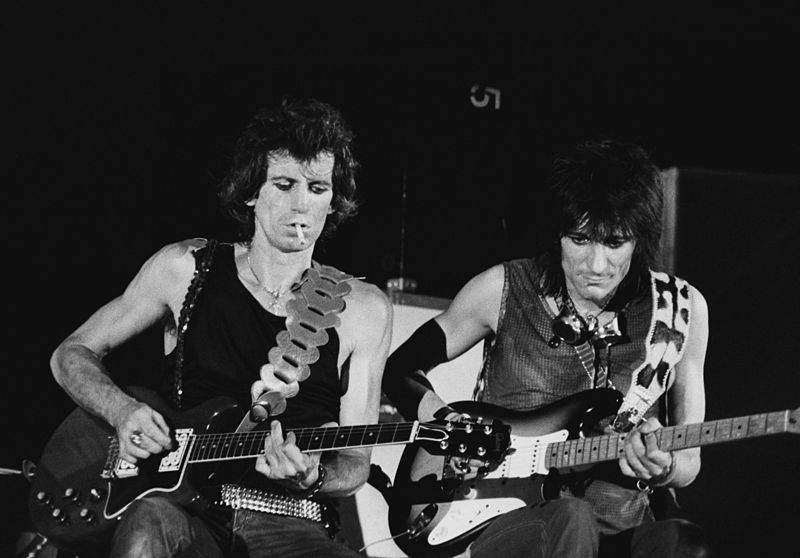
Rock and roll is our passion. The sound track of our lives. Just about every rock and roll song and every rock and roll band reminds us of something that happened in our lives….or someone. I love this music as much today as I did when I was 20….no, maybe I love it more. My favorite rock and roll group is the Rolling Stones and I don’t care how old they are, they still play my kind of music. My friend and I and our husbands saw the Rolling Stones play in Cleveland, OH many years ago. We’ve never forgotten that concert. If the Rolling Stones tour again and play anywhere close to where we live, we’ll be there. On the front row if we can get tickets.

While we’re waiting on the Stones, we’re going to see rock and roll bands we’ve wanted to see for years. We have tickets, some with other friends and family joining us, for four more concerts in 2016 and who knows, we may add more. We’re going to enjoy every single minute of listening to the soundtrack of our lives. #RollingStones #classicrock #amwriting #writing #blogging