Posted in Appalachia

Book Review: Hillbilly Elegy, by J.D. Vance

Update: This book has been made into a movie, directed by Ron Howard.

Before I start this book review, I feel the need to print a bit of a disclaimer. This book is about the area of the country in which I grew up. I grew up on the fringes of Appalachia, but I spent a lot of time with my grandparents who lived in Magoffin Country, KY, just two counties over from Jackson, KY, where the author spent at least part of his childhood. I don’t think I’m biased as I’ve spent most of my life in places other than Appalachia. But, I understand the culture and I am brutally honest about the culture. I have delayed writing this book review because the subject matter of the novel is so close to my heart as I’m sure it is close to the heart of J.D. Vance. With that said, here goes…..

Hillbilly Elegy: A Memoir of a Family and Culture in Crisis, by J.D. Vance is about a family who originated in Breathitt County, KY, squarely in the middle of the Appalachian portion of Kentucky (southeastern Kentucky). Breathitt County is poor, even desperately poor, white, and most of the people are, in their way, both hopeless and proud. This book is Mr. Vance’s memoir. However, J.D. Vance did not grow up in Appalachia or in Breathitt County, KY. His familymoved to Middletown, Ohio and that’s where Vance grew up. He was in Kentucky on occasion to visit relatives.

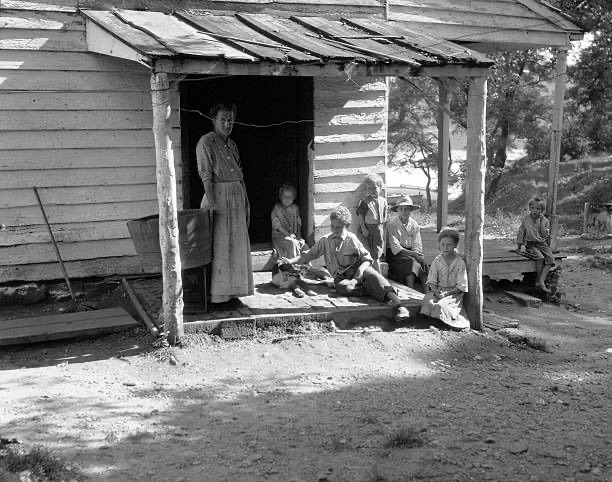
Hillbilly Elegy is a graphic portrayal of life in Appalachia, or perhaps I should say Eastern Kentucky, during the time Vance grew up. I’m speaking as one who was there at the same time, as well as before and since. I know the way Mr. Vance portrayed Eastern Kentucky is based on his truth and what he may have observed when visiting, but it is sensationalized. Hillbilly Elegy gives its readers a warped perspective of the area, a sensationalized account of one family’s struggles.

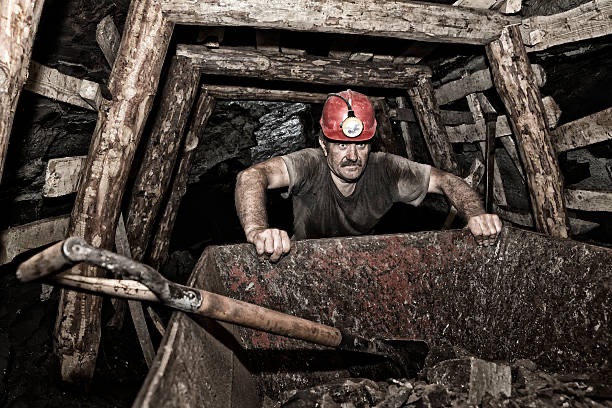
The people of Appalachia are good people. They are proud and hard-working, if there were anywhere to work. Once the occupation of coal mining started to decline, unemployment skyrocketed in the area. Industries simply seldom move into this part of Appalachia due to its relative geographic isolation, the lack of good roads, and a low educational level of the people.

By the time Vance visited Appalachia, the health care industry was starting to replace the mining and tobacco industries in Appalachia. There were and are a plethora of health care jobs available in Appalachia because of the high rates of illness there, particularly illnesses like black lung and COPD, which are caused by coal mining. The people in Appalachia tend to eat higher carbohydrate and higher fat foods due to poverty and those foods are cheap. That type of diet may cause various illnesses including contributing to the onset of Type II diabetes.

Since work is has been scarce, there have been periods of migration out of the area, and Mr. Vance’s family moved during one of those periods. The typical places to move have been to Ohio and Michigan. Vance’s family moved to Middletown, Ohio seeking a better life and work. Ultimately, they were seeking upward mobility. A generation or two before the period in which Hillbilly Elegy is set, upward mobility existed in Eastern Kentucky. That was during my grandparent’s time. During Vance’s time, upward mobility was difficult to obtain but certainly not impossible.

Advertisement

null

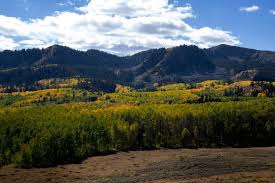
One fault I see in Vance’s book is that he gave no historical perspective on the Appalachian region. The Appalachia that I knew was not the Appalachia that Vance seemed to know. Those who experienced Appalachia before Vance knew a beautiful, peaceful place with people who immigrated mostly from Scotland, Ireland and England. The people were fiercely independent and self-sufficient because they had to be. They were farmers and, yes, coal miners, among other occupations. They were clannish and family-oriented. Vance seemed to suggest that the problems in Appalachia were caused by the people and nothing could be further from the truth.

Another problem with Mr. Vance’s book is that he depicted the people as either ignorant, drug addicts, alcoholics, lazy or some combination of all of these characteristics. Vance couldn’t be more wrong. Even though many are uneducated, uneducated does not always mean ignorant. They are independent and self-sufficient and many were self-educated and went into the trades such as construction, plumbing, electricity, auto mechanics and more. Clearly, alcoholism and drug addiction were not part of their lives.

A generation or two before Vance’s time in Appalachia, many people were farmers, often tobacco farmers. Some of that ended when the price supports for tobacco were removed by the federal government. However, they farmed other crops. Corn, wheat, soybeans were some and they raised sheep and cattle. The communities thrived between farming, mining and service jobs. Unfortunately, Vance’s family must not have taken these paths.

Vance basically trashed the Appalachian area and the culture of the Appalachian people with little explanation or historical perspective. Hillbilly Elegy is a book based on one Appalachian family, not the entire area. Vance sensationalized those things he had been exposed to, but didn’t do his research on why things were as they were.

Vance’s family carried their culture with them when they moved to Ohio. What else were they to do? They knew nothing else. They were hot-tempered and quick to take offense. Perhaps that was because the culture in Eastern Kentucky developed in geographic isolation from the rest of the world. The family had addiction problems. When people can’t find work, that tends to happen. Those things went with them to Ohio as they are not solvable over night. They were also “different” culturally and socially than their neighbors in Ohio. Of course they were. They came from a different place with different social norms and different values. It was hard to fit in, especially with people who called you a “hillbilly” and made fun of your accent. Vance’s family all struggled with their middle-class life in Ohio. They struggled to escape the demons of their past. They never did and my guess is neither did J.D. Vance. Hillbilly Elegy was the written testament to the chip Vance carries on his shoulder.

Vance’s family life seems chaotic to people who have never lived in the culture of Appalachia but not so chaotic to those of us who have. He did have the stabilizing influence of his grandparents on his mother’s side and that, perhaps, saved him. He went on to become a first-generation college student, a Marine, and he graduated from the Yale Law school. He is not the only young person to have escaped a disadvantaged background. He clearly had determination and intelligence as is evidenced in Hillbilly Elegy.

Vance, however, did not make it clear that the culture described in this book is not limited to Appalachia. Any poor, white, disadvantaged culture can fall prey to the cultural problems that Vance’s family experienced. It seems to me that Vance made broad generalizations about Appalachia based on the experiences of only one family.

Hillbilly Elegy is a bestseller. My feeling is that it was written to be a bestseller by sensationalizing the bad and ignoring the good that exists in Appalachia. It is a social psychology look at a culture in crisis. If you want to read just one perspective on Appalachia, then read this book. Keep in mind that it depicts only the single family perspective of Vance. There are other books on Appalachia, the people and the culture that are much more well-rounded. Vance’s book has a narrow perspective and to cast it as some sort of cultural phenomenon that depicts Appalachian life is deeply wrong and unfair to the people of the area. Hillbilly Elegy is simply the story of one family, the family of J.D. Vance.

Posted in Appalachia, Non-fiction

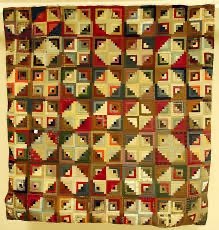
Appalachian Culture: Quilting

Quilting is an old Appalachian tradition that arose in the Appalachian Mountains out of necessity. The region was, and still is, quite geographically isolated. When there is little business in an area, the people have to become more self-sufficient. Self-sufficiency is one of the characteristics that define the Appalachian region and people.

Quilting has a rich cultural heritage in many countries and among varied ethnicities.

Since the maternal side of my own family came from Appalachia, I’m part of that quilting culture although I don’t quilt myself. The women of that region quilted in order to have warm bed clothing for their families. Since families tended to be large, most required a lot of quilts. There weren’t many “store-bought” bed clothes to be found.

My maternal grandmother, and the women who came before her, all quilted. She had six girl children, all of whom were educated and most worked outside the home teaching school. My oldest aunt is the only one of the children who quilted.

Each quilt is as unique as the quilter who made it. The quilting traditions came from the Scots, Irish and German immigrants, but it also had touches of the influence of the Amish, the Quakers, and the Native Americans.

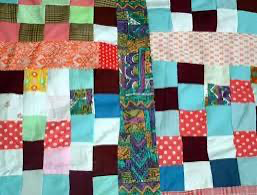
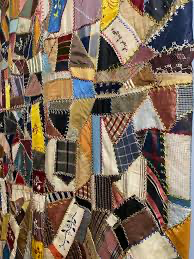
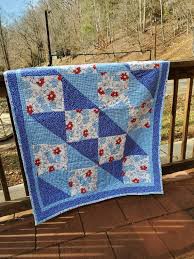
Some of the early quilts, in particular, were made from old feed sacks. Other materials used were pieces cut from old clothing. I have a plethora of handmade quilts I inherited from my grandmother and aunts. The oldest one has a top layer made of pieces of colorful feed sacks and the stuffing is just cotton batting, which bunches up terribly. That quilt was just as warm as any other and I still use it in my bedrooms.

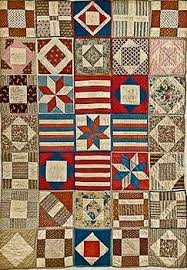
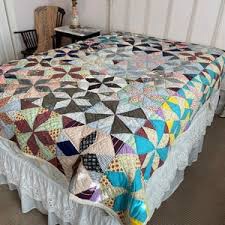
The tops of quilts sometimes told a story, often of family history. There were also popular patterns that were used along with variations on those popular patterns. Many, perhaps most, of the American quilts have geometric designs which came from the Native American culture. African quilts are different and each tells a story, often of a tribe’s heritage. Many European quilts are patchwork quilts. All are usually colorful. All you have to do is an internet search and you will happen upon endless quilting patterns.

Quilting is also a communal activity with quilting bees and quilting circles held in communities. Not only did the quilts tell a story, but it was an opportunity for the women in the community to get together and chat. That is still true in many areas of Appalachia.

In the modern day, quilting has become very popular. There are quilting classes and quilting shows available if you are interested in learning the art of quilting. It is an artistic endeavor, along with practicality, just as much as painting a picture if you had a canvas and a paintbrush. Quilting can also, now, be done on a machine, but somehow the tradition is lost if you machine quilt. Hand stitching is the old, and valued, way.

Posted in Appalachia, nonfiction

An Overview of Higher Education in Appalachia

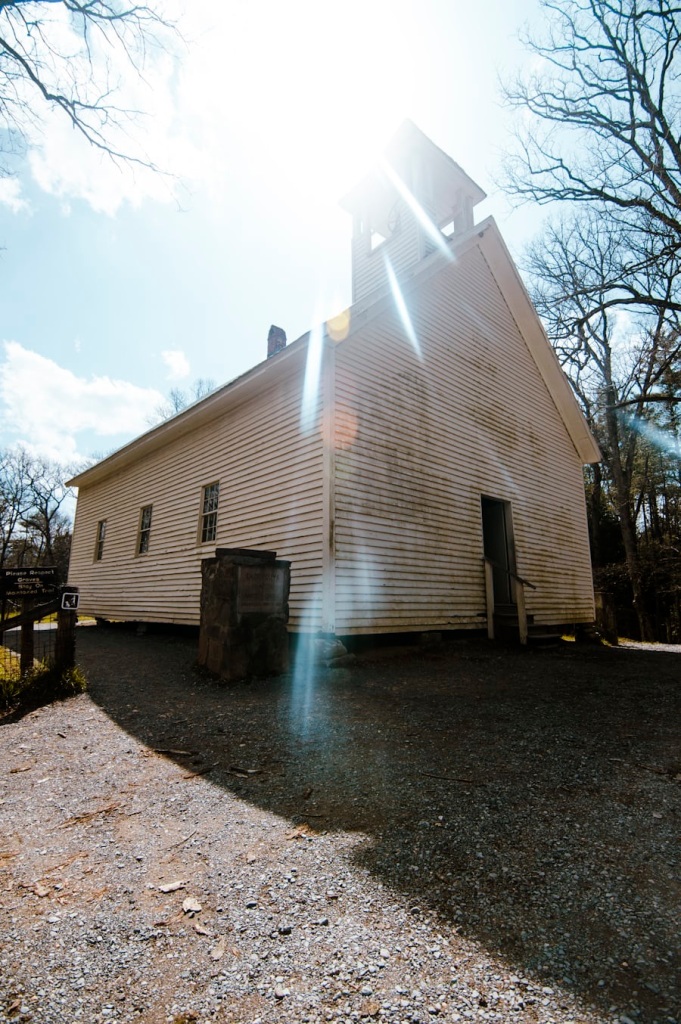
The picture that you see above was where my grandfather went to what passed for higher education (college) around the turn of the 20th century – the late 1800s and early 1900s. It was called the Kentucky Normal College.

Higher education in Appalachia has always been problematic because of both the geographic isolation of the region and the Appalachian cultural values. To this day, there are few good roads in and out of the heavily mountainous region of the U.S. Until fairly recently, there were few institutions of higher learning that existed in the region.

Cultural values also played a role in the lack of higher education in Appalachia. Jobs that were available were mostly blue collar. Coal miners and farmers are two of the main examples. It was not thought that men working at those professions needed to go to college, except in the case of mining engineers, and women were encouraged to make a family and not to go to college.

Appalachian women were certainly not encouraged to seek higher learning in the past since their role was to run the family home and raise the children. Some of these stereotypes still exist today.

The maternal side of my family, who lived deep in Eastern Kentucky, did not subscribe to these beliefs. My maternal grandfather saw it as a great point of pride that all of his eight children left the area to receive college degrees and some higher levels of graduate education.

He was a farmer and an employee of an oil company. He had a large farm, but simultaneously he worked for an oil company in Kentucky helping to map the mineral deposits and who owned them in his part of the state. Kentucky, particularly the Appalachian portion of Kentucky, has vast deposits of minerals including coal, oil, and natural gas. He believed in higher education and wanted his eight children, including the six girl children to do well in life.

After my grandfather graduated from what was high school in the late 1800’s and early 1900’s, he was fortunate enough to go on to the only real college accessible to him. That college was Kentucky Normal College in Louisa, KY. Another student at that college, at the same time, was Fred Vinson, who later became Chief Justice of the U.S. Supreme Court. They were close friends.

As time passed, some of the children of Appalachia were able to attend colleges and universities just outside their home areas. In Kentucky, several colleges were on the fringes of Appalachia and had a large percentage of Appalachian students enrolled. Two of the early ones were Morehead State University in Morehead, KY and Eastern Kentucky University in Richmond, KY.

Many of the colleges were originally “normal” schools. Normal schools are colleges that primarily train teachers. The students received a bachelor’s degree in teacher education. Later, in the 20th century, these normal schools expanded to full-fledged colleges and universities. They still have a sizable percentage of Appalachian students enrolled.

Not everyone in Appalachia was as progressive as my grandfather. That’s still the case in some areas. The girls in many families were not encouraged to go to any college. Even the boys were encouraged to stay and work on the family farm or in the coal mines. Many were drafted to serve in World Wars I and II. Others enlisted.

There are now a few scattered colleges and universities in the Appalachian regions. A Kentucky example is the University of Pikeville in Pikeville, KY which is deep in the coal-producing area of the Appalachian area in the state.

Higher education still continues to be a problem in Appalachia. Many potential students stay home and work close to home, some all their lives. Some have migrated outside the area to find work, primarily to Ohio and Michigan. In the 1950s and 1960s, there was a mass migration out of Eastern Kentucky to the north, often to work in the automobile factories.

It is often even difficult to sell the benefits of high school education to the people of Appalachia. They see more value in their children staying close to home. One of the primary cultural characteristics of Appalachia is the clannish nature of the people.

Distance learning and online education have helped the problem of lack of access to higher education in Appalachia although that is a reasonably new solution. Money for the infrastructure for widely-based broadband in the Appalachia area of Kentucky has recently been allocated under the infrastructure bill.

Posted in Appalachia, nonfiction

Appalachian Honor Culture

The Appalachian Honor Culture is a phenomenon that exists in the Appalachian Mountains, U.S., but also exists in other forms in different geographical areas in the U.S.

Sometimes I think I have lived in the foothills of the Appalachian Mountains, U.S. for so long that I take for granted the cultural differences that exist here and other places outside these hills.

The Appalachian Honor Culture is one of those cultural behaviors that have existed in these mountains ever since the Native American people here were encroached on by the white European settlers. This culture involves how people of the Appalachians settle their differences.

If a person, particularly a man, in Appalachia is insulted, embarrassed, called out, or shamed in any way, the Appalachian Honor Culture demands that they react either with threats of violence or immediate violence. As an example, let’s say that one man insults another man’s wife or one man comments on any aspect of another man’s life in a negative fashion, Appalachian men react with their fists first and think about legal charges of assault later.

This scenario is played out in Appalachia, especially southern Appalachia, over and over in cases of small, unintended embarrassments to bigger insults and arguments. There is usually no talking about a problem and settling it peacefully. Either violence erupts or something more insidious like the holding of grudges. Appalachians can hold a grudge, and often do, for a lifetime, even against members of their own family. It isn’t only men who uphold the Appalachian Honor Culture. Women do as well.

Let’s take my maternal grandmother as an example. She was, in many ways, a woman ahead of her time, but she was also an Appalachian through and through. There were members of our family and extended family that she held a grudge against for a lifetime. There was seldom such a thing as forgiveness even long after the issue that caused the grudge was long forgotten.

She loved my grandfather with a passion even though they seldom agreed on anything. If another woman, however, tried to make inroads with him, she would have picked up her shotgun and run her off their property without hesitation. Then, she would hold a grudge against the woman forever. This was and still is normal behavior in the Appalachian Mountains.

In Appalachia, you have a rather odd mix of people who are the nicest people you’ve ever known, the coldest and most stubborn people you’ve ever known, coupled with violence and feuds that could rival any gang activity in big cities.

The earliest settlers of the area came, in large part, from the Anglo-Scottish borderlands, and parts of Ireland and Great Britain with a smattering of Germans thrown in. You may find similar cultural anomalies in these areas that the immigrants brought with them to the U.S.

Posted in Appalachia

Stories of Appalachia: The Beauty Queen

Country women are the hardest working women around. Particularly country women who live in Appalachia. All work hard at home which is often a farm, or these days, land that was a former farm. Many also have jobs outside the home, more now than in the past.

Sarah was a woman of the past, living her entire life in Appalachia. She was born in the 1930’s, so her life spanned the century mark in 2000. Most of her life was like women had lived in Appalachia in the past centuries, but parts of her life were very much in the present and future. She was most comfortable with the traditions of the past but valiantly tried to embrace the present and look toward the future.

She was the kindest, most caring person I’ve ever known. She was beautiful inside and out. She met the love of her life, Randall, as a small child. They were neighbors and playmates in the hills of Eastern Kentucky. Teenage sweethearts, they even went off to college together after they married. Randall became a biology and general sciences teacher in the local school system. Sarah went to work for the county’s Board of Education.

They had a rich life, full of friends and family although they had no biological children. They did have a very special daughter who came to them through Randall’s family. Sarah loved her, as did Randall, as if she were their biological child. After they cared for her as she grew up into a successful and kind adult, she spent many years caring for them.

Their special daughter is still caring for Randall. Sarah considered her to be her own. Until the last twenty years, Sarah and Randall also cared for Sarah’s mother. Such is the way of the rather clannish people of Appalachia. Family still means something to them. They take care of their own.

Sarah and Randall lived in Sarah’s grandparents home place. It was most of the way up a “holler,” which is the Appalachian slang for a long, narrow valley between close mountains. Most of that holler was part of Sarah’s grandfather’s large farm until the grandparents passed away. Sarah’s mother retained land and the house. When Sarah’s mother passed away, Sarah inherited it. They made their home there for the rest of their lives. It was a beautiful place.

Before the opioid epidemic that affected Eastern Kentucky among many other areas, the entire region was green and lush with farms here and there. Then, one of the area’s major industries, coal mining, began to die and the unemployment rate started to rise. Not only did the area lose the coal mining jobs, but their major cash crop of tobacco also vanished.

Many left the area, but just as many did not. They didn’t want to leave their families. Drugs found a foothold due to joblessness and poverty. Suddenly, it wasn’t quite as beautiful as it had been in Sarah’s childhood, but she and Randall remained in the family home place after Sarah’s mother passed away.

Sarah’s grandfather and grandmother had a large family. There were many aunts, uncles, and cousins. Especially in the last years, Sarah graciously welcomed any family member who knocked on her door and planned family get-together’s and reunions. After all, that was the family home place for Sarah’s side of the family. In the present day, the family is dwindling away until mostly cousins remain, but the cousins were always welcome.

Then, tragedy struck. Sarah was struck down by a heart attack probably caused by underlying health conditions. Other health issues cropped up and Sarah was transferred to the nearest city where her health issues could be addressed. Sarah was 83 and Randall was 86. Beautiful Sarah survived for a number of days, but finally, the doctors could do nothing else and hospice was recommended. Sarah only briefly survived in hospice with her daughter and Randall right beside her. Tragically, to Sarah’s family and friends, she passed away after a long life with her soulmate.

I always thought of Sarah as a beauty queen. Beautiful inside and out, she positively affected everyone’s life that she touched. She was rather eccentric, (I just thought of her as her own special person), but filled with common sense. She often advised me and other members of the family. She will be so missed by her family and friends. I will be lonely for Sarah the rest of my life. Randall is, thankfully, still with us, but he is failing.

—————————-

Note: Why am I writing about Sarah? She was my beloved first cousin and we always stayed close. Without Sarah, I will be lonely for the rest of my life for her unique personality, the culture she represented, and my own family which is lost to me. She represented a dying culture that was beautiful to its core. People who cared about their family and friends and were willing to sacrifice to care for them describes the Appalachian people in general and Sarah specifically. May Sarah, who was a beauty queen to me, rest in peace.

Posted in Appalachia

Where is Appalachia?

C1101958-AD7B-4549-AF10-2B3C8E4BEC8A

I live on the fringes of Appalachia and my roots are deep in this region of the United States. I live in a university town in northeastern Kentucky. Appalachia has rough geographic boundaries, but it is largely a cultural region, as opposed to a geographic region, of the U.S. In many places, Appalachia is difficult to access because of geographic impediments. The region is located in the Appalachian Mountains. Roads are few and the roads that are there are curvy through the mountains. In some places, the roads are not well built and are prone to washouts and mudslides. The fact that they run through mountains doesn’t help.

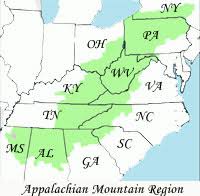
If you look at the map above, you can see that the Appalachian region includes all of West Virginia, almost half of Kentucky and Tennessee, most of Pennsylvania, one-third of Ohio, and the southern slice of New York. In the south, it touches Virginia, North Carolina, and South Carolina, and includes portions of Georgia, Alabama, and Mississippi. Appalachia stretches from New York to Mississippi and encompasses 206,000 square miles where roughly 26 million people live.

It is a large region of the United States and even though parts are sparsely populated, the whole has a sizable number of people residing there.

Posted in Appalachia

Appalachia: Appharvest Aims to be the Breadbasket of the U.S.

I live in the south-central portion of Appalachia, actually on the fringes of the region, in northeastern Kentucky. We are excited about the future here due to Appharvest making its home in the county in which I live.

Appharvest is a startup company that has opened the largest greenhouse in the U.S. in Rowan County, KY. The goal of the company is to produce the majority of tomatoes used in the U.S., taking that market share away from our traditional supplier of tomatoes, Mexico.

Appharvest is a greenhouse that covers 60 acres and employs almost 300 people. Jonathan Webb is the founder of the company. He is a Kentucky resident and a graduate of the University of Kentucky. Appharvest is within a day’s drive of 70% of American consumers. It is a facility, patterned after greenhouses in The Netherlands, that uses sustainable crop production techniques. It uses recycled rainwater for irrigation and a combination of solar energy and LED lighting in order to grow the tomatoes. At a later time, Appharvest will expand beyond tomatoes.

Immediately upon the opening of the Rowan County, Kentucky facility, ground was broken for a second Appharvest greenhouse in Madison County, Kentucky. Appharvest is set to be a great asset to this region of Appalachia, providing jobs and national exposure.

Posted in Appalachia

Appalachian Recipe: Fall Apple Cake

Hi everyone! This is a very old Appalachian recipe, handed down from my great-grandmother to my grandmother and finally to my precious Aunt Red, the lady I wrote about in the blog post,  The Most Elegant Lady. It is so old that the writing is extremely faded on the paper I have. I have to get it typed up before it completely fades away! Since it is fall apple season, I thought it was time to share this with all of you!

Fall Apple Cake

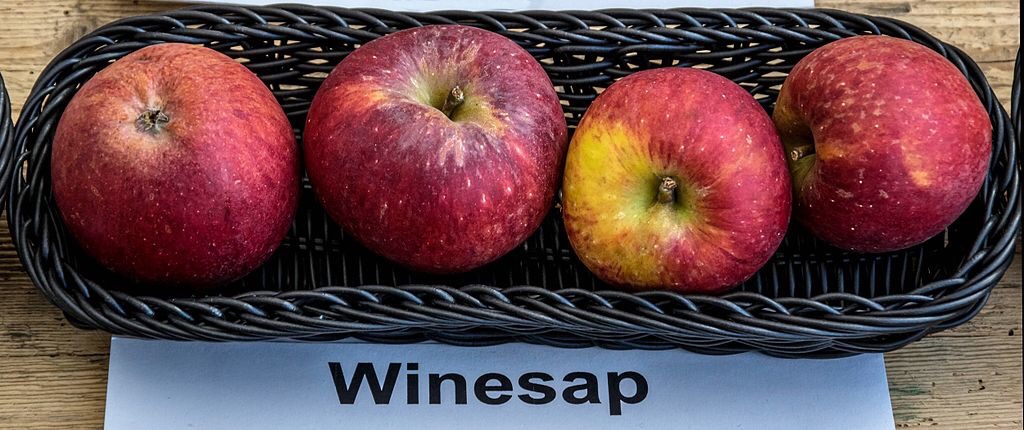
*This cake was originally supposed to be made with Winesap apples. Winesap apples are very hard to find now. Granny Smith apples are the best substitute.

2 cups sugar

2 cups vegetable oil – Wesson oil or other oil

Mix sugar into vegetable oil

3 cups all purpose flour

1/2 tsps cloves

1/2 tsps cinnamon

1 tsps salt

1 tsps baking soda

3 cups finely chopped apples (Winesap or Granny Smith)

Optional: 1 cup finely chopped nuts or 1 cup raisins

Mix everything together

Bake at 350 degrees for 1 hour

Let cool on a baking rack before cutting it

ENJOY!!

Posted in Appalachia

Appalachia: John Morgan Salyer, Father of Bluegrass Music and Kentucky fiddle music

Kentucky fiddle music, the precursor to Bluegrass music, began to be common in households across the eastern Kentucky area of Appalachia in the late 19th century. It developed in more or less complete isolation in the rural, geographically isolated parts of Appalachia and eastern Kentucky. John Morgan Salyer, this writer’s great uncle, is remembered as the last great fiddle (violin) player. He was instrumental in the development of Kentucky Fiddle music.

John did not like playing publicly, although he did from time to time. We have an extraordinary collection of John’s music only because his sons, Grover and Glenn Salyer, recorded them on a home disc machine during the 1940s. John’s music is housed at Berea College in Berea, KY.

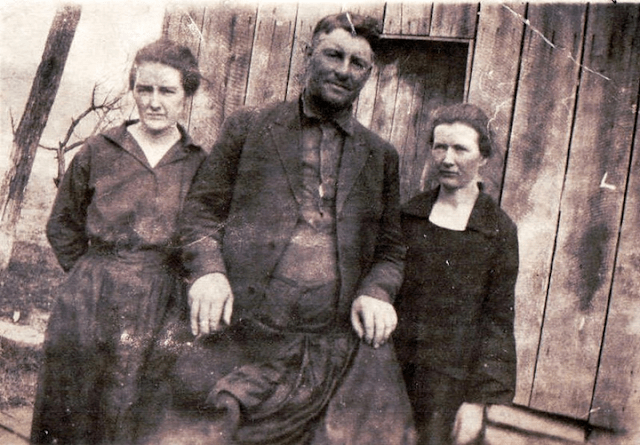
John Morgan Salyer, a pioneer of Kentucky fiddle music and the beginnings of Bluegrass music, was my great-uncle. In the picture below, my grandmother, Mollie Evelyn Salyer, is on the right of John Salyer, and her sister, Julia Salyer, is on the left. John Salyer was the son of Morgan Salyer and Katherine Patrick. He was my grandmother’s half brother. Morgan Salyer married my great-grandmother after his marriage to Katherine Patrick ended.

John Salyer was born in 1882. He was raised in a log cabin on Birch Branch, off Burning Fork Road, in Magoffin County, KY. He lived in that specific area of Appalachia all of his life. He began playing the violin, called the fiddle in that part of the world, when he was a boy. When John was 8 years old, he broke his leg. His father, my great-grandfather, Morgan Mason Salyer bought him a violin. He began to realize his musical talent. John subsequently spent 3 years in the Phillipines during the early part of the 1900’s. When he returned home to Magoffin County, KY, he married and had nine children, two of whom died at birth.

John’s branch of the Salyer family and my grandmother’s branch of the family were tied together by a common father, Morgan Mason Salyer. The family was musical and they frequently got together and played music. John played the fiddle. My grandmother played the banjo. John’s musical influences were local musicians including Willie Fletcher and Jeff Gipson.

Back in those days, from the late 1800s to the 1950s, few people received any formal musical training. They learned from older generations. There was very little travel to other parts of the country. Automobiles did not come to Magoffin County, Kentucky until the 1920s. The families would get together in the evenings and play. Kentucky fiddle music developed through largely informal groups of people getting together to play on someone’s porch or in their living room in John’s case. There are stories in the family of evenings spent playing and practicing with John Morgan Salyer. 

John did not ever sign a recording contract. Instead, he played at square dances and hoedowns in his local area of Magoffin County. Once, he and other musicians went on a rail trip to the 1933 Chicago World’s Fair. The musicians went from car to car playing their music all the way from Kentucky to Chicago. When they arrived in Chicago, they were invited to play at the Knickerbocker Hotel in Chicago, a famous venue.

John Morgan Salyer was a farmer by trade. He passed away in November, 1952 from complications of diabetes.


Left: Julia Salyer, half-sister to John Morgan Salyer; Middle: John Morgan Salyer; Right: Mollie Evelyn Salyer, half-sister to John Morgan Salyer


Posted in Appalachia, Creative Nonfiction Essays, Eastern Kentucky

Appalachia: Hillbilly and Redneck

When we hear the term “hillbilly” or “redneck,” we automatically have a negative connotation associated with them. To those who aren’t familiar with Southern Appalachia, we think of the TV show, “The Beverly Hillbillies,” or the movie, “Deliverance,” and the associated depiction of the two terms. Those images are only caricatures dreamed up by show business.

The term “hillbilly” is an old term that simply refers to people who live in the mountains, in rather remote areas, and live their own way. It doesn’t mean they don’t wear shoes or that they’re ignorant, but we tend to use the term as a slur to refer to people we consider hillbillies. Hillbilly seems to have somehow gotten tied up in a social class definition. That couldn’t be further from the truth. My grandfather, who was born deep in the mountains of Eastern Kentucky, was certainly a hillbilly, but he and his family were of at least the high middle socio-economic class regarding income, social standing, and education.

The word “hillbilly” originally referred to a type of music played and developed in the mountains. Hillbilly music was the original bluegrass music. Pure, original Bluegrass music originated in the late 1800’s and early 1900’s in isolated pockets in the mountains, usually through the music of family groups or bands. Somehow, the word shifted from the music of the people to the people themselves. Most mountain people don’t mind being called hillbillies. When it is used as a slur based on an imagined stereotype, that shows the ignorance of the user and not the hillbilly.

The word “redneck” is thrown around today as a slang word referring to people with, usually, a particular way of life and political persuasion. We think of rednecks and we immediately see the Confederate flag, conservative leanings, and guns. Perhaps that is the modern definition of “redneck,” but it is not what the word originally referred to.

The word “redneck” originally came from Scotland and referred to those who worked outdoors and had a sunburned neck as a result. It also referred to peaceful protestors against mining officials because the protestors tied a red bandana around their necks.

The word “redneck” is not a word tied to the mountains or to any geographic region. You can be from the middle of the largest cities. If your beliefs are based on the Second Amendment, you fly the Confederate flag in the back of your pickup truck, and you believe in far right-wing politics, you are the modern definition of a redneck.

When I was growing up, I never saw a Confederate flag at my grandfather’s house in Eastern Kentucky. The only guns I saw were a couple of hunting rifles used to deer hunt for food. My grandfather was a centrist in his politics but leaned left. The modern definitions of “hillbilly” and “redneck” would not fit him even though he was one of the originals.

Copyright Rosemary Carlson @2020