Posted in Fiction, Uncategorized, Writing

Looking Back, Part 2

Here is a recap of Looking Back, Part 1

Now, Looking Back, Part 2

As Serena sat at her table and cried, she realized she had been through this before. This man had been her husband for 20 years and they had divorced. Then, she had remarried him after 16 years without him and this had caused her to jeopardize everything she had and would have. Once she had looked up marriage statistics and found that with individuals who marry the same partner twice, only two percent have successful marriages. Serena suddenly feels like a statistic after she remembers reading that. She had spent 20 years learning how incompatible they were.

Serena and her husband have now been married five years, second time around. The first year was nice. The man kept the promises he had made to her before they married. Beginning in the second year, all those promises fell to the wayside and the marriage had gotten increasing bad. Now they weren’t even sleeping together and the house was quiet. They didn’t talk. They didn’t communicate at all, which was one of the promises.

She finds herself thinking back five years ago when she talked to the man again after being apart from him for 16 years. He was down on his luck. He was working a fairly blue color job but only part time. He told her that he didn’t want to work full-time ever again. He didn’t make any money to save any money, but that wasn’t the biggest problem he had. He was a heavy drinker and a gambler. He had gambled away most of his retirement portfolio, second-mortgaged the house several times to get cash, and a variety of other issues. He started coming to Serena’s house and she could not turn him away. He was trying to quit drinking and gambling.

Oh, she feels so angry when she thinks of all this! Promising her that he would quit his bad behavior, playing on her sympathies, is what got her into this mess. She remarried him to help him and, to be truthful, because she was lonely and didn’t trust anyone. It was the worst mistake she had ever made. He promised her things would be different than in their first marriage. Things aren’t different at all. In fact, they are worse.

Serena is a gifted painter. She has found her muse again and wants to capture her thoughts and feelings on canvas. The constant uproar in her household and in her head and heart is killing her creativity. She goes to her studio to paint and even though the knows exactly what she wants to do, it isn’t happening at the end of her brush. Anything she painted would be angry. As angry at herself for making such a stupid mistake as angry at him.

He doesn’t want her to paint again. He doesn’t want her to do anything but tend to him. He’s jealous. Jealous of even her painting. Certainly jealous of her friends and family. How can someone be jealous of even inanimate objects like a canvas that stands before her? Maybe she should just let those angry feelings pour our onto that canvas, but she hates for her cherished painting to be dark and angry.

Serena calls the man her soon-to-be ex-husband because that is what he should be. In reality, no divorce action has yet been filed. He was so vicious when they divorced the first time. It frightens her that the same thing will happen this time. The first divorce almost destroyed her. She isn’t as strong now. What will a second divorce do to her? How can she have let herself get to this place? Where does she go from here?

She knows she has to go somewhere from here. Somewhere different. She has to take some action to save herself. But what? That’s what she has to figure out. She doesn’t feel she has much time left. #amwriting #blogging #writing #shortfiction #fiction #dailyprompt

Posted in Flash Fiction, Uncategorized, Writing

A Boy and his Horse

image

“Artie, I can’t believe you rode that horse up here to the revival meetin’,” Kaye said.  “Why not, Momma,” Artie replied, “Old Clara is good to ride.” Kaye said, “You didn’t even put a bridle on that old hag.” “Momma!” Artie cried, “Clara is not an old hag.” “Bah,” said Kaye. “You’ve embarrassed me in front of the preacher and all my friends.”

Out of the meetin’ tent flew Artie, as fast as his short legs would carry him. He swung himself up on Clara’s back. As they walked down the road, Artie searched the fields for the biggest haystack he could find. He parked Clara and himself right behind one.

After dark fell and Artie’s momma got home, he was still behind the haystack with Clara. “He’ll come home when he’s hungry or scared,” she said to her husband, and shut the door, turning out the lights. #flashfictionforaspiringwriters #writing

*Photo courtesy of Phylor

**FFfAW brought to you by Priceless Joy

Posted in Creative Nonfiction Essays, Flash Fiction, Uncategorized, Writing

The Gardener

image

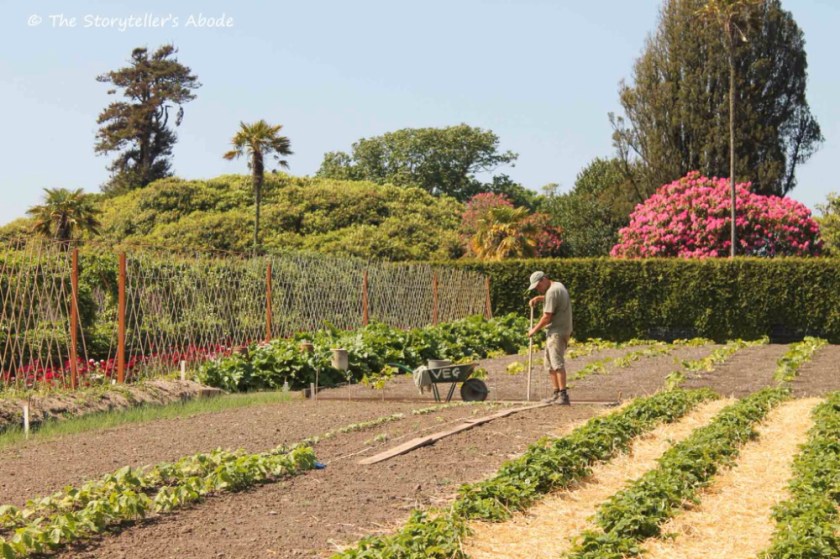
“Betty,” the man said. “The soil in this garden is as dry as dust.” Betty replied, “Our vegetables are still growing pretty well, Curtis.” “They won’t keep growing like this unless we get some rain or we start irrigating. Irrigating this garden would be so expensive,” Curtis replied. Betty said, “We’ll just have to think about it for awhile.”

A man was walking along the street and heard Curtis talking but no one was in the garden with him. He stepped over to Curtis and said, “Sir, I heard you talking but your companion must have left.” “Oh yes, she left two years ago,” Curtis replied. “Betty passed away. She still lives in my head and we talk all the time. You see, she’s all I have.”

*Photo by Louise with the Story Teller’s Abode

**FFfAW Challenge sponsored by Priceless Joy

Posted in Creative Nonfiction Essays, Uncategorized, Writing

When a Writer Can’t Write

image

A writer has to write. When a committed writer cannot write, they can be creative. They can read or travel in order to see things, meet people, and learn new writing techniques. I do that, but when I want to write, I want to write. To do otherwise causes me cognitive dissonance…….or a storm in my head. For the last six days, I’ve had a storm in my head about writing.

Six days ago, I pinched a nerve in my arm. My right arm, which is my dominant arm. I woke up in the morning, couldn’t move my fingers, and my wrist was limp. I ran, not walked, to my neurologist who found the pinched nerve. I did it in my sleep. Slept on my arm the wrong way! Stuff happens, everyone. Never forget that.

I have a brace on my hand, wrist, and forearm that will remain there until the nerve regenerates. Time to regeneration? Each person is different. Minimum is three weeks. Could be six months. My fingers are moving a little more each day. I’m finally able to write this blog post. I am no good at using dictation software. I have to sit down and pound the keys.

I won’t post as much as usual until I’m better, but I will post! If I can’t write, I’m not myself so I will do my best. Of course, I don’t want to lose touch with you, my followers. Thank you for following me!

Rosemary


Posted in Flash Fiction, Uncategorized, Writing

The Leaving

image

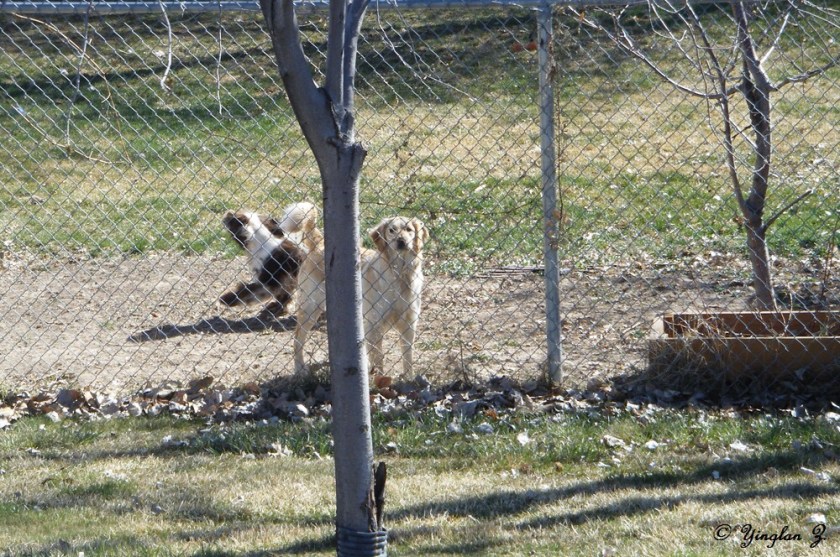
As I walked away, I saw the look on Oscar’s face. The look that said, “Please don’t leave me. Please let me go too.” But, this is one trip where Oscar could not join me as he usually did. I had to do this by myself. I made sure Oscar would be safe on the farm, with my friends and the other dogs. It was so hard to walk away from him.

It was my mother. I had to fly across the country and I refused to fly Oscar in cargo. My mother was ill and I had to go to her. Flying a dog in cargo is dangerous and Oscar means too much to me. The only problem is I don’t know how long I’ll be gone. I will miss that sweet face.

*Photo courtesy of Yinglan

Posted in weekendcoffeeshare, Writing

#weekendcoffeeshare: 6/12/2016

imageDiane

“The road to hell is paved with adverbs.”

–Stephen King, On Writing: A Memoir of the Craft

“Jenn is certainly in a hurry this morning,” I think to myself as I watch my friend come racing through my door. “Good morning, Jenn,” I say. Jenn grabs the coffee pot from the counter and says, “Let’s sit on the deck this morning. It’s such a beautiful day. I have a problem and an important question to ask you.” I follow along behind her with my tea cup, wondering what’s going on.

We sit down at the table on the deck and Jenn sighs in apparent exasperation. “Jenn, ask away,” I say. “Oh, Rosemary,” she says, “I am having a hard time with a story I am writing. I am using one of the text editors you can buy and it keeps pointing out to me that I am using too many adverbs in the story. I don’t know how to write my story without them. They seem to make my story have more meaning. But, they must be a bad thing.” She continues, “Do you have this problem?”

I laugh because I have certainly had this problem although probably more in the past than in the present. “Jenn, the first person that ever pointed out to me that I use too many adverbs was my friend, Ed, who has kindly edited a lot of my work for many years. I know what you mean when you say they seem to add emphasis and meaning, but I have come to the conclusion we are fooling ourselves about that.” Jenn asks me why.

I tell Jenn that I have read Stephen King’s book, On Writing: A Memoir of the Craft, at least three times and I showed her the quote above. King dislikes the use of adverbs intensely since all they really do is modify verbs, other adverbs, and adjectives. You can almost always spot them as they usually, but not always, end in -ly.  King states that the use of the adverb is the mark of a timid writer. The writer who is afraid she is not getting her point across.

For example, consider this sentence. “She put the pot on the stove firmly.” “Firmly” is an adverb used to emphasis a point. Instead, what about writing the sentence like this: “She slammed the pot on the stove.” I think the sentence without the adverb sounds better.

King makes his point with dialogue. If this is a line of dialogue: “Don’t do that,” he said abruptly, then abruptly is the adverb. King, along with authors like Larry McMurtry, believe in the word “said.” That sentence should read, “Don’t do that,” he said. He thinks the sentence should stand on its own because the surrounding story should be strong enough so the reader will understand its context.

Jenn says that I make some good points and she thinks she will buy Mr. King’s book. She wants to make her stories stronger as I do.

Jenn finishes her coffee and gets up to leave and get on with her day as we continue to do what writers do — talk about writing. She thanks me for telling her about Stephen King’s book and I thank her for helping me clarify the argument for fewer adverbs in my mind. It’s been a good #weekendcoffeeshare morning!

It’s good when you Share!

*#weekendcoffeeshare is sponsored by Diana at Parttimemonster

Posted in Appalachia, Eastern Kentucky, history, Uncategorized, weekendcoffeeshare, Writing

#weekendcoffeeshare: 5/21/16

image

Hello! I’m so glad you’re back for our #weekendcoffeeshare! It’s raining outside so bring your coffee and let’s sit on the couch in my office and chat. It’s so good to see you. Do you think the rain is ever going to end?

How has your week been? You’re suffering from writer’s block? That is so frustrating, isn’t it. What do you usually do when that happens? I need to know because it happens  to me too. So you leave your writing and do other things for awhile? I guess that’s one approach, but I’ll have to disagree. If I step away, I step away for a long time — too long. What works for me is to push through it. Instead of writing about topics in what is supposed to be my niche, I go outside my niche and write about something else I know about. After all, we all know about more than one topic, don’t we? Couple our knowledge with good research and there you have it. Suddenly, we’re writing again, though maybe about something new. Maybe we can sell this piece to a different editor or publisher and we will have a wider market for our writing.

I’ll tell you what I did once. I was having trouble finding topics in the niche I considered my own so I went far afield with my writing. I had always been interested in writing about Appalachia but I had never tackled any topic in that area. On the campus of the University here, where I taught for a long time, is a little piece of Appalachian history, the Cora Wilson Stewart Moonlight School. It was originally located next to the campus training school where I attended grades one through twelve. I did some research and wrote a piece on the Moonlight School for Preservation Magazine, having never written about historic preservation before. My writer’s block was gone! I also realized I could write about more than one topic.

Tell me how it works for you to step away from your writing? So you take a walk or go somewhere different or do some reading. You gradually relax enough to relieve the writer’s block. Sounds possible. What I would hope is that I could get ideas from a walk or traveling or reading or whatever else I would do that is different. That really might work if I could then have enough discipline to get back to writing. I will be going some different places this summer, taking a lot of photos, and getting some new ideas that I can turn into articles or into some sort of work. Really the same principle as your strategy.

It’s been so good to talk to you today for #weekendcoffeeshare. You’ve given me a great idea about getting rid of writer’s block and a lot to think about. Have a good weekend.