Posted in Creative Nonfiction Essays, Uncategorized

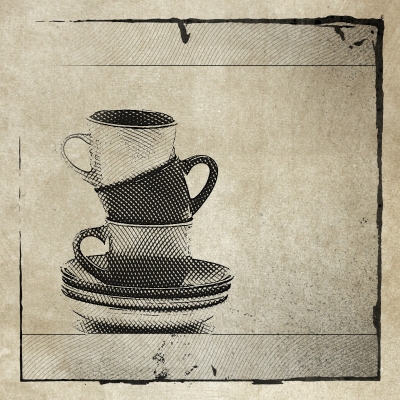
Clutter and Stuff

image

Clutter. You know. The stuff you have lying around that you think you might need. That you’re sure you will need……some time, some day. Won’t you? What exactly is clutter? Clutter can be defined as anything we don’t need, want, use or anything that takes up space we need, or our time, our energy, or that destroys our serenity. Do you know where I got that definition? From an organization called Clutterers Anonymous! Yes, there is such an organization. I couldn’t believe it either.

I hate clutter and have been systematically going through my life trying to eliminate clutter. Clutter is, of course, items like clothes you can’t wear anymore, gifts you have received and can’t use, things you have bought and don’t like, books and papers you think you might need but don’t, and unnecessary items stuffed in storage bins and facilities. But, that isn’t all clutter is. It is also unfulfilling relationships, activities we don’t enjoy, and other psychological “junk” that we hold on to because we always have. Our minds can become cluttered just like our surroundings. Clutter seems to multiply of its own accord.

Where did this clutter problem start for so many of us? Many say it comes from fear. Instead of buying one of something, we buy two. We think if we need one, we might need two because that one might wear out, break, become unusable. Maybe we were taught in our childhood to fix things that break instead of throwing them away or to save things we buy because someone might need them. Those broken things and possible gifts pile up. If our clutter problem is bad enough, we feel hopeless. We feel we can never get rid of all the clutter. We have forgotten how to organize. Finally, clutter spills out of our drawers and our closets. It becomes embarrassing and overwhelming. Our hopelessness and helplessness over the clutter becomes worse. Clutterers realize they have a problem with their excess possessions.

Not only have I grown to hate clutter in my own life, I am growing to dislike “stuff.” The trappings of life that we feel we have to have in order to live. What “stuff” is differs for all of us though I think it may have similarities within social classes. We, in the U.S., don’t freely admit that we have a social class structure but we do. In Great Britain, they have always had a relatively well-defined social class system, more so in the past than now, but it still exists. They admit it.

The U.S. middle class, at least in my age group, still wants a nice home. Nothing wrong with that. It is the “stuff” that goes into those nice homes that gets out of hand. I’m as guilty of this “stuff” issue as anyone reading this blog post. Most of us want the good furniture, reasonably nice art on the walls, the latest appliances, the most up-to-date everything, as well as the accessories to pull it all together and make it into our idea of home. Outside of our homes, there are two or three cars, maybe a boat or RV. Nice lawns and landscaping. Individually, we want clothes, shoes, handbags, and jewelry for every occasion. I’m particularly guilty of this clothes issue! Everyone is different regarding how much stuff they like and can live with.

Last year, about this time, my house flooded and I lost a great deal of what I had. My stuff. See my Time to Rebuild blog post. It was devastating. I was most devastated by the loss of the interior of my house but the loss of my stuff was almost as bad. Until I started to move back into my house and started going through all the stuff. I realized how much of it I really did not want or need. How much was unnecessary to my life as it was in the present. How much was just old stuff stored in closets in boxes and was meaningless at this point in my life. So I started sorting. Soon, I stopped sorting and started pitching and throwing. It felt liberating. We moved much less back in than we moved out.

Now, I’m careful what I bring back into my home. I’ve found, once again, that I enjoy people more than stuff. I’ve renewed old friendships, old relationships, and those people are so much more valuable to me and enjoyable than “stuff.” My possessions were not giving me joy. The people in my life do, indeed, give me joy. I’m as careful about new relationships as I am about new stuff. New relationships have to be really worth it to be brought into my life. Otherwise, they are just so much stuff.

Our society has become so fractured and many of us have become so fearful that we surround ourselves with stuff instead of people. A problem we need to try to fix if we are to regain our American optimism and happiness.


*Image by Jonathan Billinger at SO3951

Posted in Appalachia, Food, Recipes, Uncategorized, weekendcoffeeshare

#weekendcoffeeshare 6/25/2016

image

If you stopped by for coffee, I would tell you about the apple orchard that is near my home. “Oh, hello Jenn.There you are. I didn’t know if you were stopping by today or not,” I said. My friend, Jenn, just came through my side door. “I’m sorry I’m late, Rosemary. It’s been a crazy, busy week and I’m running behind.” “No problem,” I said. “Would you like a cup of coffee? You can grab the pot off the counter.”

Jenn grabbed the coffee pot and we took our drinks out to the front porch. It was gearing up to be a hot day. “Jenn,” I said, “Do you ever can or freeze food?” “Yes, I do,” Jenn replied. “What have you got in mind?”

So I told Jenn about the apple orchard near my house. I can remember my grandmother and my aunt freezing a little yellow apple that they called June apples. They were a little tart and required some sugar to bring out their flavor. Here, on the fringes of Appalachia, you can still find them if you look really hard. Some farmer’s markets have them, but only for a short period of time. They are ready to pick in late June and early July; thus, their name of June apples. June apples are also delicious when you use them to make fried apples which people in this part of the world love, especially for breakfast.

I went ahead to tell Jenn that the apple orchard near me was a June apple orchard and you could go there and pick all you want. I’m going to do that on Monday. Jenn decided she wanted to go with me and then we will freeze a batch of apples for the winter. June apples are easy to freeze. Here is how you do it:

Freezing June Apples

1. Wash the apples under cold, running water.

2. Peel and core apples. Some people find it easiest to use an apple peeler.

3. Cut the apples into slices. You have to decide what size slice suits your purpose.

4. Get out a cookie sheet and cover it in parchment paper.

5. Brush each apple slice with lemon juice to prevent browning. You can use reconstituted lemon juice or diluted juice from lemons.

6. Place the apple slices on the cookie sheet. Be sure they don’t touch each other so each slice freezes individually.

7. Place the cookie sheet in the freezer for 2-3 hours. Do this for all the apple slices you have.

8. After all the apple slices are frozen individually, remove them from the cookie sheet and place them in separate freezer containers. I recommend freezer-safe plastic bags. Just press all the air out of the bags. This way, you can remove any amount of apple slices you want  to use in a variety of dishes. Fried apples, apple pies, and more.

9. Now you have a supply of apples to last you all winter! Wasn’t that easy?

Jenn was thrilled with her new recipe and now we have plans to visit the apple orchard on Monday. We have really enjoyed our #weekendcoffeeshare this week!

*weekendcoffeeshare is sponsored by parttimemonsterblog.com


Posted in Democracy, Politics

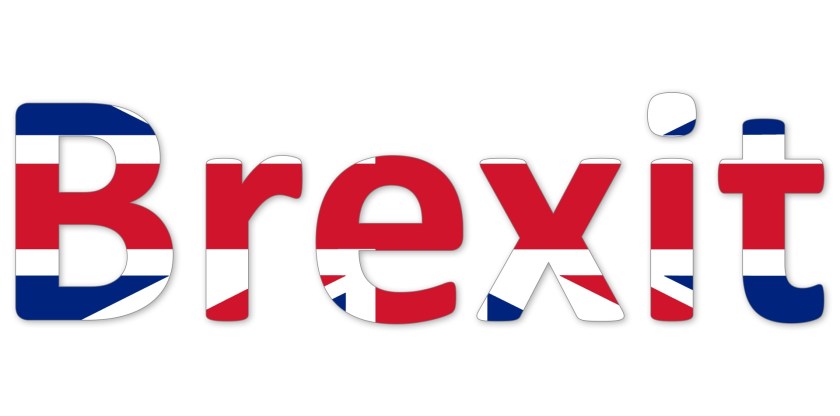
The Brexit Vote: Does it Foretell the American Election

image

Great Britain’s Brexit vote refers to the decision by the populace of Great Britain this week to leave the European Union (EU). A decision with wide-reaching implications not only for Great Britain but for the rest of the 28-nation EU, the United States and perhaps the rest of the world. One of the most important issues of the Brexit referendum was immigration into Great Britain. The U.S., of course, has the same issue that is a hot button for the 2016 Presidential election.

At the risk of over-simplification, the EU stressed freedom of movement among its member states. When Tony Blair was Prime Minister, he embraced the British integration into the EU. When eastern European countries joined the EU, many other European countries put immigration limits in place. Great Britain did not. Since then, three-fourths of the immigrants into Great Britain have not been European at all but of other nationalities. The immigration wave has been massive with the new arrivals stressing Britain’s welfare system, environment, and almost every other resource available to the British people. It should not be lost, however, that not an inconsiderable amount of the hatred of new immigrants had more than a little to do with racism and bigotry.

This begs the question of why wasn’t, under Prime Minister David Cameron, some sort of immigration reform put into place? Was taking the step of withdrawing from the EU actually necessary? It seems like a case of closing the barn door after the horses got out.

Of course, many draw the parallel between the immigration problem in Great Britain and that in the United States. I see a real difference. The United States has immigration laws already on the books. Enforcing them would go a long way toward solving the problem of illegal immigrants in the U.S. just like enacting immigration reform would have done much to help Great Britain.

Along with immigration, Brexit was also a response to globalization. It can be argued that it is a step toward de-globalization or nationalism. Globalization has been a movement in countries like Great Britain and the U.S. since World War II. Globalization involves free trade of goods and services across borders. In the case of Great Britain, that means that trade is tariff-free within the EU. Will the EU still allow tariff-free trade when Great Britain withdraws? We will see. Perhaps not.

Many countries have literally stopped producing many items needed by their people due to globalization. They rely on trade agreements with other nations to provide what their population needs. The United States has such trade agreements with a number of nations. For example, the U.S. no longer has a manufacturing economy. If there is a nationalist President, like Donald Trump, elected that tears down the trade agreements in the U.S., one has to wonder where the manufacturing plants and skilled labor will suddenly come from to produce what the U.S. citizenry need. The same questions can be asked about Great Britain. Will they suddenly be importing everything they need and paying tariffs? One can sense economic disaster.

So what happens now due to Brexit? In the short-run, the world financial markets reacted drastically negative. Manufacturers and financial institutions are threatening to pull out of Great Britain. Scotland will probably have a referendum on freedom from Great Britain and succeed. Other short-term effects are bound to be felt. The world as Europe knows it will change. We have no way to know what the long-term effects will be yet. The same may happen in the United States if Donald Trump, the GOP presumptive nominee, wins the 2016 Presidential election. #Brexit #realDonaldTrump #writing #amwriting #blogging

Posted in Travel, Uncategorized

My Daydream Voyage

image

I take a voyage almost every day. Sometimes several times a day. I’ll drift off from my work or whatever else I’m doing and go somewhere I’ve been before…….or somewhere I’ve never been, but only in my mind. I recall my favorite places and people. Don’t we all do this? Some of my voyages are very private and I won’t recount them here. Others are not as private and I can share them with you. I will tell you a little about one of my favorite places to voyage…….

There is a small island off the coast of Florida. It is not one of those touristy, popular islands like Sanibel Island, for example, although it is near Sanibel. It is not as well-known or as well-traveled. It is a barrier island in the Gulf off the coast of Ft. Myers. At one end of the island is a wonderful Greek community. At the other end, there is a small town made up of island folks and people who live there largely in the winter. There is quite a population that lives there year round in between. Hurricanes seldom plague this part of Florida.

Because this island does not have a large population of tourists, you feel like one of the community when you’re there. I like that feeling when I travel. There is an art gallery, library, grocery, drug store, a couple of cool bars with the best grouper you’ve ever eaten, a great restaurant or two…really all you need. Most people get around on bicycles and there are wide sidewalks just for that purpose. I live on great seafood when I’m there. I’ve even considered moving there, but there is never any real estate for sale. The real estate isn’t as expensive as you might think but it just never goes up for sale. That probably says something about the desirability of living on the island.

I feel safe there. I can walk and bike around and never worry. I can walk my dog. The island has a large population of wood storks, a species a little different from the traditional stork we are all familiar with. They beg for hot dogs, which I do not feed them. Everyone smiles and laughs. It’s a happy place. Sometimes, when I drift off, I think of this island and what a happy place it is and I take a brief,mental voyage there. Suddenly, I’m happy too, just thinking of that jewel of an island sparkling in the Florida sunshine against the blue water of the Gulf of Mexico. How I wish I could be there!  But, I’ve enjoyed the mental voyage I have just taken with you! #blogging #amwriting #writing

Posted in Appalachia, Music, Uncategorized

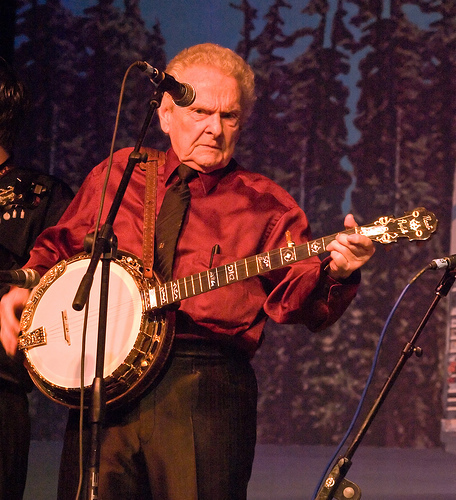
Bluegrass Musician, Ralph Stanley, Dies

image

Ralph Stanley, one of the earliest pioneers of traditional bluegrass music, died June 23, 2016 at the age of 89. Dr. Stanley, who received an honorary doctorate of music from Lincoln Memorial University, died of complications from skin cancer.

Stanley, along with his brother, Carter, teamed up with their band, the Clinch Mountain Boys in 1946 and began to develop what is now known as bluegrass music through the adaptation of Appalachian folk music. Ralph Stanley played banjo; Carter Stanley, who passed away at a young age in 1966, played guitar. Stanley continued as a solo artist. He and the Clinch Mountain Boys played for most of the next 50 years. He and his band served as a mentor for such bluegrass artists as Keith Whitley and Ricky Skaggs.

Stanley was a member of the Grand Ole Opry. He was awarded the National Medal of Arts and the Living Legends award. A coup in his career occurred when he appeared on two movie soundtracks, “O Brother, Where Art Thou,” and “Lawless.” He continued touring into his 80s.

Stanley is survived by his wife, three children, and many grandchildren and great grand-children. #RalphStanley #writing #amwriting #blogging

*Image by armadilo60 at Flickr.com 2009

Posted in Appalachia, Food, Recipes, Uncategorized

Appalachia and Food: Potato Pancakes

image

Friday Fare to Appalachia

The Appalachian culture is all about food. Appalachian farmers and truck gardeners worked the land to grow the basics for their family. They had a hard-scrabble existence. Some of the basics among the vegetables were corn, squash, and potatoes. Not much rice was eaten in Central Appalachia even though rice was a daily dish in the south. In the mountain territory, the land was not suitable to grow rice. The people substituted potatoes for rice.

A dish I learned to fix from my mother, and one that everyone loved, is the potato dish featured today. We called them Potato Cakes. Some called them Potato Pancakes. My mother sometimes fixed them for breakfast, sometimes for dinner. They were a favorite. Very filling and somewhat nutritious for people working hard physical labor later in the day. This is a very plain dish enjoyed by plain people. One thing you will notice about many of the Appalachian recipes is that measurements are often either non-existent or approximate. You have to experiment until it tastes the way you want. It isn’t hard, I promise!

Potato Cakes

Leftover Mashed Potatoes – as many as you have!

1 -2 eggs depending on how many potatoes you are using

Skim milk – enough to just wet the potatoes and allow you to stir them

Stir together the first three ingredients. Make sure the consistency is medium thick but stirable.

Add a pinch of salt and pepper.

Regular Flour – Add enough regular flour, a tbsp at a time, to make the potato mixture stick together and to enable you to pat it into cakes.

Pat the mixture into pancake-size cakes.

Prepare a skillet by melting several tbsps of butter (or margarine) in it. Melt it slowly and don’t let it burn.

When the butter/margarine is melted, add as many potato cakes as the skillet will hold. Fry them until they bubble on top. Then turn them with a spatula. Cook until both sides are golden brown.

Remove and place on paper towel-covered plate.

Serve and enjoy!

Copyright Rosemary Carlson 2016

Image by sylvar Flickr 2016


Posted in Second Amendment, Uncategorized

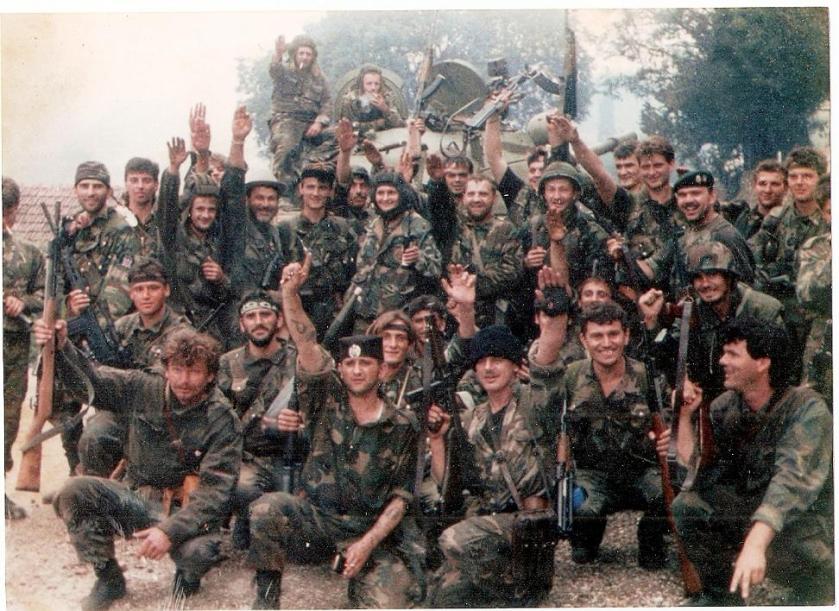
The Second Amendment, State Militias, and Paramilitary Groups

“A well regulated militia being necessary to the security of a free State, the right of the People to keep and bear arms shall not be infringed.”

The above is the text of the Second Amendment of the Constitution. One of the hot button issues of our time. It is interesting to read the Second Amendment. It sounds so simple. The effects have been so wide-ranging in the times in which we find ourselves. I contend that one of the problems with the interpretation of the Second Amendment is that it has two parts. I only want to address the first part of the Second Amendment.

The first part addresses a well-regulated militia being necessary to the security of a free State. Militia does not mean the National Guard although some interpret it in this way. Militia means a policing body in each of the 50 states. The Founding Fathers wrote this into the Constitution in order that the states would have the means to protect themselves in the case of a federal government gone wild. They are under the control of the governor of each state.

image

According to sources, all 50 states do not have active militias. The state militias that are active seem to be a fluid thing so it is difficult to find an accurate list of those that are active at any given point in time. Some define the membership of the state militias as the police forces in the states. That may be true for some states but it is not true for all states. Some states’ militias are composed of general citizenry with police perhaps being a part of the militia. Perhaps not. The members of some state militias are known to the general citizenry. Others prefer not to be known.

Still other state militias have devolved into paramilitary anti-government groups rather than militias that protect the citizenry in times of crisis. The question is do these anti-government paramilitary groups that call themselves state militias have as their purpose the protection of all the citizenry of their state against the tyranny of the federal government? Do they have another purpose? If they are protecting the citizenry of their state against tyranny, how do they define tyranny? The definition of tyranny according to the Merriam-Webster Dictionary is two-fold. First, it is defined as the cruel and unfair treatment by people with power over others and second, as a government in which all power belongs to one person, the rule or authority of a tyrant. I contend that some of the paramilitary groups practice tyranny themselves.

State militias that are truly state militias and that intend to protect each and every citizen against tyranny should stand up and be counted. They should certainly be well-armed. I do not agree that they no longer have a purpose. I think they will always have a purpose.

But there is another issue. What about the anti-government paramilitary groups that exist that are too cowardly to stand up and be counted and would rather operate in secret and in the dark? Many pretend they are state militias but we all know what they really are and they are not state militias. They are nothing more or less than terrorist groups right here on our own soil. Their purpose is to terrorize at least a group of our citizens. They are a scourge. I have no hope that they can be rooted out. I do have hope that fewer and fewer American citizens will allow themselves to be recruited by such organizations and that more will actively campaign against them. They think they can quietly and secretly take over our country while we aren’t paying attention. I hope they are wrong. #blogging #amwriting #writing


Posted in Creative Nonfiction Essays, Living Life, Uncategorized

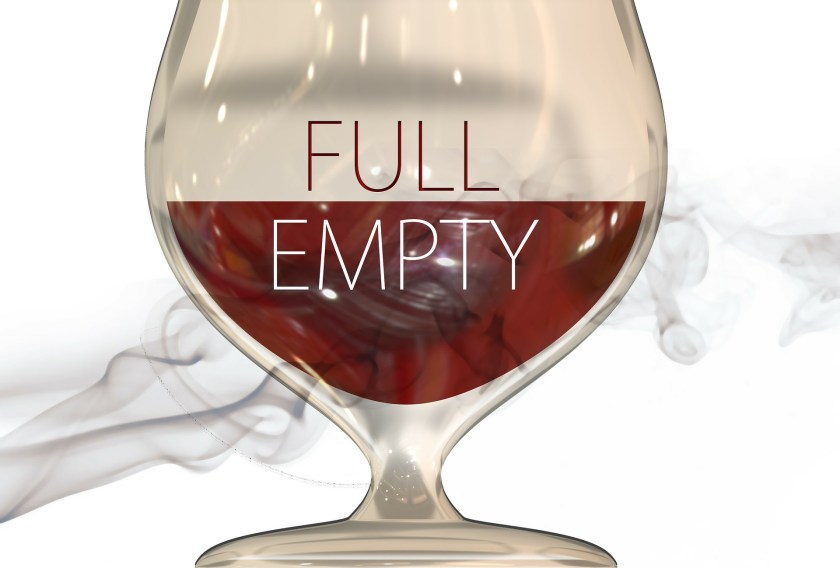
Glass Half Empty…..or Half Full?

image

Are you a glass half empty or half full person? I confess. I can often be a glass half-empty person….a bit of a pessimist. Not always. It depends on what we’re talking about. I can also be a crazy glass half-full optimist. This expression is used so often now that it’s often just referred to as the “Optimist/Pessimist saying.”

The glass half-empty saying is an idiom. When you think about it, you realize it is used to illustrate that different people perceive a situation in different ways. Some optimistically. Some not so much. How you perceive a situation is based, to some extent, on your own experiences during your life. Some people have had experiences that have made them more an optimist than a pessimist and vice versa.

The glass half-empty principle really becomes interesting when you think of how attitude affects your health. If you always see the glass half-empty, then you have a pessimistic view of life. Can that possibly be healthy? Of course not! If you are an optimistic person, you wake up every morning and see the day filled with possibilities. You expect positive results from what you do each day. A study done consisting of a group of law students in 2012 found that the law students who were optimistic made more than $30,000 above their pessimistic counterparts. Optimism creates good fortune. If you are a pessimist and expect bad things to happen, it will be a self-fulfilling prophecy.

It’s a tough world out there and you can use the glass half-full/half-empty saying to help yourself out if you are trying to improve your life by…..let’s say……buying a home, getting a job, or something else equally difficult in this world of ours. First, avoid pessimists! They drain your energy and sap your self-confidence. Engage with people like an optimist. Carry yourself well. Don’t slump. Look good. Spiff up your personal hygiene — hair, nails, clothes. Smile and laugh. Laughter really is the best medicine. Think of that half-full glass and feel optimistic and smile. Laughter has all kinds of health benefits such as lowered blood sugar and blood pressure. Plus it makes you look good and feel good. Get some exercise. Take the dog for a walk. Exercise releases all those feel good endorphins.

We live in a world that tends to be a glass half-empty place. Be a glass half-full person  and you will be surprised what you can accomplish. #writing #amwriting #blogging #glass half-full #dailyprompt


Posted in Creative Nonfiction Essays

Map Quest

image

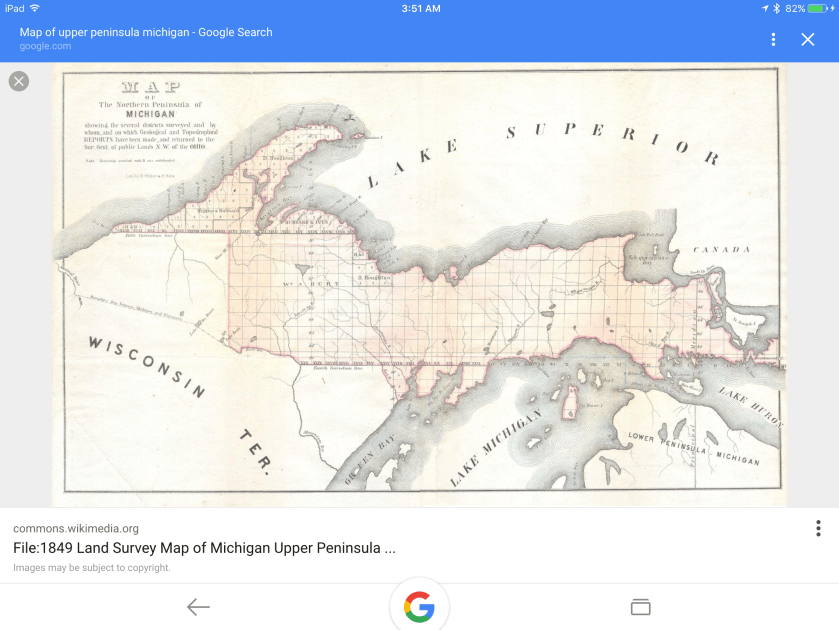
If you want to come see me, follow the map and these directions:

1. From wherever you are, go to Interstate 75 which runs north and south from southern Florida to northern Michigan. Go north on I-75. Be careful. No matter where you are on I-75, the traffic is heavy. It is the most heavily traveled interstate highway in the U.S.

2. Depending on where you get on I-75, you will see lots of beautiful scenery. From the swamps of the Everglades in Florida, through Georgia’s piney forest, to the foothills of the Appalachian Mountains in Tennessee and Kentucky. Next comes the Buckeye State of Ohio where you will find farming and manufacturing and, finally, Michigan, but Lower Michigan.

3. Lower Michigan is the mitten-shaped part of the state. I-75 will take you past Detroit and Flint, where I have relatives, then up through the central part of the state where my aunt and uncle made their home. A couple of more hours of driving and you are at the foot of the Mackinaw Bridge. It’s summer so the big bridge in the sky should be relatively easy to cross. In the winter, that is not always true. Of course, you can always get an escort to drive you across.

4.  When I went to the Upper Peninsula of Michigan for the first time, we took a ferry across the Straits of Mackinaw. The Mackinaw Bridge is the longest suspension bridge between two anchorages (the Lower and Upper Peninsula of Michigan) in the Western Hemisphere and is five miles in length. It carries four lanes of I-75.

5.  Keep going north as you pass St. Ignace on the northern side of the Mackinaw Bridge. Remember that you go north until you run out of I-75 which is at Sault Ste. Marie, MI on Lake Superior. When you get to Sault Ste. Marie, turn west on MI-28, heading toward Marquette, MI at the western end of the Upper Peninsula. You will be treated to a beautiful drive along the southern shoreline of Lake Superior. The lake is wild and the shoreline is rocky. The rocks are the most beautiful you will ever see. Stop and pick up some.

6. Some of the attractions along the southern shore are Pictured Rocks National Seashore, Grand Island, and Munising Waterfalls…..and much more. You can stop or continue on to see me.

7.  You are still on MI-28 but now you are getting close to Marquette, MI. Start watching for an old road on your right which is called Old MI-28. When you see it, turn right onto Old MI-28. You will see a group of log cabins along this road. My cabin is the third  one on the right along the lakeshore. Aren’t the birch logs that it is made out of beautiful? You are in Shelter Bay, MI.

You have found me at this beautiful spot. You’ll know it’s my cabin by the great big rock in Lake Superior right in front of the cabin. See all the cars out back of the cabin? My family is having a party. Come join us. There is just one caveat. You’ve found me, but it’s the six-year old me and the year is around the early 1960’s.

I visited this cabin in Shelter Bay, with my parents, often during my childhood and growing up years. My dad’s family would always rent it and I remember my time there as one  big happy party. My dad’s family believed in having a party and they could throw a good one. All my great aunts and uncles would show up along with most of my dad’s siblings. My mother, who grew up in the Kentucky Bible Belt, was decidedly uncomfortable, but she had to learn to cope.

The cabin front, facing Lake Superior, was glass on three sides with cots around the outside of the room. At six years old, I still remembered a lot. The porcupines that lived under the porch. The fact that there was an outhouse, not a bathroom, took some getting used to since there were black bears roaming at night and the porcupines. In the kitchen, everyone cooked on an awesome wood stove. I can envision my grandfather sitting in a big chair by the fireplace that was used year round.

What I remember most was the love in that cabin when we were all there. There was so much love that I felt enveloped in it. Some days, I wish I could go back to being six years old and in that cabin again. Like today. I’ve lost a dear friend under difficult circumstances. Lake Superior, my family, most of them gone now, and the love in that cabin is calling me. #dailyprompt #writing #amwriting #blogging #everydayinspiration


Posted in Father's Day, Holidays, Uncategorized

Father’s Day in the U.S. And Other Countries

image

My dad has been gone for 33 1/2 years and I miss him as much today as I did when he died. Particularly on Father’s Day, the third Sunday of June in the United States. My dad was a fun, but hard-working parent, never aimless. I miss the twinkle in his eye when he saw me and the spring in his step when he carried me to bed! This poem reminded me of him.

Father’s Day was first celebrated by Sondra Dodd in 1910 in Spokane, Washington. She had lost her mother in childbirth and her father cared for her. She wanted to show her appreciation for him. Sondra’s dad’s birthday was June 5, so Father’s Day unofficially ended up in June. The movement to establish a day to honor father’s grew and in 1924, President Calvin Coolidge became a supporter. He did not declare it an official holiday.

Father’s Day was celebrated in June. In 1966, President Lyndon Johnson declared it an official holiday and designated the third Sunday in June as the official date for Father’s Day. In 1972, President Richard Nixon declared Father’s Day to be a national holiday.

There are some interesting and fun facts about Father’s Day in the U.S.

There are over 70 million fathers in the U.S. And 2 million of them are single. It is the fourth busiest day for sending greeting cards. More than 214,000 men are single fathers.

Other countries also celebrate Father’s Day. Canada celebrates it like the U.S. but unofficially. France celebrates Father’s Day on the third Sunday in June. They used to give their fathers’ Bic lighters but now they substitute other small gifts. Germany celebrates the day on the last day of the Easter holiday.

In Asia, India celebrates Father’s Day much the same way as we do, but Thailand celebrates the day on the birthday of their king and everyone wears yellow. In Australia, Father’s Day is celebrated on the first Sunday of their spring which is September.

Now, I’m going to go and start the dinner I’m preparing tonight in honor of my dad. Happy Father’s Day to all the dad’s out there!