Posted in Appalachia, nonfiction

An Overview of Higher Education in Appalachia

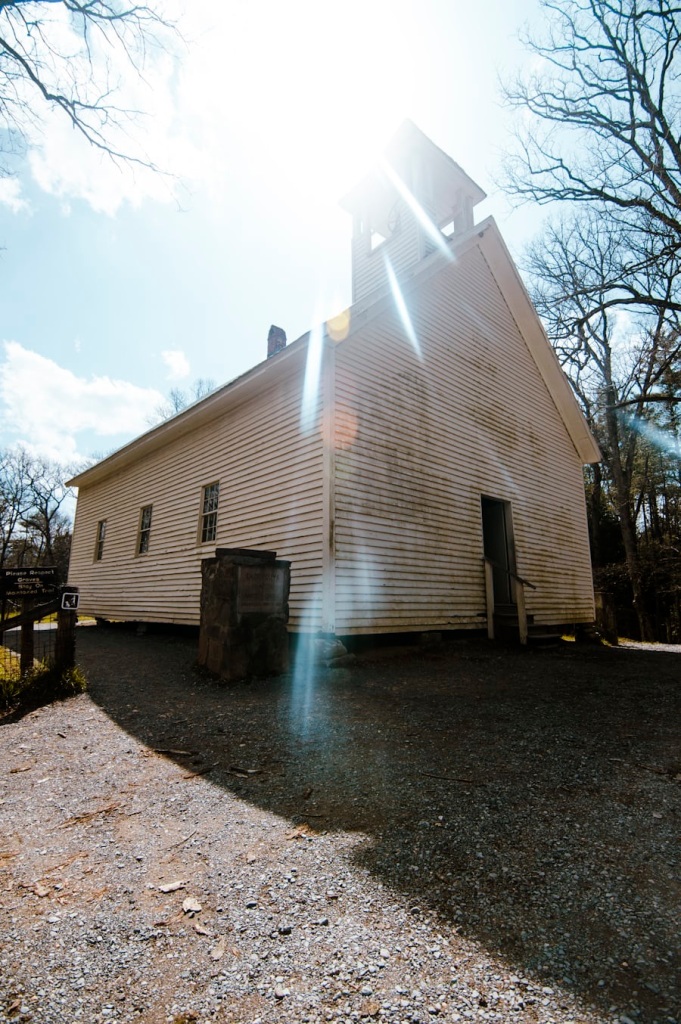
The picture that you see above was where my grandfather went to what passed for higher education (college) around the turn of the 20th century – the late 1800s and early 1900s. It was called the Kentucky Normal College.

Higher education in Appalachia has always been problematic because of both the geographic isolation of the region and the Appalachian cultural values. To this day, there are few good roads in and out of the heavily mountainous region of the U.S. Until fairly recently, there were few institutions of higher learning that existed in the region.

Cultural values also played a role in the lack of higher education in Appalachia. Jobs that were available were mostly blue collar. Coal miners and farmers are two of the main examples. It was not thought that men working at those professions needed to go to college, except in the case of mining engineers, and women were encouraged to make a family and not to go to college.
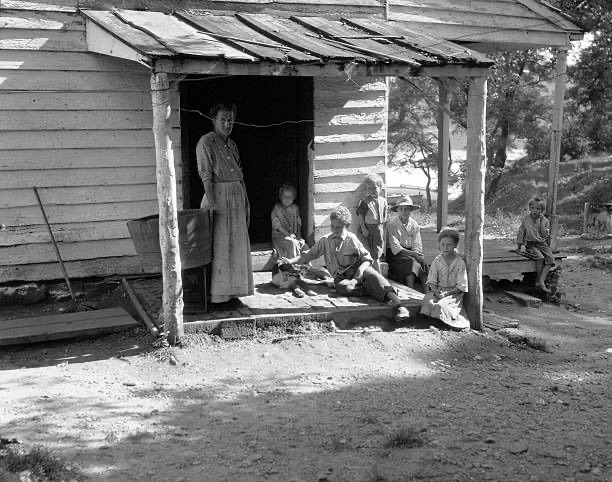
Appalachian women were certainly not encouraged to seek higher learning in the past since their role was to run the family home and raise the children. Some of these stereotypes still exist today.

The maternal side of my family, who lived deep in Eastern Kentucky, did not subscribe to these beliefs. My maternal grandfather saw it as a great point of pride that all of his eight children left the area to receive college degrees and some higher levels of graduate education.

He was a farmer and an employee of an oil company. He had a large farm, but simultaneously he worked for an oil company in Kentucky helping to map the mineral deposits and who owned them in his part of the state. Kentucky, particularly the Appalachian portion of Kentucky, has vast deposits of minerals including coal, oil, and natural gas. He believed in higher education and wanted his eight children, including the six girl children to do well in life.

After my grandfather graduated from what was high school in the late 1800’s and early 1900’s, he was fortunate enough to go on to the only real college accessible to him. That college was Kentucky Normal College in Louisa, KY. Another student at that college, at the same time, was Fred Vinson, who later became Chief Justice of the U.S. Supreme Court. They were close friends.

As time passed, some of the children of Appalachia were able to attend colleges and universities just outside their home areas. In Kentucky, several colleges were on the fringes of Appalachia and had a large percentage of Appalachian students enrolled. Two of the early ones were Morehead State University in Morehead, KY and Eastern Kentucky University in Richmond, KY.
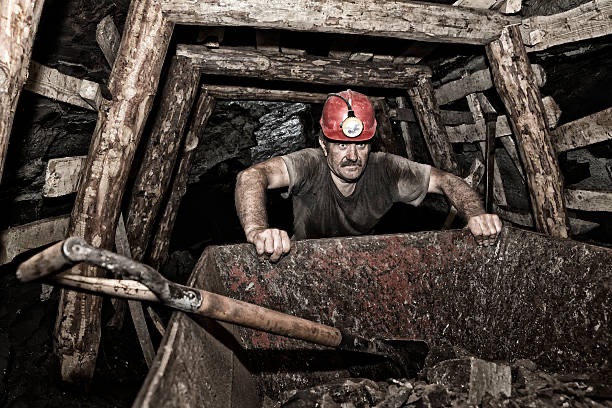
Many of the colleges were originally “normal” schools. Normal schools are colleges that primarily train teachers. The students received a bachelor’s degree in teacher education. Later, in the 20th century, these normal schools expanded to full-fledged colleges and universities. They still have a sizable percentage of Appalachian students enrolled.

Not everyone in Appalachia was as progressive as my grandfather. That’s still the case in some areas. The girls in many families were not encouraged to go to any college. Even the boys were encouraged to stay and work on the family farm or in the coal mines. Many were drafted to serve in World Wars I and II. Others enlisted.

There are now a few scattered colleges and universities in the Appalachian regions. A Kentucky example is the University of Pikeville in Pikeville, KY which is deep in the coal-producing area of the Appalachian area in the state.

Higher education still continues to be a problem in Appalachia. Many potential students stay home and work close to home, some all their lives. Some have migrated outside the area to find work, primarily to Ohio and Michigan. In the 1950s and 1960s, there was a mass migration out of Eastern Kentucky to the north, often to work in the automobile factories.

It is often even difficult to sell the benefits of high school education to the people of Appalachia. They see more value in their children staying close to home. One of the primary cultural characteristics of Appalachia is the clannish nature of the people.

Distance learning and online education have helped the problem of lack of access to higher education in Appalachia although that is a reasonably new solution. Money for the infrastructure for widely-based broadband in the Appalachia area of Kentucky has recently been allocated under the infrastructure bill.

Posted in Appalachia, nonfiction

Appalachian Honor Culture

The Appalachian Honor Culture is a phenomenon that exists in the Appalachian Mountains, U.S., but also exists in other forms in different geographical areas in the U.S.

Sometimes I think I have lived in the foothills of the Appalachian Mountains, U.S. for so long that I take for granted the cultural differences that exist here and other places outside these hills.

The Appalachian Honor Culture is one of those cultural behaviors that have existed in these mountains ever since the Native American people here were encroached on by the white European settlers. This culture involves how people of the Appalachians settle their differences.

If a person, particularly a man, in Appalachia is insulted, embarrassed, called out, or shamed in any way, the Appalachian Honor Culture demands that they react either with threats of violence or immediate violence. As an example, let’s say that one man insults another man’s wife or one man comments on any aspect of another man’s life in a negative fashion, Appalachian men react with their fists first and think about legal charges of assault later.

This scenario is played out in Appalachia, especially southern Appalachia, over and over in cases of small, unintended embarrassments to bigger insults and arguments. There is usually no talking about a problem and settling it peacefully. Either violence erupts or something more insidious like the holding of grudges. Appalachians can hold a grudge, and often do, for a lifetime, even against members of their own family. It isn’t only men who uphold the Appalachian Honor Culture. Women do as well.

Let’s take my maternal grandmother as an example. She was, in many ways, a woman ahead of her time, but she was also an Appalachian through and through. There were members of our family and extended family that she held a grudge against for a lifetime. There was seldom such a thing as forgiveness even long after the issue that caused the grudge was long forgotten.

She loved my grandfather with a passion even though they seldom agreed on anything. If another woman, however, tried to make inroads with him, she would have picked up her shotgun and run her off their property without hesitation. Then, she would hold a grudge against the woman forever. This was and still is normal behavior in the Appalachian Mountains.

In Appalachia, you have a rather odd mix of people who are the nicest people you’ve ever known, the coldest and most stubborn people you’ve ever known, coupled with violence and feuds that could rival any gang activity in big cities.

The earliest settlers of the area came, in large part, from the Anglo-Scottish borderlands, and parts of Ireland and Great Britain with a smattering of Germans thrown in. You may find similar cultural anomalies in these areas that the immigrants brought with them to the U.S.

Posted in #weekendcoffeeshare, creative writing, nonfiction, Uncategorized, weekendcoffeeshare

#weekendcoffeeshare 165

Welcome, everyone to my #weekendcoffeeshare 165! There are several types of coffee for your drinking pleasure along with tea. Green and black. Let’s catch up after you get the beverage of your choice.

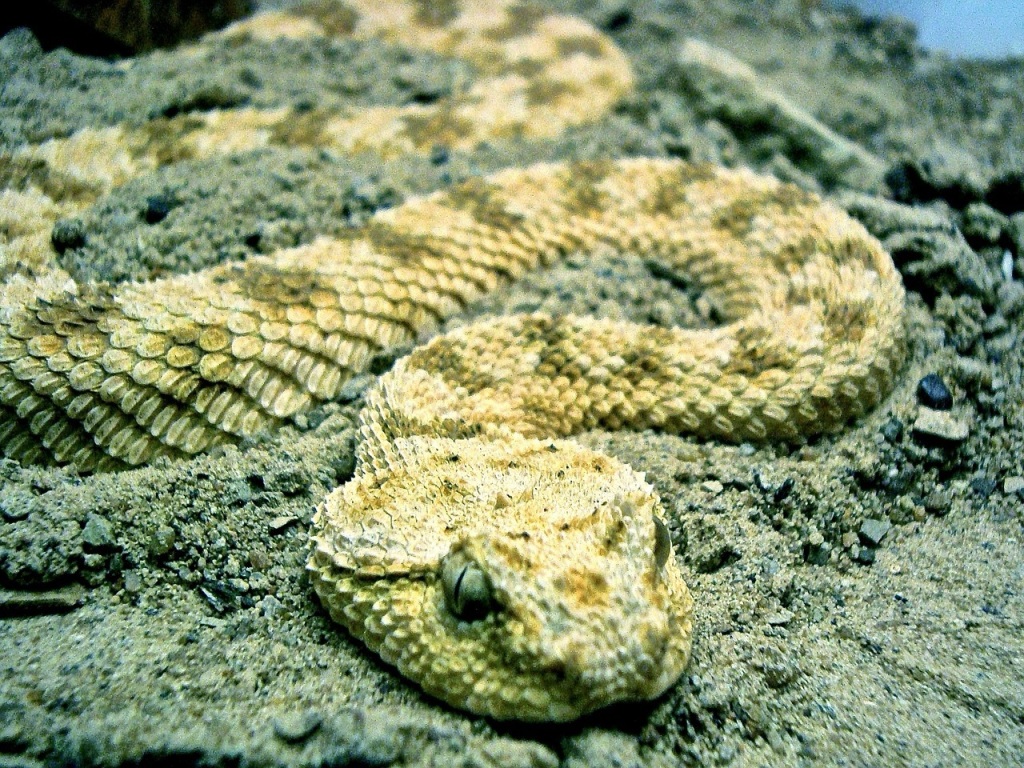
If we were having coffee today, I would tell you about the creepiest thing that happened to me this week! This morning, my husband was doing some weed eating around the house. We have two evergreen trees close together in the yard and he went there to weed eat. What he saw rattled him….no pun intended. It was a timber rattlesnake, a juvenile, which probably means there is a nest nearby. Now I’m afraid to go out in my yard! I’m posting a picture so anyone who lives in or near the woods will know what they look like. Be careful!

Timber rattlesnake

On Monday of this week, we had a little get-together at my house for Memorial Day. The U.S. celebrates our veterans on that day and the tradition, at least in the south, is to decorate their graves. We did that earlier in the weekend. Then, on Monday, we had a cookout for just a few friends. We had a really nice time! If you aren’t familiar with the U.S. tradition of Memorial Day, here is an article I wrote about it.

I’ve talked to some cherished family and a few good friends this week which is always nice. Besides that, it’s been a normal week for us, made better by beautiful spring weather. The gardens aren’t doing well due to the wild swings in temperature here and too much rain. See you next week!

Rosemary

Thanks to Natalie the Explorer for hosting weekendcoffeeshare!

Posted in Appalachia

Stories of Appalachia: The Beauty Queen

Country women are the hardest working women around. Particularly country women who live in Appalachia. All work hard at home which is often a farm, or these days, land that was a former farm. Many also have jobs outside the home, more now than in the past.

Sarah was a woman of the past, living her entire life in Appalachia. She was born in the 1930’s, so her life spanned the century mark in 2000. Most of her life was like women had lived in Appalachia in the past centuries, but parts of her life were very much in the present and future. She was most comfortable with the traditions of the past but valiantly tried to embrace the present and look toward the future.

She was the kindest, most caring person I’ve ever known. She was beautiful inside and out. She met the love of her life, Randall, as a small child. They were neighbors and playmates in the hills of Eastern Kentucky. Teenage sweethearts, they even went off to college together after they married. Randall became a biology and general sciences teacher in the local school system. Sarah went to work for the county’s Board of Education.

They had a rich life, full of friends and family although they had no biological children. They did have a very special daughter who came to them through Randall’s family. Sarah loved her, as did Randall, as if she were their biological child. After they cared for her as she grew up into a successful and kind adult, she spent many years caring for them.

Their special daughter is still caring for Randall. Sarah considered her to be her own. Until the last twenty years, Sarah and Randall also cared for Sarah’s mother. Such is the way of the rather clannish people of Appalachia. Family still means something to them. They take care of their own.

Sarah and Randall lived in Sarah’s grandparents home place. It was most of the way up a “holler,” which is the Appalachian slang for a long, narrow valley between close mountains. Most of that holler was part of Sarah’s grandfather’s large farm until the grandparents passed away. Sarah’s mother retained land and the house. When Sarah’s mother passed away, Sarah inherited it. They made their home there for the rest of their lives. It was a beautiful place.

Before the opioid epidemic that affected Eastern Kentucky among many other areas, the entire region was green and lush with farms here and there. Then, one of the area’s major industries, coal mining, began to die and the unemployment rate started to rise. Not only did the area lose the coal mining jobs, but their major cash crop of tobacco also vanished.

Many left the area, but just as many did not. They didn’t want to leave their families. Drugs found a foothold due to joblessness and poverty. Suddenly, it wasn’t quite as beautiful as it had been in Sarah’s childhood, but she and Randall remained in the family home place after Sarah’s mother passed away.

Sarah’s grandfather and grandmother had a large family. There were many aunts, uncles, and cousins. Especially in the last years, Sarah graciously welcomed any family member who knocked on her door and planned family get-together’s and reunions. After all, that was the family home place for Sarah’s side of the family. In the present day, the family is dwindling away until mostly cousins remain, but the cousins were always welcome.

Then, tragedy struck. Sarah was struck down by a heart attack probably caused by underlying health conditions. Other health issues cropped up and Sarah was transferred to the nearest city where her health issues could be addressed. Sarah was 83 and Randall was 86. Beautiful Sarah survived for a number of days, but finally, the doctors could do nothing else and hospice was recommended. Sarah only briefly survived in hospice with her daughter and Randall right beside her. Tragically, to Sarah’s family and friends, she passed away after a long life with her soulmate.

I always thought of Sarah as a beauty queen. Beautiful inside and out, she positively affected everyone’s life that she touched. She was rather eccentric, (I just thought of her as her own special person), but filled with common sense. She often advised me and other members of the family. She will be so missed by her family and friends. I will be lonely for Sarah the rest of my life. Randall is, thankfully, still with us, but he is failing.

—————————-

Note: Why am I writing about Sarah? She was my beloved first cousin and we always stayed close. Without Sarah, I will be lonely for the rest of my life for her unique personality, the culture she represented, and my own family which is lost to me. She represented a dying culture that was beautiful to its core. People who cared about their family and friends and were willing to sacrifice to care for them describes the Appalachian people in general and Sarah specifically. May Sarah, who was a beauty queen to me, rest in peace.

Posted in Appalachia

Where is Appalachia?

C1101958-AD7B-4549-AF10-2B3C8E4BEC8A

I live on the fringes of Appalachia and my roots are deep in this region of the United States. I live in a university town in northeastern Kentucky. Appalachia has rough geographic boundaries, but it is largely a cultural region, as opposed to a geographic region, of the U.S. In many places, Appalachia is difficult to access because of geographic impediments. The region is located in the Appalachian Mountains. Roads are few and the roads that are there are curvy through the mountains. In some places, the roads are not well built and are prone to washouts and mudslides. The fact that they run through mountains doesn’t help.

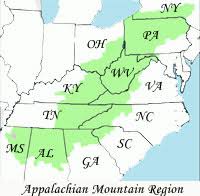
If you look at the map above, you can see that the Appalachian region includes all of West Virginia, almost half of Kentucky and Tennessee, most of Pennsylvania, one-third of Ohio, and the southern slice of New York. In the south, it touches Virginia, North Carolina, and South Carolina, and includes portions of Georgia, Alabama, and Mississippi. Appalachia stretches from New York to Mississippi and encompasses 206,000 square miles where roughly 26 million people live.

It is a large region of the United States and even though parts are sparsely populated, the whole has a sizable number of people residing there.

Posted in #weekendcoffeeshare, creative writing, weekendcoffeeshare

#weekendcoffeeshare 77

#weekendcoffeeshare

Please come in and grab a cuppa! I have several different brews of coffee and a couple of tea blends – a green Japanese sencha along with my ever-present cinnamon blend and a wonderful orange pekoe. If we were having coffee today, I would first tell you about the lovely family reunion I attended beginning early in last weekend and extending through part of the week..

The reunion was for my mother’s side of the family that originated from eastern KY, a part of Appalachia. The roots of my mom’s family began there in the years before the Revolutionary War and some of us still live there. This reunion was really in honor of my only remaining aunt who turned 90 a few days ago. A very vital, active 90. She’s amazing. When her daughter asked what she wanted for her birthday, she said she wanted to go home,,,,home being here in Kentucky. So they planned a trip and brought her home. I had not seen her in eight years, so I really enjoyed seeing her.

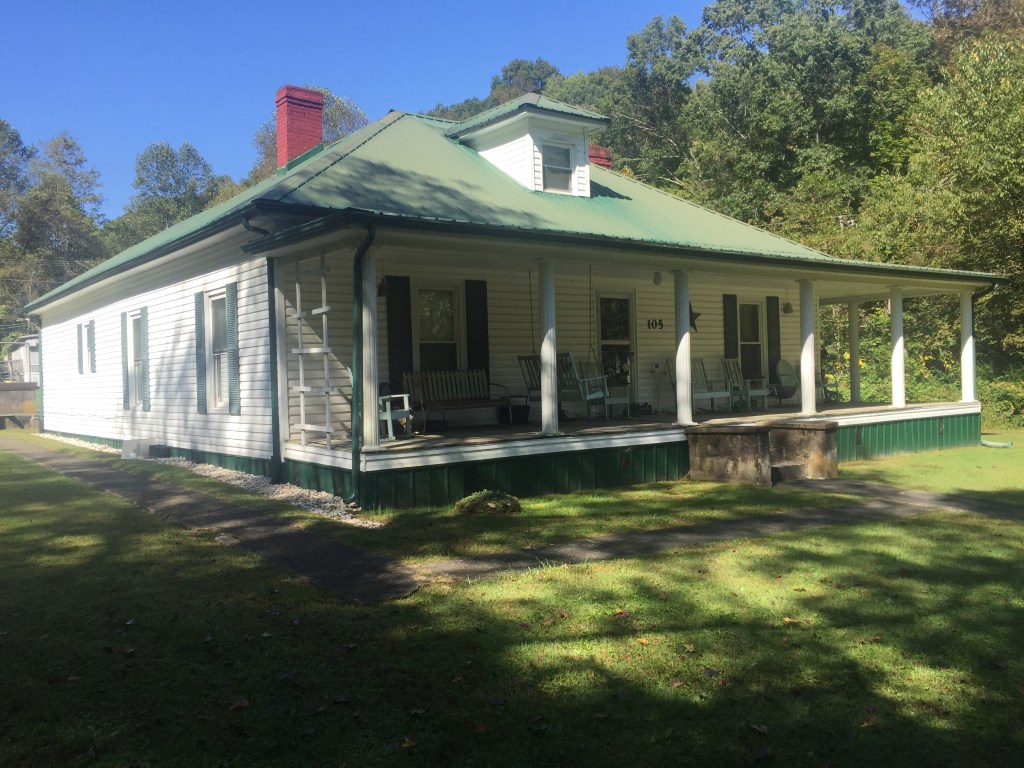
On Thursday night, we all had dinner together at one of the restaurants in the city in which she is staying. The closest large city to me. The whole family didn’t show up but a very good representation. It had been a long time since I’d seen most of them, so it was wonderful to catch up. Then, on Saturday, we all went ”up in the country” to where my grandfather’s beautiful farm used to be. I have a cousin who still lives there at the old homeplace. Some of us cooked a spur-of-the moment dinner but we did have the traditional green beans and cornbread plus more. Almost everyone was there although there are a handful of family members lost to us. At least, I feel they are lost to me, but I guess that happens in most families. I could only stay for a few hours, but it went very well and many in the family got to relax, talk and enjoy the day even though it was stormy. The house is in the picture below and you can see the big wraparound porch. We hung out there, and in the house, most of the day.

@Rosemary Carlson

This is a picture of our old homeplace in eastern KY. It was built by my grandfather in 1901 and this is where he raised my mother’s family. This is also where we just had our family reunion. The house has been upgraded and restored. Our reunion here was a great success!

This was probably my 90 year old aunt’s last time to come back ”home.” She lives near her daughters in a wonderful retirement center in Scottsdale, Arizona. The cousin who lives in this house is also elderly at 84. Chances are slim that she’ll ever be able to host us again even with help as she has some ongoing illness issues. Sad for me, as this is where my roots are and it always feels like home.

Other than the reunion, Hubby and I have been busily preparing to have a new roof put on our home. What a big job! We have storm damage to the roof, as do most other people in my area. We may have to wait weeks and maybe months, but it has to be done before winter. Building materials, although dropping in price now, are still expensive so the estimates are coming in for the roof way on the high side.

I haven’t had much time for creative endeavors amidst the reunion and the roof on my home. I’ve only been able to do a little writing recently, most of here on this blog. I have read a few really good books and as we all know, reading is essential for a writer. I try to read many different genres and styles. My next project, which may have to wait until cooler weather, is a fantasy story for young adults that I am working on. It’s set in medieval England, but more about that when I dive back into it.

I’ve always been a political animal and I find myself very interested in not only American politics right now (which are a mess) but also into worldwide politics. The next two years will be a fascinating and scary time for American politics. I’m considering starting another blog where I would write only about politics, mostly opinion pieces but fact-checked to the max. What do you think?

We are probably not traveling this summer. We waned to travel some, in a limited area, in the US in our RV. But with high gas prices (at least high to us), we’ve decided not to. It would take $500 to put gas in the RV once!

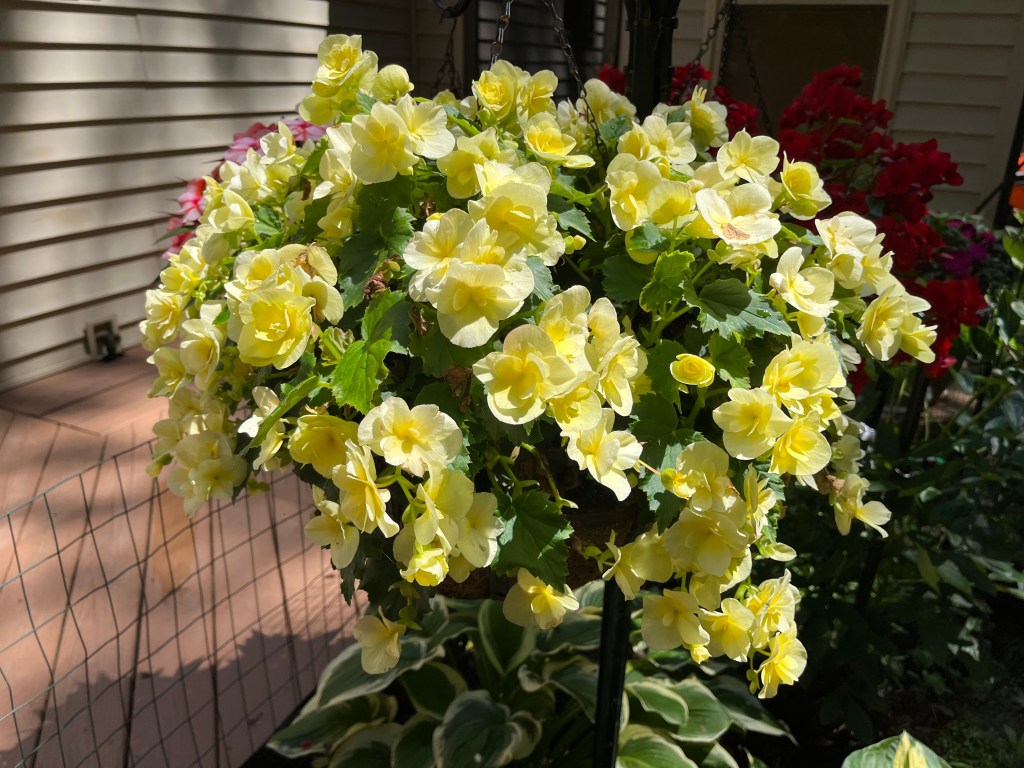
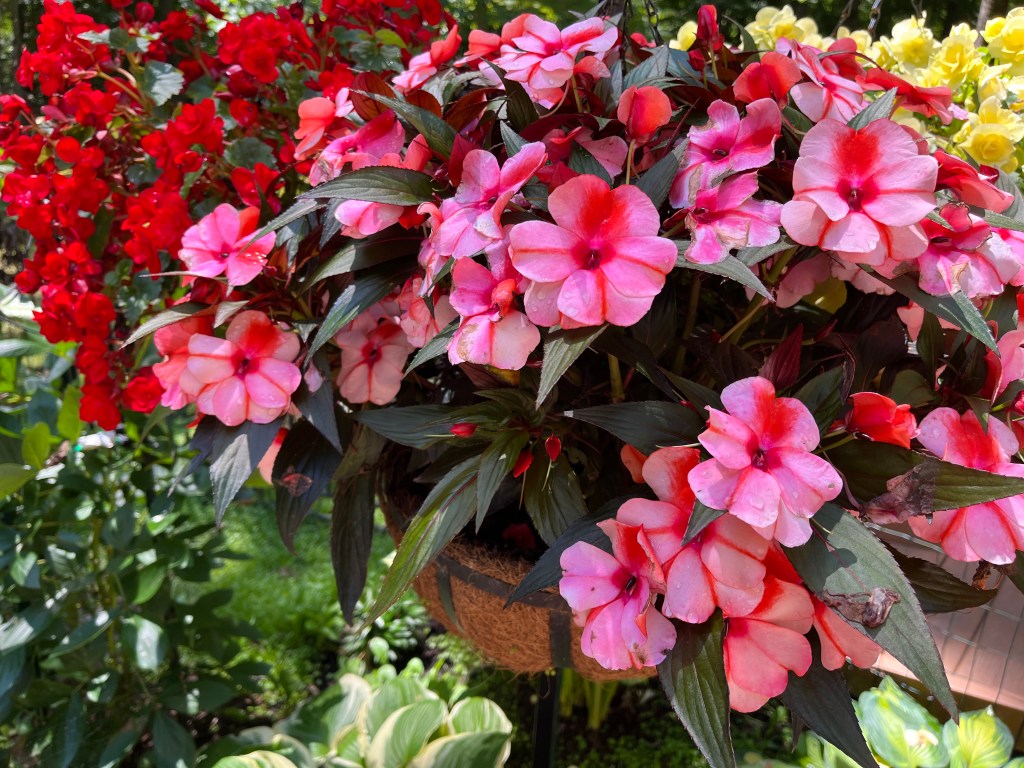
We are having a very hot, and now humid, summer. Here are some photos of my flower garden to end our coffeeshare time.

Rose begonias @Rosemary Carlson

New Guinea Impatients @Rosemary Carlson

I’d love to hear about your weekend!

For #weekendcoffeeshare

Posted in Appalachia

Appalachia: Appharvest Aims to be the Breadbasket of the U.S.

I live in the south-central portion of Appalachia, actually on the fringes of the region, in northeastern Kentucky. We are excited about the future here due to Appharvest making its home in the county in which I live.

Appharvest is a startup company that has opened the largest greenhouse in the U.S. in Rowan County, KY. The goal of the company is to produce the majority of tomatoes used in the U.S., taking that market share away from our traditional supplier of tomatoes, Mexico.

Appharvest is a greenhouse that covers 60 acres and employs almost 300 people. Jonathan Webb is the founder of the company. He is a Kentucky resident and a graduate of the University of Kentucky. Appharvest is within a day’s drive of 70% of American consumers. It is a facility, patterned after greenhouses in The Netherlands, that uses sustainable crop production techniques. It uses recycled rainwater for irrigation and a combination of solar energy and LED lighting in order to grow the tomatoes. At a later time, Appharvest will expand beyond tomatoes.

Immediately upon the opening of the Rowan County, Kentucky facility, ground was broken for a second Appharvest greenhouse in Madison County, Kentucky. Appharvest is set to be a great asset to this region of Appalachia, providing jobs and national exposure.

Posted in Appalachia

Appalachian Dialect: Comments on its history

The way that people talk in the Appalachian region of America, particularly the Southern Appalachian region, is a subject that has always fascinated people from other regions. Southern Appalachia runs from southeastern Pennsylvania to Alabama. The dialect has often had fun poked at it because it sounds different than English spoken in other areas of the U.S. It isn’t as simple as just the fact that the Appalachian people have a particular accent. Their actual speech patterns may differ from traditional English.

One of the myths about the Appalachian dialect is that it dates back to Shakespearean English. Not true. It probably goes even further back to the days of Chaucer. The dialect has survived, for one reason, because of the geographic isolation of the area. Appalachia is mountainous with hills not as high and new as the Rocky Mountains in the west, but high hills nonetheless. They are more rounded and green. The Appalachian Mountains have been here longer and have sheltered the people from many outside influences. Roads into the area have been difficult to build and expensive. There still aren’t many of them.

The fact is that the Appalachian dialect is close to that of the first settlers to America. Chances are, the English spoken among the first colonial settlers sounded a lot like the Appalachian English of today. It is the English of the Scots-Irish immigrants who first settled in Appalachia. Other cultures are also represented in the Appalachian dialect. The area had 10% African-Americans around 1860. German immigrants also populated the area.

Not only does the English spoken in Appalachia sound different due to the way words are pronounced, the grammatical structure of sentences is actually different. One difference is the agreement between the subject and verb in a sentence. An example would be, “Horses is large animals,” and “We went to find the dogs, which was over the hill.” This pattern of speech was found in the Scottish lowlands as well as colonial America due to the Scots immigration to the area.

Maybe the vocabulary of Appalachian speech is most fascinating. Words like “poke” refer to a sack. “Pone” refers to bread made in a skillet, usually cornbread. A well-known word is “holler” which refers to the valley or hollow between two mountains. “Sallet” refers to salad. The Appalachians put the letter “a” before verbs like “I’ll be a-going to the store right now.” Unusual contractions are used like “They done gone to town.”

The people have southern Appalachia have been laughed at and discriminated against because of their different dialect. They have been called “rednecks” and “hillbillies” in a derogatory way. During the great migration of Appalachian people, between the 1940s and 1960s, to northern climates in the U.S. to find work, the city of Cincinnati, Ohio actually made it against the law to discriminate against them.

There are many legends and myths associated with Southern Appalachia and those surrounding the language and dialect of the Appalachian people are just some of them.

Posted in Appalachia, Non-fiction

#SoCS – 5/26/18 – Appalachia: Memorial Day

59818522-96A3-4277-BCF8-C388BD8101E8

It’s Memorial Day weekend and that’s an important holiday in Appalachia. It’s a holiday that honors lost loved ones, whether they were lost in war or died of natural causes, in this region of the U.S. In Appalachia, it’s a weekend where families reunite, have large meals together, and decorate the graves of their deceased relatives with flowers. Across Appalachia, Memorial Day is most often called Decoration Day.

When I was growing up, and even now, the family would congregate where most of the relatives were buried. In my case, that was at my grandparent’s home in Magoffin County, Kentucky. Every nuclear family within the extended family would bring beautiful flowers to decorate each grave. Often, that would involve going to three or four cemeteries.

Memorial Day at the cemetery was also a social occasion. Families who seldom saw each other would have a chance to talk and catch up while decorating the graves.

After decorating the graves, everyone would go to my grandmother’s house for a large meal and a visit with each other afterward. It was one of the most important family holidays of the year.

We still honor our lost loved ones in Appalachia in much the same way. Families are smaller. There are fewer large family meals. Instead of meals in grandma’s kitchen, they are often prepared on the grill. You will still find people hunting flowers a few days before the Memorial Day weekend to decorate gravesites. They will still enjoy visiting with family and friends in the cemeteries. It’s getting more difficult to find children who know what “Decoration Day” really means and who it honors.

Posted in Appalachia, Non-fiction

#SoCS – 5/19/18 – Stories of #Appalachia – The Postman and the Dog

IMG_0789

Up until I was in my 20s, my uncle lived deep into the Birch Branch hollow  (pronounced “holler” in the eastern Kentucky dialect). He lived in a cabin and with him lived his female Doberman Pinscher, Gertrude. For awhile, he also had a male Doberman Pinscher named Sue, after Roger Miller’s song, “A Boy Named Sue.”

But this story is about Gertrude. My uncle was a postal service worker in Magoffin County, Kentucky. He delivered mail and Gertrude accompanied him. Mail carriers in rural areas tend to drive slowly between stops and my uncle certainly did. One reason he drove slowly is because of where Gertrude rode in/on the station wagon that he drove. She rode on top of it. My uncle and Gertrude were something of a legend in Magoffin County because this was quite a sight to passers-by.

My uncle passed away in 1974 and left poor Gertrude behind. She was old then and very bonded to him. She lived the last years of her life on my cousin’s porch, in a cushy dog house, undoubtedly grieving for my uncle. She was bonded and there was little to do for her although my cousin certainly tried.

A man and his dog.