
Posted in #weekendcoffeeshare, nonfiction

weekendcoffeeshare #175

August 23, 2024

Hello everyone and welcome to my weekendcoffeeshare for the week beginning August 23, 2024! Please come right in and join me for a catchup and a cup of coffee or tea. Please help yourself to whatever you like.

If we were having coffee together today, I would tell you that I haven’t participated in the coffee share or in any of the challenges for about three weeks now. Why? Put simply, life got in the way! There have been lots of things, some good and some not so good, going on that has taken my focus (and time) away from writing. I’m getting back in the groove now.

My flower gardens are just about gone for this year. We have four distinct seasons here in my location in the U.S., Kentucky, Upper South. Summer is coming to an end. We’ve even had nights down in the 40s though the days are still mostly hot, even some in the 90s. We have had an awfully hot summer and some of the plants I have traditionally grown have not done so well this year. Others have fared very well. I think climate change will eventually change our growing zones and that is perhaps happening in my location even now.

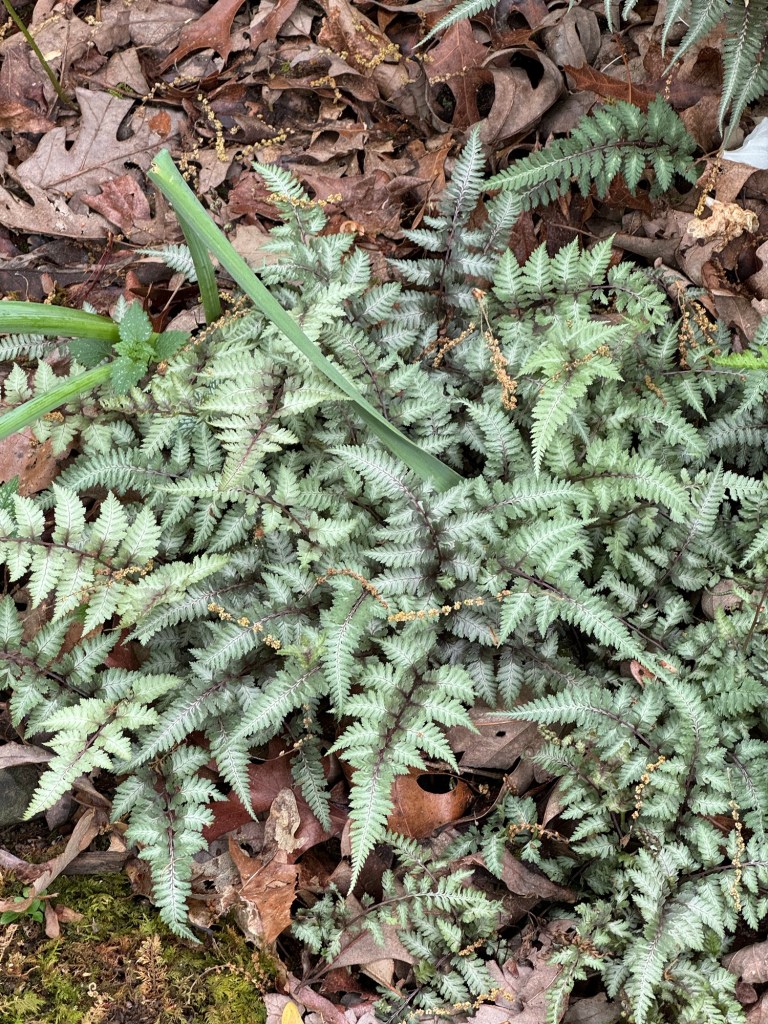
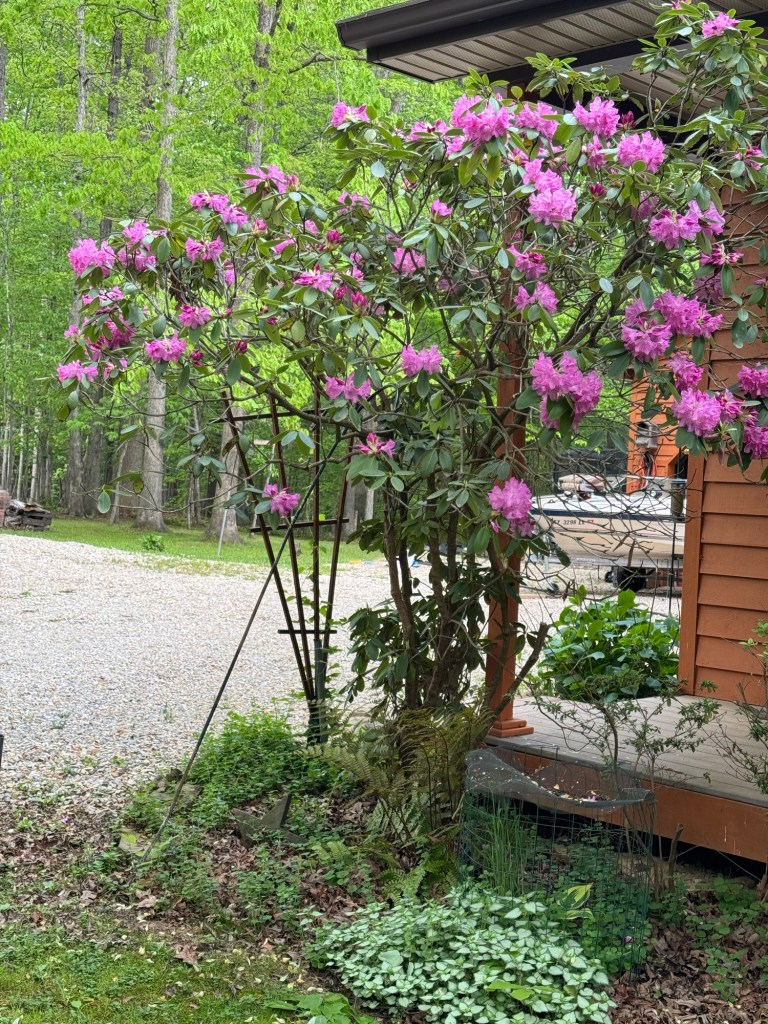
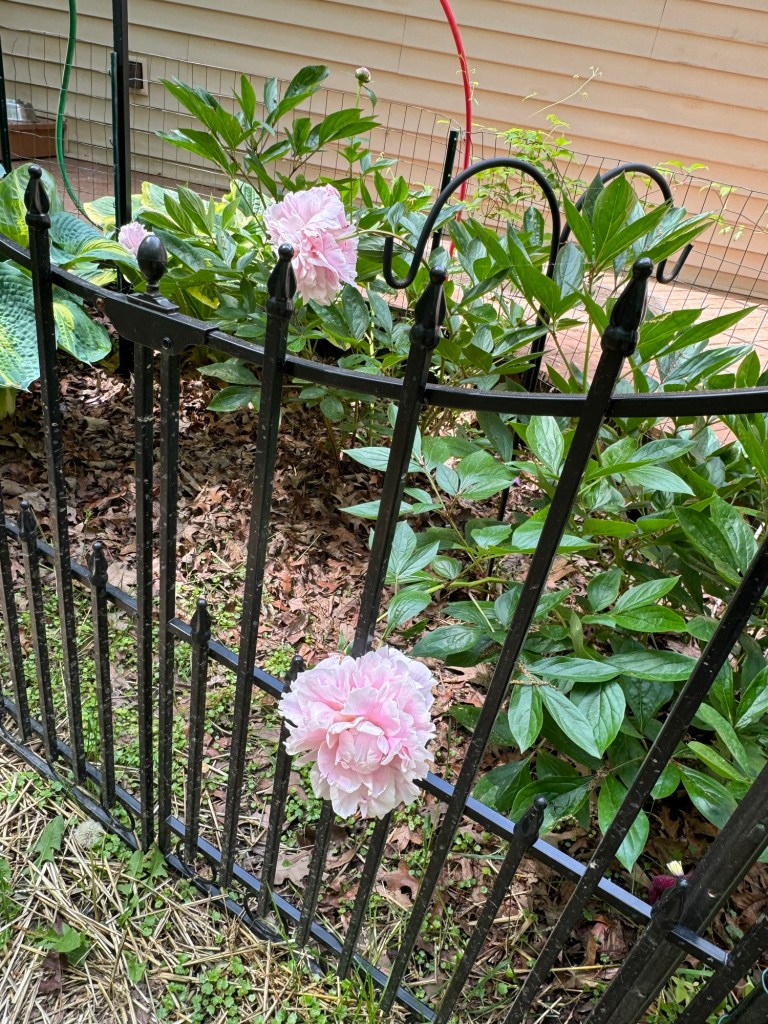
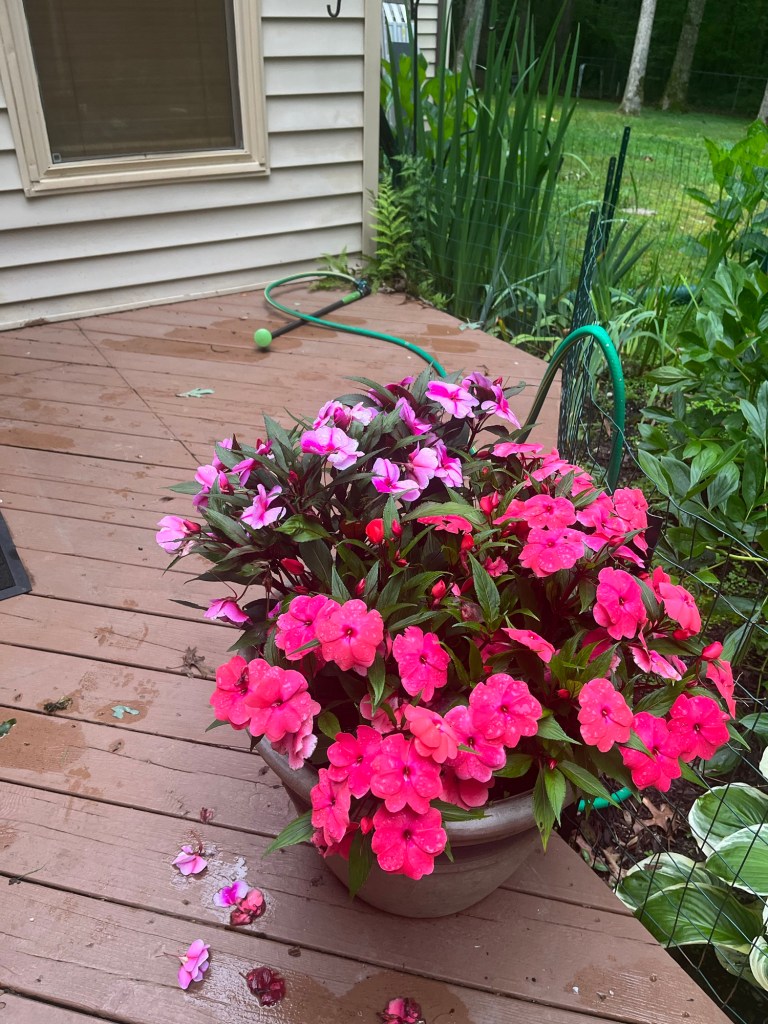
Here are some of the plants that I’ve managed to grow this summer.
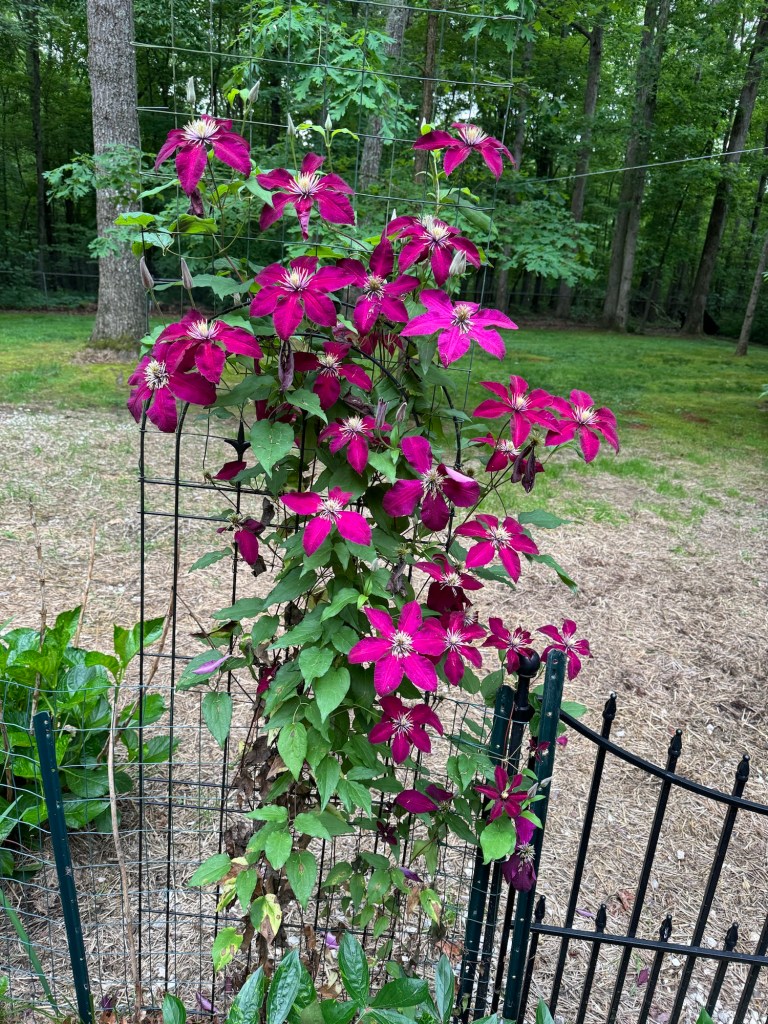
Clematis

They have been nice and brightened up my yard, but the weather has been hard on them. These are not plants that do particularly well when the temperatures are in the 90s every day. Very unusual for my area.

My husband and I have both had some health issues pop up recently. He will have to have some eye surgery in the fall. As for me, it is going to take a specific and very restrictive diet. There is nothing, and I mean nothing, to eat on this diet. I’m already thin and I really don’t want to get any thinner, but I suspect that will happen! Getting older is not for sissies!

I’ve been fortunate to be able to talk to and see some friends and family recently. That always helps everything seem better. I had a small nuclear family, but I have a big extended family on both my mom’s and dad’s sides of the family. I also have good lifetime – and new – friends. We have had a lot of support over the past few weeks.
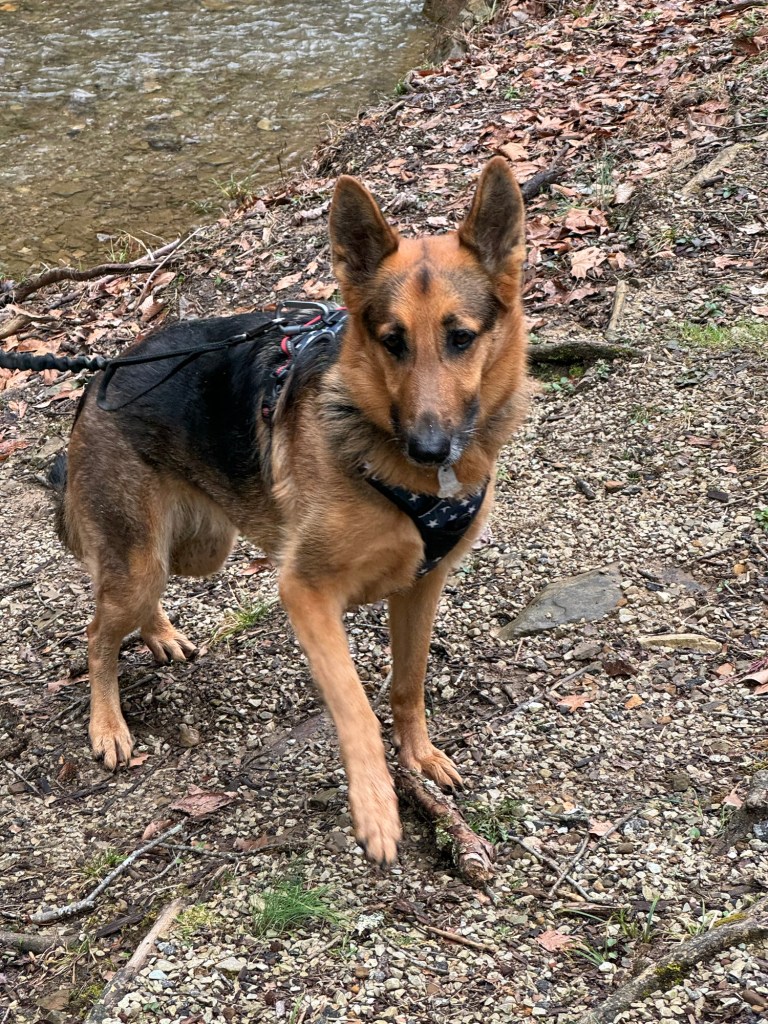
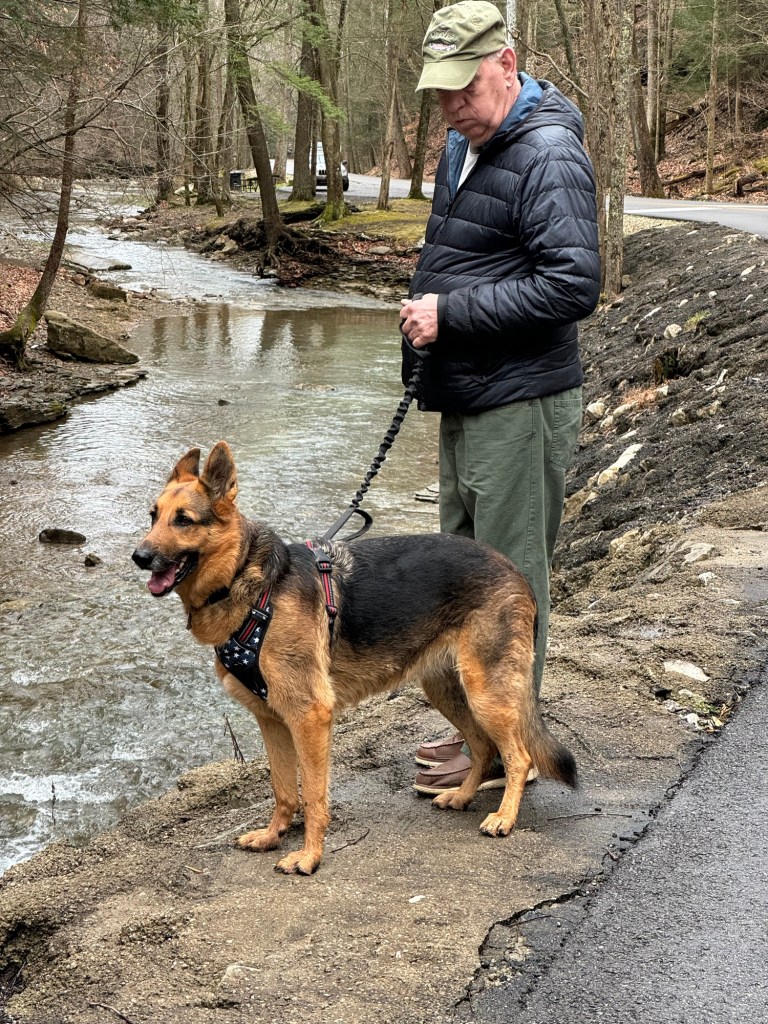
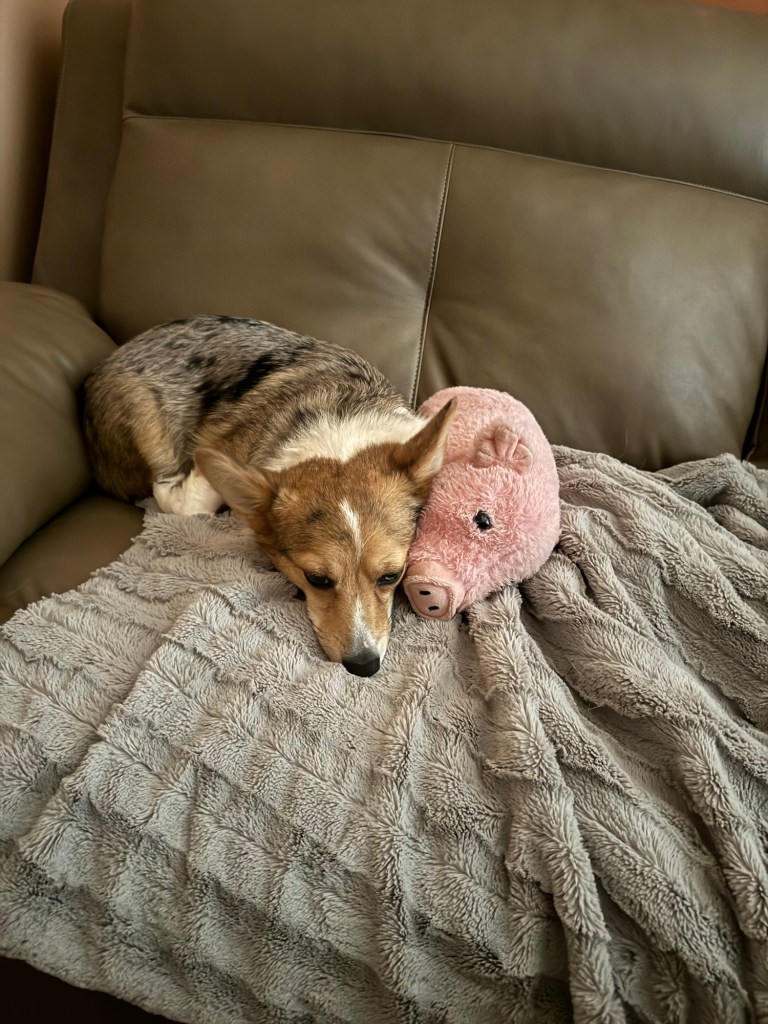
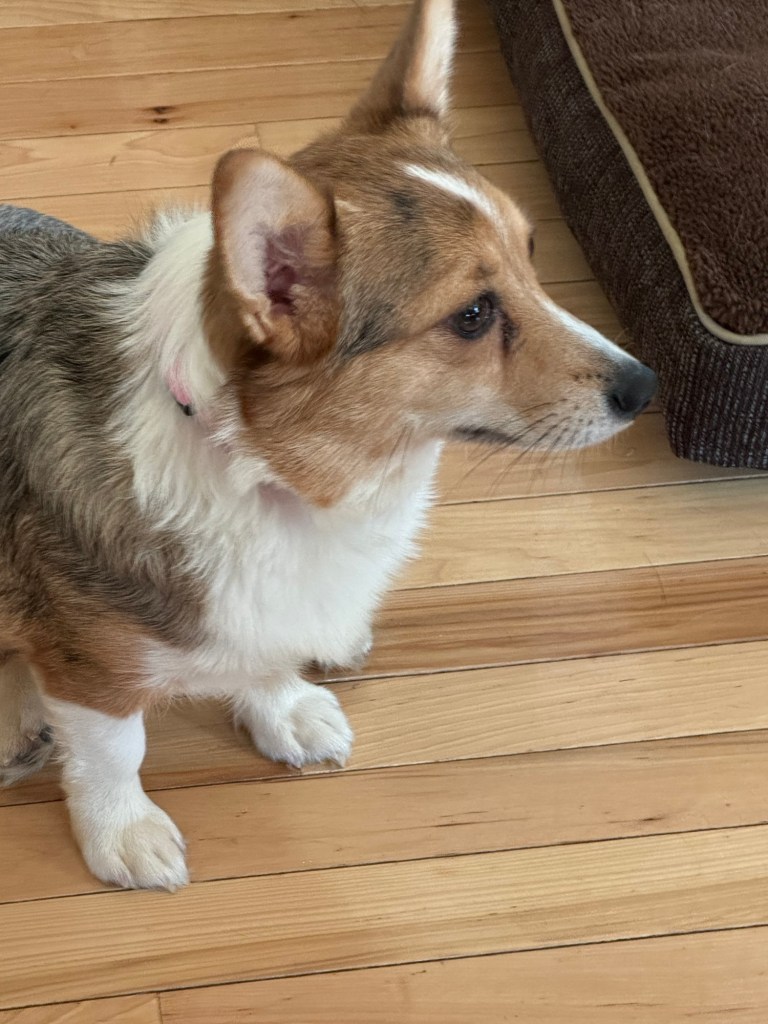
These two (very spoiled) four-legged babies have been my salvation over the past few weeks. Sophie is big and protective, but a baby inside. Hazel is just now really coming around after being rescued last year. It’s been hard for her, but she has turned into a sweet, loyal puppy. They lift my spirits when times are tough.

I am redecorating the inside of my house and in the fall, we will paint the entire inside. Redecorating is really an overstatement. I am redoing some things, but not everything. Just decluttering and, in the process, figuring out how to modernize as I go along. So far, it has been a very big job. I worked such long hours for so many years and didn’t really pay much attention to my home. I’m paying for that now by having to put some long hours into my house!

All of this adds up to no writing for the past few weeks. I don’t want to get into that pattern, so I’m back to work on my blog and will be participating more. Not only do I enjoy writing, but it is therapeutic for me. I’m starting to freelance a little, mostly in the field in which I worked for so many years which is finance.

I’ve missed talking to all of you. Thank you for coming to my weekendcoffeeshare!

Thank you Natalie, the Explorer for hosting #weekendcoffeeshare!

Posted in Appalachia, Non-fiction

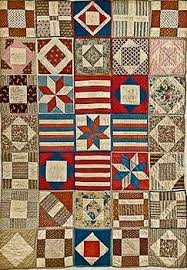
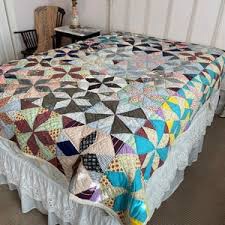
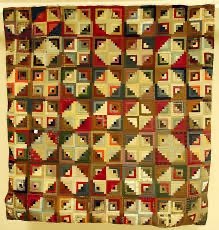
Appalachian Culture: Quilting

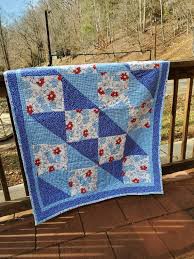
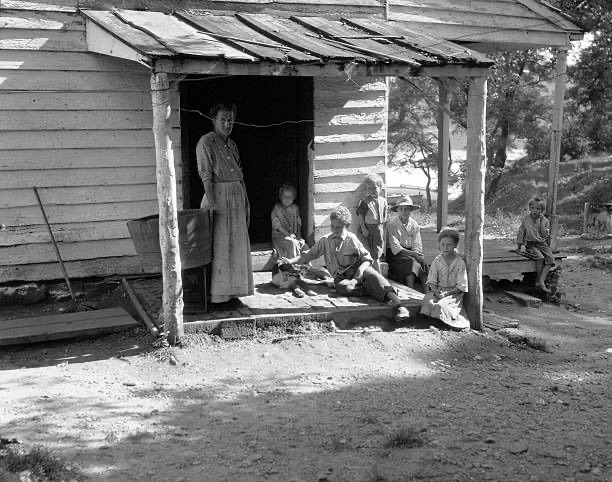
Quilting is an old Appalachian tradition that arose in the Appalachian Mountains out of necessity. The region was, and still is, quite geographically isolated. When there is little business in an area, the people have to become more self-sufficient. Self-sufficiency is one of the characteristics that define the Appalachian region and people.

Quilting has a rich cultural heritage in many countries and among varied ethnicities.

Since the maternal side of my own family came from Appalachia, I’m part of that quilting culture although I don’t quilt myself. The women of that region quilted in order to have warm bed clothing for their families. Since families tended to be large, most required a lot of quilts. There weren’t many “store-bought” bed clothes to be found.

My maternal grandmother, and the women who came before her, all quilted. She had six girl children, all of whom were educated and most worked outside the home teaching school. My oldest aunt is the only one of the children who quilted.

Each quilt is as unique as the quilter who made it. The quilting traditions came from the Scots, Irish and German immigrants, but it also had touches of the influence of the Amish, the Quakers, and the Native Americans.

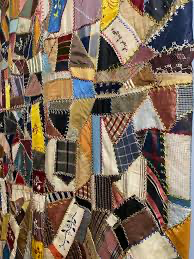
Some of the early quilts, in particular, were made from old feed sacks. Other materials used were pieces cut from old clothing. I have a plethora of handmade quilts I inherited from my grandmother and aunts. The oldest one has a top layer made of pieces of colorful feed sacks and the stuffing is just cotton batting, which bunches up terribly. That quilt was just as warm as any other and I still use it in my bedrooms.

The tops of quilts sometimes told a story, often of family history. There were also popular patterns that were used along with variations on those popular patterns. Many, perhaps most, of the American quilts have geometric designs which came from the Native American culture. African quilts are different and each tells a story, often of a tribe’s heritage. Many European quilts are patchwork quilts. All are usually colorful. All you have to do is an internet search and you will happen upon endless quilting patterns.

Quilting is also a communal activity with quilting bees and quilting circles held in communities. Not only did the quilts tell a story, but it was an opportunity for the women in the community to get together and chat. That is still true in many areas of Appalachia.

In the modern day, quilting has become very popular. There are quilting classes and quilting shows available if you are interested in learning the art of quilting. It is an artistic endeavor, along with practicality, just as much as painting a picture if you had a canvas and a paintbrush. Quilting can also, now, be done on a machine, but somehow the tradition is lost if you machine quilt. Hand stitching is the old, and valued, way.

Posted in Appalachia, nonfiction

An Overview of Higher Education in Appalachia

The picture that you see above was where my grandfather went to what passed for higher education (college) around the turn of the 20th century – the late 1800s and early 1900s. It was called the Kentucky Normal College.

Higher education in Appalachia has always been problematic because of both the geographic isolation of the region and the Appalachian cultural values. To this day, there are few good roads in and out of the heavily mountainous region of the U.S. Until fairly recently, there were few institutions of higher learning that existed in the region.

Cultural values also played a role in the lack of higher education in Appalachia. Jobs that were available were mostly blue collar. Coal miners and farmers are two of the main examples. It was not thought that men working at those professions needed to go to college, except in the case of mining engineers, and women were encouraged to make a family and not to go to college.

Appalachian women were certainly not encouraged to seek higher learning in the past since their role was to run the family home and raise the children. Some of these stereotypes still exist today.

The maternal side of my family, who lived deep in Eastern Kentucky, did not subscribe to these beliefs. My maternal grandfather saw it as a great point of pride that all of his eight children left the area to receive college degrees and some higher levels of graduate education.

He was a farmer and an employee of an oil company. He had a large farm, but simultaneously he worked for an oil company in Kentucky helping to map the mineral deposits and who owned them in his part of the state. Kentucky, particularly the Appalachian portion of Kentucky, has vast deposits of minerals including coal, oil, and natural gas. He believed in higher education and wanted his eight children, including the six girl children to do well in life.

After my grandfather graduated from what was high school in the late 1800’s and early 1900’s, he was fortunate enough to go on to the only real college accessible to him. That college was Kentucky Normal College in Louisa, KY. Another student at that college, at the same time, was Fred Vinson, who later became Chief Justice of the U.S. Supreme Court. They were close friends.

As time passed, some of the children of Appalachia were able to attend colleges and universities just outside their home areas. In Kentucky, several colleges were on the fringes of Appalachia and had a large percentage of Appalachian students enrolled. Two of the early ones were Morehead State University in Morehead, KY and Eastern Kentucky University in Richmond, KY.

Many of the colleges were originally “normal” schools. Normal schools are colleges that primarily train teachers. The students received a bachelor’s degree in teacher education. Later, in the 20th century, these normal schools expanded to full-fledged colleges and universities. They still have a sizable percentage of Appalachian students enrolled.

Not everyone in Appalachia was as progressive as my grandfather. That’s still the case in some areas. The girls in many families were not encouraged to go to any college. Even the boys were encouraged to stay and work on the family farm or in the coal mines. Many were drafted to serve in World Wars I and II. Others enlisted.

There are now a few scattered colleges and universities in the Appalachian regions. A Kentucky example is the University of Pikeville in Pikeville, KY which is deep in the coal-producing area of the Appalachian area in the state.

Higher education still continues to be a problem in Appalachia. Many potential students stay home and work close to home, some all their lives. Some have migrated outside the area to find work, primarily to Ohio and Michigan. In the 1950s and 1960s, there was a mass migration out of Eastern Kentucky to the north, often to work in the automobile factories.

It is often even difficult to sell the benefits of high school education to the people of Appalachia. They see more value in their children staying close to home. One of the primary cultural characteristics of Appalachia is the clannish nature of the people.

Distance learning and online education have helped the problem of lack of access to higher education in Appalachia although that is a reasonably new solution. Money for the infrastructure for widely-based broadband in the Appalachia area of Kentucky has recently been allocated under the infrastructure bill.

Posted in Appalachia

Where is Appalachia?

C1101958-AD7B-4549-AF10-2B3C8E4BEC8A

I live on the fringes of Appalachia and my roots are deep in this region of the United States. I live in a university town in northeastern Kentucky. Appalachia has rough geographic boundaries, but it is largely a cultural region, as opposed to a geographic region, of the U.S. In many places, Appalachia is difficult to access because of geographic impediments. The region is located in the Appalachian Mountains. Roads are few and the roads that are there are curvy through the mountains. In some places, the roads are not well built and are prone to washouts and mudslides. The fact that they run through mountains doesn’t help.

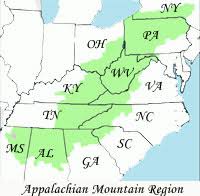
If you look at the map above, you can see that the Appalachian region includes all of West Virginia, almost half of Kentucky and Tennessee, most of Pennsylvania, one-third of Ohio, and the southern slice of New York. In the south, it touches Virginia, North Carolina, and South Carolina, and includes portions of Georgia, Alabama, and Mississippi. Appalachia stretches from New York to Mississippi and encompasses 206,000 square miles where roughly 26 million people live.

It is a large region of the United States and even though parts are sparsely populated, the whole has a sizable number of people residing there.

Posted in Appalachia

Appalachia: Appharvest Aims to be the Breadbasket of the U.S.

I live in the south-central portion of Appalachia, actually on the fringes of the region, in northeastern Kentucky. We are excited about the future here due to Appharvest making its home in the county in which I live.

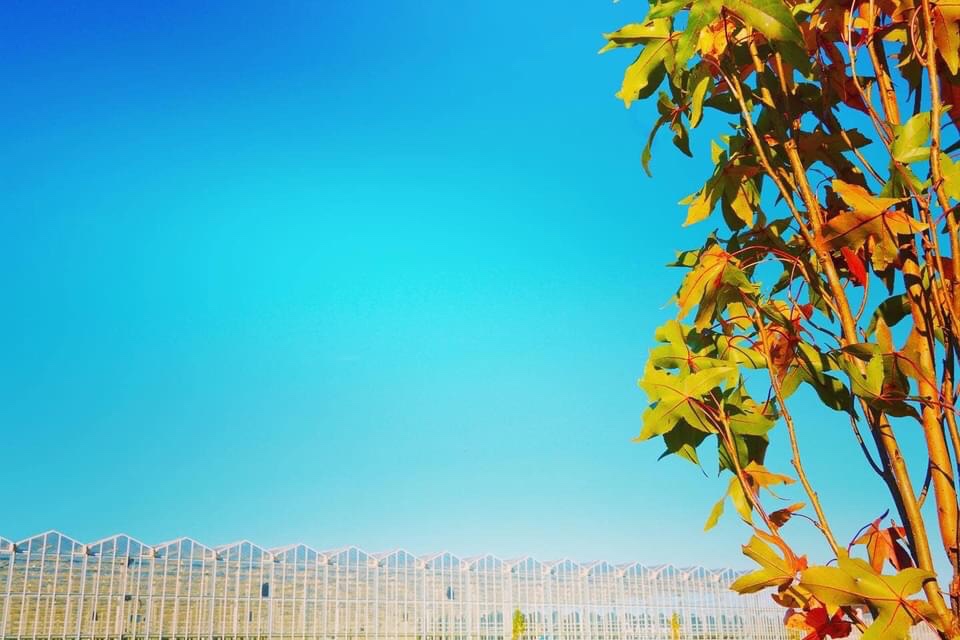
Appharvest is a startup company that has opened the largest greenhouse in the U.S. in Rowan County, KY. The goal of the company is to produce the majority of tomatoes used in the U.S., taking that market share away from our traditional supplier of tomatoes, Mexico.

Appharvest is a greenhouse that covers 60 acres and employs almost 300 people. Jonathan Webb is the founder of the company. He is a Kentucky resident and a graduate of the University of Kentucky. Appharvest is within a day’s drive of 70% of American consumers. It is a facility, patterned after greenhouses in The Netherlands, that uses sustainable crop production techniques. It uses recycled rainwater for irrigation and a combination of solar energy and LED lighting in order to grow the tomatoes. At a later time, Appharvest will expand beyond tomatoes.

Immediately upon the opening of the Rowan County, Kentucky facility, ground was broken for a second Appharvest greenhouse in Madison County, Kentucky. Appharvest is set to be a great asset to this region of Appalachia, providing jobs and national exposure.

Posted in Appalachia

Appalachian Dialect: Comments on its history

The way that people talk in the Appalachian region of America, particularly the Southern Appalachian region, is a subject that has always fascinated people from other regions. Southern Appalachia runs from southeastern Pennsylvania to Alabama. The dialect has often had fun poked at it because it sounds different than English spoken in other areas of the U.S. It isn’t as simple as just the fact that the Appalachian people have a particular accent. Their actual speech patterns may differ from traditional English.

One of the myths about the Appalachian dialect is that it dates back to Shakespearean English. Not true. It probably goes even further back to the days of Chaucer. The dialect has survived, for one reason, because of the geographic isolation of the area. Appalachia is mountainous with hills not as high and new as the Rocky Mountains in the west, but high hills nonetheless. They are more rounded and green. The Appalachian Mountains have been here longer and have sheltered the people from many outside influences. Roads into the area have been difficult to build and expensive. There still aren’t many of them.

The fact is that the Appalachian dialect is close to that of the first settlers to America. Chances are, the English spoken among the first colonial settlers sounded a lot like the Appalachian English of today. It is the English of the Scots-Irish immigrants who first settled in Appalachia. Other cultures are also represented in the Appalachian dialect. The area had 10% African-Americans around 1860. German immigrants also populated the area.

Not only does the English spoken in Appalachia sound different due to the way words are pronounced, the grammatical structure of sentences is actually different. One difference is the agreement between the subject and verb in a sentence. An example would be, “Horses is large animals,” and “We went to find the dogs, which was over the hill.” This pattern of speech was found in the Scottish lowlands as well as colonial America due to the Scots immigration to the area.

Maybe the vocabulary of Appalachian speech is most fascinating. Words like “poke” refer to a sack. “Pone” refers to bread made in a skillet, usually cornbread. A well-known word is “holler” which refers to the valley or hollow between two mountains. “Sallet” refers to salad. The Appalachians put the letter “a” before verbs like “I’ll be a-going to the store right now.” Unusual contractions are used like “They done gone to town.”

The people have southern Appalachia have been laughed at and discriminated against because of their different dialect. They have been called “rednecks” and “hillbillies” in a derogatory way. During the great migration of Appalachian people, between the 1940s and 1960s, to northern climates in the U.S. to find work, the city of Cincinnati, Ohio actually made it against the law to discriminate against them.

There are many legends and myths associated with Southern Appalachia and those surrounding the language and dialect of the Appalachian people are just some of them.

Posted in Appalachia, Non-fiction

#SoCS – 5/19/18 – Stories of #Appalachia – The Postman and the Dog

IMG_0789

Up until I was in my 20s, my uncle lived deep into the Birch Branch hollow  (pronounced “holler” in the eastern Kentucky dialect). He lived in a cabin and with him lived his female Doberman Pinscher, Gertrude. For awhile, he also had a male Doberman Pinscher named Sue, after Roger Miller’s song, “A Boy Named Sue.”

But this story is about Gertrude. My uncle was a postal service worker in Magoffin County, Kentucky. He delivered mail and Gertrude accompanied him. Mail carriers in rural areas tend to drive slowly between stops and my uncle certainly did. One reason he drove slowly is because of where Gertrude rode in/on the station wagon that he drove. She rode on top of it. My uncle and Gertrude were something of a legend in Magoffin County because this was quite a sight to passers-by.

My uncle passed away in 1974 and left poor Gertrude behind. She was old then and very bonded to him. She lived the last years of her life on my cousin’s porch, in a cushy dog house, undoubtedly grieving for my uncle. She was bonded and there was little to do for her although my cousin certainly tried.

A man and his dog.

Posted in Appalachia, Non-fiction

Stories of #Appalachia – Birch Branch Today

42A67ACA-F936-489C-B59C-7775BD464DD3

My grandfather’s farm, in Magoffin County, KY, USA, located in the heart of Appalachia, is no more now in 2018. It was located at the intersection of the small dirt road, Birch Branch, and a county road that was only a little more well-traveled, Burning Fork. My grandparents have been gone now for many years and the farm sold off. I only have one reason now to go back to Birch Branch and that is a much-loved cousin who still lives in the area. I guess a second reason is to gaze longingly at what used to be the farm and wish for things that used to be. I feel less and less able to do that and more likely just to remember it in my heart and mind.

Today, unless you can remember Birch Branch and my grandfather’s farm in what used to be lovely eastern Kentucky, you wouldn’t recognize it. The road is the same, dirt and some gravel. But where my grandfather’s and great uncle’s farms were beside it, now there is a trailer park. Not a well-maintained trailer park, but trailers with neglected little children running around in dirt yards and dogs tied out in the heat on chains. Usually, there are men sitting on the steps of the trailers, during the day when they should be working. There are no jobs. The unemployment rate in the county is upwards of 33 percent. They either don’t think of it or don’t have the means to travel to find a job like generations before them did.

You’ve heard of the opioid problem in the U.S.? You’re looking at it when you view what is now where my grandfather’s farm used to be. Instead of working, these men are taking pain pills. OxyContin, Percocet, Hydrocodone, any of the codeine or morphine=based drugs they can get. Most of them aren’t just temporarily high because of some sort of problem. They are the long-term addicted. If they ever had job skills, they lost them long ago. Generations of men just like them lost them long ago. It is the cycle of poverty and drug abuse.

Such things had never been heard of when my grandfather farmed this land. If you couldn’t find a job around home, you joined the military or you left home and worked away. You didn’t give up and sit on the steps of a trailer stoned out of your mind day after day after day. I find these people and this lifestyle disgusting.

The creek is still there, filled with trash. I can still envision the part of the land that was my great-uncle’s. He had a beautiful collie dog named Lassie who I played with as a child in the green pasture land. The horrible drug trailers populate that land now.

Some of you may think that the loss of coal mining is responsible for this problem. Not so. Magoffin County is not a coal mining county. The loss of self-respect and the availability of drugs is responsible for the problem. When I visit, I want to scream at these people to get in their cars and find a job. It wouldn’t help.

Politicians can discuss the opioid problem, but until they can find jobs for these people, the opioid problem will remain. It may, right now, be too late. I hate to sound cynical about an area that I loved so much, but I don’t expect this social and cultural problem to be solved in my lifetime. Magoffin County, KY is certainly not the only county in an area as big as Appalachia to have exactly the same problem.

Posted in Appalachia, Non-fiction, Uncategorized

Stories of Appalachia: Birch Branch

6B427DE9-B136-43A7-B481-82F479262612.jpeg

There is a little creek that runs up a hollow (pronounced “holler” in eastern Kentucky) called Birch Branch. Now in case you don’t know what a holler is, I’ll tell you. It is the very narrow valley between two mountains. I’m not sure if that term is specific to Appalachia, but that’s the only place I’ve ever heard it used. Birch Branch is the creek that was beside the farms and houses where my family, for many generations back, lived and thrived. The name came from the Native Americans. I assume it was named because of the slight river birch trees that grow by the creek.

I didn’t live there. I grew up in northeastern Kentucky which is still Appalachia, but it isn’t the heart of the region. Birch Branch and the area around it, which is in Magoffin County, Kentucky, is in the heart of Appalachia.

When I was growing up, we used to visit my grandparents and other relatives in and around Birch Branch very frequently. That area was originally where my maternal grandmother’s people lived and, when I was a girl, most of them still lived there. My mother, dad, and I were often there every weekend. I developed an understanding of Appalachia and its people because I am one of its people. My mother grew up there. I have deep Appalachian roots through her that extend back to the Revolutionary War.

Back to Birch Branch. It was a beautiful place back in those days. Heavily wooded. Mountainous. A few homes miles apart. The road was dirt and gravel. My grandfather and grandmother married and bought a house on that road in 1901 along with a beautiful farm. They raised eight children in that farmhouse, including my mother.

By the time I came along, they had moved to another farm house on what they called the main road, an intersecting road with Birch Branch. All of my childhood, my cousins and I would play up and down the Birch Branch road and in that creek. We heard stories of what had happened there in the past. One story was that one of my great-grandfather’s wives had gotten angry with him and thrown herself into the creek. I’ll have to tell you that it would be very hard to drown yourself in that creek since the water level is usually low. That story is part of the family legend.

One particularly poignant memory for me is a trip I took up Birch Branch with my grandfather in his cart pulled by his mules. We went to his family’s homeplace, which was farther on from Birch Branch. I remember that, even as a child, the beauty of that place struck me. Green, lush, pure, clean. Not like it is today. The remains of the log cabin in which my grandfather had grown up were in the wonderous meadow to which he took me. I’ll never forget that special day. Circa 1960s.

Birch Branch is part of my heritage. Stay tuned for Part 2. Birch Branch today.

Posted in Fiction

Dark #writephoto

74571A80-9DFC-4547-B5C5-8811A808B9B6

The stress that permeated his family was unbearable. There were no jobs. No way to make a living. He was thinking of leaving the small town in the Appalachian Mountains to find work elsewhere. He would try to come home on the weekends. So many in generations before him had done the same. Others had moved their families to cities, to other towns, where they could find work. Their families weren’t usually happy. The people of Appalachia were clannish. They loved their mountain life existence, their extended families, their neighbors. They didn’t want to go to a strange place. He was thinking of going it alone, sending money home, coming home when he could.

He walked before dawn at the foot of the mountains. Thinking. Pondering. It was so beautiful here. The sun was about to rise and he stopped to watch. He had seen this sunrise many times and each time it was more beautiful as it rose over the mountains. No wonder the family didn’t want to leave. People from the outside didn’t understand. They thought them lazy. That they were people who wanted to be on the government dole. That wasn’t it at all. Their culture was different from that on the outside. They knew they wouldn’t fit in out there. Their families and their lifestyle was important to them.

The coal mining jobs had gone away due to the movement toward clean energy. Farming had gone away because tobacco was no longer a cash crop and the corn and other crops had been usurped by the big corporate farms. Because they were geographically isolated, industry did not want to locate there. What were they supposed to do? Abandon the life that they had known for generations?

He had been a specialized machinist in the mines. He could get a job on the outside and had even interviewed with other companies. As the sun rose over the mountains, he knew he had to leave to support his family. He had to send his children to college. There was no place for his wife to work and both their parents depended on him. As the sun rose higher in the sky, he made his decision and started walking home to tell his family. He would not lose them or his connection to this beautiful place. He would drive home on weekends. He would give them the gift of keeping their lives intact.