She walked away from her home because she needed to think. Depression and anxiety were plaguing her. She felt like she was losing her mind. Her heart was sick.
She arrived at the path that led to the ocean. She started to walk toward the ocean. She wanted it to swallow her. Maybe then she could forget.
When she got to the sculptures, she stopped and admired them. A feeling of hope washed over her. She wanted to live, really live. After standing there, she turned to walk home.
She knew what she had to do.
Thanks to Rochelle for hosting #friday Fictioneers!
The Appalachian Honor Culture is a phenomenon that exists in the Appalachian Mountains, U.S., but also exists in other forms in different geographical areas in the U.S.
Sometimes I think I have lived in the foothills of the Appalachian Mountains, U.S. for so long that I take for granted the cultural differences that exist here and other places outside these hills.
The Appalachian Honor Culture is one of those cultural behaviors that have existed in these mountains ever since the Native American people here were encroached on by the white European settlers. This culture involves how people of the Appalachians settle their differences.
If a person, particularly a man, in Appalachia is insulted, embarrassed, called out, or shamed in any way, the Appalachian Honor Culture demands that they react either with threats of violence or immediate violence. As an example, let’s say that one man insults another man’s wife or one man comments on any aspect of another man’s life in a negative fashion, Appalachian men react with their fists first and think about legal charges of assault later.
This scenario is played out in Appalachia, especially southern Appalachia, over and over in cases of small, unintended embarrassments to bigger insults and arguments. There is usually no talking about a problem and settling it peacefully. Either violence erupts or something more insidious like the holding of grudges. Appalachians can hold a grudge, and often do, for a lifetime, even against members of their own family. It isn’t only men who uphold the Appalachian Honor Culture. Women do as well.
Let’s take my maternal grandmother as an example. She was, in many ways, a woman ahead of her time, but she was also an Appalachian through and through. There were members of our family and extended family that she held a grudge against for a lifetime. There was seldom such a thing as forgiveness even long after the issue that caused the grudge was long forgotten.
She loved my grandfather with a passion even though they seldom agreed on anything. If another woman, however, tried to make inroads with him, she would have picked up her shotgun and run her off their property without hesitation. Then, she would hold a grudge against the woman forever. This was and still is normal behavior in the Appalachian Mountains.
In Appalachia, you have a rather odd mix of people who are the nicest people you’ve ever known, the coldest and most stubborn people you’ve ever known, coupled with violence and feuds that could rival any gang activity in big cities.
The earliest settlers of the area came, in large part, from the Anglo-Scottish borderlands, and parts of Ireland and Great Britain with a smattering of Germans thrown in. You may find similar cultural anomalies in these areas that the immigrants brought with them to the U.S.
“Isn’t this the way you wanted it,” Emil asked Portia as she lamented her small social circle.
“I wanted to escape my previous life. Not my present life,” Portia responded to Emil.
“Portia,” Emil responded, “I’m not sure that you can be certain you have yet escaped your previous life. How can you possibly take the chance of putting yourself out there socially?”
As Portia contemplated Emil’s question, Emil thought about how he met Portia soon after she arrived in the small Portuguese town and they became fast friends.
Portia was a fun-loving, social person who had sought a way to rid herself of baggage in her life in the U.S. A drastic way, yes. Probably not a reasonable way. Portia had been desperate and had simply walked off and left her old life behind.
Emil said, “Portia, it isn’t easy to vanish in today’s world. Even though you have a fake passport and you don’t use your credit cards, he will probably find a way to trace you if he wants to.”
Portia would never go back to him or work for him again.
Ten days passed and Portia stayed in seclusion other than having Emil with her. One night, there was a knock at the door. She opened the door to find several law enforcement officers standing there. They announced that she was under arrest and would be extradited back to the U.S.
She went with the officers, crying and screaming, with Emil following. When they got to the jail, there he stood.
“Portia,” he said, “You can stay in Portugal. I don’t want you back. I do want the million dollars you embezzled from my company back. You almost bankrupted us.”
“I don’t have it now,” she said as she cried and begged for his mercy.
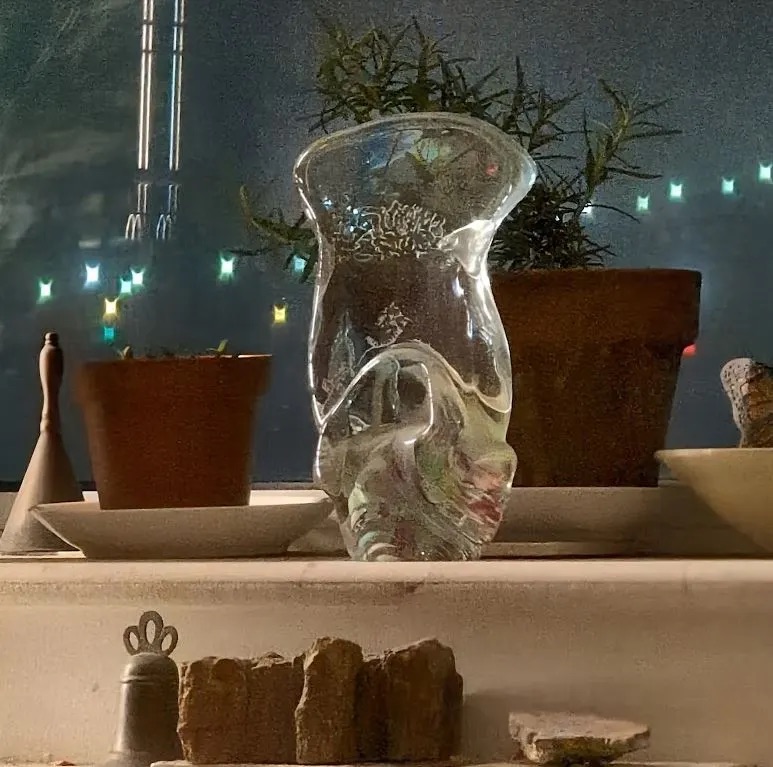
The girl looked out the window of her high-rise apartment at the skyline of New York. She was placing her few keepsakes from home on the window sill.
Except the last one. The distorted glass. Ellie found it lying in the gutter of a New York City street.
She thought it was welcoming her to New York. A striking city that was a bit contorted like the glass.
There was a rattle and the glass slipped off its perch. It shattered. Ellie gasped and hoped that her life in the city wouldn’t shatter like that glass.
“Captain,” the detective said, “we know that women are not often grab and go thieves.”
“In the past, that was true, but in the present time, I’d believe anything. How do you explain what Mrs. Johnson saw? What about the shoe in the gutter?”
Across town, Gracie was making her way home on the side streets and alleyways. She had taken off the hat and wig she had worn and ditched them. It had been slow going. She was walking with just one shoe.
“There is another mystery,” the Captain commented. “I find it really coincidental that the thief grabbed Mrs. Johnson’s purse. No one could have believed she would have $10,000 U.S. dollars in cash in that handbag.”
“Hmm…why didn’t the thief pick a rich-looking woman?” asked the detective.
Gracie was finally home. There it was, all $10,000 of it. She thought back at the conversation she had overheard between her boss and a friend. The friend had a debt to pay, and she was musing on when and where she had to go to get the money.
Little Eddie ran into the room and Gracie bent to hug him.
“Mommy,” he said, “where’s your other shoe?”
“Don’t worry, Eddie. We can afford to buy shoes now.”
The Captain started looking at the pictures a bystander had taken of the robbery. The face of the thief was clear and familiar to him. Even though the hair was different, that was Gracie’s face. Gracie, his housekeeper.
She sat on a bench across the street from the museum, studying the sculpture in front. It was a man, seemingly sculpted from wood, reading. He reminded her of a book she once read, “A Man of Two Faces.”
If you looked closely at the man, you could see his skeletal-like face. Above it, between his forehead and the crown of his head, another face appeared to her. You could distinguish two eyes and a nose that would be looking skyward if the sculpture could have looked up. He captured her imagination particularly given the times she was living in.
The outward looking face of the man was bowed, reading a book. The book he was reading, she imagined, was a book on American culture in these unsettled current times. There were bitter political rivalries, hundreds of conspiracy theories, religious involvement, misinformation and disinformation. Neighbors turned against neighbors and family against family. Long-time friendships were forever destroyed. The American dream to her seemed to be gone and she had no understanding of half the American population and its thinking.
She looked at the other face of the sculpture. That face wasn’t as clear, the expression was more off-kilter, perhaps confused, and a little dreamy. Maybe that face was dreaming of what could be, but wasn’t, in America. The American Dream, but this time an inclusive American Dream that was available to everyone. Was it now lost forever? Destroyed by greed and the lust for power? The sculpture had no answers.
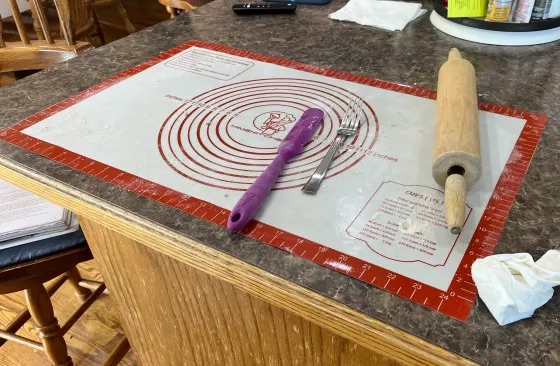
Mollie scurried around her kitchen, cooking for the festival in her town. Food from the southern US is often prepared differently than food from anywhere else.
Mollie couldn’t decide between entering her stack cake or a cushaw pie in the competition. Her neighbor was going to enter cushaw pie, but Mollie’s pie was her specialty dish.
The day of the competition came and Mollie’s pie won the blue ribbon. Her neighbor was angry and threw Mollie’s pie to the ground screaming.
Mollie learned that real friendship is hard to find and should be cherished and nurtured.
______________________________________
Note: Cushaw pie is not common outside the southern U.S. A cushaw is a gourd and the filling is used to make pie. Many think it is tastier than pumpkin pie.
I awakened with a start. What had I heard? Oh, it was only Sophie, my German Shepherd dog who sleeps beside my bed. Wait! Sophie! Why was she whining? I leaped out of bed realizing my clock said 6:45 a.m. I usually took her for a walk on the beach by 5 a.m.
We walked outside. She pushed open the garden gate and started for the beach. I followed trying to stop her. Since one of her strides is equal to three of mine, there was no hope of catching her.
I jumped in my car. What else could I do? My dog was taking herself for a walk to the beach.
I pulled up in a parking space watching Sophie run gleefully around on the beach. As soon as I stepped on the beach calling her, a police car pulled up beside me. Sophie immediately ran to me, fearing I was in danger.
Ma’am, get your dog off the beach.”
Sophie barked at the officer. Her bad dog bark.
“Get off the beach with that dog,” he said in a loud, aggressive voice.
“Officer, if you would just give me a………”
What happened next wasn’t very pleasant. Sophie and I ended up looking through the bars of the backseat of a police car.
I was unhappy. The officer was unhappy. But Sophie? She had gotten to defend me from the bad police officer. Now if she can only figure out how to charm us out of jail.
The old lady trudged up the street to the church she had attended for more than 60 years. The light from the steeple caused the white church to glow. She climbed the stairs up to the steeple.
The violin was lying on the table. She opened a window for some cool air.
The old woman started to play. She played Horner’s “My Heart Will Go On.” A crowd gathered on the street. They waited for her to come out to praise and thank her.
The steeple went dark. She didn’t appear. They looked for her, but she had vanished.














 The Write Scribe