Posted in Appalachia, nonfiction

An Overview of Higher Education in Appalachia

The picture that you see above was where my grandfather went to what passed for higher education (college) around the turn of the 20th century – the late 1800s and early 1900s. It was called the Kentucky Normal College.

Higher education in Appalachia has always been problematic because of both the geographic isolation of the region and the Appalachian cultural values. To this day, there are few good roads in and out of the heavily mountainous region of the U.S. Until fairly recently, there were few institutions of higher learning that existed in the region.

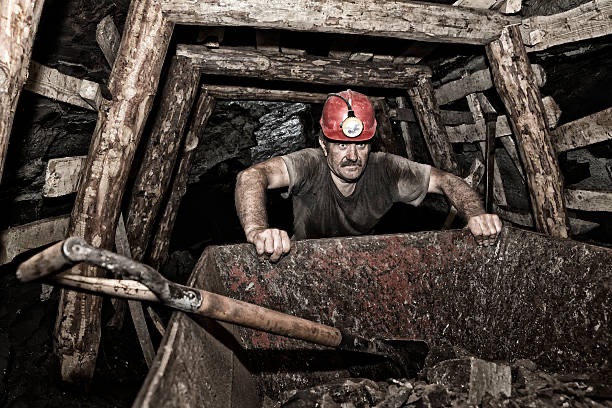
Cultural values also played a role in the lack of higher education in Appalachia. Jobs that were available were mostly blue collar. Coal miners and farmers are two of the main examples. It was not thought that men working at those professions needed to go to college, except in the case of mining engineers, and women were encouraged to make a family and not to go to college.
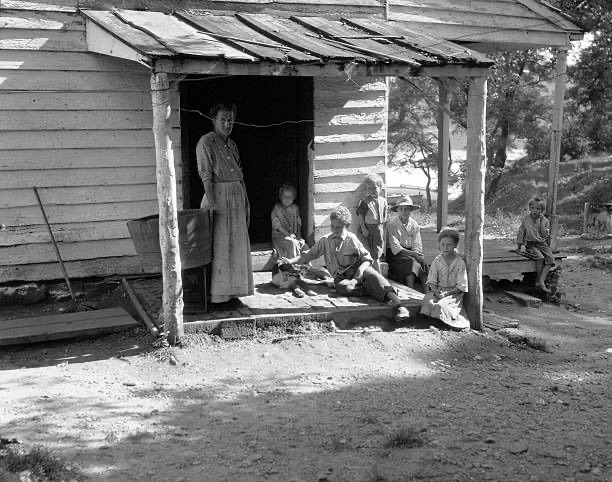
Appalachian women were certainly not encouraged to seek higher learning in the past since their role was to run the family home and raise the children. Some of these stereotypes still exist today.

The maternal side of my family, who lived deep in Eastern Kentucky, did not subscribe to these beliefs. My maternal grandfather saw it as a great point of pride that all of his eight children left the area to receive college degrees and some higher levels of graduate education.

He was a farmer and an employee of an oil company. He had a large farm, but simultaneously he worked for an oil company in Kentucky helping to map the mineral deposits and who owned them in his part of the state. Kentucky, particularly the Appalachian portion of Kentucky, has vast deposits of minerals including coal, oil, and natural gas. He believed in higher education and wanted his eight children, including the six girl children to do well in life.

After my grandfather graduated from what was high school in the late 1800’s and early 1900’s, he was fortunate enough to go on to the only real college accessible to him. That college was Kentucky Normal College in Louisa, KY. Another student at that college, at the same time, was Fred Vinson, who later became Chief Justice of the U.S. Supreme Court. They were close friends.

As time passed, some of the children of Appalachia were able to attend colleges and universities just outside their home areas. In Kentucky, several colleges were on the fringes of Appalachia and had a large percentage of Appalachian students enrolled. Two of the early ones were Morehead State University in Morehead, KY and Eastern Kentucky University in Richmond, KY.
Many of the colleges were originally “normal” schools. Normal schools are colleges that primarily train teachers. The students received a bachelor’s degree in teacher education. Later, in the 20th century, these normal schools expanded to full-fledged colleges and universities. They still have a sizable percentage of Appalachian students enrolled.

Not everyone in Appalachia was as progressive as my grandfather. That’s still the case in some areas. The girls in many families were not encouraged to go to any college. Even the boys were encouraged to stay and work on the family farm or in the coal mines. Many were drafted to serve in World Wars I and II. Others enlisted.

There are now a few scattered colleges and universities in the Appalachian regions. A Kentucky example is the University of Pikeville in Pikeville, KY which is deep in the coal-producing area of the Appalachian area in the state.

Higher education still continues to be a problem in Appalachia. Many potential students stay home and work close to home, some all their lives. Some have migrated outside the area to find work, primarily to Ohio and Michigan. In the 1950s and 1960s, there was a mass migration out of Eastern Kentucky to the north, often to work in the automobile factories.

It is often even difficult to sell the benefits of high school education to the people of Appalachia. They see more value in their children staying close to home. One of the primary cultural characteristics of Appalachia is the clannish nature of the people.

Distance learning and online education have helped the problem of lack of access to higher education in Appalachia although that is a reasonably new solution. Money for the infrastructure for widely-based broadband in the Appalachia area of Kentucky has recently been allocated under the infrastructure bill.

Posted in #atozchallenge, Challenges

E is for Education – #AtoZChallenge – April 5, 2024

#AtoZChallenge

Education or lifelong learning as you age will keep your mind sharp and help stoke your curiosity about the world. Not only will you stay alert and aware, you can learn the skills for a new “encore” career if you miss working, part-time or full-time. Maybe there is something, besides the job you have either retired from or you will retiring soon, that you’ve always wanted to do. If you study for that new encore career, you can have a fulfilling work life after retirement from your major employer.

If you have a local university nearby, it may have programs that allow senior citizens to attend classes for free. Check with the Admissions Office when you file your application for admittance.

An example might be graphic design. Do you like to play on your iPad or computer? Are you interested in making a little money designing webpages or even entire websites? Is there some other job in graphic design you prefer? You could work part-time and enjoy retirement the rest of the time, but you have to gain the skills. Those will come through education, either in a classroom environment or online through remote learning.

In my case, I was a college professor of finance and business for over 25 years. I was able to retire with full benefits, but I missed working. I missed my co-workers. I missed being able to express my creativity daily. I actually missed everything about working. I had always been a writer and had written a few things for publication. Writing became my encore career. It was hard at first, but I’ve had one book and over 400 articles published.

If you would like to incorporate socialization with your education, you might choose to take classes on a subject of interest in a local university or community college classroom setting. If you prefer to study on your own, you can choose to use online learning via computer. Even though my primary fields were finance and business during my career, my interests now are very diverse. Currently, I’m taking classes (free online classes) in anthropology and genetics. There is a wide array of subjects you can choose from.

You can find online adult education classes at numerous sites online. One is Udemy. You can find classes on a wide array of subjects for reasonable fees. Another excellent platform for online learning is Coursera. If you do an internet search, you can find other platforms for online courses depending on what you want to study.

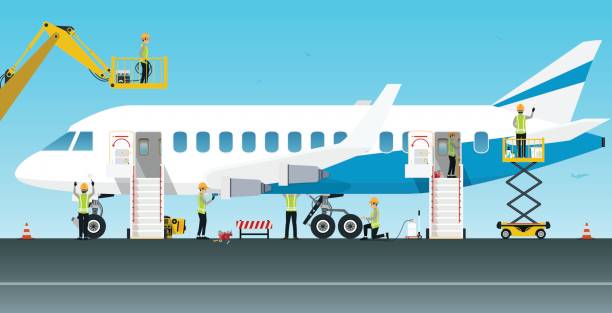
You can also go the vocational route if that suits you. I have a friend who had a 30 year career as a podiatrist. After he retired, he went to vocational school and became an airplane mechanic.

Aviation engineer workers are maintaining various aircraft systems.

Adult education, or lifelong learning, will help you keep up to date skills and help you feel part of the modern world. It will keep your brain active and alert. Older adults can benefit in many ways from studying something of interest after retirement.

#AtoZChallenge

Posted in Appalachia, Drug abuse, Eastern Kentucky, Poverty, Uncategorized

Appalachian Roots

I am from Appalachia, central Appalchia to be exact. Northeastern Kentucky to be even more exact. My roots have a bit of a split personality. Part Appalachian, part Swedish! What a combination which probably accounts for my split personality and eccentric leanings. Someday, I will write about my Swedish family. Now I want to write about Appalachia. Appalachia breaks my heart.

I have always lived geographically close to Appalachia and spent almost 30 years teaching students who came from the region. I did not grow up deep in the heart of Appalachia but I frequently visited my grandparents and other family who lived in the Central Appalachian region. As I grew up, their culture was my culture, their values were my values, their way of life was my way of life. By the time I was becoming a teenager, Appalachia’s best days were behind it but I didn’t know it. My grandfather had worked hard to insure that his eight children, including my mother, had left the region in order to get an education and seek their fortunes. One had to go elsewhere for an education. There were only two universities reasonably close by and the terrain of the region is geographically isolating.

Poverty was the calling card of the region. My grandfather was a landowner, a successful farmer, and had gas and oil wells on the rich land. When I looked out his front door, I saw acres of corn and tobacco growing and many dairy cattle grazing. He was the exception not the rule. He refused to let his family work in the coal mines, but coal mining was one of the principal industries. Much of the region is not suited for farming as it is too mountainous. Manufacturers did not bring their industries to Eastern Kentucky. There were no good roads.

The people opposed interference from outside the region. They feared that their culture would be taken away, their way of life stolen, their children corrupted. They feared cultural change more than they feared poverty.

My grandparents are gone now but the old farmhouse still stands. Do you know what I see when I look out the door now? Trailer parks. Very poor, hopeless people. Children playing in the dirt yards. Starving dogs surviving on table scraps tied out in the yard. I know enough about the area to know what lies within some of those trailers. Drugs. Heroin. Pain pills. In that county, there is little economic activity with around a 33% unemployment rate. Farming is gone. The gas and oil wells still pump but the owners of the mineral rights live far away or the mineral rights were unfortunately sold along with the land. The people lost their way of life but not to manufacturers or education. They lost it to drugs and poverty.

Appalachia breaks my heart. #appalachia #poverty #drug abuse

Watch this space for much more on Appalachia.