Posted in Musings, Non-fiction

Thursday Thoughts – April 18, 2024

Thinking about the benefits of the sea…….

Photo @ R.M. Carlson

I talked with one of my best girlfriends this morning. She and her husband are planning a short vacation to America’s Gulf of Mexico coast. The picture above is of the Gulf at sunset, looking west from the western coast of Florida. Hearing her excitement and then looking at my ocean pictures have caused me to long for the sea today.

I’ve never lived by the sea unless you count the year I spent teaching at the University of Porto in Porto, Portugal. During that year, I lived several miles from the coastline of Portugal, but I went to the sea often. A little later in my life, my husband and I spent the winters in Florida in the U.S. We had a small place just a mile from the Gulf and I went there daily just to sit by the sea.

I’ve always said that spending time by the sea heals my soul. I think I need some of that now! It turns out that there is scientific evidence that supports my theory. The sound and motion of the waves lapping against the shore can improve your circadian rhythm and allow you to sleep better. Spending time in salt water can moderate your blood sugar and improve your muscle and nerve performance.

Photo @ R.M. Carlson

The above photo is of the beautiful Mediterranean Sea in 2019. This shot is off the southern coast of Italy.

Salt water even rejuvenates your skin. It can heal minor cuts and scrapes. It is full of the mineral magnesium which is essential for so many body functions. Magnesium can cure migraine headaches and is beneficial in so many ways. It is almost impossible to get enough magnesium in a western diet unless you live by the sea and consume a lot of fish and seafood. Magnesium helps the heart function properly. It, however, is not plentiful in food and we often should supplement the right type of magnesium.

Salt water is also full of other minerals and trace minerals that are essential for good health. Minerals such as zinc, iron, and potassium along with a whole host of trace minerals are bio-available in sea water. No, you don’t have to drink it. If you spend time in the sea, your body absorbs the minerals.

I’ll talk about the many other benefits of the sea in other posts. Right now, I think I’m going to get better about taking my magnesium supplement and hope that a trip to the sea is in my near future! Does the sea make you feel better? What are the benefits of spending time at the sea for you personally? I’d love to hear your comments!


Posted in #atozchallenge, Challenges

G is for Gerontology – #AtoZChallenge – April 7, 2024

Theme: Aging and aging issues

#AtoZChallenge

What is gerontology? Gerontology is the study of the social, cultural, behaviorial, health, and other aspects of aging and older adults. As the population ages, and the baby boomer generation is currently the older generation, the study of gerontology as a job gets increasingly popular. Gerontologists or geriatric specialists work in hospital settings and in private practice.

Gerontologists are advocates for older adults. The needs of older adults cannot just be lumped into one big category. They vary based on the health and gender of the individual. The needs of older individuals include transportation, medical care, living arrangements, legal needs, and nursing care, just to name a few. If you are an older adult and you have to enter a hospital, ask if they have a gerontologist on staff and have a meeting with that professional. You can also use the services of a gerontologist to help you plan during your older years. There may be gerontologists available for you, especially if you live in a larger community.

You can search for a geriatrics professional in your state in the U.S. by using this search engine. They can help you find an assisted living facility if that is what you want to do. They can also help you go through the process of moving into assisted living or even a rehab center or nursing home.

Take advantage of gerontology services when you are making plans. They can make the issues of aging more understandable and easier for you to navigate.

Posted in #atozchallenge, Challenges

F is for Family – #AtoZChallenge – April 6, 2024

Theme: Aging and Associated Issues

#AtoZChallenge

The relationships between generations of families is rapidly changing, not just in the U.S. but in much of the world. The generation that is aging right now is the baby boom generation. This generation changed a lot in the U.S. and in the rest of the world, The generations behind us are very different. The baby boom generation is actually where the attitudes starting changing about taking care of the elderly. Now, the generation behind us, those in their 40s, is called the “sandwich generation” because 40% of households in their 40s include both an elderly parent and children.

Often,the elderly (who are now usually the baby boom generation), don’t particularly want to live with their children. Illness may make it necessary. Money may also make it necessary. In the U.S., assisted living facilities and nursing homes are prohibitively expensive. Other cultures take care of their elderly far better than the U.S.

There are subcultures in the U.S. that still do feel a desire and a responsibility to take care of aging parents. One area where this subculture lives is the area where I live, Appalachia. You find many multigenerational families in my area of the world. In some other cultures in the U.S., children often live thousands of miles from where they grew up which doesn’t foster the ideal environment for a multigenerational family.

The elderly who have strong family ties often report a stronger immune system, less illness, improved mental and physical health, and a longer life overall. Work on your family relationships during your life so they will remain strong and supportive as you age. Check out government eldercare resources for very good information on family life and aging.

Posted in #atozchallenge, Challenges

D is for Depression – #AtoZChallenge – April 4, 2024

#AtoZChallenge

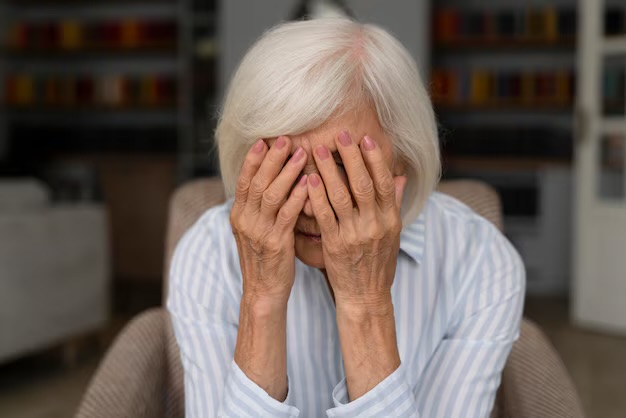
Depression is often a condition people who are aging suffer. It may occur after retirement because people find themselves at loose ends and can’t find a way to structure their life without work. It may also occur because older people lose family and friends at this time in their life. Bouts of depression are normal for the aging, but clinical depression is not. Older people often feel very satisfied with their lives despite the changes going on around them. I find that the twists and turns of life are easier to accept at this older age than when I was younger.

Depression is very treatable by your physician. There are things you can do yourself to combat depression. One of the best activities is to try to live in the moment. Don’t engage in too much nostalgia or in much worry about the future. Find things you enjoy at the present moment. A good meal, the birds singing, the company of a friend, a good book are just a few.

If you notice symptoms like the following in an older friend or relative, reach out to them and offer to help: sadness, anxiety, overeating, oversleeping, irritability, loss of interest in favorite activities, difficulty sleeping, or talking or moving more slowly than usual.

There is mild depression that starts and ends quickly. Then, there are other kinds of depression that may need the attention of a doctor along with medicine or therapy. It’s important to see a doctor if the more serious forms of depression are present.

Here is a good resource if you need to find ways to stay socially active. Often, staying physically active may help any depression you may feel. You may already be shaking your head no, but just consider some of the activities you will find here.

Posted in #atozchallenge, Challenges

C is for Cognitive Decline – #AtoZChallenge 2024

Theme: Aging and Associated Issues

#AtoZChallenge

We tend to associate aging with cognitive decline. Cognitive decline is just a fancy term for dementia or Alzheimer’s Disease. It can also refer to Mild Cognitive Decline which is not considered a form of dementia.

Age-related cognitive decline includes difficulty in finding the right word, slowness of thought, inability to multitask, problems with sustaining attention, and problems with retaining information. In this modern era, if a person exhibits the mildest of these symptoms, their family and doctors automatically jump to the conclusion that they have dementia. If you are worried about a loved one having some form of dementia, these are the symptoms they might be experiencing.

In my grandparent’s era, slowing down a bit mentality was just considered part of the natural process of aging. It was considered to be normal. Nothing to get excited about. Now, everyone wants a diagnosis, so they get slapped with a diagnosis of dementia when mild cognitive decline is, indeed, not dementia at all.

Here are some statistics to think about. Most people who are diagnosed with a form of dementia live in low to middle income countries. There are 55 million people worldwide who have been diagnosed with dementia with five million of those living in the United States. The country where the most dementia is present is Finland. The United Kingdom comes in second. Among developed countries, Japan comes in last. Dementia is on the rise particularly among disadvantaged countries and populations. The harder one has to live, the better the chance of dementia, it seems. People with chronic illnesses also tend to have more dementia.


Mild cognitive decline (MCI) is what most people experience as they age. Sometimes, MCI progresses into full-blown dementia, but often it does not. The symptoms of mild cognitive decline are brief problems with memory, judgment, and language. For example, you may forget where you park, forget your car keys. In the middle of a conversation, you may lose your train of thought or you may not be able to fully follow the conversation. You may get temporarily lost in a place you know well. Your judgment may not be as good as it has been in the past. These symptoms of MCI are nothing to panic about because they happen to almost all people who are aging, but you should report them to your doctor if they get to be particularly bad.

Posted in #atozchallenge, Challenges

B is for Boredom – #AtoZChallenge – April 2, 2024

AtoZChallenge

Boredom: Is boredom a problem in retirement?

Those of you not yet retired may think that I’m crazy for mentioning boredom in retirement. You may look forward to sleeping late, doing what you want, and perhaps traveling. Those of you who are already retired are right here with me on the boredom issue. You’ve found out that there is more to retirement than sleeping late and being a free spirit.

When is boredom a problem in retirement? Often, in America, it is a result of spending most of your working life putting in long hours under a great deal of stress. It’s important to develop hobbies and leisure activities that you enjoy as you will rely on those pursuits when you’re no longer working. Unfortunately, twelve and sixteen hour days leave us tired and stressed and many of us don’t have the time or energy for much leisure or any hobbies. Once the novelty of retirement wears off, we have all those hours in the day to fill.

So what is a retired person to do? At 65 or 70 years old, we may not have the curiosity we once did and we probably don’t have the attention span we did when younger. If you don’t allow yourself to be curious about things you aren’t familiar with, it’s going to be a long retirement. That leads to attention span. You can lengthen your attention span through curiosity.

But now, let’s be realistic. If you have worked all your life, you may feel out of sorts and useless, at least when you first retire. You may be lonely for your co-workers and friends who were related to your job. Your social activities may plunge. You may literally not know what to do with yourself. These things are why you should make a plan before you retire. A plan will help you avoid boredom.

It seems that travel is at the top of everyone’s wish list when they retire. Stay tuned! Travel and associated topics are coming right up and you may be surprised!