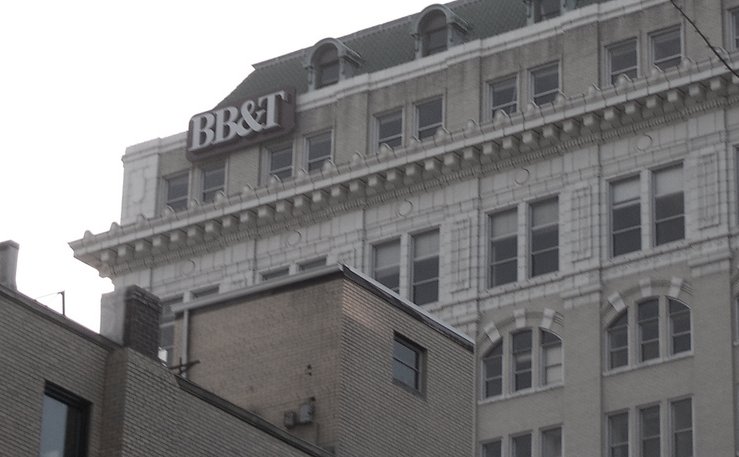
2008 Financial Collapse in Banking
Since the near collapse of the U.S. financial institutions at the end of 2008, the social responsibility of these and other institutions have been front and center in the American consciousness. It became apparent that the big banks and other financial institutions were all about profit and shareholder’s wealth in the short-term and not about their customers at all. It also didn’t seem that these corporations cared about their long-term profits or wealth of their shareholders because they allowed greed to take them so close to financial collapse. This attitude flies in the face of every principle of financial theory under which publicly traded institutions should operate.
The financial crisis in the U.S. really started back in 1999 when the Glass-Steagall Act was repealed. This legislation protected customers and shareholders alike because it prohibited banks of all sizes from engaging in both investment and commercial banking. Banks either had to be an investment bank which sold securities to the public or they had to be a retail bank that accepted deposit accounts and made loans. They could not do both. When Glass-Steagall was repealed in 1999, the scenario that followed was an almost exact replica of what happened in the 1920’s and the resulting stock market crash. Back then, banks were allowed to both accept deposits and make loans and issue securities. A bubble in the stock market resulted due to fraudulent activity and the stock market crashed. In 1933, Glass-Steagall was passed and protected shareholders and consumers alike until 1999. Then, the cycle began all over again. By 2007, banks were facing a crisis of liquidity and by the end of 2008, we really don’t realize how close our banking system in the U.S. was close to complete collapse. It would have collapsed had the Federal Government and the Federal Reserve not bailed them out.
By 2008, the banks had been mingling the investment and deposit functions for nine long years. They had been issuing securities and making loans. We know at least part of the story and there are many causes of the 2008 financial collapse. It was, indeed, a worldwide collapse. Consumers of financial products, such as mortgages, were not blameless. Even though corporations like the big banks and non-banking corporations that failed, like Lehmann Brothers and AIG, are responsible for protecting their shareholders and consumers, those stakeholders pushed these corporations hard for these financial products. In the giant real estate bubble that resulted from the banking practices during that time, it was hard to say no.
Banks and other financial institutions should have said no. They should have stood up to their ethical responsibility to their shareholders and consumers, as well as to their employees. They are the experts. They are the ones with the full financial information, not the shareholders or consumers. They should have used their expertise to stop the fraudulent and unwise banking practices that were the “soup of the day” at that time. But, they did not. They paid the price and so did the consumer.
Banks used their ability to offer investment banking and loans to develop rather exotic financial products such as the subprime loan. This was a mortgage loan made to risky borrowers with poor credit histories that struggled to pay off these mortgages and many of them defaulted. They were then turned into pools of mortgages, called mortgage-backed securities, and were gathered into securities by the big banks called collateralized debt obligations, given high ratings by the credit ratings agencies, and sold to investors. Unfortunately, investors found out later they really weren’t worth anything. Interest rates were low and banks kept searching for riskier and riskier products in which to invest.
Mortgage-backed securities began to fail and collateralized debt obligations proved to be worthless. The banks’ capital positions began to erode. Banks have to always have a certain percentage of capital on hand to be sure they have adequate capital to meet the demand for customer withdrawals and loans. Bank regulators, charged with insuring that banks have adequate capital, seemed asleep at the wheel. Even as this was happening and banks were operating with a razor-thin capital position, consumers were demanding more and more low-interest mortgages.
In late 2008, it all came tumbling down. Banks and consumers alike realized that prosperity could not be built on bigger and bigger piles of debt. Investors suffered because the exotic securities they had purchased were worthless. The housing bubble burst and the price of homes dived steeply. It was a buyer’s market and seller’s just sat on their houses. Capital ratios for banks were so thin as to be non-existent and they had to be bailed out.
Had the financial institutions just remembered that one of the tenets of financial theory is not only maximization of shareholder wealth but also social responsibility, none of this would have happened.
Not only do the managers and directors of a publicly-held business firm have a responsibility to maximize the stock price of that firm, they have a responsibility to maximize the stock price in a socially responsible manner. If a bank were a steel mill, they wouldn’t spill all their pollution into the air because, in the long run, this would lower their stock price as investors and consumers alike would eventually feel the effects of that pollution. In banking, if the managers engage in risky behavior with the money of the consumers and stockholders and the jobs of their employees, they may reap the benefits for a short time, but in the long run, that bank runs the risk of financial collapse. Just what happened in the 1920’s and again in 2008. Social responsibility is the only reasonable strategy for business firms if they want to survive in the long-term.
*Photo by waxesstatic @ flickr.com 2008
Freeman, R. Edward, ―A Stakeholder Theory of the Modern Corporation,‖ in Ethical Theory and Business, 5th and 6th edition, Tom L. Beauchamp and Norman E. Bowie, ed., 1997, 2001 Prentice Hall Inc.
Palazzo, Guido, ―Corporate Social Responsibility, Democracy, and the Politicization of the Corporation,‖ Academy of Management Review, 33 (2008), 773-75.



 The Write Scribe