What is gerontology? Gerontology is the study of the social, cultural, behaviorial, health, and other aspects of aging and older adults. As the population ages, and the baby boomer generation is currently the older generation, the study of gerontology as a job gets increasingly popular. Gerontologists or geriatric specialists work in hospital settings and in private practice.
Gerontologists are advocates for older adults. The needs of older adults cannot just be lumped into one big category. They vary based on the health and gender of the individual. The needs of older individuals include transportation, medical care, living arrangements, legal needs, and nursing care, just to name a few. If you are an older adult and you have to enter a hospital, ask if they have a gerontologist on staff and have a meeting with that professional. You can also use the services of a gerontologist to help you plan during your older years. There may be gerontologists available for you, especially if you live in a larger community.
You can search for a geriatrics professional in your state in the U.S. by using this search engine. They can help you find an assisted living facility if that is what you want to do. They can also help you go through the process of moving into assisted living or even a rehab center or nursing home.
Take advantage of gerontology services when you are making plans. They can make the issues of aging more understandable and easier for you to navigate.
The relationships between generations of families is rapidly changing, not just in the U.S. but in much of the world. The generation that is aging right now is the baby boom generation. This generation changed a lot in the U.S. and in the rest of the world, The generations behind us are very different. The baby boom generation is actually where the attitudes starting changing about taking care of the elderly. Now, the generation behind us, those in their 40s, is called the “sandwich generation” because 40% of households in their 40s include both an elderly parent and children.
Often,the elderly (who are now usually the baby boom generation), don’t particularly want to live with their children. Illness may make it necessary. Money may also make it necessary. In the U.S., assisted living facilities and nursing homes are prohibitively expensive. Other cultures take care of their elderly far better than the U.S.
There are subcultures in the U.S. that still do feel a desire and a responsibility to take care of aging parents. One area where this subculture lives is the area where I live, Appalachia. You find many multigenerational families in my area of the world. In some other cultures in the U.S., children often live thousands of miles from where they grew up which doesn’t foster the ideal environment for a multigenerational family.
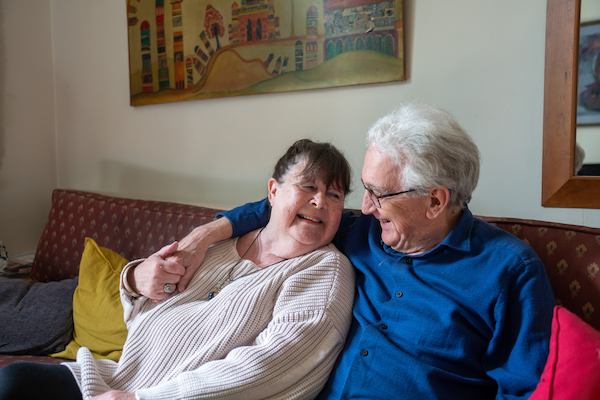
The elderly who have strong family ties often report a stronger immune system, less illness, improved mental and physical health, and a longer life overall. Work on your family relationships during your life so they will remain strong and supportive as you age. Check out government eldercare resources for very good information on family life and aging.
Good morning and welcome to my April 6, 2024 #weekendcoffeeshare 159! Please come in a have a seat. I was hoping it would be warm this morning, but it isn’t, so we will be here in my kitchen.
If I were having coffee with you this morning, I would tell you that this has been one of those weeks. By the end of it, I didn’t know if I wanted to scream or if I wanted to climb back in bed and pull the covers up over my head!
The week started, last Sunday, with three and one-half or four full on bad weather
days. Here in the East Central U.S., we had flood warnings, tornado watches and warnings, severe thunderstorm watches and warnings,, and warnings about hail. In addition, we had warnings from the National Weather Service about high winds, perhaps hurricane force.
Where I live, we got all the weather, but we were spared any real damage. There was one evening where we had 70 mile per hour winds and a terrible thunderstorm, but they weren’t tornadic. The road flooded at the base of the mountain where I live and no one could get in or out.
After the stormy weather, it turns cold here. Really cold for April where I live in the US. I have two perennial gardens and all the plants had to be covered up – for four nights in a row. I think, today, the weather is finally back to something approaching normal and we can take the covers off.
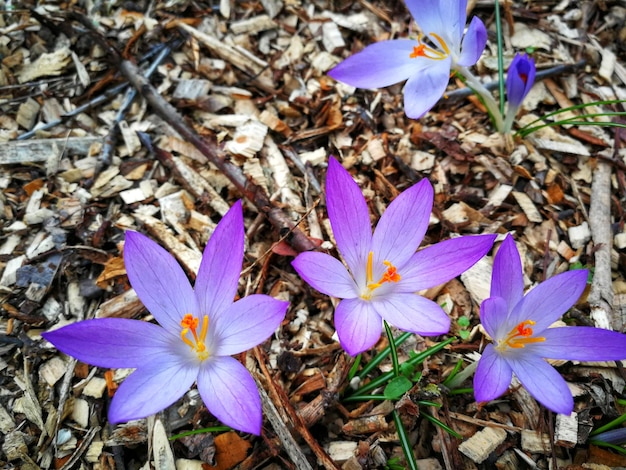
Even in the cold, the perennial gardens are just starting to thrive.
The end of the week held an event I went to. One of my best friends lost her husband a month ago. She had a Celebration of Life for him instead of the traditional visitation and funeral. It was at a local bar where he worked off and on. Although we all paid our respects, it was really just a big party in celebration of Jeff’s life. It was nice to be able to see a lot of friends all at once. I was able to see some of my high school classmates which I always enjoy.
I’ve been doing a lot of writing for this blog. I’m gradually getting comfortable with it again and may start back to work on my book. I had been sort of blocked for a while, but seeing friends and writing with friends here has helped. Thanks to all of you!
I’m currently reading the book, “Commonwealth,” by Ann Patchett. I like her books sometimes, but not always. I’ve only just started this book and the jury is still out. Has anyone else read it?
Thank you for stopping by my #weekendcoffeeshare today! I’m off to read some of your’s. Will you watch the solar eclipse this week?
Education or lifelong learning as you age will keep your mind sharp and help stoke your curiosity about the world. Not only will you stay alert and aware, you can learn the skills for a new “encore” career if you miss working, part-time or full-time. Maybe there is something, besides the job you have either retired from or you will retiring soon, that you’ve always wanted to do. If you study for that new encore career, you can have a fulfilling work life after retirement from your major employer.
If you have a local university nearby, it may have programs that allow senior citizens to attend classes for free. Check with the Admissions Office when you file your application for admittance.
An example might be graphic design. Do you like to play on your iPad or computer? Are you interested in making a little money designing webpages or even entire websites? Is there some other job in graphic design you prefer? You could work part-time and enjoy retirement the rest of the time, but you have to gain the skills. Those will come through education, either in a classroom environment or online through remote learning.
In my case, I was a college professor of finance and business for over 25 years. I was able to retire with full benefits, but I missed working. I missed my co-workers. I missed being able to express my creativity daily. I actually missed everything about working. I had always been a writer and had written a few things for publication. Writing became my encore career. It was hard at first, but I’ve had one book and over 400 articles published.
If you would like to incorporate socialization with your education, you might choose to take classes on a subject of interest in a local university or community college classroom setting. If you prefer to study on your own, you can choose to use online learning via computer. Even though my primary fields were finance and business during my career, my interests now are very diverse. Currently, I’m taking classes (free online classes) in anthropology and genetics. There is a wide array of subjects you can choose from.
You can find online adult education classes at numerous sites online. One is Udemy. You can find classes on a wide array of subjects for reasonable fees. Another excellent platform for online learning is Coursera. If you do an internet search, you can find other platforms for online courses depending on what you want to study.
You can also go the vocational route if that suits you. I have a friend who had a 30 year career as a podiatrist. After he retired, he went to vocational school and became an airplane mechanic.
Aviation engineer workers are maintaining various aircraft systems.
Adult education, or lifelong learning, will help you keep up to date skills and help you feel part of the modern world. It will keep your brain active and alert. Older adults can benefit in many ways from studying something of interest after retirement.
“It looks like a crypt,” he said to himself as he got off the bus. It was the correct address for the hotel his buddy had directed him to when he arrived in town. He had traveled across the country, the whole of America, to play with a band here.
He had no money, but his buddy said that wouldn’t be a problem at this establishment. He pushed open the heavy door. It was dirty and dark inside. It smelled. There was a hotel counter on his right with a bell and a dim light. He rang the bell.
A Goth-looking girl materialized behind the counter. She remarked they had been expecting him. She directed him to what she called a room, but it was just a space, with a dirty cot and a wash basin. The girl invited him to happy hour.
He sat down on the cot and thought about leaving, but he had no money. He wandered down the hall to the place the Goth-girl directed him to for happy hour.
He walked in to order a drink but stopped dead in his tracks. The people were all in Goth attire and makeup and they were dancing an odd dance. He had a bad feeling. He’d find somewhere else.
Grabbing his stuff, he went up to the hotel counter to check out. No one was there, but there was a small sign. It said, “You can check out any time you like but you can’t ever leave.”
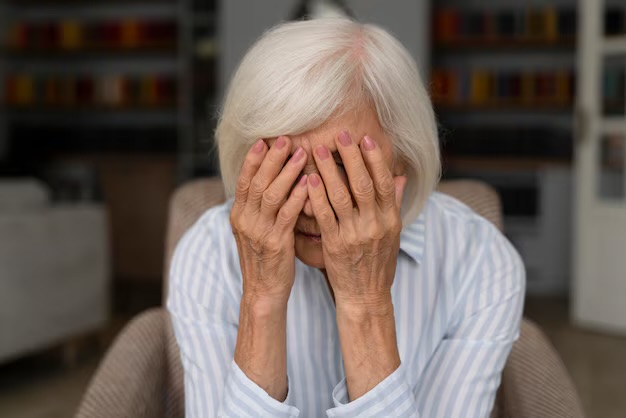
Depression is often a condition people who are aging suffer. It may occur after retirement because people find themselves at loose ends and can’t find a way to structure their life without work. It may also occur because older people lose family and friends at this time in their life. Bouts of depression are normal for the aging, but clinical depression is not. Older people often feel very satisfied with their lives despite the changes going on around them. I find that the twists and turns of life are easier to accept at this older age than when I was younger.
Depression is very treatable by your physician. There are things you can do yourself to combat depression. One of the best activities is to try to live in the moment. Don’t engage in too much nostalgia or in much worry about the future. Find things you enjoy at the present moment. A good meal, the birds singing, the company of a friend, a good book are just a few.
If you notice symptoms like the following in an older friend or relative, reach out to them and offer to help: sadness, anxiety, overeating, oversleeping, irritability, loss of interest in favorite activities, difficulty sleeping, or talking or moving more slowly than usual.
There is mild depression that starts and ends quickly. Then, there are other kinds of depression that may need the attention of a doctor along with medicine or therapy. It’s important to see a doctor if the more serious forms of depression are present.
Here is a good resource if you need to find ways to stay socially active. Often, staying physically active may help any depression you may feel. You may already be shaking your head no, but just consider some of the activities you will find here.
We tend to associate aging with cognitive decline. Cognitive decline is just a fancy term for dementia or Alzheimer’s Disease. It can also refer to Mild Cognitive Decline which is not considered a form of dementia.
Age-related cognitive decline includes difficulty in finding the right word, slowness of thought, inability to multitask, problems with sustaining attention, and problems with retaining information. In this modern era, if a person exhibits the mildest of these symptoms, their family and doctors automatically jump to the conclusion that they have dementia. If you are worried about a loved one having some form of dementia, these are the symptoms they might be experiencing.
In my grandparent’s era, slowing down a bit mentality was just considered part of the natural process of aging. It was considered to be normal. Nothing to get excited about. Now, everyone wants a diagnosis, so they get slapped with a diagnosis of dementia when mild cognitive decline is, indeed, not dementia at all.
Here are some statistics to think about. Most people who are diagnosed with a form of dementia live in low to middle income countries. There are 55 million people worldwide who have been diagnosed with dementia with five million of those living in the United States. The country where the most dementia is present is Finland. The United Kingdom comes in second. Among developed countries, Japan comes in last. Dementia is on the rise particularly among disadvantaged countries and populations. The harder one has to live, the better the chance of dementia, it seems. People with chronic illnesses also tend to have more dementia.
Mild cognitive decline (MCI) is what most people experience as they age. Sometimes, MCI progresses into full-blown dementia, but often it does not. The symptoms of mild cognitive decline are brief problems with memory, judgment, and language. For example, you may forget where you park, forget your car keys. In the middle of a conversation, you may lose your train of thought or you may not be able to fully follow the conversation. You may get temporarily lost in a place you know well. Your judgment may not be as good as it has been in the past. These symptoms of MCI are nothing to panic about because they happen to almost all people who are aging, but you should report them to your doctor if they get to be particularly bad.
She never tired of this view. Every night, she came to the lovely, long pier on the bay to watch the sunset. The sky turned to watercolors.
The sun was down now, but she stayed on the pier for the companionship of the locals and to watch the nighttime water birds.
It was her last night on the island. She thought she would be back next winter. In the coming summer, the hurricane made a direct hit on the island. It caused destruction to both the island and to her. She knew she would never see the magical island again.
*I cheated a little this week. This is a true story slightly fictionalized.
Those of you not yet retired may think that I’m crazy for mentioning boredom in retirement. You may look forward to sleeping late, doing what you want, and perhaps traveling. Those of you who are already retired are right here with me on the boredom issue. You’ve found out that there is more to retirement than sleeping late and being a free spirit.
When is boredom a problem in retirement? Often, in America, it is a result of spending most of your working life putting in long hours under a great deal of stress. It’s important to develop hobbies and leisure activities that you enjoy as you will rely on those pursuits when you’re no longer working. Unfortunately, twelve and sixteen hour days leave us tired and stressed and many of us don’t have the time or energy for much leisure or any hobbies. Once the novelty of retirement wears off, we have all those hours in the day to fill.
So what is a retired person to do? At 65 or 70 years old, we may not have the curiosity we once did and we probably don’t have the attention span we did when younger. If you don’t allow yourself to be curious about things you aren’t familiar with, it’s going to be a long retirement. That leads to attention span. You can lengthen your attention span through curiosity.
But now, let’s be realistic. If you have worked all your life, you may feel out of sorts and useless, at least when you first retire. You may be lonely for your co-workers and friends who were related to your job. Your social activities may plunge. You may literally not know what to do with yourself. These things are why you should make a plan before you retire. A plan will help you avoid boredom.
It seems that travel is at the top of everyone’s wish list when they retire. Stay tuned! Travel and associated topics are coming right up and you may be surprised!
Theme: Aging: Slices of Life Past and Present; Aging Issues and Financial Concerns
Aging and Aerosmith
Welcome to The Write Scribe, my blog, where I will write about issues related to aging, along with slices of life past and present, during the 2024 A to Z Challenge! I look forward to reading your blog posts and enjoying your theme during this Challenge. You can find my A to Z 2024 Challenge posts under the Challenges category at the top of the front page. I invite you to read the posts as you wish and I look forward to your comments.
Since my theme starts with an “A,” I thought starting off with some general comments about aging, and more.
There is only one alternative to aging and we know what that is. Since I’m not done in this world yet, I’ve had to accept this fundamental truth and move on with this aging business. I’ll have to tell you that I’m doing it kicking and screaming and not very graciously.
Younger people ask if, as you get older, you feel any different? I guess my answer is that it depends. If you can stay well, you might answer this question in one way, but if not, your answer might be different. Anyone at any age can become ill. However, it gets more likely as you move into your 60s and 70s. Speaking for myself, I don’t feel much different than I did at 35 except, perhaps, a little (or a lot) wiser. If only the young could have the wisdom of the old! I’ve wished that for my younger self many times.
As you age, you feel like you become invisible in the American society. Other cultures take better care of their elderly. In America, it’s all about youth and the concerns of the young. The elderly, at least in the modern era, are pushed aside as irrelevant and just a bother by many. Some of that changed during the pandemic. Employers discovered that they could depend on older workers and since the pandemic, that opinion has remained, at least to some extent.
Most people who are aging want to stay in their own homes and continue to pursue their own interests without becoming a burden to their children. To me, it’s a shame that parents have to feel like a burden although if aging parents can stay in their own homes, that is often best.
There are a lot of people who are aging who feel lonely. By the time you reach your mid-60s and early 70s, you have lost much of your family and at least some of your friends. You may be widowed. You may not be interested in socializing as much as in the past because your interests have changed. Add that to the likelihood that your friends interests have also changed and there is loneliness.
Some of my interests have changed, but basically my core interests have remained the same. For example, I still love the same music and don’t really enjoy the music of recent generations. Aerosmith, a famous rock and roll band that began in the 1970s, is still going strong, and is still one of my favorite bands, now as well as when I was younger. Steven Tyler, the lead singer, is a talented musician who has lived a long and colorful life. If you’ve never heard Aerosmith and Steven Tyler, listen to his song “Dream On” and see what you think. It’s pretty indicative of the baby boomer generation and how we grew up. Conservative parents, more liberal friends, and lots and lots of what seemed then like innocent fun. For the most part, it was!

































 The Write Scribe