
Posted in Finance, Uncategorized

Social Responsibility in Banking

image

2008 Financial Collapse in Banking

Since the near collapse of the U.S. financial institutions at the end of 2008, the social responsibility of these and other institutions have been front and center in the American consciousness. It became apparent that the big banks and other financial institutions were all about profit and shareholder’s wealth in the short-term and not about their customers at all. It also didn’t seem that these corporations cared about their long-term profits or wealth of their shareholders because they allowed greed to take them so close to financial collapse. This attitude flies in the face of every principle of financial theory under which publicly traded institutions should operate.

The financial crisis in the U.S. really started back in 1999 when the Glass-Steagall Act was repealed. This legislation protected customers and shareholders alike because it prohibited banks of all sizes from engaging in both investment and commercial banking. Banks either had to be an investment bank which sold securities to the public or they had to be a retail bank that accepted deposit accounts and made loans. They could not do both. When Glass-Steagall was repealed in 1999, the scenario that followed was an almost exact replica of what happened in the 1920’s and the resulting stock market crash. Back then, banks were allowed to both accept deposits and make loans and issue securities. A bubble in the stock market resulted due to fraudulent activity and the stock market crashed. In 1933, Glass-Steagall was passed and protected shareholders and consumers alike until 1999. Then, the cycle began all over again. By 2007, banks were facing a crisis of liquidity and by the end of 2008, we really don’t realize how close our banking system in the U.S. was close to complete collapse. It would have collapsed had the Federal Government and the Federal Reserve not bailed them out.

By 2008, the banks had been mingling the investment and deposit functions for nine long years. They had been issuing securities and making loans. We know at least part of the story and there are many causes of the 2008 financial collapse. It was, indeed, a worldwide collapse. Consumers of financial products, such as mortgages, were not blameless. Even though corporations like the  big banks and non-banking corporations that failed, like Lehmann Brothers and AIG, are responsible for protecting their shareholders and consumers, those stakeholders pushed these corporations hard for these financial products. In the giant real estate bubble that resulted from the banking practices during that time, it was hard to say no.

Banks and other financial institutions should have said no. They should have stood up to their ethical responsibility to their shareholders and consumers, as well as to their employees. They are the experts. They are the ones with the full financial information, not the shareholders or consumers. They should have used their expertise to stop the fraudulent and unwise banking practices that were the “soup of the day” at that time. But, they did not. They paid the price and so did the consumer.

Banks used their ability to offer investment banking and loans to develop rather exotic financial products such as the subprime loan. This was a mortgage loan made to risky borrowers with poor credit histories that struggled to pay off these mortgages and many of them defaulted. They were then turned into pools of mortgages, called mortgage-backed securities, and were gathered into securities by the big banks called collateralized debt obligations, given high ratings by the credit ratings agencies, and sold to investors. Unfortunately, investors found out later they really weren’t worth anything. Interest rates were low and banks kept searching for riskier and riskier products in which to invest.

Mortgage-backed securities began to fail and collateralized debt obligations proved to be worthless. The banks’ capital positions began to erode. Banks have to always have a certain percentage of capital on hand to be sure they have adequate capital to meet the demand for customer withdrawals and loans. Bank regulators, charged with insuring that banks have adequate capital, seemed asleep at the wheel. Even as this was happening and banks were operating with a razor-thin capital position, consumers were demanding more and more low-interest mortgages.

In late 2008, it all came tumbling down. Banks and consumers alike realized that prosperity could not be built on bigger and bigger piles of debt. Investors suffered because the exotic securities they had purchased were worthless. The housing bubble burst and the price of homes dived steeply. It was a buyer’s market and seller’s just sat on their houses. Capital ratios for banks were so thin as to be non-existent and they had to be bailed out.

Had the financial institutions just remembered that one of the tenets of financial theory is not only maximization of shareholder wealth  but also social responsibility, none of this would have happened.

Not only do the managers and directors of a publicly-held business firm have a responsibility to maximize the stock price of that firm, they have a responsibility to maximize the stock price in a socially responsible manner. If a bank were a steel mill, they wouldn’t spill all their pollution into the air  because, in the long run, this would lower their stock price as investors and consumers alike would eventually feel the effects of that pollution. In banking, if the managers engage in risky behavior with the money of the consumers and stockholders and the jobs of their employees, they may reap the benefits for a short time, but in the long run, that bank runs the risk of financial collapse. Just  what happened in the 1920’s and again in 2008. Social responsibility is the only reasonable strategy for business firms if they want to survive in the long-term.

*Photo by waxesstatic @ flickr.com 2008

Freeman, R. Edward, ―A Stakeholder Theory of the Modern Corporation,‖ in Ethical Theory and Business, 5th and 6th edition, Tom L. Beauchamp and Norman E. Bowie, ed., 1997, 2001 Prentice Hall Inc.

Palazzo, Guido, ―Corporate Social Responsibility, Democracy, and the Politicization of the Corporation,‖ Academy of Management Review, 33 (2008), 773-75.

Posted in Home, Uncategorized

Time to Rebuild

 image

Time to Rebuild, Part I

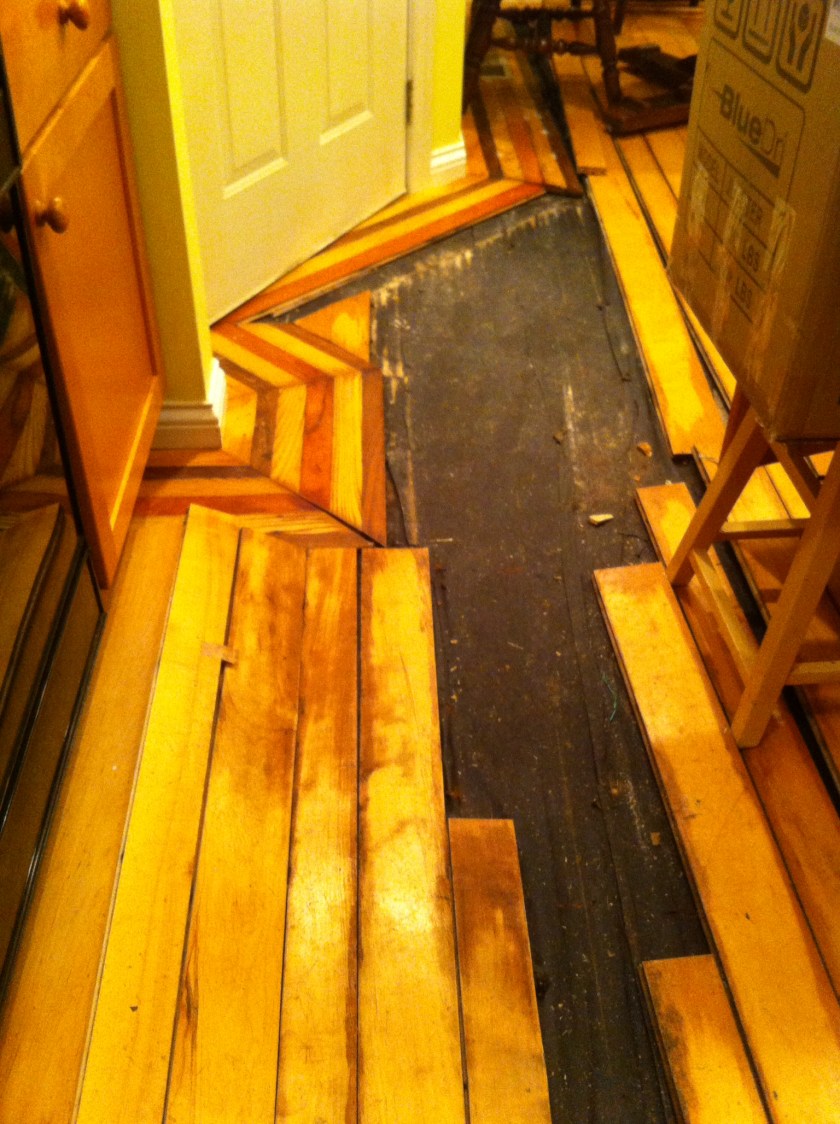
When I walked into my house, after shoving in the door, I knew we would have to rebuild. The entire inside of the house. It was destroyed. It was such a shock that I was shaking and felt I had to sit down, but there was nowhere to sit. The furniture was knocked over and wet. I couldn’t even sit on the floor. It was wet but not only that. The hardwood was raised up. The water had caused it to move and stack itself up in piles. It was the most unbelievable thing I had ever seen. The power of water. The power of a flood. The necessity to rebuild the entire interior of a house due to a flood.

This is what happened to me and my family last summer, the summer of 2015. We had been on vacation. Traveling around New England in our RV. We were planning to be gone for six weeks and had gotten as far as Cape Cod. We were planning to go as far as northern Maine before heading south again. We had so enjoyed the southern coast of Connecticut on Long Island Sound. We had actually enjoyed the entire state of Connecticut. The beautiful Cape Cod houses in their traditional New England colors. The campus of Yale. The mansions along the Rhode Island coast. The Mystic harbor and the old ships. On the way north, we had seen so much in Maryland and Pennsylvania — become familiar with those two states beautiful states. America is really a wonderful, gorgeous place.

When we got the call about the flood in our home, we were, of all places, on a large boat off the shore of Plymouth, Massachusetts on a whale-watching tour. My cell phone rang. I wish now I had not answered it but finished the tour instead. But answer it I did and heard what no one on vacation ever wants to hear. My neighbor said, “Rosemary, I have bad news.”

A pipe had burst under a sink in my kitchen. My neighbor had noticed water running out of my house — a sure sign of something being wrong. He had a key and walked in to check. He didn’t really walk in. He shoved his way in as he couldn’t open the door because the floor being pushed up blocked it. Water was everywhere. Even standing in the drawers of the cabinetry in the kitchen. He and another neighbor looked through the house. The water had knocked over furniture, ruined the floors, and they actually couldn’t tell all the damage that had been wrought. They  just knew it was bad. Very bad. So, my neighbor made that phone call.

The eighteen hour trip home in an RV over the Allegheny Mountains was the longest trip of my life. We hardly talked. We hardly stopped — only for gas and to eat. Neither of us could really eat. We just snacked. When we got home and pulled the RV into the driveway, we just sat there for a few minutes. We knew there wasn’t much use to hurry. We didn’t know when the water pipe had burst, but we got the call about the flood 3.5 weeks into our trip. Later, much later, the insurance adjuster told us that it probably burst quite soon after we left based on our water bill and the damage done to our home.

So we took a deep breath, got out of the RV, and started toward the house. I had the house built myself, at that time it had been 17 years. I had put a lot of blood, sweat, and tears into my home. I couldn’t imagine that the inside was destroyed. We opened the door. #flooding #amwriting #writing #blogging

Stay turned for Time to Rebuild, Part 2.

Posted in Uncategorized, Women's Issues

Friendship

image

When we are young adults, most of us have many friends. We still have our friends from high school. We make friends in college. We have embarked on our careers and have work friends. We have friends from other walks of life that we have made along the way. As we go along through our lives, not all of those friends stay with us. We lose some along the way. Some become involved in their families and with their children and don’t feel they have time for friendships. Others are trying to establish demanding careers and they are lucky to get home at night in time to fall into bed, get a few hours sleep, and do it all over the next day. Some friends develop interests that are different than ours and friendships die a natural death. Others move away and the geographic distance makes maintaining friendship challenging.

As our friends change and step into their adult lives, we change too.

If we are emotionally healthy, we develop an understanding of why friends come and go and we don’t end up with any resentment toward these individuals who were our friends. As we get older, our friends tend to fall into several categories:

1. Casual Friends: These are the friends you might go to a movie with, or shopping, or even lunch. Casual friends are usually for pure social interaction. But, you aren’t going to tell them your deepest and darkest thoughts and secrets.

2. Business Friends: These are your work friends. They are people you see daily, collaborate with on projects, and may have a little social interaction with like daily lunches. It is easy to let them become at least casual friends, but these friends can become toxic due to issues like professional jealousy.

3. Intimate Friends: Don’t think sexual here. That is not what I mean by intimate friends. Intimate friends are your best friends. I am of the opinion that you have only a handful of real intimate friends in your life, though your perception may be that you have more than this. I think that is a dangerous perception. Intimate friends are those with whom you share your hopes and dreams and your deepest thoughts and feelings. You trust these friends implicitly.

4. Toxic Friends: These friends are those you make, perhaps at work, that latch onto you without knowing you well but who want to know all your deepest and darkest secrets. They may also be casual friends who are not emotionally healthy and become obsessed. The sooner you can get out of a toxic relationship, the better.

The whole discussion of friendship begs the question: Why do we need friends? Why can’t our spouse or significant other, serve as the only friend we need? The answer, I think, is simple. People need people. Not just our spouse or significant other. Women need their girlfriends. We find being around our girlfriends soothing and satisfying. We can talk to them and get things off our chests. We can listen and help them do the same. We feel needed.

In order to work, friendship has to feel right. One person can’t be a better friend than the other. There can’t be any passive-aggressive behavior or hidden agendas on either side. There has to be openness and honesty. There has to be mutual sharing and respect. Both people in a friendship have to be able to talk to the other. If we have that with our girlfriends, we have real friends. #amwriting #writing #blogging #Bestfriends!

Posted in weekendcoffeeshare, Writing

#weekendcoffeeshare: 6/12/2016

imageDiane

“The road to hell is paved with adverbs.”

–Stephen King, On Writing: A Memoir of the Craft

“Jenn is certainly in a hurry this morning,” I think to myself as I watch my friend come racing through my door. “Good morning, Jenn,” I say. Jenn grabs the coffee pot from the counter and says, “Let’s sit on the deck this morning. It’s such a beautiful day. I have a problem and an important question to ask you.” I follow along behind her with my tea cup, wondering what’s going on.

We sit down at the table on the deck and Jenn sighs in apparent exasperation. “Jenn, ask away,” I say. “Oh, Rosemary,” she says, “I am having a hard time with a story I am writing. I am using one of the text editors you can buy and it keeps pointing out to me that I am using too many adverbs in the story. I don’t know how to write my story without them. They seem to make my story have more meaning. But, they must be a bad thing.” She continues, “Do you have this problem?”

I laugh because I have certainly had this problem although probably more in the past than in the present. “Jenn, the first person that ever pointed out to me that I use too many adverbs was my friend, Ed, who has kindly edited a lot of my work for many years. I know what you mean when you say they seem to add emphasis and meaning, but I have come to the conclusion we are fooling ourselves about that.” Jenn asks me why.

I tell Jenn that I have read Stephen King’s book, On Writing: A Memoir of the Craft, at least three times and I showed her the quote above. King dislikes the use of adverbs intensely since all they really do is modify verbs, other adverbs, and adjectives. You can almost always spot them as they usually, but not always, end in -ly.  King states that the use of the adverb is the mark of a timid writer. The writer who is afraid she is not getting her point across.

For example, consider this sentence. “She put the pot on the stove firmly.” “Firmly” is an adverb used to emphasis a point. Instead, what about writing the sentence like this: “She slammed the pot on the stove.” I think the sentence without the adverb sounds better.

King makes his point with dialogue. If this is a line of dialogue: “Don’t do that,” he said abruptly, then abruptly is the adverb. King, along with authors like Larry McMurtry, believe in the word “said.” That sentence should read, “Don’t do that,” he said. He thinks the sentence should stand on its own because the surrounding story should be strong enough so the reader will understand its context.

Jenn says that I make some good points and she thinks she will buy Mr. King’s book. She wants to make her stories stronger as I do.

Jenn finishes her coffee and gets up to leave and get on with her day as we continue to do what writers do — talk about writing. She thanks me for telling her about Stephen King’s book and I thank her for helping me clarify the argument for fewer adverbs in my mind. It’s been a good #weekendcoffeeshare morning!

It’s good when you Share!

*#weekendcoffeeshare is sponsored by Diana at Parttimemonster

Posted in Women's Issues

Women and Midlife: Sleep Issues

image

When I talk about women reaching midlife, I am not going to mention the horrible term “midlife crisis.” I’m also not going to mention menopause. Issues that women have at midlife can occur without a crisis and before or after menopause. One issue that we face as we try to juggle children, perhaps a career, elderly parents or other family members, a spouse, and the rest of our lives is sleep. Sleep, for me, is like climbing a very tall and steep mountain.

There is no doubt, according to extensive research, that decreases in a woman’s estrogen and progesterone at midlife contribute to sleep disturbances. Doctors, in my opinion, often simplify our insomnia to just that and it is much more complicated. This is the time in our life when we are most likely to be part of the infamous sandwich generation, taking care of children and parents. If we have a professional career, as I have, add more fuel to the fire of anxiety and stress. You go to bed at night without sufficient time to relax and when you go to bed, you are already hurrying to get up the next morning. I call it the “hurry up and sleep” syndrome. Is it any wonder that you are climbing that mountain toward sleep, hoping to arrive, all night almost every night? Then, rinse and repeat the next day.

The advice continues. Don’t drink caffeine for six hours before bedtime or liquor for three hours. Don’t exercise except earlier in the day. When? We’re busy, working, taking care of our families! Don’t eat a heavy dinner. Go to bed only when tired. Does all this sound as ridiculous to you as it does to me? Then, the last piece of advice. Doctor says, “I can give you a mild antidepressant which should help with your sleep issues.” That, my friends, is when I want to scream.

A drug. Give us a possibly dangerous drug to help us climb that mountain toward sleep instead of addressing the problem. The problem is that we need help. Help with the chaos that our lives have become. Not a pill.

Since help doesn’t often seem to be around the corner, try some natural solutions. Women’s bodies are almost always deficient in magnesium which helps our muscles relax. Take a magnesium supplement a couple of hours every night before bed. It will help you sleep, help your digestive system, and relieve cramping in your legs. Very few foods that we eat on a regular basis contain enough magnesium for us to meet our daily requirements. Melatonin is another possibility. Take half an hour for yourself and try a warm shower or bath, possibly using Epsom salts (which contain magnesium). After your shower, put on some calming music and sit quietly and meditate. Personally, magnesium is a miracle solution for me.

Get all the electronics out of your bedroom. Unplug at night even though it’s hard. Read a book you can hold in your hands rather than your Kindle.

I’m not saying that you don’t have sleep apnea or depression or some other medical condition that needs treatment. What I am saying is that not everyone does and it is too easy for doctors to hand us an anti-depressant rather than take the time to get at the root of the problem and suggest real solutions.

Think for a minute. Does that anti-depressant really make that much difference in how you sleep at night? Does it make that mountain you are climbing toward sleep less steep? Just give some of the natural sleep solutions a try. #sleep #amwriting #writing #blogging

*Image by photostock at Freedigitalphotos.net

Posted in Appalachia, Eastern Kentucky, history

Personality Traits of the Appalachian People

image

Friday Fare to Appalachia

Do the people of a geographic region like Appalachia have unique personality traits? Some think so. A number of studies have linked personality traits to U.S. geographic regions or even U.S. states. As an example, a 2013 study done by Time Magazine found that the people of Kentucky are one of the most neurotic and introverted people in the nation. They are not very agreeable or open. West Virginia joins Kentucky in the trait of introversion. But, the people in both states exhibit tough-mindedness as well. Most “happiness” studies that have been done find the people of Kentucky and West Virginia ranking near the bottom.

But, wait! This sounds terrible regarding the personalities of the people of these parts of Appalachia. Since I am one of these people,I don’t think we are all unhappy or that we all have troublesome personalities. Could part of the problem be stereotypes of the people of Appalachia? Read on…..

Appalachia is a large region in the eastern part of the United States, named after the Appalachian Mountains. It encompasses 205,000 miles and the people are 42% rural as compared to 20% of the national population. All of West Virginia is considered to be in Appalachia. Parts of twelve other states are in the region, including Kentucky, Alabama, Georgia, Maryland, Mississippi, New York, North Carolina, Ohio, Pennsylvania, Tennessee, South Carolina, and Virginia.

John Alexander Williams, an author who wrote Appalachia: A History, specified that there is a “core” Appalachia. That core includes 164 counties. Those counties are the entire state of West Virginia and parts of Kentucky, Tennessee, Virginia, Georgia, and North Carolina. I tend to agree with Mr. Williams. In case you haven’t read my story on this blog entitled, Appalachian Roots, I was born and raised on the fringes of Appalachia and my mother’s family is from deep in the heart of Appalachia. There is a distinct difference between those living deep in Appalachia and those on the fringes.

I spent a good deal of time with my grandparents in the heart of Appalachia growing up and until I was in my 20s. I became familiar with the personality type of the people. While introversion and tough-mindedness are characteristics of the people, I don’t agree with some of the others mentioned in the Time personality study cited earlier. You do have to recall that people migrated to Appalachia during the pioneer days under great hardship. Many migrated because they wanted privacy and land around them. They did not want close neighbors and the thought of being in the mountains appealed to them. The fact that their descendants are introverted and tough-minded can’t be a surprise.

The author Loyal Jones, in his 1991 book entitled, Appalachian Values described some of the personality characteristics of the people very well and his description tallied with my experience. He said the people had the traits of, “Religious, Individualism, Self-Reliance and Pride, Neighborliness and Hospitality, Family Solidarity, Personalism, Love of Place, Modesty and Being One’s Self, Sense of Beauty, Sense of Humor, Patriotism” (Jones 1991:170). I can picture my grandfather when I read that description along with a lot of the men he associated with at his home in Magoffin County, KY. Jones stated that some other authors considered these personality characteristics to be deficiencies, which I can’t imagine.

I believe these personality characteristics may describe the Appalachian people of the past very well. The citizenry of the region have changed as economic times have changed. Money has gotten more scarce as coal mining and farming wanes, a lower paying service economy picks up, and the drug culture and welfare society explode. These cultural and economic events have taken a toll on the personalities of the Appalachian people. Gone is the sense of self and self-reliance of these once-proud people. Family solidarity has fractured. Individualism is no more. Instead, we see once-proud, hard-working people relying on welfare and selling their food stamps for drugs. We see single girls having babies so they can draw those welfare checks and young men seeking out pain pills and disability checks for non-existent ailments. We see any money that does exist invested in drugs instead of in food for the children and a roof over those childrens’ heads. Only in pockets of Appalachia do we find the once proud people of that region. Where there is no work, there can be no pride.

Why do the people stay in Appalachia? Some of their personality traits explain that. The love of place, their culture, their family — all of those are reasons. But, there have been waves of out-migration from the area since the 1960’s. The smart ones seem to leave. The others seem to find reasons not to. The very personality characteristics which are endearing may spell the end of the people of Appalachian unless economic times change in the area. That is the subject for several more blog posts.

Watch this space! #appalachia #amwriting #writing #blogging


Posted in Wildlife

Whales: Prisoners for Entertainment

image

Killer whales. Orcas. Synonyms for a single species. Both refer to the whale that is in the news right now. The whale from Seaworld that beached itself on the Canary Islands in a water park pool. Her name is Morgan and she is a captive who swims around all day in a concrete pen that is a fraction of the size of the territory she actually requires. Whales beach themselves when they are sick or hurt….or to die.

Orcas are not whales, though they look like a whale and that is what they are called. They are the largest species of dolphin. They have huge brains. They exhibit intelligence similar to the dolphins with which we are familiar and eerily similar to humans. Many animal species can pass along skills to their young which are generic in nature. In other words, birds pass along migratory routes. Big cats pass on hunting skills. But whales and dolphins go a step further. They can learn as individuals and pass individual knowledge on to their young — just like humans. Imagine a creature that intelligent swimming around all day in a pen that is tiny to them. Imagine a human being in a bathtub. Having to do tricks.

Many orcas exhibit self-destructive behavior when kept in captivity. They do things like repetitively bob their heads upwards and down. They swim faster and faster in small circles. At the Miami Seaquarium, there used to be two orcas. Lolita and Hugo. It has been reasonably well established that Hugo committed suicide in 1980 by repeatedly ramming his head into the walls of his tank until he died. Do we know for certain it was suicide? They can’t talk, at least not to us. I guess we can’t know for sure. But, no other cause was found. Some say Morgan, the whale that is in the news, was also attempting suicide.

The movie, Blackfish, is a documentary about an orca whale named Tilikum who killed his trainer while held in captivity, first at Sealand, then at Seaworld. Theories abound that whales held in captivity suffer from some sort of severe psychological trauma.

Orca whales, in the wild, swim around 100 miles per day and have a complex society. They live in several types of pod structures, all of which contain several generations of family, including children, parents, and grandparents. Their need for social interaction is high. Their needs cannot be met when held in captivity.

If we want to see orcas, why can’t we take whale-watching tours and go to them instead of making them come to us. If they come to us, they have to endure a life of captivity for which they are not suited. Seaworld announced this year that they would hold no more whales in captivity. It’s about time. Other marine parks should follow suit.

UPDATE: JANUARY 2017
A few months ago, I wrote a blog post on orca whales (SEE ABOVE), who are actually dolphins, and the problems they face in captivity, and Tilikum, the whale featured in the movie Blackfish. Blackfish is the movie that publicized the plight of the orca whales that are kept in captivity. The movie finally forced entertainment facilities like Sea World to stop using the orcas for entertainment purposes. They also stopped breeding them in captivity.

Tilikum recently passed away at the age of 36. He died from a persistent bacterial lung infection. Tilikum finally became aggressive in captivity and, in 2010, he killed a trainer at Sea World. He was implicated in the deaths of two others. There was actually sympathy for Tilikum because the stress of his captivity was seen as the major factor in his behavior. There have been reports of oracas trying to commit suicide in captivity as reported in the above-mentioned blog post.

After Tilikum died, the President of the Humane Society, was quoted as saying that his death meant the end of the orca captivity program. We can only hope. A much better alternative for us is to take whale-watching tours a few miles out into the ocean. RIP Tilikum.

*Image by Christopher Michel 2009 Born Free

Posted in history, Uncategorized

The Song of Hiawatha

image

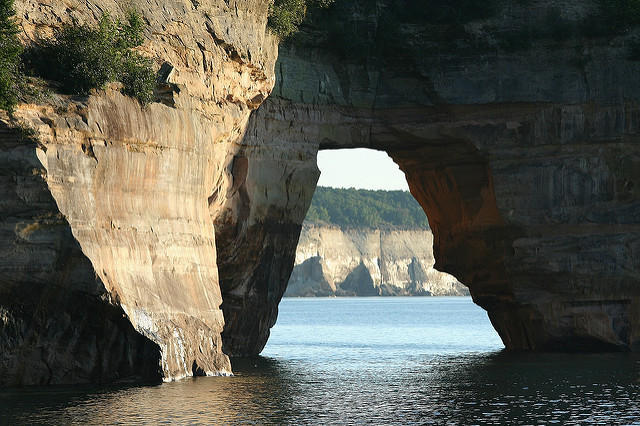
The Song of Hiawatha, by Henry Wadsworth Longfellow, was written in 1855 and set on the southern shore of Lake Superior, the largest of the five Great Lakes and the largest fresh water lake in North America. The poem is connected to the Pictured Rocks area of the lakeshore. Hiawatha, a Chippewa warrior, and Minehaha, his true love, played out a tragic love story in the beautiful poem on the Pictured Rocks Seashore.

The poem is also connected to Lake Superior because of one of the most famous lines in the poem……”by the shores of Gitche-Gumee, by the shining Big-Sea-Water…”. Gitche-Gumee was the Chippewa name for Lake Superior or the Big Sea Water.

Pictured Rocks Seashore is a beautiful place on an exquisite lake….a place I’ve visited many times since the ancestral home of my father is quite near the area and is itself near the shores of Gitche-Gumee.

Here is The Song of Hiawatha, compliments of YouTube:


*Image by Laurel Gillespie 2014

Posted in Diabetes, Low Carb, Weight Loss

My Life with Diabetes

image

There. I said it. Diabetes. Twenty years ago, I was diagnosed with diabetes. I have almost said it in a couple of blog posts, but never quite got up the nerve. I alluded to it in my posts on Healthy Eating and Orthorexia because I am always on a diet. Sometimes, a diabetic diet. Right now, both a diabetic and weight loss diet. Since I know many people can relate to this story, here goes.

When I was diagnosed with diabetes 20 years ago, I weighed 110 pounds. There is a misconception, I think, that you have to be overweight to develop diabetes. That is not true. I have diabetes on both sides of my family. Most of my aunts and uncles have diabetes and some of my cousins. The genetic cards were stacked against me. I remember coming home after the doctor gave me this news and announcing that diabetes was not going to change my life. I think back to that now and laugh. Maybe grimace is a better word.

I tried to control my blood sugar, at first, with diet and exercise. That is usually how doctors like to proceed. It very quickly became obvious that I needed more than diet and exercise. My elliptical and a strict diet just weren’t working. Diet for a diabetic, back then, meant no sweets and perhaps the old diabetic exchange system. Not much more. I went back to the doctor.

Next, we tried diet, exercise, and the drug metformin. The maximum dose. Metformin is a drug with a number of uses, but at this time, it was used primarily for lowering blood sugar in Type II diabetics. The beauty of metformin is that it also helps prevent negative cardiovascular events from occurring in Type II diabetics. We are at risk for heart events just by virtue of the fact we have Type II diabetes. Again, I stuck to my diet, rode the elliptical like a fiend, and took my metformin. My blood sugar did not come down. I felt like I would have to exercise on the elliptical for two hours after meals to make even a dent in my blood sugar.

Again, I returned to my primary care doctor. He decided that my particular case of diabetes was beyond his expertise and sent me to an endocrinologist. Endocrinologists specialize in diseases of the metabolic system such as diabetes and thyroid disorders. The endocrinologist was suspicious that maybe I did not have Type II diabetes after all. Maybe I had adult-onset juvenile diabetes or Type I diabetes. He did some tests for antibodies that indicate the presence of Type I diabetes, but they were negative. I had Type II diabetes, but I had very hard to control, brittle diabetes. The fear was that my high blood sugar was going to start causing damage to organs in my body so there was nothing to do but start on insulin, along with metformin and, of course, diet and exercise. By this time, most doctors were at least having their diabetic patients visit a dietician but except add “portion control” to the no sweets advice, not much had changed.

Type I diabetes occurs when the pancreas does not produce insulin and occurs primarily in children. It requires immediate insulin therapy. Type II diabetes is often seen in people who have insulin resistance. Their pancreas still produces insulin but, for whatever reason, their body cannot use it. In my case, I had been diagnosed as a Type II diabetic, which was the correct diagnosis, but I produced almost no insulin. It took several years before this was recognized by my doctors. When a Type II diabetic has to begin using insulin, they are then classified as a Type I diabetic.

Back in those days, insulin was still administered with a syringe and a vial of the drug. Those shots weren’t fun, but they did start to bring down my high blood sugar. My doctor specified the dose and it was very hard to get it right. Sometimes, the insulin was too little and my blood sugar would still go too high. The scarier times were nights, when my blood sugar went too low and I would wake in the middle of the night shaking, sweating, and have to stumble to the refrigerator to get a quick glass of orange juice to bring my blood sugar up. It often went too low at night.

I was still working during all those years. In fact, I worked for 15 more years as a college professor after I was diagnosed with diabetes. There were days when I felt good, like myself. There were other days where the fatigue, a side effect of diabetes, made going to the office almost more than I could do. I’m sure I would have taught longer had diabetes not struck. I am still working now as a writer, but I am retired from teaching.

Life got a little better regarding diabetes when the insulin delivery system changed from the traditional needle to a punch needle system. About the same time, carbohydrate counting became an option for controlling blood sugar and it seemed to suit my needs. You simply count the carbs you eat at each meal and take the appropriate amount of insulin for that amount of carbs, based on a formula supplied by your doctor. I was able to control my blood sugar better than ever as indicated by my A1c readings, around 7.0, along with my home monitor readings. Doctors were finally recognizing that “sweets” were just one carbohydrate and that all carbohydrates raised blood sugar. My endocrinologist was pleased.

Taking insulin is a mixed blessing. It saves a diabetic’s life. But, it makes you hungry. Diabetics have to watch what they eat, and how much, very carefully. Insulin, and the resulting hunger, cause weight gain and I gained some weight which caused poor blood sugar control once again. Taking insulin is a vicious circle. At this point in my life with diabetes, I was taking up to 90 units of Novolog insulin during the day and 60 units of Lantus insulin at night, along with a fairly new drug called Janumet. As any diabetic or doctor who is reading this knows, that is a lot of insulin. Janumet is a combination of metformin and sitagliptin. Sitagliptin is a bit more dangerous than metformin. It is more likely to cause low blood sugar and other side effects. It increases the amount of insulin a diabetic produces and decreases the amount of sugar produced by the liver. I knew I had to do something. I just wasn’t sure what and neither was my doctor. All that I knew was that I wanted to have a life. A normal, active life.

By this time, low carbohydrate diets had become popular. I did a lot of my own research, talked to my doctor, and decided to go on a low-carb diet to see if I could lose the extra weight I had gained and, as a result, lower my insulin requirements. That’s where you find this writer today. I am happy to report that it seems that a low-carb diet is working for me. My blood sugar control is the best it has been in 20 years. My weight is dropping and I am optimistic I can get to my goal. It isn’t far away now! I don’t even crave carbohydrate-rich foods any more. I live on lean protein and salad. I feel the best I have felt in many years and can, once again, have a normal life. When I reach my goal weight, I will allow myself some carbohydrates here and there, but not many. I have worked too hard for the success I’m enjoying. I’m not able to exercise much yet. Insulin makes that difficult, but since I take much less than I used to, I hope exercise is in my future.

The change in my insulin dose is remarkable. Most days, I take no daytime insulin at all. I don’t need it anymore. I still take 55 units of Lantus insulin at night. Since I don’t produce insulin myself, I will always need a maintenance dose at night. I also still take Janumet though that could change.

It wasn’t particularly easy to write this account of my struggle with diabetes. It’s very personal. I thought it would be cathartic for me and perhaps helpful to some of you. Helpful because you will know you aren’t alone. Helpful because maybe it gives you a place to start. But, don’t start anywhere until you talk to your doctor. Your mileage may vary though I would encourage you to do research on your own. Don’t be a victim of this terrible disease. Take charge of your diabetes. Don’t let it take charge of you. It works silently and will damage your heart, eyes, nerves, kidneys, blood vessels, and much more. Work with your doctor and find out what works for you. You will feel so much better and be able to live a long, happy life!

A great blog on Type II diabetes is Diabesity

I’ll keep you posted.

*Image by Stuart Miles FreeDigitalPhotos.net