
Posted in Fourth of July, Holidays, Uncategorized, Wildlife

#weekendcoffeeshare 7/2/2016


image

“Jenn, you’re early for coffee today, but come on in,” I called out as I saw Jenn walking toward my side door. I was glad to see her as I always am when she stops by for coffee. “Rosemary, it’s the Fourth of July weekend. I was afraid you wouldn’t be home,” Jenn said. I replied to Jenn that I had been gone earlier in the week but planned to stay home for the Fourth. My little dog, Betsy, is sometimes scared of the noise of fireworks so I wanted to be with her. She helped me finish the coffee and tea and we went out back to sit on the deck. We wanted to have a nice, long chat and morning brew.

“You’ll never believe what I saw as I drove up your mountain road,” Jenn said. “I saw a bald eagle sitting in the top of a tree along the road! The road rose up right at that spot and I was almost as high as the eagle and got a really good look. I didn’t think many bald eagles were around any more.”

“Oh, Jenn,” I said. “There are a few bald eagles around here now and many across the country.” That’s the way our #weekendcoffeeshare chat started today.

There is a big, wild lake close by where I live and nesting pairs of bald eagles have been spotted there. I told Jenn that there is one tree, probably the one she saw, along our mountain road, where I have also seen a bald eagle, probably one of those nesting pairs of birds. The bald eagle is a success story because it has been brought back from near extinction. By 2007, it was actually taken off the endangered species list.

It’s appropriate to talk about the bald eagle this Fourth of July weekend since it is America’s national bird. “Jenn, I said,” “Bald eagles are the only eagle that exists only in North America. But, we almost killed them off largely because we used DDT, an insecticide. This chemical caused damage to the eggs of the eagle. The eagle’s habitat was also damaged when the original forests were removed. The birds that the bald eagle eats were hunted and killed off. They had no food supply. Bald eagles were even shot because farmers thought they threatened their livestock.”

Jenn asked,”So, what happened to save the bald eagle?”

I replied, “First, we banned the DDT insecticide which went a long way toward protecting the bald eagle. Shooting them was also banned. When they were considered an endangered species, we protected their nesting sites and, in most places, still do. Their nests are used year after year by the eagles and weigh, sometimes, up to 4,000 pounds. As our pollution control laws took effect and our water quality improved, we started seeing more bald eagles. By 2007, there were enough so they were taken off the endangered species list. They are still protected under the Bald and Golden Eagle Protection Act and the MIgratory Bird Treaty Act.”

Jenn said, “I’ve heard of bald eagles sometimes nesting in suburban neighborhoods.” “Yes,” I said. “From what I understand, there are so many now, they are competing for territory. The U.S. Department of Fish and Wildlife sometimes find them injured by other bald eagles because of this problem. In 1963, there were only 487 nesting pairs of bald eagles in the U.S. By 2006, there were over 9700.”

I said to Jenn, “Many people don’t realize that bald eagles are powerful, big, and that they are birds of prey. They are meat-eating birds. They usually live near lakes. They fish, eat roadkill, and steal the kills of other birds. Bald eagles can weigh up to about 14 pounds with a wing span of six to eight feet. They have been known to swoop down and pick up small dogs and cats out of backyards.”

The bald eagle has been America’s national symbol since 1782. The bald eagle had been seen as a sign of strength since ancient Rome. It started appearing on flags, documents, and gradually became associated with America and its spirit and strength.

Happy Fourth of July, everyone! I hope you get to see a bald eagle! #writing #amwriting #blogging #FourthofJuly

*Image provide by therightclicks at Creative Commons


Posted in Appalachia, Uncategorized

Appalachian Cultural Stereotypes: TV Show “Outsiders”

Friday Fare to Appalachia

Outsiders

There have always been television shows and movies that supposedly portray Appalachian or hillbilly culture. The newest one on the scene is a show on the WGN station called Outsiders. Set in the present time and in a county in Eastern Kentucky, Outsiders has now run two seasons and has been renewed for a third. It is about a large, extended family, living on the top of one of the high Eastern Kentucky mountains called (fictitiously) Shay Mountain.

The Farrell Clan has lived on Shay Mountain for 200 years. They have lived “off the grid” and outside the bounds of society, adhering to many of the “old” ways of Appalachia and making up a few “ways” of their own. No one from the town at the foot of the mountain bothers them. They make “Farrell wine” which is moonshine and a few of the retail establishments in town sell it. Under the counter, of course.

The Farrell’s steal food, guns, and other supplies from the town below them. The Sheriff’s Department ignores them, knowing that to challenge them is asking for more problems than they can handle. They make their own clothing, their medicine from herbs, and build their own shacks. One member of the clan has tried to join town society but has been cast out and cast out of the Farrell society as well.

A coal company has come into the town and they want to strip mine the mountain under a state order, forcing the eviction of the Farrell Clan. The Farrell’s are determined to hold on to their land by any means possible including violence.

This show has adult content with considerable sex and violence.

Review: If you want a rather over-the-top view of parts of current day Appalachia, the Outsiders is certainly entertaining. The zap2it.com website calls it a cross between Sons of Anarchy and Justified. This writer would say that it comes down more on the Sons of Anarchy side with Justified being pretty tame as compared to Outsiders. If people unfamiliar with Appalachia want to see all of the bad and very little of the good about the region, watch Outsiders. On the other hand, the show does depict some of the “old” ways of the people and, if you can tolerate the violence, can be pretty entertaining.

The rottentomatoes.com site recommends it, particularly with regard to the very good acting. It is a sweeping drama with a huge cast of characters. Once you get to know them all, it is an interesting television show, particularly if you understand Appalachia and maybe even if you want to understand it.

Enjoy the trailer!


Posted in Appalachia, Food, Recipes, Uncategorized, weekendcoffeeshare

#weekendcoffeeshare 6/25/2016

image

If you stopped by for coffee, I would tell you about the apple orchard that is near my home. “Oh, hello Jenn.There you are. I didn’t know if you were stopping by today or not,” I said. My friend, Jenn, just came through my side door. “I’m sorry I’m late, Rosemary. It’s been a crazy, busy week and I’m running behind.” “No problem,” I said. “Would you like a cup of coffee? You can grab the pot off the counter.”

Jenn grabbed the coffee pot and we took our drinks out to the front porch. It was gearing up to be a hot day. “Jenn,” I said, “Do you ever can or freeze food?” “Yes, I do,” Jenn replied. “What have you got in mind?”

So I told Jenn about the apple orchard near my house. I can remember my grandmother and my aunt freezing a little yellow apple that they called June apples. They were a little tart and required some sugar to bring out their flavor. Here, on the fringes of Appalachia, you can still find them if you look really hard. Some farmer’s markets have them, but only for a short period of time. They are ready to pick in late June and early July; thus, their name of June apples. June apples are also delicious when you use them to make fried apples which people in this part of the world love, especially for breakfast.

I went ahead to tell Jenn that the apple orchard near me was a June apple orchard and you could go there and pick all you want. I’m going to do that on Monday. Jenn decided she wanted to go with me and then we will freeze a batch of apples for the winter. June apples are easy to freeze. Here is how you do it:

Freezing June Apples

1. Wash the apples under cold, running water.

2. Peel and core apples. Some people find it easiest to use an apple peeler.

3. Cut the apples into slices. You have to decide what size slice suits your purpose.

4. Get out a cookie sheet and cover it in parchment paper.

5. Brush each apple slice with lemon juice to prevent browning. You can use reconstituted lemon juice or diluted juice from lemons.

6. Place the apple slices on the cookie sheet. Be sure they don’t touch each other so each slice freezes individually.

7. Place the cookie sheet in the freezer for 2-3 hours. Do this for all the apple slices you have.

8. After all the apple slices are frozen individually, remove them from the cookie sheet and place them in separate freezer containers. I recommend freezer-safe plastic bags. Just press all the air out of the bags. This way, you can remove any amount of apple slices you want  to use in a variety of dishes. Fried apples, apple pies, and more.

9. Now you have a supply of apples to last you all winter! Wasn’t that easy?

Jenn was thrilled with her new recipe and now we have plans to visit the apple orchard on Monday. We have really enjoyed our #weekendcoffeeshare this week!

*weekendcoffeeshare is sponsored by parttimemonsterblog.com


Posted in Appalachia, Music, Uncategorized

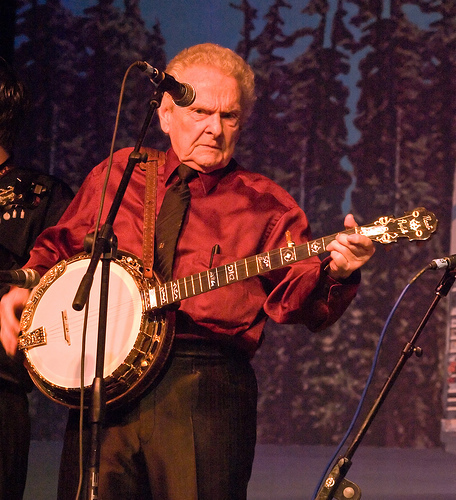
Bluegrass Musician, Ralph Stanley, Dies

image

Ralph Stanley, one of the earliest pioneers of traditional bluegrass music, died June 23, 2016 at the age of 89. Dr. Stanley, who received an honorary doctorate of music from Lincoln Memorial University, died of complications from skin cancer.

Stanley, along with his brother, Carter, teamed up with their band, the Clinch Mountain Boys in 1946 and began to develop what is now known as bluegrass music through the adaptation of Appalachian folk music. Ralph Stanley played banjo; Carter Stanley, who passed away at a young age in 1966, played guitar. Stanley continued as a solo artist. He and the Clinch Mountain Boys played for most of the next 50 years. He and his band served as a mentor for such bluegrass artists as Keith Whitley and Ricky Skaggs.

Stanley was a member of the Grand Ole Opry. He was awarded the National Medal of Arts and the Living Legends award. A coup in his career occurred when he appeared on two movie soundtracks, “O Brother, Where Art Thou,” and “Lawless.” He continued touring into his 80s.

Stanley is survived by his wife, three children, and many grandchildren and great grand-children. #RalphStanley #writing #amwriting #blogging

*Image by armadilo60 at Flickr.com 2009

Posted in Appalachia, Food, Recipes, Uncategorized

Appalachia and Food: Potato Pancakes

image

Friday Fare to Appalachia

The Appalachian culture is all about food. Appalachian farmers and truck gardeners worked the land to grow the basics for their family. They had a hard-scrabble existence. Some of the basics among the vegetables were corn, squash, and potatoes. Not much rice was eaten in Central Appalachia even though rice was a daily dish in the south. In the mountain territory, the land was not suitable to grow rice. The people substituted potatoes for rice.

A dish I learned to fix from my mother, and one that everyone loved, is the potato dish featured today. We called them Potato Cakes. Some called them Potato Pancakes. My mother sometimes fixed them for breakfast, sometimes for dinner. They were a favorite. Very filling and somewhat nutritious for people working hard physical labor later in the day. This is a very plain dish enjoyed by plain people. One thing you will notice about many of the Appalachian recipes is that measurements are often either non-existent or approximate. You have to experiment until it tastes the way you want. It isn’t hard, I promise!

Potato Cakes

Leftover Mashed Potatoes – as many as you have!

1 -2 eggs depending on how many potatoes you are using

Skim milk – enough to just wet the potatoes and allow you to stir them

Stir together the first three ingredients. Make sure the consistency is medium thick but stirable.

Add a pinch of salt and pepper.

Regular Flour – Add enough regular flour, a tbsp at a time, to make the potato mixture stick together and to enable you to pat it into cakes.

Pat the mixture into pancake-size cakes.

Prepare a skillet by melting several tbsps of butter (or margarine) in it. Melt it slowly and don’t let it burn.

When the butter/margarine is melted, add as many potato cakes as the skillet will hold. Fry them until they bubble on top. Then turn them with a spatula. Cook until both sides are golden brown.

Remove and place on paper towel-covered plate.

Serve and enjoy!

Copyright Rosemary Carlson 2016

Image by sylvar Flickr 2016


Posted in Appalachia, Eastern Kentucky, history

Appalachian Folklore: The Jack Tales

image

Storytelling is a tradition in Appalachia. Down through the decades, many Appalachian children and adults have spent nights on the front porch, gathered around an elder, listening to stories that have seldom found a place in written forklore. Most of the stories have been in oral format only. This is true for the Jack tales though historians and some storytellers are making an effort to capture them in writing. Jack tales are seldom told in the same way twice which makes writing them down difficult. Different storytellers tell them in different ways. Even the same storyteller may change the telling of a Jack tale from telling to telling.

We’ve all heard of Jack and the Beanstalk, Jack and the Giant Killer, Jack and Jill, Jack Sprat, Jack Horner. There are many other Jack tales. All are examples of the Jack tales that originally came to America from the British Isles. The first Jack tales can be traced back as far as the fifteenth century in Great Britain. By the next two centuries, the first tellings of the Jack and the Giant Killer story can be found. That’s when the rhyme, “Fi-Fy-Fo-Fum, I smell the blood of an Englishman,” can be found in English literature for the first time, including in Shakespeare’s King Lear. Jack, who was supposedly located in Cornwall, England, trapped the Giant in a pit in order to kill him. Other giants were also present in the tale. By the eighteenth century, the Jack tales were found in the nursery as they had been turned into nursery rhymes.

As the British immigrated to America, along with the Scots and the Irish, each culture brought their own rendition of the Jack tales. The versions of the Jack tales were likely combined to become the Jacks that we know and love today. A book by Richard Chase, published in 1943, is a collection of at least some of the Jack tales. Chase alleged that many of the Jack tales were collected by a group of families in North Carolina and came into Southern Appalachia from that area. Chase did acknowledge that new Jack tales were surfacing in other parts of Appalachia, specifically in Virginia and Kentucky. In Harlan County, KY, Mrs. Sally Middleton of Martin’s Fork, knew versions of two of the Jack tales of North Carolina that she carried on. In all of the Jack tales, Jack is thrown into difficult situations. In the Appalachian versions, the themes reflect the problems of the area such as poverty and farming and the harsh conditions of life.

Jack is probably the first legendary hero in American literature. Counce Harmon was one member of the families in North Carolina that passed the Jack tales down for most of 200 years before they were ever written down. Here is a telling of a Jack tale for your enjoyment by a descendent of Counce Harmon, one of the original tellers of the Jack tales in America:


https://youtu.be/t3S5dry-IKk


Chase, Richard. (2015) The Jack Tales. HMH Books for Young Readers.


Posted in Appalachia, Eastern Kentucky, history

Personality Traits of the Appalachian People

image

Friday Fare to Appalachia

Do the people of a geographic region like Appalachia have unique personality traits? Some think so. A number of studies have linked personality traits to U.S. geographic regions or even U.S. states. As an example, a 2013 study done by Time Magazine found that the people of Kentucky are one of the most neurotic and introverted people in the nation. They are not very agreeable or open. West Virginia joins Kentucky in the trait of introversion. But, the people in both states exhibit tough-mindedness as well. Most “happiness” studies that have been done find the people of Kentucky and West Virginia ranking near the bottom.

But, wait! This sounds terrible regarding the personalities of the people of these parts of Appalachia. Since I am one of these people,I don’t think we are all unhappy or that we all have troublesome personalities. Could part of the problem be stereotypes of the people of Appalachia? Read on…..

Appalachia is a large region in the eastern part of the United States, named after the Appalachian Mountains. It encompasses 205,000 miles and the people are 42% rural as compared to 20% of the national population. All of West Virginia is considered to be in Appalachia. Parts of twelve other states are in the region, including Kentucky, Alabama, Georgia, Maryland, Mississippi, New York, North Carolina, Ohio, Pennsylvania, Tennessee, South Carolina, and Virginia.

John Alexander Williams, an author who wrote Appalachia: A History, specified that there is a “core” Appalachia. That core includes 164 counties. Those counties are the entire state of West Virginia and parts of Kentucky, Tennessee, Virginia, Georgia, and North Carolina. I tend to agree with Mr. Williams. In case you haven’t read my story on this blog entitled, Appalachian Roots, I was born and raised on the fringes of Appalachia and my mother’s family is from deep in the heart of Appalachia. There is a distinct difference between those living deep in Appalachia and those on the fringes.

I spent a good deal of time with my grandparents in the heart of Appalachia growing up and until I was in my 20s. I became familiar with the personality type of the people. While introversion and tough-mindedness are characteristics of the people, I don’t agree with some of the others mentioned in the Time personality study cited earlier. You do have to recall that people migrated to Appalachia during the pioneer days under great hardship. Many migrated because they wanted privacy and land around them. They did not want close neighbors and the thought of being in the mountains appealed to them. The fact that their descendants are introverted and tough-minded can’t be a surprise.

The author Loyal Jones, in his 1991 book entitled, Appalachian Values described some of the personality characteristics of the people very well and his description tallied with my experience. He said the people had the traits of, “Religious, Individualism, Self-Reliance and Pride, Neighborliness and Hospitality, Family Solidarity, Personalism, Love of Place, Modesty and Being One’s Self, Sense of Beauty, Sense of Humor, Patriotism” (Jones 1991:170). I can picture my grandfather when I read that description along with a lot of the men he associated with at his home in Magoffin County, KY. Jones stated that some other authors considered these personality characteristics to be deficiencies, which I can’t imagine.

I believe these personality characteristics may describe the Appalachian people of the past very well. The citizenry of the region have changed as economic times have changed. Money has gotten more scarce as coal mining and farming wanes, a lower paying service economy picks up, and the drug culture and welfare society explode. These cultural and economic events have taken a toll on the personalities of the Appalachian people. Gone is the sense of self and self-reliance of these once-proud people. Family solidarity has fractured. Individualism is no more. Instead, we see once-proud, hard-working people relying on welfare and selling their food stamps for drugs. We see single girls having babies so they can draw those welfare checks and young men seeking out pain pills and disability checks for non-existent ailments. We see any money that does exist invested in drugs instead of in food for the children and a roof over those childrens’ heads. Only in pockets of Appalachia do we find the once proud people of that region. Where there is no work, there can be no pride.

Why do the people stay in Appalachia? Some of their personality traits explain that. The love of place, their culture, their family — all of those are reasons. But, there have been waves of out-migration from the area since the 1960’s. The smart ones seem to leave. The others seem to find reasons not to. The very personality characteristics which are endearing may spell the end of the people of Appalachian unless economic times change in the area. That is the subject for several more blog posts.

Watch this space! #appalachia #amwriting #writing #blogging


Posted in Appalachia, Eastern Kentucky, Wildlife

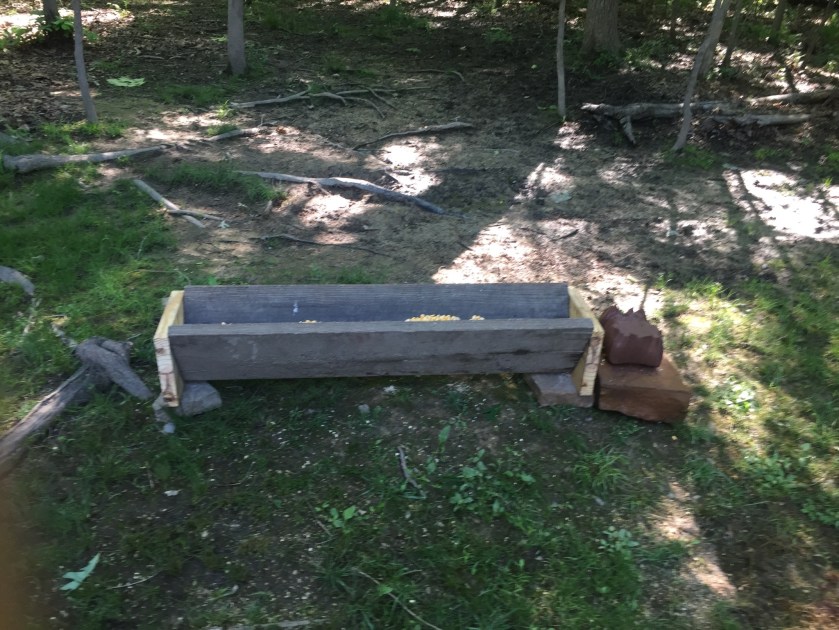
Deer at the Feeding Trough

image Continue reading “Deer at the Feeding Trough”

Posted in Appalachia, Eastern Kentucky

Book Review: Clay’s Quilt

Clay Sizemore, a young coal miner who lost his mother at a young age, is the main character of Clay’s Quilt. This novel by Silas House, a renowned Kentucky author, was House’s debut novel in 2001. I’m reviewing this book for you because it is one of the best novels I have ever read. It is worth reading whether you are interested in Appalachia or if you are just interested in reading a good novel. If you like a heart-wrenching story, populated by colorful characters, and set in the most difficult of environments, you will enjoy Clay’s Quilt.

The story is a microcosm of life in Appalachia based on this one Eastern Kentucky family but it will strike a familiar chord to members of all Eastern Kentucky families. I know this writer, at times, felt like I was reading about my own family.

Free Creek, the setting for the novel, is located in the hills of Eastern Kentucky, near coal mining operations. Young men like Clay Sizemore and his friend, Cake, are born here and never expect, or want, to leave. They settle into their occupations, raise a family, have a big extended family full of aunts and uncles and nieces and nephews, and this is their life. It can be a very good life. It can also be a hard life, but these people, the people of Appalachia, don’t know that. This is all they know and they wouldn’t have it any other way.

Clay Sizemore lost his mother in a tragic car accident when he was three years old. That day, an icy and snowy winter day, Clay’s mother decided she was going to leave her husband. She took Clay with her and lost her life on slick roads. His extended family closed ranks around him and raised him from the age of three. After that day, Clay never knew his father. He had his beloved Aunt Easter, who took care of him as a boy. He also had Uncle Paul, who made quilts, and Dreama, his cousin who he loved like a sister.

Clay became a hard-working coal miner. He worked in the mines during the day, but on the weekends, he and Cake went to the local honky-tonk, drank their fill, and listened to their mountain music. There he met the beautiful Alma, a fiddler with whom he wanted a future, but Alma had her own problems. Most importantly, Clay had a box of his mother’s possessions from which he tries to put together her past, hoping to figure out who she was and who he is. During this time, Uncle Paul is making a quilt – out of the pieces of Clay’s mother’s clothes.

This is a beautiful story written by Silas House in lyrical prose. It is short on sentimentality and long on descriptive characterizations and good storytelling. It is easily readable in a weekend. Clay’s Quilt is a stunning and mystical novel that will stay with you for a long time after you read it.

You can get the Kindle edition at amazon.com or the hardcover or paperback at Abe Book’s. Enjoy! #writing #am writing #blogging #appalachia #Best_Books

Posted in Appalachia, Eastern Kentucky, Food, Holidays, Memorial Day, Recipes, Uncategorized

Recipe for Memorial Day: Corn Pudding

image.jpeg

Just for fun, I want to share with you an old-fashioned Eastern Kentucky recipe that you might enjoy for your Decoration Day celebration. It came to me from my aunt, Sylvia Prater, who was born and raised in Appalachia. She was my mother’s sister, a wonderful cook, and our whole family enjoyed her big meals often as I was growing up and even after I became an adult. Here is her recipe:

Corn Pudding

Preheat your oven to 350 degrees.

Combine the following ingredients in a 13″ by 9″ baking dish:

2 cups frozen corn

4 beaten eggs (I recommend a cage-free brand)

2 cups milk  (I recommend skim milk)

2 tbsp butter (i recommend real butter like Kerry Gold)

1/4 cup sugar

Salt and pepper to taste

Grease your baking dish with a dab of the butter. Bake at 350 degrees for 45-60 minutes. Stir before it sets. Enjoy for your holiday dinner! #am writing #writing #blogging #appalachia #recipes

*Image courtesy of ji1991 https://freedigitalphotos.net