Posted in Creative Nonfiction Essays, Travel

Serendipity

image

I was thinking tonight about serendipity. Just simply deciding to do something on the spur of the moment and having it turn out to be a really desirable and fun thing to have done. In my life, I’ve found that the less you plan and the more you do things on the spur of the moment, the more fun you have. At my age, fun is important. In fact, at any age, fun is important! Just going with your gut and getting out in the world and doing something you want to do is what fun is all about.

It’s interesting. I know people who, as they age, seem to plan more and do serendipity less. I don’t know why. Perhaps they feel more of a need to control their lives, control their destiny. But, I think you lose some of the joy of youth when you forget about serendipity and plan every activity down to the last detail. Some seem to have to screen every thought they have about possible activities they might like to pursue. I guess I am youth-obsessed. As I age, I want to keep that joy that we feel when we are young, even the joy we have as children. Of course, I have also been accused of having the Peter Pan Syndrome, but I think that is a good thing. Doing serendipity allows me to keep that joy in my life.

I’ve had some interesting experiences by doing serendipity. Once, a friend and I were presenting a paper at a conference in Mesa, Arizona at Arizona State University. We had a free day so we took a drive (a long drive!) over and around the Grand Canyon. We  went off the beaten path to the northern edge of the Grand Canyon. To give you some perspective, the tourist area is on the southern rim. The northern rim is pretty deserted.

As we drove toward the northern rim, we felt totally lost. We were hungry and needed gas in the car and there was nothing around. Suddenly, we ran upon a restaurant with gas pumps so we stopped there to eat. It was a restaurant that was run by the Native American tribe who lived in the area. The menu was interesting and we didn’t know what to order since we didn’t really recognize any of the food on the menu. We told the server just to bring us something good. I still don’t know what it was I ate.

We set out, after eating and getting gas, for the northern rim. We drove down this straight, long, lonesome road, assuming that the northern rim would be at the end of it. We were literally the only car on the road. Suddenly, I had to slam on the brakes as a huge heard of elk ran out of in front of us. They were crossing the road and it was a beautiful site. There had to be 50 or 60 of them. We drove on and soon, we saw a parking lot. We parked and walked a bit and there was the Grand Canyon, but it looked different than it does on the southern rim.

There are not even any guard rails around the northern rim. It is steeper and more raw. It’s absolutely beautiful but in a different way. We spent some time taking pictures and drinking in the beautiful sight.

It was a long way back to our hotel in Mesa so we started back. On the way back, we saw a herd of wild horses. Being a horse lover, I wanted to jump out of the car, but they aren’t exactly longing for a pat!

When we got back to our hotel, we talked about our day. Serendipity was good to us that day. We would never have had those experiences if we had meticulously planned something.

I hope I can keep my joy in experiencing new things on the spur of the moment for the rest of my life. #SoCS #amwriting #amblogging #writing #GrandCanyon


This post is part of SoCS.

Posted in Creative Nonfiction Essays

My Issues with Wal-Mart

image

Many people will say that Wal-Mart has given people in small communities, particularly, a low-cost way to shop. That may be true. But at what cost? What are they buying? Is the quality of those low-cost goods adequate for the people buying them?

First, at what cost is Wal-mart to local communities? Has it been worth it, or not, to bring Wal-mart into small communities for low-income shoppers. Some would say Wal-mart appeals primarily to down and out shoppers. In the small town where i live, everyone shops at Wal-mart, from the down and out to the working person to the happy couple and to the teenager. Do you know why? There is no other place to shop.

It’s an interesting phenomenon. My town is not that small. It is a university town. When I was growing up here, there was a thriving business district on Main Street. There are a few viable storefronts left on Main Street but very few. When Wal-mart came to town, the small business person could not compete with Wal-Mart’s lower prices. Many of our businesses went out of business. It seemed that the bright sunshine shined only on Wal-mart. The cost of Wal-mart was the loss of the small business in my town as it is in so many small towns. They were also offered incentives to locate here, tantamount to giving them the proverbial ice cream with a cherry and sugar on top.

Wal-Mart has no twin in the business world. Many call them the worst company in America, primarily for some of their labor practices. Even though they have a problematic relationship with their employees, they refuse to even consider allowing labor unions to get involved. As one of America’s top companies, they set a bad example by not only using a lot of foreign labor but also child labor overseas. Look at where Wal-Mart’s products are made sometime. I think you will find almost all are made overseas.

In an effort to be fair, Wal-Mart does offer valuable goods and services that some people could not afford otherwise. But their quality is suspect. They have a large electronics section which is valuable in a small community, but no significant computer repair. They offer gardening implements and outdoor plants, in season. They offer indoor plants year round, such as the Christmas cactus.They offer everything from clothes to groceries to soft goods for the home.

But, in this writer’s opinion, none of that makes up for what they take away from a community. I will write more about this company and its problematic business model in a blog post in the future. #amwriting #amblogging #writing #Wal-Mart

Thematically Correct


Posted in Creative Nonfiction Essays, education, Lifestyle, Women's Issues

A Letter to my 15-Year Old Self

image

Do you ever think back to some past point in your life and ponder what you might do differently if you had it all to do over again? I find myself doing that at critical junctures in my life. Recently, I’ve thought about myself as a young teenager and what she might do differently if she had the opportunity to write a different script for her life. I think some of what I determined might be better courses of action for her might apply to others so I thought I would share them with you.

  1.  If I could be 15 years old again, with the wisdom I have now, I would ignore the boy I met at the college basketball that night when I was truly 15. When he came over to me, sat down beside me, and introduced himself, I would get up and walk away. I would know that I wasn’t ready to date anyone, including that boy. I would know that this boy came from a different background and we wouldn’t understand each other. I would sense his underlying bad temper and be fearful of him. I would not waste three years on him and let him change the course of my life forever.
  2. If I could be 15 years old again, with the wisdom I have now, I would be looking at colleges in other cities rather than just in my hometown. I wanted to go to an Ivy League school and I would try to make that happen by getting scholarships. Instead, I let my parents talk me into staying at home and going to college in my hometown. It was a good school, but I wanted to go to a great school – an Ivy league school. Instead of majoring in what was popular at the time, I would double major in Classical Piano and English and head off to New York City after college to seek my fortune – a good music school that would accept me into their program.
  3. If I could be 15 years old again, with the wisdom I have now, I would realize that I would have my friends from my time in the first 12 grades of school with me all of my life but that I would also make other lifelong friends during my life journey. I would not care quite so much about the “sibling” rivalry that springs up in a small private school like mine. Rather, I would realize that when we all grew up, the petty stuff would be gone and we would renew our friendships on an adult level and support each other the rest of our lives.
  4. If I could be 15 years old again, with the wisdom I have now, I would listen to my parents when they advised me not to marry as young as I did. For me, very little good came from marrying so young and, perhaps, a great deal of harm. Marrying young caused me to be unable to know myself as an adult beyond functioning as a half of a couple.
  5. If I could be 15 years old again, with the wisdom i have now, I would spend more time with my parents as they got old. Of course, my dad never got old. He didn’t get that chance and I didn’t get the chance to know him as an adult because, during the few years he lived when I was an adult, he was working hard and I was working hard. We failed to prioritize our relationship – something I will always regret. My mother did get old and spent the last 14 years of her life in my care. Unfortunately, she was beyond strengthening relationships at that point.

IF you could go back to 15 years old, what would you do differently? #amwriting #amblogging #writing #lifestyle

Posted in Appalachia, Creative Nonfiction Essays, Eastern Kentucky, Poverty, Uncategorized

Appalachia: Hillbillies, Rednecks?

image

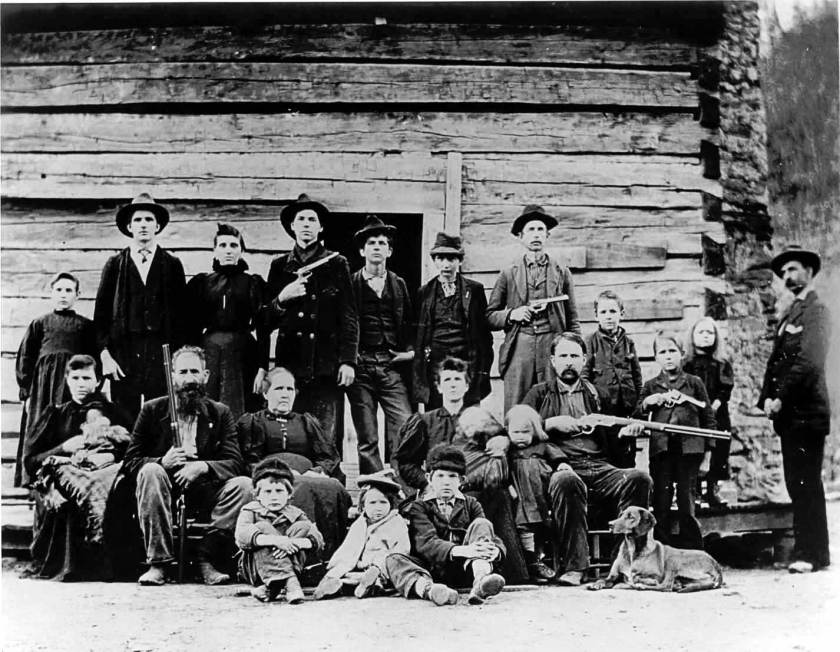
So are the terms hillbillies and rednecks, when used to refer to the people of Appalachia, considered derogatory? The short answer is yes, usually they are. If we explore where those terms originally came from, we’ll see that they were not necessarily meant to be derogatory terms but the American people took them and ran with them. Remember The Beverly Hillbillies TV show? The Dukes of Hazzard?  Deliverance, the movie? These words were certainly derogatory in connection with these television shows and, in the case of the first show, gave the viewers something to laugh at. In the case of the movie, Deliverance, these words were more to frighten and horrify viewers.

It is unclear where the word “hillbilly” originated, but it may have been derived from similar words in the Scots-Irish culture. The Scots-Irish people were among the first settlers of Appalachia and may have brought this word with them. The word “hillfolk” was used by the Scots to describe those who preferred living in the mountains and isolation from society. The word “billie” was used to refer to a companion. After the Civil War, Appalachia became perceived as backward as the US moved westward and Appalachia was left isolated geographically and inbred because of that. During the Great Depression, and after, there was outward migration from Appalachia to the north in search of work. The poor whites who emerged from the mountains became figures in stories and the characterization of “hillbillies” emerged even stronger.

When “hillbillies” self-identify, they simply say they are people living in the mountainous regions. When “rednecks” self-identify, they refer to a time when union coal miners fought against mine operators who were trying to oppress them and wore red bandanas around their necks. Rednecks often tie themselves to an entire political and cultural movement in the US. Both terms tend to take on derogatory meanings when used by outsiders. This writer prefers the term “Appalachians” to reflect the proud heritage of the people of the region. #amwriting #writing #blogging #Appalachia


Posted in Creative Nonfiction Essays, Lifestyle, Women's Issues

The Most Elegant Lady

image

I always blame my aunt for my credit card bills. Even though she has been gone now for a long time, she had great influence over me in many areas. Education. Behavior. The way I view my family. The way I view the world. And, perhaps unfortunately for me, the things that I like including clothes, accessories, and home furnishings.

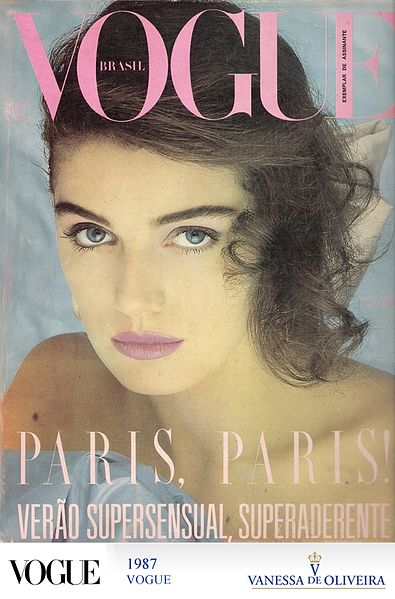
My Aunt Red was the most elegant lady. She lived next door to me as i grew up. She was a fourth grade school teacher in a small elementary school in a county in northeastern Kentucky. She came from a county deep in the heart of eastern Kentucky. I’ve often wondered where she learned to be so refined, such a polished and stylish lady in a land where elegance wasn’t necessarily the norm. Survival was. I still can’t answer that question. But, I do remember seeing her reading Vogue Magazine years before anyone else around this part of the country knew what Vogue Magazine even was. In the 1920s, she was even a flapper girl!

Aunt Red was the definition of elegance in everything she was and did. She was dignified to a fault and graceful in her appearance and behavior. She dressed in a tasteful, yet simple, manner. But not cheap. Never cheap. Since she did not live in a place where designer clothes were available, she ordered them from nearby big cities. From stores like Saks. She started buying designer clothes for me when I was 12 and did so up until I left home at 20. Even after that, she would surprise me with clothes. The first designer piece of clothing she ever bought me was a black coat which I wish i had to this day. She taught me what to wear and what not to wear, lessons I remember still.

Do you see why I blame her for my clothing bills? Her lessons about appropriate, fine clothing are so ingrained in my head that I could not buy anything else if i tried and her lessons were taught to me 50 years ago.

But, Aunt Red was not all about clothes. She embodied elegance in many other ways. She was the glue that held our family together. Even more than my grandparents. After her death, I saw cracks start in my family. Cracks that have grown wider and deeper with time. Aunt Red helped people. She had many friends and, if it was within her power, she never let anyone suffer or want for anything. She took care of me, an only child, when my dad was working out of town and my mother couldn’t. She taught me to read at three years of age and put me in piano lessons at four. She was my second mother in every way that made a difference.

Aunt Red could go anywhere, fit in with any group of people, and look and sound like the best educated person in the room. She could discuss any subject and make any person to whom she spoke feel like they were the most important person she had ever met.

She passed away from a horrible, painful illness way too young. She never complained like the elegant lady she was, right to the end. The last thing she said to me, the night before she died, was to admonish me to finish my education. I loved her very much, as did everyone in my family. Every girl should have such a dignified, exquisite role model. I consider myself very lucky indeed. But i still blame her for my credit card bills! #amwriting #writing #amblogging #lifestyle

Posted in Creative Nonfiction Essays, Uncategorized, weekendcoffeeshare

#weekendcoffeeshare 9/3/2016

image
Time for this week’s #weekendcoffeeshare and since my friend, Jenn, can’t join me for coffee this week, I would like to share my coffee with all of you. So, grab a cup, pull up a chair, and help me deal with a subject that has made me quite contemplative this week.

That subject is mortality. A subject that makes most of us, including me, uncomfortable. But, bear with me. This week, I have had a dear uncle and the father of a first cousin, once removed, pass away and mortality is quite on my mind. First, my uncle. He was my uncle by marriage. You couldn’t find a better man. He had been chronically ill for years and passed away at age 85. A good long life for a man with more chronic illnesses than you would wish on your worst enemy, let alone a fine man. Then, my cousin’s dad passed away at age 79. He, too, had been chronically ill for years, some of his illnesses possibly brought on by lifestyle, and he, too, had a good long life.

My uncle was a church-going, spiritual man or that is the way it appeared on the outside. He was good to his family and friends and lived life as he seemed to want to live his life. My cousin’s dad would probably have been described as “fun-loving” back in the day when he was still well. He was described as living life “on his own terms” which is really just another way to say that he did what he damn well pleased. I’ve thought a lot about those descriptions of these two men – both of whom I liked immensely.

A question tickles my brain. Given what I’ve just told you about these two men, didn’t both of them “live life on their own terms” even though it was only my cousin’s dad, the fun-loving guy, who was usually described that way? I’ve found that when someone is described in that way, it may be derogatory. Not always, but often. But, my uncle, a religious man, probably lived life on his own terms as well, though they were different terms and perhaps more socially acceptable than those “terms” under which my cousin’s dad lived. Who’s to say my uncle didn’t have just as much fun in his own way? Or that my cousin’s dad wasn’t spiritual in his own way?

I’m tired of placing people in boxes and stereotyping. We don’t know what goes on in other people’s heads. I am sure both of these men had good and bad qualities as do we all. They had flaws and wonderful characteristics. They were just different. Let’s give each other the benefit of the doubt and a break. #weekendcoffeeshare

Posted in Creative Nonfiction Essays, Uncategorized, Writing

#SoCS – The Fall

image

Eliza had passed away three weeks before. She had suffered from pancreatitis for the almost 14 years of her life, off and on, but that wasn’t her cause of death. I suppose her cause of death was a combination of old age and canine dementia. You’re in danger of inducing canine dementia in your dogs every time you put them under anesthesia when they are old. Eliza had a tooth that was infected and it had to be extracted. There was no choice but to use anesthesia. When she came home from the veterinarian, I knew she wouldn’t live long when she collapsed into the middle of the living room floor for the next 14 hours.

When she finally got up, she was never the same again. She barked at closet doors to go out. She thought night was day and day was night. She forgot that she was hungry. But, I knew her. I could keep her safe and comfortable, at least for awhile. At least that’s what I told myself. That lasted a few months until one morning I saw the look on her face. Somewhere in her little confused mind, she knew things were very wrong. That day, I told my heart dog goodbye and had her gently put to sleep. It didn’t take much. She was mostly gone already.

I felt very alone. She had been with me through many trials and tribulations as well as through good times. She centered me. I had anticipated her death and had started to think about another dog, not being able to imagine being without a canine companion.   I started making some phone calls and heard about a breeder who had two puppies. One needed to find a home. Her sister was going on to be a show dog. The puppy who would come to be my Betsy didn’t have a purpose. Her purpose was to be my companion.

We drove five hours to see the puppy. To a house that was new construction. There was no question that Betsy would come home with me. We spoke at length with the breeder. Dark was coming and we were far from home so we got ready to leave and take Betsy with us. We stepped out onto the porch of this new home. It was dusk and the porch was high off the ground. I stepped forward as I had noticed the wide steps down to the ground. I stepped off the porch……into thin air. There was no railing around the porch and the steps were not the width of the porch. I hit the concrete flat on my face.

I thought at first I was fine. Then, I watched in horror as my vision drained away out of my right eye. The next day, I found out I had suffered a complete detachment of my retina.

Posted in Creative Nonfiction Essays, Uncategorized

Making Mistakes

The only man who never makes a mistake is the man who never does anything. – Theodore Roosevelt

What a wise quote by President Teddy Roosevelt. We can all make a mistake. If we don’t, we are sitting at home with our hands folded in our laps. Mistakes can be large or small. Irrelevant in the grand scheme of your life or life-changing. Usually, when we make a big, life-changing mistake, we surely don’t realize it at the time. We either think what we were doing was not all that important or we were convinced we were doing the right thing. It’s only when things start to go wrong and we look back do we realize we made a mistake.

Why does making a mistake bother us so much? I think the reasons are many but one is that it shows us our vulnerability. We have analyzed a situation incorrectly. On top of that, many of us may not realize it, but we have limited and fragile support systems. Those support systems may collapse if we make a mistake as there may be judgment and criticism involved. Some societies even cast out those who have made a mistake. In the United States, people who make a mistake are usually not cast out explicitly, but they may be implicitly. They certainly may be shunned. For all these reasons, along with the fear of being hurt, we have a deep-seated fear of making mistakes which makes us less creative in our lives.

We cannot avoid making mistakes due to changes in the world around us. Most change in the world we cannot see. It happens slowly and subtly and our actions often cannot keep up with it. So when we take an action, it is a mistake because change has happened that we are not aware of. The older we get, the more we usually fight change. The more we allow ourselves to be flexible and bend with change, the fewer mistakes we will make.

Even though it doesn’t feel like it when we make a mistake, there are benefits to be had. Some of them are: Mistakes deepen our knowledge. They help us see what matters and what does not. They allow us to see if someone in our life has changed or has not. They can teach us to value forgiveness. They can serve as a warning. They can give us a new insight.

There are many more lessons we can learn from mistakes. But we have to get beyond the pain we feel at making the mistake in order to learn the lessons.

When we realize that mistakes are part of the inevitable flow of life, we can relax and handle them better. It won’t take away the pain of making the mistake, but it will help us understand why we made the mistake and learn the lessons we should from it. #amwriting #blogging #writing


Posted in Creative Nonfiction Essays, education, Higher Education, Lifestyle, Uncategorized

The Millennial Generation: Overtaking the Baby Boomers?

The millennial generation is generally defined as that group of individuals in the U.S.  born between 1980 and 2000. We are hearing a lot about the millennials currently, particularly with regard to how they may affect the 2016 U.S. Presidential election and how they are affecting the workplace. My series of articles on the Baby Boom generation, born between 1946 and 1964, would not be complete without drawing some obvious comparisons between that generation and the millennial generation.

  1.  The millennial generation is now the largest generation, in sheer numbers of people. They actually outnumber the huge baby boom generation by about 10 million people, even though their population is increased by immigrants. The Brookings Institute says that by 2020, 1 in 3 adults in the U.S. will be a millennial.
  2. Baby boomers married, in 1970, when the men were about 23.5 yrs of age and women were a little over 20. Millennials marry when men are, on average, 29 and women are 27. Up to 25% of millennials will never marry at all.
  3. Millennials are a more diverse group than baby boomers. Only 57% of millennials are white and 72% of baby boomers are white. Both Hispanic and Asian immigrants have increased the diversity in the U.S.
  4. About 2/3 of millennials ages 25-32 do not have a college degree. Those that do earn almost $20,000 per year more than those with only a high school diploma. It is an impossible comparison in this category with baby boomers since a high school diploma bought much more for them than it does for millennials. You will hear that millennials are over-educated and underemployed. You can see from this statistic that is not necessarily true, though millennials may think it is true. One truth is that, those who sought a higher education, are paying dearly for it in student loan debt.
  5. We often hear about the unemployment rate of the millennials. If the millennials went to college, their unemployment rate is only 3.8%. Without the college degree, it is over 12%. So, if millennials further their education, their unemployment rate is much lower than that of the general population. They are pickier about their jobs than the baby boomers. They will take less money and have a job they enjoy more, unlike the boomers. The baby boomers would work at just about anything in order to survive. Many millennials have had a safety cushion in the form of parents and family to fall back on. That was not necessarily true for the baby boomers.

There is quite a disparity in the characteristics of the baby boomer generation and the millennial generation. The U.S. now has a service economy and we surely need workers for that type of economy. However, with two-thirds of the millennials not having college degrees, this writer wonders who is going to teach our children, do our research and development, be our medical doctors, innovate products, and so many other jobs that need those credentials. Does this mean that we will have to import foreign labor that place a higher value on higher education to do these skilled tasks, such as the Asians? I understand that higher education is expensive and that student loan debt is high. Our politicians must address this if we want our young people to take over our country as the older generations retire. #dailyprompt #writing #blogging #amwriting #millennials #babyboomers

Posted in Appalachia, Climate Change, Creative Nonfiction Essays, Lifestyle, Uncategorized, weekendcoffeeshare

A Thought on Extended Families

I know a woman who has a large extended family. Let’s call her Pat. Pat’s immediate family is gone. She was an only child who had no children. Her husband is still living. Pat has a large, but dwindling, extended family on her father’s side that she grew up with. They were all always close. Until one of Pat’s aunts passed away. Then, the family basically fell apart. The aunt was the glue that held them together.

The relationships within this extended family have gotten complicated. It makes Pat sad. She loved her extended family, particularly her cousins. But, I’m getting ahead of myself. I feel sorry for Pat. She assumed, for her entire life, that she could always depend on her extended family. Now she knows there are a few that she can depend on, but most of them don’t care about her anymore.

There were seven aunts and uncles in this family. All had one or more children. Pat’s cousins. The brothers and sisters were all close even though there were occasional squabbles. They saw each other frequently. That meant the children, Pat’s cousins, saw each other and were also close. Right or wrong, since Pat was an only child, she saw those cousins as her siblings. The older cousins were mentors. The younger cousins were her loves. She felt like they were her’s.

Everyone, of course, grew up and went on to live their lives. Of course, everything changed. Pat didn’t understand why their relationships with each other had to change. Just like in any family, there were quarrels. Everyone seemed to hold grudges instead of working it out. Emotional distances grew between the cousins. But not between all the cousins. Pat remained close to a cherished few of her cousins. Those cousins are the ones who live far away.

There is one aunt who is left in Pat’s family and she is treasured. Besides the one aunt,  there are 17 cousins, including several first cousins, once removed. Pat loves them all. There are two cousins that Pat has no contact with for reasons she doesn’t know. That leaves 15 cousins. Out of those 15, Pat thinks there are about five she could depend on in a crisis. Earlier in her life, she felt she could depend on just about all of them. Worse yet, Pat misses her cousins.

Take my poll. How do you feel about your extended family? The poll is anonymous. #amwriting #writing #blogging #family