
Posted in Appalachia, Eastern Kentucky, Politics, Uncategorized

Does America Really Vote Against our Own Self-Interests?


image

In the 2015 Kentucky Governor’s election, some of the results of the voting seemed astounding. For one thing, Kentucky elected a Republican Governor for only the second time in four decades. Most were shocked when Governor Matt Bevin was elected, having fully expected his Democrat foe to prevail as Democrats usually do in the race for the Governorship in this usually red state. The results were even more shocking when officials looked at the county-by-county breakdown of the voting.

Matt Bevin had made his platform clear. He was going to repeal Obamacare in the state. Kentucky has one of the most successful Obamacare programs in the U.S., called Kynect, which has been particularly helpful to some in the poorer Eastern Kentucky counties located in Appalachia. Bevin also planned to considerably roll back Medicaid, the welfare program that so many in this poor state relied on. Yet, in Owsley County, Kentucky, the ninth poorest county in the state, voting results showed that 70.5% of the voters cast their vote for now-Governor Matt Bevin, despite his position on these policies. In Magoffin County, Kentucky, also in the Appalachian region of the state and the eighth poorest county, 54% voted for Bevin.

Did the voters in these two counties vote against their own self-interests when they voted for Matt Bevin for Governor? In Owsley County, 66% of the population is enrolled in Medicaid and 47% in Magoffin County. Yet, they voted for the candidate that stated he was going to dismantle the health insurance part of the program and considerably roll back the welfare benefits. Why?

There are many opinions and varying answers to these questions. On the surface, some say that the average education level of the voters in Eastern Kentucky is low and these low information voters cast a ballot without full knowledge of the candidates’ positions. I personally know that is true in many cases.

There is a second issue which quite possibly trumps the issue of the low-information voter. This issue is not one you hear the talking heads spout on Fox News or any of the news programs. Some people actually vote principle over pocketbook

Eastern Kentucky is in the region we call the Bible Belt. Many people rely on their religious values to determine their actions. The conservative movement has hijacked religion and made it a part of secular politics. They have somehow painted the Democratic party as the Anti-God party though this is blatantly not true. The Democratic party has simply respected the separation of church and state. Many voters have cast votes for candidates who espouse their own religious views even if the very things they promise to do are against their own self-interests.

There are many examples of voting principle over pocketbook. Gun control is another. Until the mid-1970’s, the National Rifle Association (NRA) was a moderate organization supporting moderate gun control laws. Then, it adopted a strict original interpretation of the Second Amendment and bought and paid for many members of Congress. In 1991, in an interview, Chief Justice Warren Burger, who was appointed to the Court by Richard Nixon and was a conservative, accused the NRA of fraud on the American people and said it had far too much influence on the members of Congress. He ended the interview by saying, “and I am a gun man.” Imagine what Burger would think today!

The NRA supports the Republican party and has convinced gun owners that Democrats want to take away their guns, which is foolishness. My family, Democrats as far back as our genealogy can be traced, have been gun owners, though we have felt no need to carry them in holsters on the street. Voters cast votes for candidates who are supported by the NRA because they fear anyone else will somehow take away their guns.

These are only two examples of many. Other issues that fall in the “principle over pocketbook” category are abortion, drugs, affirmative action, racism, and taxes. But those are topics for other blog posts. The Tea Party branch of the Republican party has been particularly effective at encouraging low-information voters to vote principle over pocketbook with Fox News being their media tool.

In our 2016 Presidential election, it will be interesting to watch this phenomenon. Unfortunately, in this writer’s opinion, the presumptive Republican candidate, Donald Trump, has not yet taken definitive positions that allow anyone to make decisions based on their pocketbooks or their principles. #amwriting #writers #blogging #BlogHer



Posted in Appalachia, Eastern Kentucky, history, Uncategorized

Appalachia: Settlers of Eastern Kentucky in the 1700s

image

The eastern seaboard of America was settled, as we all learned in elementary history classes, in the 1600s, by the English. For the most part, most scholars agree that these settlers were of the English middle class and even some of their landed gentry, seeking their fortune in the New World. The English liked the New England portion of America, the northern seaboard. Even the climate was suitable for them. They became fishermen and farmers. Even craftsmen had come from England and set up shop in villages and town that sprung up.

Even though the climate of the southern coast of America did not suit the English, planters discovered the agricultural value of the southern coastal areas. Slaves were imported from Africa to do the hard work in the hot sunshine. The plantation society was driven by the ever-increasing demand for the largest cash crop at that time — tobacco. When  cotton entered the picture as another important crop, the slave trade from Africa could not keep up and plantation owners turned to England to try to find work hands. They succeeded.

The cities of England were not pleasant places. Hygiene was poor and crime was rampant. England was ever so happy to get rid of some of its citizens who lived on the cusp of polite society. There were honest men seeking a better life ready to come to the sunny part of the New World, but there were also thieves, men avoiding  the military, and even orphan children. These were the people who joined the slave labor force on the plantations of the New South along the coast. Many became indentured servants. Later, they were referred to as “rednecks” and “hillbillies” and are even in the modern day.

Many of the laborers died on the plantations. Those who did not die served out their bonds, or escaped, and headed northwest, toward the cooler mountainous regions of what would be known as Appalachia.

Southern laborers of English descent were not the only source of population growth in Eastern Kentucky. Boatloads of Scots-Irish people landed nearPhiladelphia around the time of the Revolution. They were self-reliant, courageous people and struck out on their own westward, toward the mountains. A large number settled in Eastern Kentucky and thrived. Another route to the mountains, far easier than crossing them, was the Ohio River. Evidence is that large number of both Northern Englanders and the Scots came into Kentucky by that route with the Northern English prevailing. Irish can also be found by examining the names found in the region.

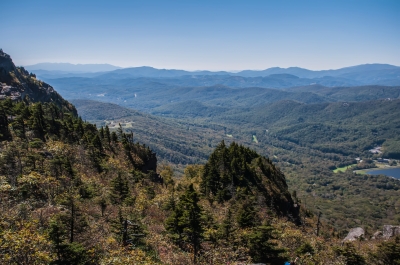
Mountain people. Mountaineers. Kentucky Highlanders. The Appalachian people, in general, and the people of  Eastern Kentucky specifically, are called mountain people by most of the authors of stories and histories about the region.  They became the distant ancestors of much of parts of present-day Appalachian and the Eastern Kentucky people. They came to the mountains in order to escape interference from government and to gain privacy from their neighbors. These people were often called derogatory names like hillbillies and rednecks. They began to farm the creek bottoms and live above them in caves, under rock overhangs, and cabins. They were some of the people who helped established this country, though in a limited geographic area, as these mountain people showed no inclination to move further west.

Watch this space for more on Appalachia and Eastern Kentucky.Mou

Posted in Appalachia, Drug abuse, Eastern Kentucky, Poverty, Uncategorized

Appalachian Roots

I am from Appalachia, central Appalchia to be exact. Northeastern Kentucky to be even more exact. My roots have a bit of a split personality. Part Appalachian, part Swedish! What a combination which probably accounts for my split personality and eccentric leanings. Someday, I will write about my Swedish family. Now I want to write about Appalachia. Appalachia breaks my heart.

I have always lived geographically close to Appalachia and spent almost 30 years teaching students who came from the region. I did not grow up deep in the heart of Appalachia but I frequently visited my grandparents and other family who lived in the Central Appalachian region. As I grew up, their culture was my culture, their values were my values, their way of life was my way of life. By the time I was becoming a teenager, Appalachia’s best days were behind it but I didn’t know it. My grandfather had worked hard to insure that his eight children, including my mother, had left the region in order to get an education and seek their fortunes. One had to go elsewhere for an education. There were only two universities reasonably close by and the terrain of the region is geographically isolating.

Poverty was the calling card of the region. My grandfather was a landowner, a successful farmer, and had gas and oil wells on the rich land. When I looked out his front door, I saw acres of corn and tobacco growing and many dairy cattle grazing. He was the exception not the rule. He refused to let his family work in the coal mines, but coal mining was one of the principal industries. Much of the region is not suited for farming as it is too mountainous. Manufacturers did not bring their industries to Eastern Kentucky. There were no good roads.

The people opposed interference from outside the region. They feared that their culture would be taken away, their way of life stolen, their children corrupted. They feared cultural change more than they feared poverty.

My grandparents are gone now but the old farmhouse still stands. Do you know what I see when I look out the door now? Trailer parks. Very poor, hopeless people. Children playing in the dirt yards. Starving dogs surviving on table scraps tied out in the yard. I know enough about the area to know what lies within some of those trailers. Drugs. Heroin. Pain pills. In that county, there is little economic activity with around a 33% unemployment rate. Farming is gone. The gas and oil wells still pump but the owners of the mineral rights live far away or the mineral rights were unfortunately sold along with the land. The people lost their way of life but not to manufacturers or education. They lost it to drugs and poverty.

Appalachia breaks my heart. #appalachia #poverty #drug abuse

Watch this space for much more on Appalachia.