
Posted in Appalachia, Eastern Kentucky, Food, history, Recipes, Uncategorized

Appalachia and Food: Green Beans and Corn Bread

image

Green beans and corn bread. The staples of life in Appalachia and Eastern Kentucky for the mountain people as they settled the area.  Fresh green beans out of the garden. Even in the winter, green beans and corn bread were one of the most common meals because many women in Appalachia have always used the canning and freezing techniques to preserve food. Green beans have been one of the crops most commonly preserved.

The family garden is not as common in Appalachia today as it was in the past, but they still can be found. They are located in the creek bottoms between the mountains. During the past three centuries, family farms growing this and other crops in those creek bottoms were common.

Today, we buy our green beans in grocery stores and never think about what variety they are. Not so in Eastern Kentucky and Appalachia both in the pioneer days and even today. Green beans were bought from family farmers and the variety was very important. Maybe the most popular variety was “white half-runners.” This is a whitish climber bean with an excellent taste. Another variety is the pole bean which is also a climber, but a much bigger bean than the half runner. Others are tenderette beans, greasy beans, Kentucky wonder beans, and different varieties of heirloom beans. One variety of heirloom bean is this writer’s favorite bean – the old-fashioned cornfield bean. These were all grown in the past in Eastern Kentucky and some are grown today. Many have become “heirloom beans.”

Heirloom seeds of any kind are seeds that are not found in the general marketplace in modern times. They are kept by farmers and seed-saving organizations and passed down from generation to generation. They are closely guarded, but this is a topic for another post.

The cooking technique for green beans was quite different than it is today for people who do not reside in the area. Green beans were cooked until they are very tender and with some sort of seasoning, usually in the form of fatty meat such as ham hock, salt pork, or something similar. Unless you were very careful, they could be quite greasy, but the Appalachian people liked fatty food. My grandmother lived on fatty pork feet and lived to be 97. She also worked hard, hard physical work, all of her life!

You could not have green beans on your table for a meal without corn bread. Corn bread was a little different than it was, for example, in the desert southwest. It was usually made with white cornmeal, though some used yellow corn meal. Buttermilk instead of regular milk was used. It was cooked in an iron skillet seasoned with lard. Many of the early Appalachian people existed on beans and cornbread. My own mother liked to have cornbread and milk for dinner.

Would you like the old recipes for green beans and cornbread from Eastern Kentucky? These were my grandmother’s, handed down to her by generations of women who came before her:

Green Beans

A pot full of green beans, broken into small pieces and washed three times

A piece of fatty meat, such as ham hock

Salt, to taste

Cover with water and boil the water down, then turn down the heat

Put a lid on the beans and cook slowly for 1-2 hours until the beans are very tender and the water is mostly gone.

Serve!

Cornbread

Preheat the oven to 450 degrees.

One cup of white or yellow corn meal, your choice – do not use self-rising

One cup of white flour…..do not use self-rising

Pinch of salt

4 tsps baking powder

Buttermilk…..enough to make the mixture smooth and stirable but not runny

While you are putting together the cornbread, have your iron skillet getting warm on the stove top with a couple of heaping tbsp of lard in it. Be sure the lard is melted.

Pour the cornbread mixture into the hot skillet. Careful! This will be hot.

Carefully place the skillet full of the cornbread mixture into the oven.

Bake 15 minutes or until the cornbread is brown on top. Remove from oven.

In the next step, CAUTION. Be careful and don’t burn yourself!

Have a plate ready. Turn the skillet upside down and dump the cornbread onto the plate. With another plate on the back of the cornbread, flip it over. Put a knife under the cornbread so it won’t sweat.

Sit it on your counter to cool. Done!

Delicious, but not so healthy in modern times. In another blog post, I will give you my own personal version of these recipes that I have made a little healthier!

These recipes helped keep the pioneers’ stomachs full as they lived their very hard lives in the mountains of Eastern Kentucky. They needed more fat in their diet than we do in 2016 as they did hard physical labor all day and their bodies required the extra calories and extra fat. #writers #amwriting #blogger #bloggerswanted #culture #history #Appalachia #EasternKentucky

Posted in Appalachia, Eastern Kentucky, history, Uncategorized, weekendcoffeeshare, Writing

#weekendcoffeeshare: 5/21/16

image

Hello! I’m so glad you’re back for our #weekendcoffeeshare! It’s raining outside so bring your coffee and let’s sit on the couch in my office and chat. It’s so good to see you. Do you think the rain is ever going to end?

How has your week been? You’re suffering from writer’s block? That is so frustrating, isn’t it. What do you usually do when that happens? I need to know because it happens  to me too. So you leave your writing and do other things for awhile? I guess that’s one approach, but I’ll have to disagree. If I step away, I step away for a long time — too long. What works for me is to push through it. Instead of writing about topics in what is supposed to be my niche, I go outside my niche and write about something else I know about. After all, we all know about more than one topic, don’t we? Couple our knowledge with good research and there you have it. Suddenly, we’re writing again, though maybe about something new. Maybe we can sell this piece to a different editor or publisher and we will have a wider market for our writing.

I’ll tell you what I did once. I was having trouble finding topics in the niche I considered my own so I went far afield with my writing. I had always been interested in writing about Appalachia but I had never tackled any topic in that area. On the campus of the University here, where I taught for a long time, is a little piece of Appalachian history, the Cora Wilson Stewart Moonlight School. It was originally located next to the campus training school where I attended grades one through twelve. I did some research and wrote a piece on the Moonlight School for Preservation Magazine, having never written about historic preservation before. My writer’s block was gone! I also realized I could write about more than one topic.

Tell me how it works for you to step away from your writing? So you take a walk or go somewhere different or do some reading. You gradually relax enough to relieve the writer’s block. Sounds possible. What I would hope is that I could get ideas from a walk or traveling or reading or whatever else I would do that is different. That really might work if I could then have enough discipline to get back to writing. I will be going some different places this summer, taking a lot of photos, and getting some new ideas that I can turn into articles or into some sort of work. Really the same principle as your strategy.

It’s been so good to talk to you today for #weekendcoffeeshare. You’ve given me a great idea about getting rid of writer’s block and a lot to think about. Have a good weekend.

Posted in Emotional Child Abuse, Horses, Memorial Day, Uncategorized

A Child’s Salvation — the Horse

image

It’s the week of the Preakness and perhaps that’s why I’m thinking about horses. The Preakness is important here in Kentucky. It’s the second jewel in the Triple Crown and this girl hopes Nyquist will wear it. Not only am I thinking about horses but I’m also thinking about horses and their people…..and the relationship between people and horses and how important that can be to both.

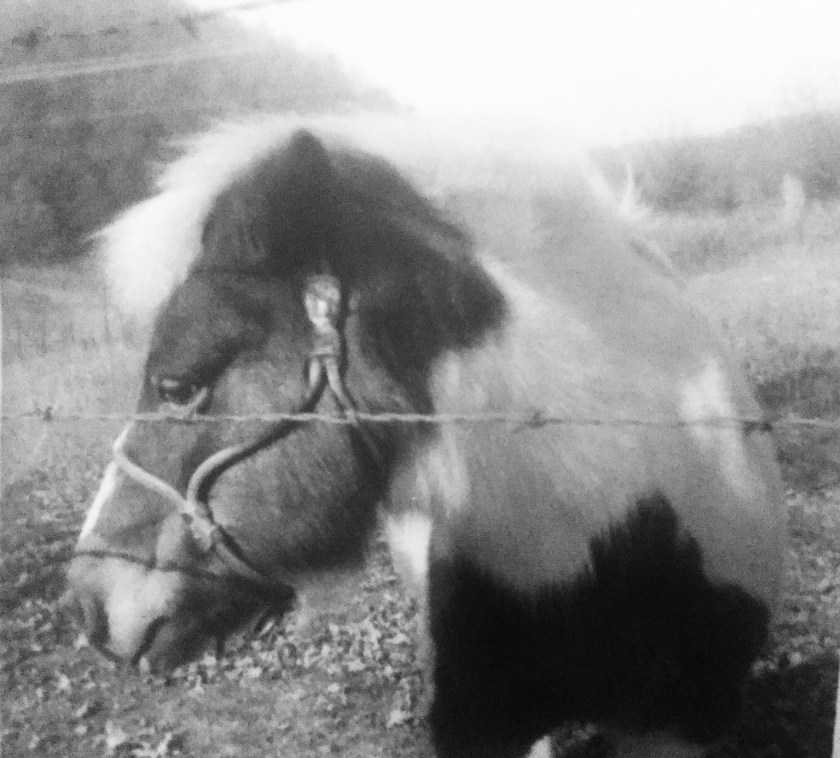
Long ago, so long I can hardly remember, I knew this little girl. She had two ponies during her childhood and, later in life, a horse. Meet her second pony, Mr. Ed, named after a rather famous TV show that aired back in the day. Her first pony didn’t work out for her as he was a stallion and her Daddy was terrified the stallion would kill her as he was pretty temperamental. Only she and the stallion knew the secret that it was really fine. The stallion went off to live at a farm and her Daddy brought Mr. Ed into her life.

The little girl didn’t take riding lessons until much later in her life. She seemed just to know how to ride. Mr. Ed was a Shetland pony but a rather large one. He was kind and gentle but fun for the little girl to ride. Sometimes, when he didn’t want to be ridden, he would just lie down on his side. The little girl would just laugh and jump off his back, barely in time, to avoid being crushed. The little girl’s Daddy watched in helpless wonder. She wasn’t even 10 years old.

Riding Mr. Ed wasn’t the most important thing to the little girl. You see, the little girl had some problems. She would not have described it like this, but in adult words, she and her mother did not have a very good relationship. Her mother was a sad and depressed woman. Probably clinically depressed though, then, that diagnosis didn’t even exist. She seemed to take her sadness and depression out on the little girl.

The little girl’s mother made the little girl feel unloved, like she wasn’t good enough, like she had to do better and better, be smarter, be prettier, than anyone else and maybe then her mother would love her. She was too young to understand that nothing she did was ever going to make her good enough, pretty enough, smart enough, to please her mother. Nothing was going to make her mother love her. She didn’t understand that the problem was with her mother, not with her. That understanding took years.

Mr. Ed was the little girl’s salvation. She would run to his red barn, in the moments she could get away from her mother, and she would sit in the straw, hiding in the corner of the barn. She would cry and talk to Mr. Ed. He would stand there, eating his oats and hay, and listen. Sometimes, he would even lie down with his head close to the little girl and sleep while she talked. She hid there as long as she could, away from her mother.

When the little girl grew into a teen-age girl, Mr. Ed watched for her to come home every day from school. She would go for a ride after school and stay with him as long as possible, even in the winter. He was still her best confidante. His barn was still her hiding place, away from the hurtful comments and the hateful face of her mother. She grew into quite a loner, preferring the company of animals to people. She had a hard time relating to most people. Her Daddy worked away from home most of the time and he was not there for support. She had a wonderful aunt and uncle close by, but the influence of her mother was too much and that of her aunt and uncle was not enough.

The teen-age girl started college and graduated early. She wanted to get a job and leave home as soon as possible. She, with her Daddy’s help, made arrangements for Mr. Ed before she left. He was old by the time she was 20 and ready to leave home. He had developed some laminitis in his hooves. He went to a farm owned by a large animal veterinarian in a nearby town, though he didn’t live long. The hoof problem was too severe.

The grown woman the little girl became will never forget Mr. Ed. She loved horses from then on. Mr. Ed had helped save her life and made intolerable emotional abuse almost tolerable.

If you are a mother who feels depressed or overwhelmed, go to your doctor and get help. If you are an adult child who suffered emotional abuse, contact the National Association of Adult Survivors of Child Abuse.

Posted in Food, Healthy eating, Low Carb, Uncategorized, Weight Loss

Healthy Eating…..Eating to Live

Eating to live, not living to eat. That’s a tough one for the American people. We have access to so much good-tasting food. Good-tasting food that, for some, may be killing us. Before I start this article, let me say that I live in a glass house. I am as guilty of enjoying all that good tasting, but unhealthy, food as the next person. So I am not throwing stones. For health reasons, I have had to try to mend my ways. I have been partially, only partially, successful. But, I am learning a lot on this journey toward improved health that I would like to share with you.

I am what is called a flexitarian. Never heard of it? Neither had I. I eat vegetables, and lots of them, and fish. Mostly seafood but some fresh water fish. I occasionally eat a chicken breast and I am done with red meat entirely. I do eat eggs. This all apparently makes me…..well…..a flexitarian which is similar to a lacto-ovo-vegetarian. But who cares about the designation?

I eat to live and wish I could take a pill instead of eating food. It would be a whole lot easier. In order to remain healthy and see those good blood work results, I eat virtually no bread products. You know how whole grain is supposed to be so good for you? Ha! Not for me. Now, as for you, your mileage may vary. Remember that bread products include potato chips (how I love salt and vinegar chips, but I have to forget them!), crackers, croissants, and so many wonderful goodies. But, we aren’t hunter-gathers anymore, people. We don’t need all the bread.

Staying with the carbohydrate theme, I eat no potato products except a baked sweet potato about every three weeks. It is really GOOD when I eat one, but it is a rare treat. I think you see what I am getting at. No white carbs. None. That includes pasta. I don’t even eat whole grain pasta and, like the rest of the world, I think a good pasta salad is to die for.

All of my carbs come in the form of vegetables, mostly salad vegetables. I do eat fruit occasionally but only low-glycemic fruit — an apple, blueberries, melon, kiwi. That is pretty much the complete list. Beans are good for you with black beans being at the top of the list. They have too many carbs for me so they aren’t on my list.

As far as my very limited meat consumption is concerned, I eat lots of fish. Salmon, tuna, shrimp, just about all seafood. A chicken breast. Small servings. I try to eat meat full of Omega-3’s.

That pretty much sums up my diet. I feel very well, better than I have felt in years. I have lost weight. I’m starting to look like “me” again and feel like me. One thing I have learned is that heavy carbohydrates in my diet, white carbs, weigh me down and make me sluggish. They also make my doctor crazy as they make my blood tests crazy. You can keep some fat in your diet if you cut the carbs.

One thing I do is take vitamins and a whole host of supplements. But, that is fodder for another blog post. I have a friend who calls all the strange little supplements her “dirt” vitamins. They work.

Your mileage may vary depending on your health challenges. Check with your doctor before starting any diet. My doctor is extremely supportive and believes that we all eat far too many carbs, herself included.

This is a weight-loss diet. Extremely low carbohydrate and 1200 calories per day. When I reach my goal weight, I will add back in some foods but I will never be able to eat a diet high in carbohydrates again. On a maintenance diet, I can increase my calories a bit. I can’t wait until I can eat a bowl of spaghetti!

Is eating this type of diet boring? You bet it is. But maybe I will live long and prosper!

Posted in Appalachia, Eastern Kentucky, Politics, Uncategorized

Does America Really Vote Against our Own Self-Interests?


image

In the 2015 Kentucky Governor’s election, some of the results of the voting seemed astounding. For one thing, Kentucky elected a Republican Governor for only the second time in four decades. Most were shocked when Governor Matt Bevin was elected, having fully expected his Democrat foe to prevail as Democrats usually do in the race for the Governorship in this usually red state. The results were even more shocking when officials looked at the county-by-county breakdown of the voting.

Matt Bevin had made his platform clear. He was going to repeal Obamacare in the state. Kentucky has one of the most successful Obamacare programs in the U.S., called Kynect, which has been particularly helpful to some in the poorer Eastern Kentucky counties located in Appalachia. Bevin also planned to considerably roll back Medicaid, the welfare program that so many in this poor state relied on. Yet, in Owsley County, Kentucky, the ninth poorest county in the state, voting results showed that 70.5% of the voters cast their vote for now-Governor Matt Bevin, despite his position on these policies. In Magoffin County, Kentucky, also in the Appalachian region of the state and the eighth poorest county, 54% voted for Bevin.

Did the voters in these two counties vote against their own self-interests when they voted for Matt Bevin for Governor? In Owsley County, 66% of the population is enrolled in Medicaid and 47% in Magoffin County. Yet, they voted for the candidate that stated he was going to dismantle the health insurance part of the program and considerably roll back the welfare benefits. Why?

There are many opinions and varying answers to these questions. On the surface, some say that the average education level of the voters in Eastern Kentucky is low and these low information voters cast a ballot without full knowledge of the candidates’ positions. I personally know that is true in many cases.

There is a second issue which quite possibly trumps the issue of the low-information voter. This issue is not one you hear the talking heads spout on Fox News or any of the news programs. Some people actually vote principle over pocketbook

Eastern Kentucky is in the region we call the Bible Belt. Many people rely on their religious values to determine their actions. The conservative movement has hijacked religion and made it a part of secular politics. They have somehow painted the Democratic party as the Anti-God party though this is blatantly not true. The Democratic party has simply respected the separation of church and state. Many voters have cast votes for candidates who espouse their own religious views even if the very things they promise to do are against their own self-interests.

There are many examples of voting principle over pocketbook. Gun control is another. Until the mid-1970’s, the National Rifle Association (NRA) was a moderate organization supporting moderate gun control laws. Then, it adopted a strict original interpretation of the Second Amendment and bought and paid for many members of Congress. In 1991, in an interview, Chief Justice Warren Burger, who was appointed to the Court by Richard Nixon and was a conservative, accused the NRA of fraud on the American people and said it had far too much influence on the members of Congress. He ended the interview by saying, “and I am a gun man.” Imagine what Burger would think today!

The NRA supports the Republican party and has convinced gun owners that Democrats want to take away their guns, which is foolishness. My family, Democrats as far back as our genealogy can be traced, have been gun owners, though we have felt no need to carry them in holsters on the street. Voters cast votes for candidates who are supported by the NRA because they fear anyone else will somehow take away their guns.

These are only two examples of many. Other issues that fall in the “principle over pocketbook” category are abortion, drugs, affirmative action, racism, and taxes. But those are topics for other blog posts. The Tea Party branch of the Republican party has been particularly effective at encouraging low-information voters to vote principle over pocketbook with Fox News being their media tool.

In our 2016 Presidential election, it will be interesting to watch this phenomenon. Unfortunately, in this writer’s opinion, the presumptive Republican candidate, Donald Trump, has not yet taken definitive positions that allow anyone to make decisions based on their pocketbooks or their principles. #amwriting #writers #blogging #BlogHer


Posted in Uncategorized, weekendcoffeeshare

#weekendcoffeeshare: 5/14/16

image

I’m not a coffee drinker, but I would serve the rest of you the coffee that you enjoy while I enjoy my cup of tea. I welcome you to my home and we would enjoy sitting around my table, rehashing our week. I have a writing problem to share with you.

I am currently writing two articles for publication in magazines. One is coming together nicely. The other…..not so much. I am having difficulty finding a second source to interview for the article. I am looking for a female entrepreneur who started a business when she was over 50 years old. I would like to hear whether or not she felt like she faced discrimination with regard to issues like obtaining financing for her business. Do you know of anyone who fits this description? If you do, I would love to hear about her.

I should get back to work. Thanks for coming and having coffee with me at our #weekendcoffeeshare. See you next weekend!

Posted in Climate Change, environment, Uncategorized

Book Review: The Sixth Extinction: An Unnatural History

I just finished reading a book that I have to tell you about. It is a 2015 Pulitzer Prize winner and I can see why. The Sixth Extinction: An Unnatural History, by Elizabeth Kolbert, is a quiet storytelling of possibly the last extinction the Earth will know. Anyone interested in the environment, climate change, history, geography, or just the world in general will likely find this book interesting.

Even our children, in their fascination with dinosaurs, study mass extinction events; specifically, the asteroid event that wiped them out. There have been other mass extinction events in the last billion or so years. The premise of Kolbert’s book is that the sixth extinction event may be the last.

I don’t want to ruin the book for you. It is a wonderful, well-researched, very readable account of the Earth in terms of the environment. Kolbert draws on the work of geologists, botanists, climatologists, biologists, historians, geographers, and more and pulls it all together. It is a five-star read, in the opinion of this writer. #Elizabeth Kolbert


Posted in Appalachia, Eastern Kentucky, history, Uncategorized

Appalachia: Settlers of Eastern Kentucky in the 1700s

image

The eastern seaboard of America was settled, as we all learned in elementary history classes, in the 1600s, by the English. For the most part, most scholars agree that these settlers were of the English middle class and even some of their landed gentry, seeking their fortune in the New World. The English liked the New England portion of America, the northern seaboard. Even the climate was suitable for them. They became fishermen and farmers. Even craftsmen had come from England and set up shop in villages and town that sprung up.

Even though the climate of the southern coast of America did not suit the English, planters discovered the agricultural value of the southern coastal areas. Slaves were imported from Africa to do the hard work in the hot sunshine. The plantation society was driven by the ever-increasing demand for the largest cash crop at that time — tobacco. When  cotton entered the picture as another important crop, the slave trade from Africa could not keep up and plantation owners turned to England to try to find work hands. They succeeded.

The cities of England were not pleasant places. Hygiene was poor and crime was rampant. England was ever so happy to get rid of some of its citizens who lived on the cusp of polite society. There were honest men seeking a better life ready to come to the sunny part of the New World, but there were also thieves, men avoiding  the military, and even orphan children. These were the people who joined the slave labor force on the plantations of the New South along the coast. Many became indentured servants. Later, they were referred to as “rednecks” and “hillbillies” and are even in the modern day.

Many of the laborers died on the plantations. Those who did not die served out their bonds, or escaped, and headed northwest, toward the cooler mountainous regions of what would be known as Appalachia.

Southern laborers of English descent were not the only source of population growth in Eastern Kentucky. Boatloads of Scots-Irish people landed nearPhiladelphia around the time of the Revolution. They were self-reliant, courageous people and struck out on their own westward, toward the mountains. A large number settled in Eastern Kentucky and thrived. Another route to the mountains, far easier than crossing them, was the Ohio River. Evidence is that large number of both Northern Englanders and the Scots came into Kentucky by that route with the Northern English prevailing. Irish can also be found by examining the names found in the region.

Mountain people. Mountaineers. Kentucky Highlanders. The Appalachian people, in general, and the people of  Eastern Kentucky specifically, are called mountain people by most of the authors of stories and histories about the region.  They became the distant ancestors of much of parts of present-day Appalachian and the Eastern Kentucky people. They came to the mountains in order to escape interference from government and to gain privacy from their neighbors. These people were often called derogatory names like hillbillies and rednecks. They began to farm the creek bottoms and live above them in caves, under rock overhangs, and cabins. They were some of the people who helped established this country, though in a limited geographic area, as these mountain people showed no inclination to move further west.

Watch this space for more on Appalachia and Eastern Kentucky.Mou

Posted in Horse Racing, Horses, Kentucky Derby, Uncategorized

My Connection to Nyquist, the 2016 Derby Winner

image

When I was a girl, I had a favorite horse. I learned to ride at a young age, followed horse racing when I was a teenager and ever since, and had a subscription to The Blood Horse younger than anyone had a right to. My favorite horse was a thoroughbred named Crimson Satan. Why? My Dad, who fulfilled every wish I had that he could, took me to visit the farm where he lived, the former Crimson King Farm and I fell in love…..with the horse. We went back over and over again up until Crimson Satan turned three and to my delight, he was entered in the Kentucky Derby.

I followed every race he ran and everything he did as he prepped for the Derby. In 1961, at two years old, he was the two year old champion male horse of the year. That award no longer exists. In 1962, he ran in each of the Triple Crown races, running sixth in the Derby, seventh in Preakness, and third in the Belmont Stakes. At my age then, I thought he was the most wonderful horse that ever lived. He went on to become a very successful sire and produced a granddaughter that sold at the Keeneland sales for $7 million in 1985.

Why am I talking about my childhood horse friend, Crimson Satan, on Derby Day, 2016 when Nyquist just brilliantly won the Kentucky Derby? You see, I am a horse pedigree freak. I always research horse pedigrees. I researched all the Derby horses, including Nyquist and much to my surprise, I found out that Nyquist 4X great granddam, on his dam’s side was a horse named Crimson Saint whose sire was MY childhood horse friend, Crimson Satan, Nyquist’s 5X great grandsire. I thought nothing could have endeared Nyquist to my heart more than this astounding finding.

But, something did. Crimson Saint was bred to one of the greatest horses of them all to eventually produce Nyquist, our beloved Secretariat. I couldn’t believe the coincidence. My research led me a step further. The greatest horse of all, Man ‘O War, is way back in Nyquist’s and Crimson Satan’s pedigree on the sire side, perhaps 9 or 10 generations.

How could Nyquist possibly have lost? #Nyquist #kentuckyderby #horseracing

Posted in Appalachia, Holidays, Mother's Day, Uncategorized

Mother’s Day: Founded in Appalachia

image

Mother’s Day, an important holiday to many of us, originated in Appalachia. It was founded in 1858 by Ann Jarvis. The founding of Mother’s Day was in response to the need for sanitation for new mothers since the infant mortality rate at that time was so high. Infection spread easily through mining camps and the small communities. Diseases that were prevalent were small pox, tuberculosis, whooping cough, measles, typhoid, and diptheria, to name a few.

After the Civil War in 1865, a woman named Julia Ward Howe who was both an author and an activist, wrote the lyrics to the Battle Hymn of the Republic and her husband was responsible for trying to clean up the unsanitary conditions that existed during and after the Civil War in the army camps. More men died in the camps from unsanitary conditions than were killed in the war. Howe wrote the Mother’s Day Proclamation which urged all mother’s to leave their homes for one day in June and work for peace in their communities. There existed two versions of Mother’s Day.

In May 1908, Anna Jarvis, the daughter of Anne Jarvis who established the initial version of Mother’s Day, worked tirelessly to see her mother’s vision fulfilled. She enlisted the help of others to get an official day established honoring mothers. In 1912, West Virginia became the first state to recognize Mother’s Day. Finally, in 1914, President Woodrow Wilson signed a proclamation declaring the second Sunday in May a national holiday — Mother’s Day. Its symbol became the carnation.

By the 1940s, Anna had soured on Mother’s Day as it was celebrated in modern society, particularly its commercialization. She passed away without ever becoming a mother.

Mother’s Day lives on and we celebrate our mother’s, or their memory, every year…..all thanks to a woman from Appalachia. #mothers day  #appalachia