Posted in Appalachia, Eastern Kentucky, history

The Early Homes of the Appalachian Mountain People

image


Friday Fare to Appalachia

Caves. Rock ledge overhangs. Primitive cabins. In that order. That is where the mountain people of Kentucky settled after they made the difficult trip to what would become the Commonwealth. As the people came into Kentucky through the Cumberland Gap — from North Carolina and across the mountains from Virginia, they experienced a really arduous journey. The trip across the mountains from North Carolina and from western Virginia was treacherous and extremely physically taxing. As of 1782, about 4,000 pioneers had settled in Kentucky and they were the ones who had made this exhausting trek. By 1790, there were 40,000 settlers in Kentucky and the increase in settlers had largely found their way to Kentucky via the Ohio River. Kentucky was settled by the people from Virginia, North Carolina, Maryland, and Pennsylvania, in that order.

As the pioneers made their way over the mountains to the south and east, they most likely lived in cave-like structures along the way, when they could find caves not inhabited by the black bear. When they arrived in Kentucky, caves were their first living quarters and they made them quite sophisticated on the inside (photo, top left). After caves, the settlers moved to rockhouses. Rockhouses were under cliff overhangs and were held up with poles, a technique probably borrowed from the Cherokees. You can find locations where rockhouses existed even today, one in Magoffin County, KY near this writer’s family home. But, it wasn’t long until the log cabin came along.

A lingering question is where did log cabin architecture come from? It didn’t come from the Native Americans since they did not have the axe as a tool until they got it from the white settlers. It probably did not come from the predominant nationalities of settlers, the Scots, Irish, or English, because those countries are mostly treeless. Many agree that settlers from Sweden, Switzerland, and southern Germany brought the idea of log cabin architecture to America and it made its way from where they originally settled in Pennsylvania to the Kentucky mountains. There was a small German population in Kentucky.

There is some confusion about where log construction came from, however. The word “cabin” is Irish. The log cabin’s construction seemed to be Irish based on the fact there were openings under the eaves instead of gables. Log cabins came before log houses on the frontier. The log houses were probably based on Germanic construction techniques and even included houses with the dog trot plans seem so frequently in Eastern Kentucky. Both were lumped together and called cabins, however.

Cabins were more crudely constructed than houses. Cabins were built quickly from logs notched at the ends, chinked and daubed, or sealed with stones and mud, with chimneys made of sticks, rocks, and mud, and they usually had no windows and a dirt floor. The roof was made of bark. Houses were more carefully built. They had windows and floors and chimneys made of stone. Their roofs were wooden shingles.

This essay describes the progression of housing only in Eastern Kentucky during the late 18th century and very early 19th century. Some parts of Appalachia were more progressive and, by the early 19th century, had moved to frame houses. Those were available only to the wealthiest settlers.

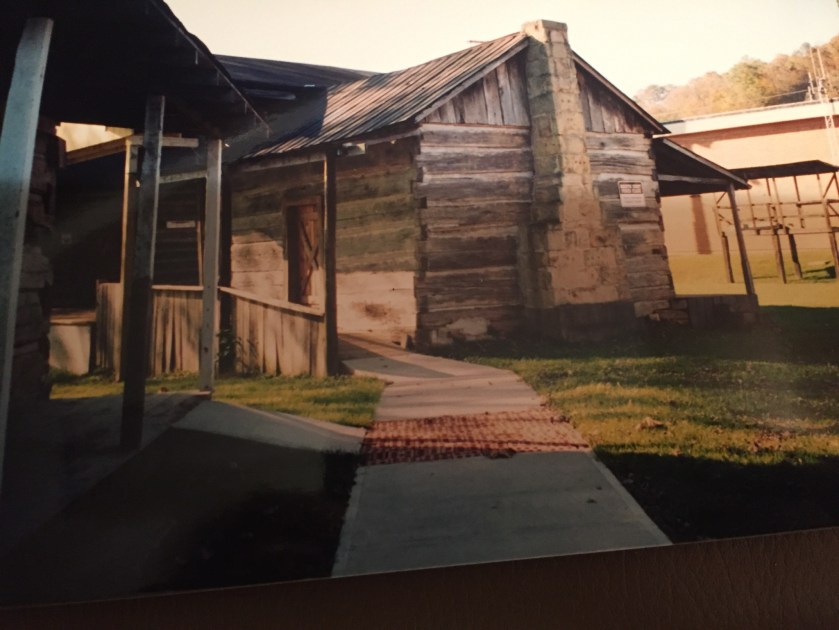
*Note: The photo of the log cabin above was taken by this writer. It is located in a display park around the Magoffin County Historical Society in Salyersville, KY. It is an actual cabin, taken from the county, and rebuilt for display in the historical society’s park. This writer’s great-grandparents built and lived in a cabin very much like this one and raised their five children. Copyright 2016. All rights reserved. #amwriting #writing #blogging #history #appalachia

Posted in Appalachia, Eastern Kentucky

Introducing A Regular Blog Feature: Friday Fare to Appalachia

image

Hi everyone! Beginning this Friday, 5/27/2016, I will introduce a regular Friday feature on my blog, Writings from the Heart, called Friday Fare to Appalachia.

Every Friday, you can look forward to a story about Appalachia. An essay, an article, a personal story, Appalachian recipes, old ghost stories, folk tales, music, or some manner of information about Appalachia and Eastern Kentucky. I’ll write about Appalachia other days of the week too, but you can depend on it on every Friday.

I hope you will join me for fun on Friday Fare to Appalachia!

Rosemary


Posted in Eating Disorders, Food, Healthy eating, Weight Loss

Eating Disorders: Orthorexia

Eating disorders. This isn’t really about eating disorders but everything you read about something called “orthorexia” will make you think you are reading about an eating disorder. As I was doing some research for this article, I originally thought I really had a bone to pick with this guy by the name of Steven Bratman. OK, Dr. Steven Bratman, which doesn’t impress me all that much given that he coined the term orthorexia. I did more research, I decided that his original article had been taken completely out of context in most everything that has been written about orthorexia since so maybe he wasn’t such a bad guy after all.

After all, even though he is an American Medical Association (AMA) qualified physician, he practices some forms of alternative medicine and he lived in a commune in the 1970s. He can’t be all bad, can he?

Back to orthorexia. We have the legitimate eating disorders such as anorexia and bulimia and a handful of other full-fledged eating disorders. If our society keeps putting pressure on our young women, there surely may be new varieties of eating disorders spring up. Orthorexia, as defined by Dr. Bratman, refers to a fixation on eating the proper food. (I can envision all my friends standing up, pointing their fingers at me, but they have surely forgotten about my love for tequila.) To continue, Bratman actually called it orthorexia nervosa, similar to anorexia nervous.

Anorexia and bulimia both focus on the quantity of food a person eats. Orthorexia focuses on the quality of the food. Bratman originally defined this eating disorder as one where a person may avoid all preservatives, fat, meat, and processed food. Orthorexics are vegetarians in that they do not eat dairy, eggs, or even fish. When Bratman considered himself to be orthorexic, he said he looked down on all his friends in the commune who didn’t eat exactly as he did and felt they were lesser human beings for their sins of eating foods such as meat or dairy or foods that were processed. Perhaps the most disturbing thing is this. Part of Bratman’s diet was to never fill his stomach more than half full when he ate a meal. He was never satisfied after eating.

No wonder he decided this was an eating disorder. The way Bratman handled so-called “healthy eating” wasn’t very healthy.

To say Bratman went overboard with his so-called healthy eating is an understatement. It was definitely not healthy mentally for him and it probably was not healthy physically. There was no mention of Bratman’s weight in his article so we don’t know if his eating habits caused him to lose an excessive amount of weight.

Bratman believed in using food as medicine when he started out on his health food journey. Unfortunately, he took it too far. In the years since he wrote his article in 1997, the medical community has learned that there are illnesses that do respond to changes in the diet. The term “health food” is not really used anymore. It has probably been replaced by organic food along with just the knowledge that items like processed food and too much red meat are not particularly good for us.

AMA-qualified doctors seldom address nutrition with their patients unless it is in the context of illnesses like lowering cholesterol. Then, they might tell you to lower your consumption of red meat. If you have high triglycerides, they will tell you to lower your consumption of sweets or carbohydrates. For a disease like diabetes, diet is definitely addressed. For a normal, healthy adult, however, nutrition is not something you usually are lucky enough to discuss with your family doctor. You have to seek out a dietician or even a doctor who specializes in alternative medicine, perhaps a nutritionist.

I have read other articles that mention orthorexia. The examples they give of individuals that have this particular eating disorder are usually also suffering from some form of obsessive-compulsive behavior or other Risk factors. There is nothing wrong with healthy eating. But, there is something wrong with anything you do if you do it in excess. A wise saying that all of us has heard. Everything in moderation.

Bratman, Steven. Health Food Junkie. Yoga Journal 1997; September/October:42-50.


Posted in Emotional Child Abuse

Emotional Child Abuse: Mother and Little Girl

image

In a previous post, I told you a story about a little girl I once knew. Although most of this ongoing story is about the little girl, I want to introduce you to Mother. Maybe a small part of Mother’s story can help explain how the little girl found herself in such a terrible predicament within her family. I’ll have to warn you. I’m not terribly sympathetic to Mother though I am trying to develop a little understanding.

When I came to know Mother, the little girl was five years old and Mother was 35. An older mother to a child that young back in those days, to be sure. Mother had tried for a long time to have a baby. She was almost 30 when she succeeded. Mother’s pregnancy was difficult. The little girl found out later that she bore the scars of that difficult pregnancy. So, probably, did Mother.

Mother visited the town’s only doctor a lot. He was an excellent doctor but only had the knowledge of those times. But, he was wise beyond those years. Mother had a number of physical ailments that she was diagnosed with when she was between 35-40. Those, however, did not start plaguing her until a few years later.

Mother’s problems during her late 30s were less of a physical nature and more of an emotional nature. Mother had a problem with Daddy. At that time, I didn’t know what  that problem was as I was only a friend. I do know that, as a few years passed, the problem seemed to grow more severe.

The problem with Daddy was not the only source of emotional distress for Mother. Mother had come from a background that was emotionally difficult. Her mother, Grandmother, was a high-strung, temperamental woman who was cold and not particularly loving. Grandmother, to be honest, was mean. Though Mother would never have said so, Mother grew up in a family where the parents were not demonstrative with any sort of loving behavior. Grandfather was a kind, generous man but probably not outwardly emotional. Mother may never have learned how to love. That is what the little girl told me when she became a grown-up woman. She also said that Mother, as she grew up, was much like Grandmother – mean, temperamental, and cold.

Here was Mother – problems with Daddy and a little girl who needed her. A raft of physical problems and an even bigger load of emotional ones that she probably did not understand. No one to help but an old family doctor who tried his best and a sister next door who also tried her best. No one seemed to know what to do. So they did what so many families do. They hid and denied the problem, except among themselves.

Mother only looked outward for help. She looked to Daddy, the doctor, her sister, and even little girl. She failed to look inward and she did not try to help herself. Perhaps she couldn’t. Perhaps her problems were too severe. There is no way to know. The grown-up woman little girl became told me that, before Mother died, her emotional problems had only gotten worse, not better.

But, back to the story. Little girl wasn’t very old when Mother realized something. She realized that little girl was a great deal like Daddy as her personality developed. Mother and Daddy had never resolved their problems and, in Mother’s eyes, the worst thing that could happen was for little girl to grow up and be anything like her Daddy. She was supposed to grow up and be like Mother and her family. Fate has a way of playing tricks on us and that was not happening.

Since Mother could only punish Daddy to a point, wasn’t little girl a good substitute? Wasn’t she just like her Daddy? Wasn’t she like his family and not like Mother’s? That’s what Mother told me. Not that little girl was a substitute, but how much she was disgusted by the way she was just like Daddy. It was years later, when little girl was a grown-up, that she told me this one day.

Not only was Mother a cold, temperamental and unemotional woman, but she had a child much like a man she had grown to hate. On top of this, she had emotional, even perhaps mental, problems and no real help available. When I look back, I realize this was a recipe for disaster for that family.

So began the problems for little girl. Emotional child abuse. A form of child abuse just as damaging as physical or sexual abuse. It just doesn’t leave bruises or any physical scars, though Mother engaged in physical abuse more than once. Emotional abuse involves degrading the child, making the child feel that he or she is not good enough, expecting the impossible of the child, not being affectionate toward the child, and much more. It is not usually obvious to people outside the immediate family. Often, they think the child is acting out when they react to the abuse. But, children who are victims of emotional abuse are not acting out. They are reacting to what amounts to betrayal by their parent.

Child abuse of any type is the ultimate betrayal between a child and the parent. Little girl suffered that betrayal at the hands of Mother even though there were reasons that Mother acted the way she did. There is no reason for child abuse.

Follow this blog for the continuing story of little girl. Continue reading “Emotional Child Abuse: Mother and Little Girl”

Posted in Appalachia, Eastern Kentucky, Food, history, Recipes, Uncategorized

Appalachia and Food: Green Beans and Corn Bread

image

Green beans and corn bread. The staples of life in Appalachia and Eastern Kentucky for the mountain people as they settled the area.  Fresh green beans out of the garden. Even in the winter, green beans and corn bread were one of the most common meals because many women in Appalachia have always used the canning and freezing techniques to preserve food. Green beans have been one of the crops most commonly preserved.

The family garden is not as common in Appalachia today as it was in the past, but they still can be found. They are located in the creek bottoms between the mountains. During the past three centuries, family farms growing this and other crops in those creek bottoms were common.

Today, we buy our green beans in grocery stores and never think about what variety they are. Not so in Eastern Kentucky and Appalachia both in the pioneer days and even today. Green beans were bought from family farmers and the variety was very important. Maybe the most popular variety was “white half-runners.” This is a whitish climber bean with an excellent taste. Another variety is the pole bean which is also a climber, but a much bigger bean than the half runner. Others are tenderette beans, greasy beans, Kentucky wonder beans, and different varieties of heirloom beans. One variety of heirloom bean is this writer’s favorite bean – the old-fashioned cornfield bean. These were all grown in the past in Eastern Kentucky and some are grown today. Many have become “heirloom beans.”

Heirloom seeds of any kind are seeds that are not found in the general marketplace in modern times. They are kept by farmers and seed-saving organizations and passed down from generation to generation. They are closely guarded, but this is a topic for another post.

The cooking technique for green beans was quite different than it is today for people who do not reside in the area. Green beans were cooked until they are very tender and with some sort of seasoning, usually in the form of fatty meat such as ham hock, salt pork, or something similar. Unless you were very careful, they could be quite greasy, but the Appalachian people liked fatty food. My grandmother lived on fatty pork feet and lived to be 97. She also worked hard, hard physical work, all of her life!

You could not have green beans on your table for a meal without corn bread. Corn bread was a little different than it was, for example, in the desert southwest. It was usually made with white cornmeal, though some used yellow corn meal. Buttermilk instead of regular milk was used. It was cooked in an iron skillet seasoned with lard. Many of the early Appalachian people existed on beans and cornbread. My own mother liked to have cornbread and milk for dinner.

Would you like the old recipes for green beans and cornbread from Eastern Kentucky? These were my grandmother’s, handed down to her by generations of women who came before her:

Green Beans

A pot full of green beans, broken into small pieces and washed three times

A piece of fatty meat, such as ham hock

Salt, to taste

Cover with water and boil the water down, then turn down the heat

Put a lid on the beans and cook slowly for 1-2 hours until the beans are very tender and the water is mostly gone.

Serve!

Cornbread

Preheat the oven to 450 degrees.

One cup of white or yellow corn meal, your choice – do not use self-rising

One cup of white flour…..do not use self-rising

Pinch of salt

4 tsps baking powder

Buttermilk…..enough to make the mixture smooth and stirable but not runny

While you are putting together the cornbread, have your iron skillet getting warm on the stove top with a couple of heaping tbsp of lard in it. Be sure the lard is melted.

Pour the cornbread mixture into the hot skillet. Careful! This will be hot.

Carefully place the skillet full of the cornbread mixture into the oven.

Bake 15 minutes or until the cornbread is brown on top. Remove from oven.

In the next step, CAUTION. Be careful and don’t burn yourself!

Have a plate ready. Turn the skillet upside down and dump the cornbread onto the plate. With another plate on the back of the cornbread, flip it over. Put a knife under the cornbread so it won’t sweat.

Sit it on your counter to cool. Done!

Delicious, but not so healthy in modern times. In another blog post, I will give you my own personal version of these recipes that I have made a little healthier!

These recipes helped keep the pioneers’ stomachs full as they lived their very hard lives in the mountains of Eastern Kentucky. They needed more fat in their diet than we do in 2016 as they did hard physical labor all day and their bodies required the extra calories and extra fat. #writers #amwriting #blogger #bloggerswanted #culture #history #Appalachia #EasternKentucky

Posted in Appalachia, Eastern Kentucky, history, Uncategorized, weekendcoffeeshare, Writing

#weekendcoffeeshare: 5/21/16

image

Hello! I’m so glad you’re back for our #weekendcoffeeshare! It’s raining outside so bring your coffee and let’s sit on the couch in my office and chat. It’s so good to see you. Do you think the rain is ever going to end?

How has your week been? You’re suffering from writer’s block? That is so frustrating, isn’t it. What do you usually do when that happens? I need to know because it happens  to me too. So you leave your writing and do other things for awhile? I guess that’s one approach, but I’ll have to disagree. If I step away, I step away for a long time — too long. What works for me is to push through it. Instead of writing about topics in what is supposed to be my niche, I go outside my niche and write about something else I know about. After all, we all know about more than one topic, don’t we? Couple our knowledge with good research and there you have it. Suddenly, we’re writing again, though maybe about something new. Maybe we can sell this piece to a different editor or publisher and we will have a wider market for our writing.

I’ll tell you what I did once. I was having trouble finding topics in the niche I considered my own so I went far afield with my writing. I had always been interested in writing about Appalachia but I had never tackled any topic in that area. On the campus of the University here, where I taught for a long time, is a little piece of Appalachian history, the Cora Wilson Stewart Moonlight School. It was originally located next to the campus training school where I attended grades one through twelve. I did some research and wrote a piece on the Moonlight School for Preservation Magazine, having never written about historic preservation before. My writer’s block was gone! I also realized I could write about more than one topic.

Tell me how it works for you to step away from your writing? So you take a walk or go somewhere different or do some reading. You gradually relax enough to relieve the writer’s block. Sounds possible. What I would hope is that I could get ideas from a walk or traveling or reading or whatever else I would do that is different. That really might work if I could then have enough discipline to get back to writing. I will be going some different places this summer, taking a lot of photos, and getting some new ideas that I can turn into articles or into some sort of work. Really the same principle as your strategy.

It’s been so good to talk to you today for #weekendcoffeeshare. You’ve given me a great idea about getting rid of writer’s block and a lot to think about. Have a good weekend.

Posted in Emotional Child Abuse, Horses, Memorial Day, Uncategorized

A Child’s Salvation — the Horse

image

It’s the week of the Preakness and perhaps that’s why I’m thinking about horses. The Preakness is important here in Kentucky. It’s the second jewel in the Triple Crown and this girl hopes Nyquist will wear it. Not only am I thinking about horses but I’m also thinking about horses and their people…..and the relationship between people and horses and how important that can be to both.

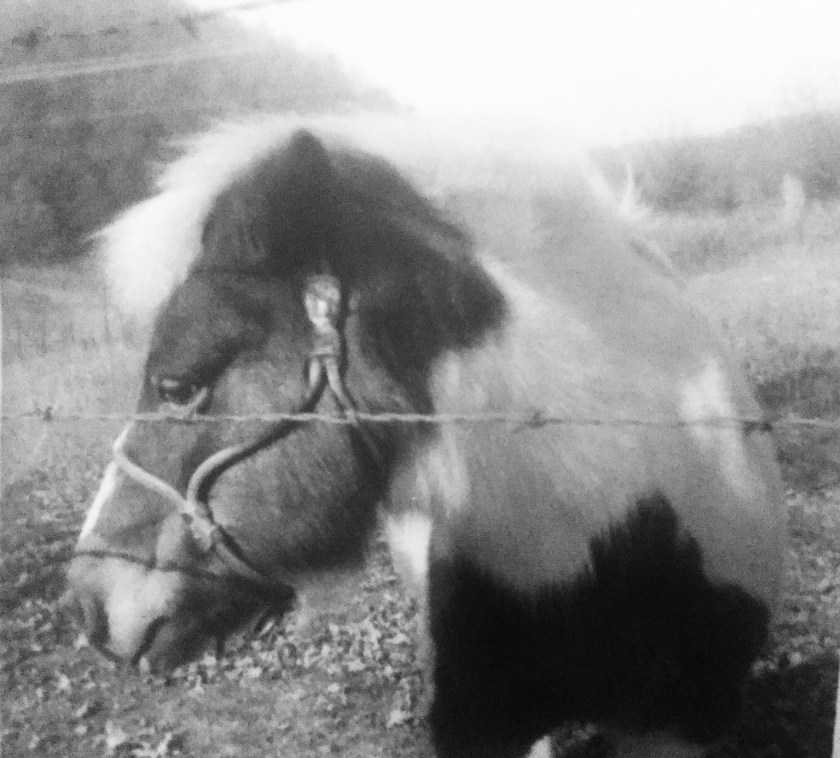
Long ago, so long I can hardly remember, I knew this little girl. She had two ponies during her childhood and, later in life, a horse. Meet her second pony, Mr. Ed, named after a rather famous TV show that aired back in the day. Her first pony didn’t work out for her as he was a stallion and her Daddy was terrified the stallion would kill her as he was pretty temperamental. Only she and the stallion knew the secret that it was really fine. The stallion went off to live at a farm and her Daddy brought Mr. Ed into her life.

The little girl didn’t take riding lessons until much later in her life. She seemed just to know how to ride. Mr. Ed was a Shetland pony but a rather large one. He was kind and gentle but fun for the little girl to ride. Sometimes, when he didn’t want to be ridden, he would just lie down on his side. The little girl would just laugh and jump off his back, barely in time, to avoid being crushed. The little girl’s Daddy watched in helpless wonder. She wasn’t even 10 years old.

Riding Mr. Ed wasn’t the most important thing to the little girl. You see, the little girl had some problems. She would not have described it like this, but in adult words, she and her mother did not have a very good relationship. Her mother was a sad and depressed woman. Probably clinically depressed though, then, that diagnosis didn’t even exist. She seemed to take her sadness and depression out on the little girl.

The little girl’s mother made the little girl feel unloved, like she wasn’t good enough, like she had to do better and better, be smarter, be prettier, than anyone else and maybe then her mother would love her. She was too young to understand that nothing she did was ever going to make her good enough, pretty enough, smart enough, to please her mother. Nothing was going to make her mother love her. She didn’t understand that the problem was with her mother, not with her. That understanding took years.

Mr. Ed was the little girl’s salvation. She would run to his red barn, in the moments she could get away from her mother, and she would sit in the straw, hiding in the corner of the barn. She would cry and talk to Mr. Ed. He would stand there, eating his oats and hay, and listen. Sometimes, he would even lie down with his head close to the little girl and sleep while she talked. She hid there as long as she could, away from her mother.

When the little girl grew into a teen-age girl, Mr. Ed watched for her to come home every day from school. She would go for a ride after school and stay with him as long as possible, even in the winter. He was still her best confidante. His barn was still her hiding place, away from the hurtful comments and the hateful face of her mother. She grew into quite a loner, preferring the company of animals to people. She had a hard time relating to most people. Her Daddy worked away from home most of the time and he was not there for support. She had a wonderful aunt and uncle close by, but the influence of her mother was too much and that of her aunt and uncle was not enough.

The teen-age girl started college and graduated early. She wanted to get a job and leave home as soon as possible. She, with her Daddy’s help, made arrangements for Mr. Ed before she left. He was old by the time she was 20 and ready to leave home. He had developed some laminitis in his hooves. He went to a farm owned by a large animal veterinarian in a nearby town, though he didn’t live long. The hoof problem was too severe.

The grown woman the little girl became will never forget Mr. Ed. She loved horses from then on. Mr. Ed had helped save her life and made intolerable emotional abuse almost tolerable.

If you are a mother who feels depressed or overwhelmed, go to your doctor and get help. If you are an adult child who suffered emotional abuse, contact the National Association of Adult Survivors of Child Abuse.

Posted in Appalachia, Curing and Smoking, Eastern Kentucky, Food, history, Smokehouse, Smokehouses

The Smokehouse – Preserving Meat in Eastern Kentucky

image

The smokehouse is a tradition in Appalachia and Eastern Kentucky. Long before the days of refrigeration, meat, mostly pork in Appalachia, was cured and preserved on family farms in buildings called smokehouses. Hams and bacon were the primary cuts of pork you would find hanging in these smokehouses. The buildings were sometimes log, concrete block, or other material. My grandfather’s smokehouse was a building made of lumber, coupled with a root cellar, and it had a sleeping loft as a second floor.

Smokehouses are windowless buildings with one door, a vent, and a smokestack. Of course, there is a stove for the smoking. Most have racks to hang the meat after curing and smoking. You will usually find a padlock on the door because the meat is a valuable commodity. It literally insured the family’s survival for the winter.

Pork was a staple in the diet of the Eastern Kentucky people. Although they raised some dairy cattle, they raised few beef cattle because there was not enough flat land for grazing. Pork and chicken were the primary meats on my grandparent’s table. One of my guilty food pleasures, to this day, is an old-fashioned country ham, just like my grandfather used to smoke. Smokehouses still exist on farms all across Kentucky and Kentucky-smoked hams are expensive treasures that are often part of the feasts at the holidays. For the early settlers of Appalachia and Eastern Kentucky right up into the early 20th century, smokehouses were necessary parts of the family farm. Without them, the population would have not had meat to live.

The process of curing and preserving meat is not complicated but it has to be done properly in order for the meat to be safely preserved. Usually, the meat is rubbed with a coarse salt and then you rest it. You repeat this rub and rest process several times. This is what is called salt-curing and it is done to pull the moisture out of the meat.

After the curing process is complete, you can begin the smoking process. You have to find the right kind of wood to burn to smoke the meat. The first rule is never to use soft wood such as pine. Such wood has resin in it. Always use hardwood and many like to use wood from fruit trees. Hickory is another wood of choice. The fire is lit and the fire burns very slowly. The goal is to kill any bugs or bacteria in the meat by bringing the meat up to a certain temperature for a long period of time, usually a period of months. Then, the meat is wrapped in cheesecloth and hung on racks to dry and cure. Some cure their meat for as long as a year or more, particularly pork. Other meats may not take as long to cure.

My grandfather, in Magoffin County, KY, raised a lot of pigs. I used to love to help him “slop the hogs.” They never let me around when it was time to slaughter them. But, I remember the smokehouse and the smoking meat vividly…..which made for delicious family dinners. Many years later, one of my aunts used to send, for Christmas, a country ham to my Uncle Tincy, who was stationed at one Air Force base or another, some overseas. We all grew up loving those smoked hams.

The largest concentration of smokehouses can be found in Virginia, with many associated with Colonial Williamsburg. Smokehouses are a valuable part of the history and culture of Eastern KY and Appalachia in general. #EasternKentucky #Appalachia #culture #history #amwriting #writers #blogger #bloggerswanted

Posted in Food, Healthy eating, Low Carb, Uncategorized, Weight Loss

Healthy Eating…..Eating to Live

Eating to live, not living to eat. That’s a tough one for the American people. We have access to so much good-tasting food. Good-tasting food that, for some, may be killing us. Before I start this article, let me say that I live in a glass house. I am as guilty of enjoying all that good tasting, but unhealthy, food as the next person. So I am not throwing stones. For health reasons, I have had to try to mend my ways. I have been partially, only partially, successful. But, I am learning a lot on this journey toward improved health that I would like to share with you.

I am what is called a flexitarian. Never heard of it? Neither had I. I eat vegetables, and lots of them, and fish. Mostly seafood but some fresh water fish. I occasionally eat a chicken breast and I am done with red meat entirely. I do eat eggs. This all apparently makes me…..well…..a flexitarian which is similar to a lacto-ovo-vegetarian. But who cares about the designation?

I eat to live and wish I could take a pill instead of eating food. It would be a whole lot easier. In order to remain healthy and see those good blood work results, I eat virtually no bread products. You know how whole grain is supposed to be so good for you? Ha! Not for me. Now, as for you, your mileage may vary. Remember that bread products include potato chips (how I love salt and vinegar chips, but I have to forget them!), crackers, croissants, and so many wonderful goodies. But, we aren’t hunter-gathers anymore, people. We don’t need all the bread.

Staying with the carbohydrate theme, I eat no potato products except a baked sweet potato about every three weeks. It is really GOOD when I eat one, but it is a rare treat. I think you see what I am getting at. No white carbs. None. That includes pasta. I don’t even eat whole grain pasta and, like the rest of the world, I think a good pasta salad is to die for.

All of my carbs come in the form of vegetables, mostly salad vegetables. I do eat fruit occasionally but only low-glycemic fruit — an apple, blueberries, melon, kiwi. That is pretty much the complete list. Beans are good for you with black beans being at the top of the list. They have too many carbs for me so they aren’t on my list.

As far as my very limited meat consumption is concerned, I eat lots of fish. Salmon, tuna, shrimp, just about all seafood. A chicken breast. Small servings. I try to eat meat full of Omega-3’s.

That pretty much sums up my diet. I feel very well, better than I have felt in years. I have lost weight. I’m starting to look like “me” again and feel like me. One thing I have learned is that heavy carbohydrates in my diet, white carbs, weigh me down and make me sluggish. They also make my doctor crazy as they make my blood tests crazy. You can keep some fat in your diet if you cut the carbs.

One thing I do is take vitamins and a whole host of supplements. But, that is fodder for another blog post. I have a friend who calls all the strange little supplements her “dirt” vitamins. They work.

Your mileage may vary depending on your health challenges. Check with your doctor before starting any diet. My doctor is extremely supportive and believes that we all eat far too many carbs, herself included.

This is a weight-loss diet. Extremely low carbohydrate and 1200 calories per day. When I reach my goal weight, I will add back in some foods but I will never be able to eat a diet high in carbohydrates again. On a maintenance diet, I can increase my calories a bit. I can’t wait until I can eat a bowl of spaghetti!

Is eating this type of diet boring? You bet it is. But maybe I will live long and prosper!

Posted in Appalachia, Eastern Kentucky, Politics, Uncategorized

Does America Really Vote Against our Own Self-Interests?


image

In the 2015 Kentucky Governor’s election, some of the results of the voting seemed astounding. For one thing, Kentucky elected a Republican Governor for only the second time in four decades. Most were shocked when Governor Matt Bevin was elected, having fully expected his Democrat foe to prevail as Democrats usually do in the race for the Governorship in this usually red state. The results were even more shocking when officials looked at the county-by-county breakdown of the voting.

Matt Bevin had made his platform clear. He was going to repeal Obamacare in the state. Kentucky has one of the most successful Obamacare programs in the U.S., called Kynect, which has been particularly helpful to some in the poorer Eastern Kentucky counties located in Appalachia. Bevin also planned to considerably roll back Medicaid, the welfare program that so many in this poor state relied on. Yet, in Owsley County, Kentucky, the ninth poorest county in the state, voting results showed that 70.5% of the voters cast their vote for now-Governor Matt Bevin, despite his position on these policies. In Magoffin County, Kentucky, also in the Appalachian region of the state and the eighth poorest county, 54% voted for Bevin.

Did the voters in these two counties vote against their own self-interests when they voted for Matt Bevin for Governor? In Owsley County, 66% of the population is enrolled in Medicaid and 47% in Magoffin County. Yet, they voted for the candidate that stated he was going to dismantle the health insurance part of the program and considerably roll back the welfare benefits. Why?

There are many opinions and varying answers to these questions. On the surface, some say that the average education level of the voters in Eastern Kentucky is low and these low information voters cast a ballot without full knowledge of the candidates’ positions. I personally know that is true in many cases.

There is a second issue which quite possibly trumps the issue of the low-information voter. This issue is not one you hear the talking heads spout on Fox News or any of the news programs. Some people actually vote principle over pocketbook

Eastern Kentucky is in the region we call the Bible Belt. Many people rely on their religious values to determine their actions. The conservative movement has hijacked religion and made it a part of secular politics. They have somehow painted the Democratic party as the Anti-God party though this is blatantly not true. The Democratic party has simply respected the separation of church and state. Many voters have cast votes for candidates who espouse their own religious views even if the very things they promise to do are against their own self-interests.

There are many examples of voting principle over pocketbook. Gun control is another. Until the mid-1970’s, the National Rifle Association (NRA) was a moderate organization supporting moderate gun control laws. Then, it adopted a strict original interpretation of the Second Amendment and bought and paid for many members of Congress. In 1991, in an interview, Chief Justice Warren Burger, who was appointed to the Court by Richard Nixon and was a conservative, accused the NRA of fraud on the American people and said it had far too much influence on the members of Congress. He ended the interview by saying, “and I am a gun man.” Imagine what Burger would think today!

The NRA supports the Republican party and has convinced gun owners that Democrats want to take away their guns, which is foolishness. My family, Democrats as far back as our genealogy can be traced, have been gun owners, though we have felt no need to carry them in holsters on the street. Voters cast votes for candidates who are supported by the NRA because they fear anyone else will somehow take away their guns.

These are only two examples of many. Other issues that fall in the “principle over pocketbook” category are abortion, drugs, affirmative action, racism, and taxes. But those are topics for other blog posts. The Tea Party branch of the Republican party has been particularly effective at encouraging low-information voters to vote principle over pocketbook with Fox News being their media tool.

In our 2016 Presidential election, it will be interesting to watch this phenomenon. Unfortunately, in this writer’s opinion, the presumptive Republican candidate, Donald Trump, has not yet taken definitive positions that allow anyone to make decisions based on their pocketbooks or their principles. #amwriting #writers #blogging #BlogHer