Posted in Fiction, Flash Fiction

The Diamond

image

The exotic-looking man stood at the jewelry counter waiting on the diamond expert. The expert was appraising the frightfully large diamond. He had just sent word that it was over six carats. It was multi-faceted and seemed faintly pink. What the expert didn’t know is that it was millenia-old and priceless.

The exotic-looking man was getting restless. He had been there, in public, for a long time. He needed to get back to his friends and his home. He needed to sell this diamond for the children in the Old Country.

The expert appeared and gave him price at which they could try to sell the diamond to their high rollers in the gem world. He offered to showcase it for the man and he placed it in the window of the shop. Rays of the sun hit it and it glowed. The man shrank back into the corner.

THe transaction was complete. The exotic-looking man walked out the door and vanished into thin air. #FfFAW #amwriting #amblogging #writing #flashfiction

*Photo courtesy of Jade Wong

*FfFAW courtesy of Priceless Joy

Good books!:

Discovery of Witches – All Souls Trilogy

Posted in Creative Nonfiction Essays, education, Lifestyle, Women's Issues

A Letter to my 15-Year Old Self

image

Do you ever think back to some past point in your life and ponder what you might do differently if you had it all to do over again? I find myself doing that at critical junctures in my life. Recently, I’ve thought about myself as a young teenager and what she might do differently if she had the opportunity to write a different script for her life. I think some of what I determined might be better courses of action for her might apply to others so I thought I would share them with you.

  1.  If I could be 15 years old again, with the wisdom I have now, I would ignore the boy I met at the college basketball that night when I was truly 15. When he came over to me, sat down beside me, and introduced himself, I would get up and walk away. I would know that I wasn’t ready to date anyone, including that boy. I would know that this boy came from a different background and we wouldn’t understand each other. I would sense his underlying bad temper and be fearful of him. I would not waste three years on him and let him change the course of my life forever.
  2. If I could be 15 years old again, with the wisdom I have now, I would be looking at colleges in other cities rather than just in my hometown. I wanted to go to an Ivy League school and I would try to make that happen by getting scholarships. Instead, I let my parents talk me into staying at home and going to college in my hometown. It was a good school, but I wanted to go to a great school – an Ivy league school. Instead of majoring in what was popular at the time, I would double major in Classical Piano and English and head off to New York City after college to seek my fortune – a good music school that would accept me into their program.
  3. If I could be 15 years old again, with the wisdom I have now, I would realize that I would have my friends from my time in the first 12 grades of school with me all of my life but that I would also make other lifelong friends during my life journey. I would not care quite so much about the “sibling” rivalry that springs up in a small private school like mine. Rather, I would realize that when we all grew up, the petty stuff would be gone and we would renew our friendships on an adult level and support each other the rest of our lives.
  4. If I could be 15 years old again, with the wisdom I have now, I would listen to my parents when they advised me not to marry as young as I did. For me, very little good came from marrying so young and, perhaps, a great deal of harm. Marrying young caused me to be unable to know myself as an adult beyond functioning as a half of a couple.
  5. If I could be 15 years old again, with the wisdom i have now, I would spend more time with my parents as they got old. Of course, my dad never got old. He didn’t get that chance and I didn’t get the chance to know him as an adult because, during the few years he lived when I was an adult, he was working hard and I was working hard. We failed to prioritize our relationship – something I will always regret. My mother did get old and spent the last 14 years of her life in my care. Unfortunately, she was beyond strengthening relationships at that point.

IF you could go back to 15 years old, what would you do differently? #amwriting #amblogging #writing #lifestyle

Posted in Appalachia, Eastern Kentucky, history

Melungeons of Appalachia

Friday Fare to Appalachia

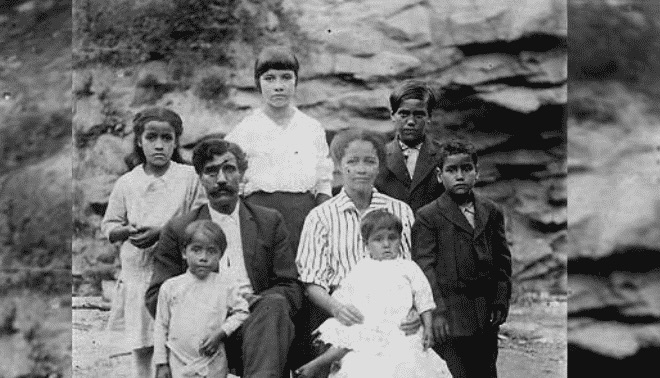
Since at least the 1800’s, there has been a mixed blood strain of people living in pockets of Appalachia called Melungeons. The groups of Melungeons are/were located near Carmel, OH USA and Magoffin County, KY, USA. One main pocket of Melungeons were located in Hancock County, Tennessee, USA. A group of about 40 families lived on the Tennessee/Virginia border.

The Melungeons would occasionally migrate to Carmel, Ohio, possibly to find work in the swampy onion fields in the area. In Magoffin County, Ky, there was very little work for them. They lived in an area where farming was difficult due to the mountains and very narrow valleys.

The Melungeons were thought to be a mixture white, actually some mix of European immigrant stock, African and Native American. They were sometimes called The Lost Tribe of Appalachia. The actual racial descent of these people was a mystery until the Melungeon DNA project was able to make a breakthrough which was published in the peer-reviewed journal of Genetic Genealogy in April 2021. They were found to have been a mixture of sub-Saharan Africans and white Europeans in the days before slavery.

Melungeon people had some particular physical characteristics. They had dark hair and skin with light-colored eyes. There were wide variations in appearance among family members. They had a bump on the back of their head, right above the neck, called the “Melungeon bump.”

As laws were put into place that forbade the mixing of races, the people known as the Melungeons had no choice but to inter-marry. After the results of the Melungeon DNA project were published, many were upset as their families had claimed Portuguese or Turkish ancestry for generations. Most thought Melungeons had some Native American characteristics, but the Melungeon DNA project found very little mixing with Native Americans.

The Melungeons faced extreme discrimination wherever they went. There are very few people of mixed race descent in most of the Appalachian region. It is a region primarily composed of white people of Scottish-English-Irish descent. People with  a darker skin stand out and face discrimination. The Melungeons also had particular surnames that identified them. Some of those names were Gibson or Gipson, Nichols, and Colllins, among others.

I can speak first hand about the discrimination the Melungeon people faced. One side of my family came from Magoffin County, Ky. I can remember my grandmother cautioning the grandchildren “not to be like the Gipsons.” We did not know who or what “the Gipsons” were. We only knew that they were a family whose behavior was considered somehow “dirty” and we were not supposed to emulate it. This is the type of discrimination these people faced. In order to fit in with the general population, the Melungeons self-identified as white mixed with Native American. According to the results of the Melungeon DNA project, the females were primarily of white, Northern European descent and males were mixed African and white descent. There was very little Native American found in the Melungeon DNA project.

The current state of many of the Melungeons is that they have intermarried and moved out of their home areas and intermingled with the majority groups in society. Many people in and out of Appalachia are curious about the Melungeons and whether or not they could have Melungeon blood. They use services like Ancestry.com to try to locate any possible Melungeon ancestors. #Melungeon #amwriting #amblogging #Appalachia #writing #Melungeons #MelungeonDNAProject #Appalachia


Posted in Appalachia, Creative Nonfiction Essays, Eastern Kentucky, Poverty, Uncategorized

Appalachia: Hillbillies, Rednecks?

image

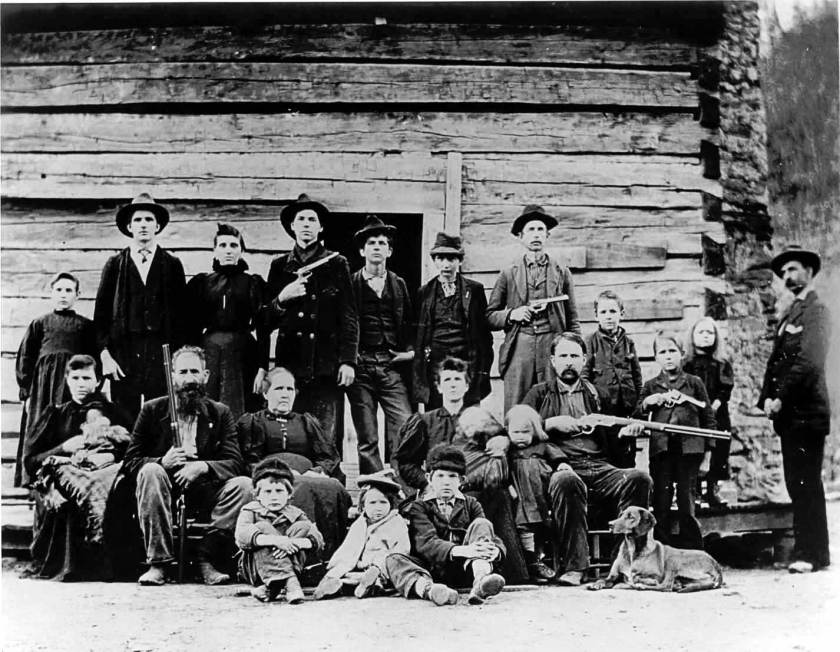
So are the terms hillbillies and rednecks, when used to refer to the people of Appalachia, considered derogatory? The short answer is yes, usually they are. If we explore where those terms originally came from, we’ll see that they were not necessarily meant to be derogatory terms but the American people took them and ran with them. Remember The Beverly Hillbillies TV show? The Dukes of Hazzard?  Deliverance, the movie? These words were certainly derogatory in connection with these television shows and, in the case of the first show, gave the viewers something to laugh at. In the case of the movie, Deliverance, these words were more to frighten and horrify viewers.

It is unclear where the word “hillbilly” originated, but it may have been derived from similar words in the Scots-Irish culture. The Scots-Irish people were among the first settlers of Appalachia and may have brought this word with them. The word “hillfolk” was used by the Scots to describe those who preferred living in the mountains and isolation from society. The word “billie” was used to refer to a companion. After the Civil War, Appalachia became perceived as backward as the US moved westward and Appalachia was left isolated geographically and inbred because of that. During the Great Depression, and after, there was outward migration from Appalachia to the north in search of work. The poor whites who emerged from the mountains became figures in stories and the characterization of “hillbillies” emerged even stronger.

When “hillbillies” self-identify, they simply say they are people living in the mountainous regions. When “rednecks” self-identify, they refer to a time when union coal miners fought against mine operators who were trying to oppress them and wore red bandanas around their necks. Rednecks often tie themselves to an entire political and cultural movement in the US. Both terms tend to take on derogatory meanings when used by outsiders. This writer prefers the term “Appalachians” to reflect the proud heritage of the people of the region. #amwriting #writing #blogging #Appalachia


Posted in Creative Nonfiction Essays, Lifestyle, Women's Issues

The Most Elegant Lady

image

I always blame my aunt for my credit card bills. Even though she has been gone now for a long time, she had great influence over me in many areas. Education. Behavior. The way I view my family. The way I view the world. And, perhaps unfortunately for me, the things that I like including clothes, accessories, and home furnishings.

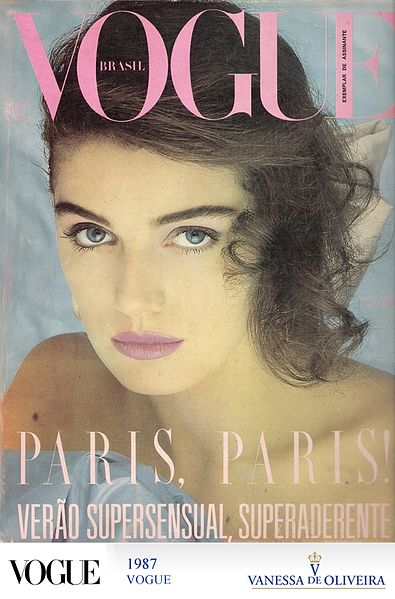
My Aunt Red was the most elegant lady. She lived next door to me as i grew up. She was a fourth grade school teacher in a small elementary school in a county in northeastern Kentucky. She came from a county deep in the heart of eastern Kentucky. I’ve often wondered where she learned to be so refined, such a polished and stylish lady in a land where elegance wasn’t necessarily the norm. Survival was. I still can’t answer that question. But, I do remember seeing her reading Vogue Magazine years before anyone else around this part of the country knew what Vogue Magazine even was. In the 1920s, she was even a flapper girl!

Aunt Red was the definition of elegance in everything she was and did. She was dignified to a fault and graceful in her appearance and behavior. She dressed in a tasteful, yet simple, manner. But not cheap. Never cheap. Since she did not live in a place where designer clothes were available, she ordered them from nearby big cities. From stores like Saks. She started buying designer clothes for me when I was 12 and did so up until I left home at 20. Even after that, she would surprise me with clothes. The first designer piece of clothing she ever bought me was a black coat which I wish i had to this day. She taught me what to wear and what not to wear, lessons I remember still.

Do you see why I blame her for my clothing bills? Her lessons about appropriate, fine clothing are so ingrained in my head that I could not buy anything else if i tried and her lessons were taught to me 50 years ago.

But, Aunt Red was not all about clothes. She embodied elegance in many other ways. She was the glue that held our family together. Even more than my grandparents. After her death, I saw cracks start in my family. Cracks that have grown wider and deeper with time. Aunt Red helped people. She had many friends and, if it was within her power, she never let anyone suffer or want for anything. She took care of me, an only child, when my dad was working out of town and my mother couldn’t. She taught me to read at three years of age and put me in piano lessons at four. She was my second mother in every way that made a difference.

Aunt Red could go anywhere, fit in with any group of people, and look and sound like the best educated person in the room. She could discuss any subject and make any person to whom she spoke feel like they were the most important person she had ever met.

She passed away from a horrible, painful illness way too young. She never complained like the elegant lady she was, right to the end. The last thing she said to me, the night before she died, was to admonish me to finish my education. I loved her very much, as did everyone in my family. Every girl should have such a dignified, exquisite role model. I consider myself very lucky indeed. But i still blame her for my credit card bills! #amwriting #writing #amblogging #lifestyle

Posted in Flash Fiction, Labor Day

The Man’s Retreat

image

We looked at the property in the fall and the deep gold of the leaves astounded us. Behind the main house was this shed. Just the kind of place my husband liked for himself. A retreat. Never mind that is was open air with an air conditioner in a strange place or that it was only partially painted. My husband was handy. He could fix all that. I think he wanted to buy the property more for the shed than the house.

He had big plans for that shed. It would be his work room for his woodworking. He could store his plethora of parts he kept to fix anything that went wrong in the house or with the cars.

More than that, he could make it his own with a little creativity. He insisted that we buy the property. He already felt at home. #amwriting #writing #blogging #FFfAW #flashfiction

*Thanks to PricelessJoy for #FFfAW ahd pholor for the photo prompt.

Posted in Politics

Do U.S. Politicians Think “Let Them Eat Cake?”


image

I don’t talk much about politics on this blog because it is such a travesty here before the 2016 U.S. Presidential election. When I saw the word cake this morning, I was both amused and horrified. Marie Antoinette, Queen of France before the French Revolution, and wife of King Louis XVI, supposedly said “let them eat cake” when told that the French peasants had no bread to eat. Clearly, that was a slam against her own people because if they could not afford bread, how could they afford cake?

I think of both our Presidential candidates when I hear the “let them eat cake” quote. Donald Trump rails against the fact that the manufacturing sector has failed in America and jobs have been sent overseas. All the while, most of the products made by the companies he owns are made somewhere else……China, Vietnam, Bangledesh, and more. HIllary Clinton rails against the same thing but until recently, she has been for every trade agreement that came along, including the TPP and NAFTA. Both philosophies kill our own manufacturing sector, slide the U.S. Economy into a service economy status, and take away jobs from skilled workers.

Let them eat cake?

These skilled workers who used to work in steel, coal mining, engineering, technology, even teaching, are now restaurant workers, retail employees, who work without many benefits, have to work odd shift work, and have no retirement plan and often no health insurance.

Let them eat cake?

Neither Trump nor Clinton can relate in any way to middle class America. Trump is a rich man, though not as rich as he would like us to believe. He has been only a moderately successful real estate developer. He really is not a good business man and has lost so many of his ventures in casinos, restaurants, and other venues such as Trump University, and many more. Clinton is probably more down to earth than Trump but she is going to owe debts to so many lobbyists by the time she is elected, if she is, these lobbyists are going to want to be paid in some way. She is going to be held accountable to her campaign donors far more than to the American people.

Let them eat cake?

Trump nor Clinton really have no understanding the problems of the middle class. They just let us work at a menial job, or read, or play on Facebook, hoping it will dull our enthusiasm for the political process and we will vote for whoever has brainwashed us most effectively. Of course, they don’t want us to really understand the issues.

Let them eat cake?

Who are YOU going to vote for? #amwriting #writing #blogging #realDonaldTrump #HillaryClinton #2016PresidentiaCampaign


Posted in Uncategorized

Labor Day and its History: Workers had to Fight for it

In 1887, Oregon became the first state to make Labor Day an official holiday, with Colorado, Massachusetts, New Jersey, and New York quickly following suit.

–Brendan I. Koerner

image

When I decided to blog about Labor Day and its significance in the United States, I went to the obvious first source for information — the US Department of Labor. There  I found some excellent information that I will share with you. But, I certainly did not find full information. I had to dig deep for that and I will share that with you as well.

To many of us now, Labor Day means a three-day weekend/holiday in early September. To workers of the past, it meant a nod to the hard work they had done during the year and that nod was hard won.  It is a national tribute to the workers of America and was created in the late 1800s by the labor movement itself. There was a movement toward establishing the Labor Day holiday in New York CIty in 1882 and the holiday was actually established in 1884 by the Central Labor Union in New York. It was called a “workingman’s holiday.”

Labor Day was established by one state and then another until 1894 when an Act of Congress finally approved the holiday for the entire country.

That, my friends, is the sanitized version of how Labor Day came to be. Now let’s look at the real story which is pretty bloody. There was a recession in America in the early 1890s. That recession led to a lessening of demand for railway cars which caused the management of railway organizations to lower wages and lay off workers. The workers became angry and the situation worsened as riots started to happen. Things were bad in 1894 when Labor Day was proclaimed by then-President Grover Cleveland. Many people died due to the railway strike.

It should be noted that, throughout history, working people have had to fight for their rights and often had to oppose management. Instead of just considering the first weekend in September a holiday, let’s reflect on how middle class working people built this country while fighting for their rights. #amwriting #LaborDay #writing #blogging

Posted in Creative Nonfiction Essays, Uncategorized, weekendcoffeeshare

#weekendcoffeeshare 9/3/2016

image
Time for this week’s #weekendcoffeeshare and since my friend, Jenn, can’t join me for coffee this week, I would like to share my coffee with all of you. So, grab a cup, pull up a chair, and help me deal with a subject that has made me quite contemplative this week.

That subject is mortality. A subject that makes most of us, including me, uncomfortable. But, bear with me. This week, I have had a dear uncle and the father of a first cousin, once removed, pass away and mortality is quite on my mind. First, my uncle. He was my uncle by marriage. You couldn’t find a better man. He had been chronically ill for years and passed away at age 85. A good long life for a man with more chronic illnesses than you would wish on your worst enemy, let alone a fine man. Then, my cousin’s dad passed away at age 79. He, too, had been chronically ill for years, some of his illnesses possibly brought on by lifestyle, and he, too, had a good long life.

My uncle was a church-going, spiritual man or that is the way it appeared on the outside. He was good to his family and friends and lived life as he seemed to want to live his life. My cousin’s dad would probably have been described as “fun-loving” back in the day when he was still well. He was described as living life “on his own terms” which is really just another way to say that he did what he damn well pleased. I’ve thought a lot about those descriptions of these two men – both of whom I liked immensely.

A question tickles my brain. Given what I’ve just told you about these two men, didn’t both of them “live life on their own terms” even though it was only my cousin’s dad, the fun-loving guy, who was usually described that way? I’ve found that when someone is described in that way, it may be derogatory. Not always, but often. But, my uncle, a religious man, probably lived life on his own terms as well, though they were different terms and perhaps more socially acceptable than those “terms” under which my cousin’s dad lived. Who’s to say my uncle didn’t have just as much fun in his own way? Or that my cousin’s dad wasn’t spiritual in his own way?

I’m tired of placing people in boxes and stereotyping. We don’t know what goes on in other people’s heads. I am sure both of these men had good and bad qualities as do we all. They had flaws and wonderful characteristics. They were just different. Let’s give each other the benefit of the doubt and a break. #weekendcoffeeshare

Posted in Music, Uncategorized

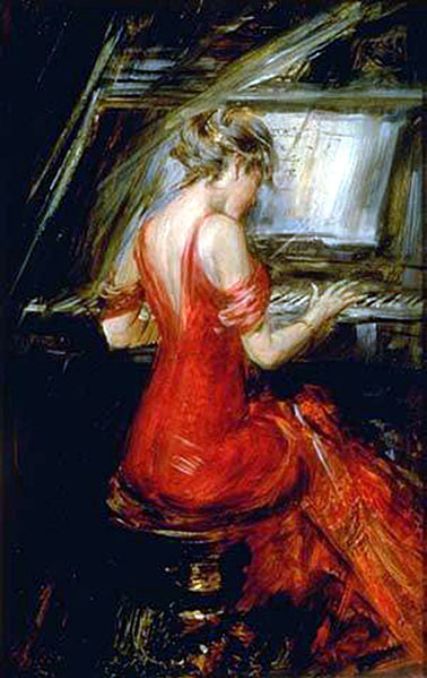
Fall is Like a Song

image

In my part of the world, fall is starting to arrive. Although not according to the calendar quite yet. Yesterday, I spent some time relaxing outside on my front porch. My porch looks out into the forest and onto the lightly traveled county road in front of my house. More often than not, there are more deer than cars trooping along that road, and in my front yard, making their way to the feeding troughs we keep full for them. As I sat on the porch, I was musing about how the woods look like fall and I fell into a reverie thinking of the melody, harmony, and beat of life, particularly in the fall.

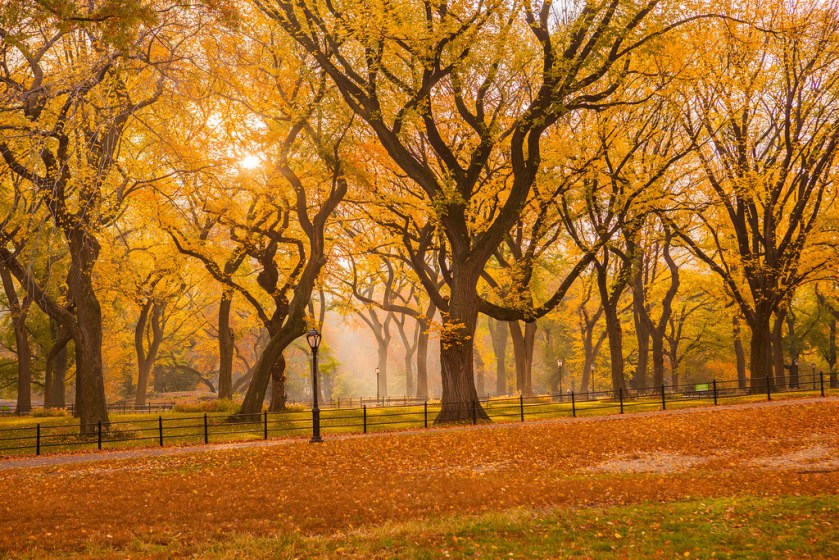
Sometimes I think fall is my favorite time of year. Then I wonder why. Fall, in so many ways, is the end. The end of the summer, of good weather, of good times with our friends outdoors, of easy travel and easier living. I look around me as I sit on my porch and i see the beginnings of fall. My clematis are trying to produce a few of their fall blooms. The black-eyed susans and purple coneflowers are frantically blooming the last of their flowers. The oak, maple, and poplar trees are turning a dingy green with some yellowing of leaves. The sycamore maples will be the first to go. The underbrush is starting to die off.

The wildlife are particularly affected by the changing of the seasons. I hear the Canadian geese as they fly overhead. Heading south, honking as they go. Chipmunks are everywhere with their cheeks full of any nuts they can find, storing food for winter. The deer even look like fall. In the summer, their coats are a chestnut red. Now they are turning gray in order to blend in with the winter forest. I have seen the antlers of the two large bucks who come to the feeding troughs and they have gotten huge. At least eight points each. The fawns the does started to bring to feed early in the summer have grown up, except for a few, and are losing their spots and becoming less dependent on their mothers. We still have a few very small fawns and i am rooting for them to grow and grow fast so they will survive the winter.

The butterflies and hummingbirds are mostly gone now. Headed south on their long journey. Some of the birds are gone but many of the species indigenous to this area stay, foraging for food.

Where I live in the U.S., we have four distinct seasons, though not as distinct as they once were. Summer has been hot and humid this year. We have reached 90 degrees many days which is odd for this corner of the world. Of course, the world is heating up. The humidity has been higher than usual, more like the Gulf Coast than the Ohio Valley. Winters used to be hard with a lot of snow and ice. Not so much now with the heating of the earth. We once had big snows and we still sometimes do. But, they are an anomaly rather than a normal occurrence. It is still cold here in the winter but usually not the brutal cold of days gone by.

Still, there is fall, that in-between time. The time between hot and cold, between summer and winter, between the lush greenery that surrounds me and the stark hardness of a deciduous forest in winter. Fall is sometimes warm, sometimes cool. Preparing us for the cold of winter, for the hardships of winter. Making us forget the uncomfortable heat and humidity of a summer that has grown too hot for the place we call home. In the fall, we try to hang on to the rituals of summer as long as possible.

It occurred to me that the changing of the seasons is like a song. There is a melody and a harmony. Music has a melody and a harmony and so does seasonal change. Melody is usually defined as the main series of notes of a song that stand out and enable us to remember a song. I think of summer as the melody of the year. It is the main event. The series of notes that stand out to us, when the world is fresh, green, alive, singing. The transition to fall is the harmony. Harmony is the series of notes that are counter-melody. It is chords that are pleasing to the ear that complement melody much like  fall complements summer and eases our transition into winter.

The change of the seasons corresponds to the concept of beat in music. A constant rhythmic pulse that is never-ending. The beat is the skeleton of the seasonal change while the melody is summer and harmony is the seasonal transition. Beat, in music, in life, in the change of the seasons, is what you feel in your heart. Fall is like a song. #amwriting #writing #blogging #fall #music