Posted in Appalachia, Creative Nonfiction Essays, Eastern Kentucky

Appalachia: Hillbilly and Redneck

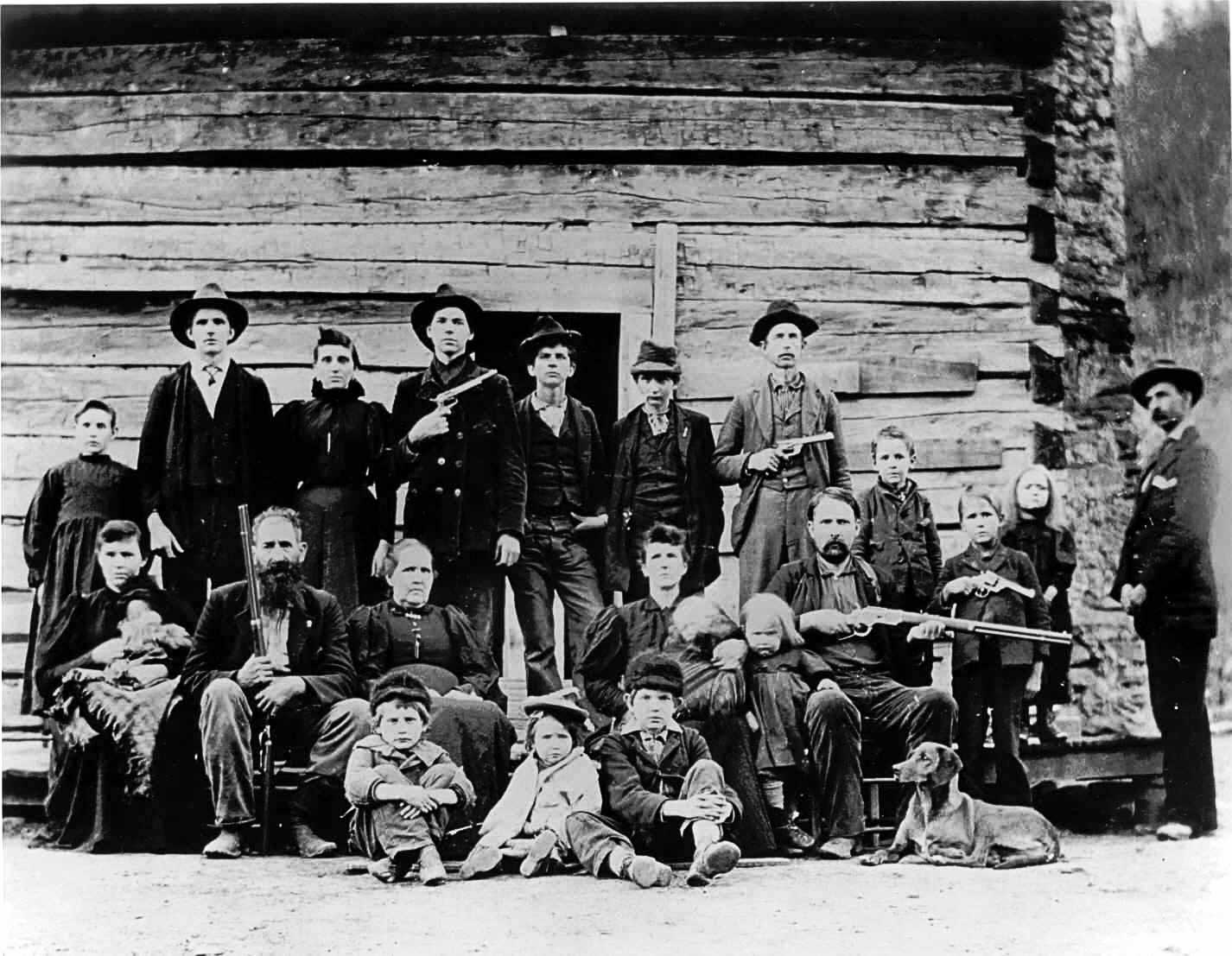
When we hear the term “hillbilly” or “redneck,” we automatically have a negative connotation associated with them. To those who aren’t familiar with Southern Appalachia, we think of the TV show, “The Beverly Hillbillies,” or the movie, “Deliverance,” and the associated depiction of the two terms. Those images are only caricatures dreamed up by show business.

The term “hillbilly” is an old term that simply refers to people who live in the mountains, in rather remote areas, and live their own way. It doesn’t mean they don’t wear shoes or that they’re ignorant, but we tend to use the term as a slur to refer to people we consider hillbillies. Hillbilly seems to have somehow gotten tied up in a social class definition. That couldn’t be further from the truth. My grandfather, who was born deep in the mountains of Eastern Kentucky, was certainly a hillbilly, but he and his family were of at least the high middle socio-economic class regarding income, social standing, and education.

The word “hillbilly” originally referred to a type of music played and developed in the mountains. Hillbilly music was the original bluegrass music. Pure, original Bluegrass music originated in the late 1800’s and early 1900’s in isolated pockets in the mountains, usually through the music of family groups or bands. Somehow, the word shifted from the music of the people to the people themselves. Most mountain people don’t mind being called hillbillies. When it is used as a slur based on an imagined stereotype, that shows the ignorance of the user and not the hillbilly.

The word “redneck” is thrown around today as a slang word referring to people with, usually, a particular way of life and political persuasion. We think of rednecks and we immediately see the Confederate flag, conservative leanings, and guns. Perhaps that is the modern definition of “redneck,” but it is not what the word originally referred to.

The word “redneck” originally came from Scotland and referred to those who worked outdoors and had a sunburned neck as a result. It also referred to peaceful protestors against mining officials because the protestors tied a red bandana around their necks.

The word “redneck” is not a word tied to the mountains or to any geographic region. You can be from the middle of the largest cities. If your beliefs are based on the Second Amendment, you fly the Confederate flag in the back of your pickup truck, and you believe in far right-wing politics, you are the modern definition of a redneck.

When I was growing up, I never saw a Confederate flag at my grandfather’s house in Eastern Kentucky. The only guns I saw were a couple of hunting rifles used to deer hunt for food. My grandfather was a centrist in his politics but leaned left. The modern definitions of “hillbilly” and “redneck” would not fit him even though he was one of the originals.

Copyright Rosemary Carlson @2020

Posted in Appalachia, Eastern Kentucky

Book Review: Hillbilly Elegy

I posted this book review some time ago, when the book was newly published, and before many of you had read it. Now, just about everyone who is very interested in the subject has read it. We know that Ron Howard is going to turn it into a movie.  Here is the review again:

Update: This book is going to be made into a movie, directed by Ron Howard.

Before I start this book review, I feel the need to print a bit of a disclaimer. This book is about the area of the country in which I grew up. I grew up on the fringes of Appalachia, but I spent a lot of time with my grandparents who lived in Magoffin Country, KY, just two counties over from Jackson, KY, where the author spent at least part of his childhood. I don’t think I’m biased as I’ve spent most of my life in other places than Appalachia. But, I understand the culture and I am brutally honest about the culture. I have delayed writing this book review because the subject matter of the novel is so close to my heart as I’m sure it is close to the heart of J.D. Vance. With that said, here goes…..

https://rosemarycarlson.com/2017/01/02/book-review-hillbilly-elegy/

Posted in Creative Nonfiction Essays, Eastern Kentucky, Uncategorized, Writing

Mistakes: Trump and the American People

img_0367

Creativity Challenge 25

The Challenge here is to use your creative talent to bring light into the current distress in the world around you, in whatever form that talent takes. Please remember that we are reaching out to a world that is facing upheaval and possibly a great number of changes. Let us reach out to that world and bring it the lessons we have learned by becoming artists and writers. “The word for this challenge is Mistakes.”

One thing I have learned as a writer is that words have impact. They have impact on those who read them. Oftentimes, you don’t know what impact your words have had until much later, when one of your readers tells you what impression they had on them. I know I have often been surprised at what significance some story or article I have written has had on a reader; perhaps a story that was just meant to be light-hearted, but a story that touched a reader in some fundamental way.

Writers aren’t the only ones with a responsibility since their story or non-fiction article seems to have imprinted on one or more people. So do our politicians. This was particularly evident in the 2016 Presidential Election in the U.S. Did this election add to the distress in the world around us? Without a doubt. The reason it did is because it was filled with hateful rhetoric. By both candidates, but particularly by President-elect Trump. Not in my lifetime do I remember a candidate for the Presidency of the United States calling other candidates, in the primary, or the candidate running against him in the general election, humiliating names. It was childish, bullying, school-yard behavior but it apparently appealed to some of the baser instincts of some sectors of our population. Some of the American people, Trump supporters, actually chanted, “KILL HILLARY,” at the end of Trump’s political rallies. Whoever thought the American people were capable of that? Clearly, that was a mistake. A mistake just as horrible as if I had written a story with those words, but about another person who opposed what I was saying.

That is called “herd mentality.” I guarantee you that some people who were chanting that phrases were just following other around them. They really were not asking for Hillary Clinton to be killed. This incident, however, was an example of how riots start. How revolutions start. I could just have easily written a book that would give people ideas about their ability to riot or undergo a revolution.

Donald Trump made a mistake. He played on the fears of a sector of the American population. The people who attended his rallies had lost their jobs due to globalization and technological innovation and robotics. Their unions had not protected them. They couldn’t find another job without re-training to which many are resistant? Their unemployment benefits had run out and they had to work menial jobs to even keep a roof over their head. Trump has promised them that he will bring the jobs back to America. But here’s the secret. That will be incredibly hard to do. The old plants stand empty and will have to be completely refitted. Trade agreements with other countries that make our products will have to be violated or repealed. In order to bring back jobs, wages will have to be low due to the other high fixed costs. It will take far more than four years if it can be done at all. Trump made a mistake by promising something to get himself elected that he cannot possibly know if he can deliver.

If I made promises as a writer that I could not deliver and I was a writer working for an employer, do you know what would happen? I would be fired.

Perhaps the most shameful mistake that Donald Trump made regarding domestic policy, and te one closest to my heart, is the promise to the coal miners of Kentucky and West Virginia. He said he is going to bring back coal mining. Because of the desperation of the coal miners for work, they believed him. They could not see the con. That all he was doing was promising them the world in order to get their vote. He got their vote, but he isn’t going to bring back coal mining. He can’t put the coal back in the ground. A lot of the mines are closed because they are mined out.

What is really driving the loss of coal jobs? It is not the federal government. Coal production is decreasing because producing natural gas is a lower cost operation. Any coal miner also knows that decades of increased mechanization in the coal mines is also taking away many coal jobs. Mechanization and the use of natural gas is not just going to go away because Donald Trump was elected President. That would put ever-increasing numbers of coal companies in bankruptcy. The cost of wind and solar power, renewable sources of energy, is also falling. Of course, there are increasing environmental regulations. But does anyone want the environment polluted? Our air and water?

I have relatives, grandparents and cousins, who lived in coal country. We couldn’t drink the water there. It smelled and tasted like sulphur. My grandparents always kept bottled water. Does coal pollute or not? Try to argue that point to the contrary. That would be another mistake. For all of Donald Trump’s rhetoric about bringing back coal, he can’t do it unless he can find a way to produce clean coal. Many environmental scientists have worked on that problem for decades. They have not found a solution yet. If I wrote anything to the contrary, I would be making a mistake.

There are many other mistakes being made today regarding the current political situation in the U.S. But, that is a blog post for another day. #amwriting #amblogging #writing #creativitychallenge25 #DonaldTrump #2016PresidentialElection

*Post in response to Creativity Challenge 25


Posted in Creative Nonfiction Essays, Eastern Kentucky, education, Higher Education

#SoCS November 12/16 Remembering my Dad….

img_0319

Yesterday was Veteran’s Day. Linda reminded us that it’s also Remembrance Day in Canada. I have remembering on my mind, particularly remembering my dad. He fought in World War II. It was his side of the family from which my Canadian relatives came. The Ottawa and Thunder Bay areas.

I was a Daddy’s girl. He was my hero from the time I have any memory. He had a big voice, a big laugh, big arms, and a bigger heart. He wasn’t home a lot. In those days, when a man couldn’t find work at home, he left home to find work as close as he could. It was the late 1950s when my memories of him start. The supposed halcyon days in the U.S. except they weren’t. Times were hard in northeastern Kentucky where I grew up. My dad worked hard.

He tried to come home on the weekends. That was my favorite time because no matter where he had to go and what he had to do on Saturday and Sunday, he took me with him. I went to lots of lumber companies, sawmills, and hardware stores! I learned about lots of things little girls didn’t often know. But, no curse words, nothing bad. My dad’s friends would never say or do anything bad in front of me. I wore little pairs of blue jeans and flannel shirts, just like he did. We took these weekend trips until I was 15 years old or so. Sometimes even after that. If he was going to work on someone’s house, I would even go with him to do that.

When I was in the third grade, my dad left home to work in Wisconsin. He was gone for an entire year. That was one of the hardest years of my life. I found out many years later that my parents had actually separated that year. I’m glad I didn’t know that then or I would have been terrified. I wrote him thousands of letters and he responded to every one. They apparently worked something out because, at the end of that year, he thankfully came home.

When I met my first boyfriend, I think it hurt him. He worried. I was only 15. He was 16. But sending me off in a car to be with our friends scared my dad to death. I see that now. Of course, I didn’t then. It turns out that he was right to be scared.

I went to college in my hometown and lived with my parents. That’s all they could afford and there really weren’t scholarships to go to the Ivy League like I wanted to do and like you can find now as a high school student.  I graduated from college early. I was 20. I moved to Frankfort, KY, the state capitol, and worked in state government for six months. I’ll never forget the day I moved. My dad cried. That was before the days of cell phones. My dad gave me a telephone calling card. He told me to call him daily – more than daily if I wanted. I still had that credit card, and used it, the day he died about 10 years later.

I, then, moved to Lexington, KY, the second-largest city in the state. A wonderful city. As a girl from the country, it was pretty overwhelming. Daddy helped me find an apartment where I would be safe. I worked a few years but I wasn’t satisfied. I needed to go back to school. I was interested in teaching in a university. My dad had paid for my education as an undergraduate student. He then paid for me to get my Master of Business Administration (MBA) degree even though I was working and had married in the interim. He wouldn’t even discuss letting me pay for it myself.

My dad was a blue-collar worker. My parents weren’t exactly rolling in money. They got by. Financing several college educations for me could not have been easy in any way. There was no arguing with him.

That wasn’t all he did. My husband and I were married very young. We bought a small home in a nice section of Lexington. Not only did my dad fix everything that was wrong with it, he insisted on making the down payment and helping us with house payments until we got on our feet.

I finished my MBA at the University of Kentucky and was recruited by the Director of the doctoral program to go into that program which would lead me, if I wanted, to a career in college teaching and research. Since I loved living in Lexington, I decided to start the doctoral program there, at the University of Kentucky in 1981. Once again, my dad insisted on paying for it.

My area was finance and it was hard work. I studied a lot and when I wasn’t studying, I was teaching classes. I didn’t see my parents much, even though they only lived 70 miles away, during the next couple of years. They understood.

Then the unthinkable happened. My dad was 63 years old. He became ill. He was diagnosed with lung cancer the second week of November, 1983. I spent as much time as I could with him. It was hard. I was in denial. He wouldn’t talk to me about it. I was in school and working. A horrible time.

From the time he was diagnosed until the time he died, only six weeks passed. My mother called me on December 20, 1983 and told me to come home as soon as possible. My dad had surgery but the cancer had spread and he was home but in pain and having trouble breathing. As soon as I got there, we called an ambulance to take him to the hospital in Lexington. My dad, who loved Christmas and who had made me love Christmas, died on December 22, 1983 and was buried on Christmas Eve.

He talked to me some, as much as he could, those last two days in the hospital. I remember every word of those conversations. He was in a coma at the end, but if I would speak to him, he would nod his head and open his eyes. It must have taken a super human effort.

I was in shock and incredibly sad for a long time. When I went back to school in January, I found that he had already paid my tuition for the spring semester. I took incompletes in my classes that semester. I just couldn’t do it. By fall semester, 1984, I had pulled myself together and finished up the class work for my doctoral degree.

I’m retired now from my career as a Professor of Finance. I had a wonderful career. It was thanks to my dad.

Someday, I’m going to write a book about him, but probably a funny book because he could be a hilarious guy, especially when he was with his brothers and sister. He was the son of immigrants from Sweden, fought in the WWII, and had a really interesting life. It’s been 33 years since he died. Maybe, by then, I won’t cry when I write about him. #SoCS #family #amwriting #amblogging #writing #WWII #USSBlessman

*This post is sponsored by SoCS Nov 12/16

Thanks, Linda!

Posted in Eastern Kentucky, Travel, weekendcoffeeshare, Writing

#weekendcoffeeshare 10/15/2016

image

My friend, Jenn, is back from vacation and she is coming for coffee this Saturday morning. Since we are having coffee, I’d like to invite all of you to join us! It’s still warm in my part of the world (global warming) so we’ll have our coffee and tea on the deck. I see Jenn pulling in the driveway right now. Let’s all go out on the deck. I have all kinds of coffee and tea, including decaf, for you to choose from. I even have a new green tea some of you might enjoy.

“Hello, Jenn! It’s so good to see you. Help me carry out these trays! I hope you had a great vacation!”

“Hello,” Jenn says. “Yes, we saw Greece and Turkey. It was an awesome trip. Very romantic for my husband and I. When I have my pictures, I will tell you all about it. What’s been up with you?”

“It’s been a good week, Jenn. I’ll tell you about it.”

It’s always a good week when you get to spend time with friends. I was able to have lunch with a friend at a good restaurant in Lexington one day this week. They had the best food and it’s always so nice to see Pam. After lunch, Pam had things to do and I had shopping to do. I visited a couple of my favorite stores. I have to replace winter clothes and made a trip to the mall and some other spots. Even shopped for some girly stuff like makeup, perfume. I hadn’t done that in a long time since I usually shop online. Betsy, my little dog, was being groomed by my friend, Anne, while I shopped and she looks beautiful now.

The next day, Pam, Janet, and I went to Keeneland which is always so much fun. I wrote a  blog post about that so I won’t repeat it all here. I could go to Keeneland every day and enjoy it!

The rest of the week, I have been getting ready to take a little trip this coming week. Just a short trip but I really need it! I’m going to Virginia Beach for a few days and will be leaving on Monday. I’ve been to a lot of the beaches up and down the East Coast of the US but I’ve never been to Virginia Beach. So, a friend and I decided, just on the spur of the moment, to take a few days off from life and drive to Virginia Beach while it is still warm.

I think we’re mostly going just to get away, walk on the beach, and sit and look at the waves and the horizon. We’ll probably do a little sightseeing but we haven’t decided exactly what we’ll see yet. We’ll just do serendipity and go and do whatever pleases us at the moment. We were lucky because we were able to get an oceanfront hotel room!

I have been amazed because we heard so much about how Hurricane Matthew damaged Florida and the Carolinas but we heard nothing about how Hurricane Nicole, which almost wiped out Bermuda, impacted Virginia! I’ve heard no news coverage of that at all. The concierge at our hotel told me that they had water in some of the guest rooms, a lot of wind, beach erosion, and even a road closed. The hurricane was hundreds of miles off the coast. Lucky for us, the hotel has been able to get everything repaired so we can go on with our visit. We’ll be back at the end of the week. I’m really looking forward to the trip!

I’m making excellent progress on getting my sunroom converted to a writing room. After I return from Virginia Beach, it will only take another week to get it ready to go, if that. We’re working on the heat and air conditioning. I have the furniture, some of the art work, some tapestries for an extra dose of warmth, and I’m still on the fence about window coverings. I want the windows as open as possible but I also need to be able to cover them when necessary with something insulating. If anyone out there has a suggestion, please send it along!

I’m really excited because I plan to spend the remainder of 2016 writing my book in my writing room. I hope to have it completed by the end of the year and off to the publisher.

I don’t usually do much for the holidays, so while everyone else is doing the holiday thing, I’m going to just write. The holidays have been a down time of year for me for years since I lost my parents at Christmas and don’t have much family left. Writing will bring me comfort this year. I usually just sort of suffer through it and pretend I’m in the holiday spirit even though I’m usually not. I’ve also had some other problems this year and I’m trying to deal with those. Problems make the holidays difficult so I’m hoping to avoid that.

That’s about all that’s been going on this week except I think everyone is worried about this crazy Presidential campaign that we have going on and what the outcome will be. The second debate was disturbing. Who knows about the third debate?

Maybe, Jenn, next weekend, we can share vacation pictures and I’ll tell you about Virginia Beach! I’ll hope to see you next Saturday, along with all my friends who read this blog! Have a great week, everyone! #amwriting #amblogging #writing #VirginiaBeach #Keeneland #travel

Brought to you by parttimemonsterblog.com


Posted in Appalachia, Eastern Kentucky, history

Melungeons of Appalachia

Friday Fare to Appalachia

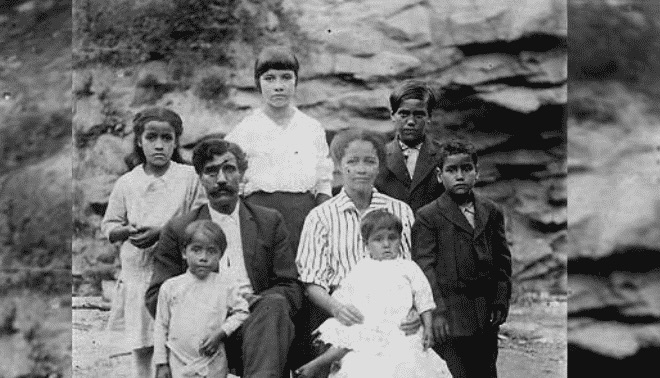
Since at least the 1800’s, there has been a mixed blood strain of people living in pockets of Appalachia called Melungeons. The groups of Melungeons are/were located near Carmel, OH USA and Magoffin County, KY, USA. One main pocket of Melungeons were located in Hancock County, Tennessee, USA. A group of about 40 families lived on the Tennessee/Virginia border.

The Melungeons would occasionally migrate to Carmel, Ohio, possibly to find work in the swampy onion fields in the area. In Magoffin County, Ky, there was very little work for them. They lived in an area where farming was difficult due to the mountains and very narrow valleys.

The Melungeons were thought to be a mixture white, actually some mix of European immigrant stock, African and Native American. They were sometimes called The Lost Tribe of Appalachia. The actual racial descent of these people was a mystery until the Melungeon DNA project was able to make a breakthrough which was published in the peer-reviewed journal of Genetic Genealogy in April 2021. They were found to have been a mixture of sub-Saharan Africans and white Europeans in the days before slavery.

Melungeon people had some particular physical characteristics. They had dark hair and skin with light-colored eyes. There were wide variations in appearance among family members. They had a bump on the back of their head, right above the neck, called the “Melungeon bump.”

As laws were put into place that forbade the mixing of races, the people known as the Melungeons had no choice but to inter-marry. After the results of the Melungeon DNA project were published, many were upset as their families had claimed Portuguese or Turkish ancestry for generations. Most thought Melungeons had some Native American characteristics, but the Melungeon DNA project found very little mixing with Native Americans.

The Melungeons faced extreme discrimination wherever they went. There are very few people of mixed race descent in most of the Appalachian region. It is a region primarily composed of white people of Scottish-English-Irish descent. People with  a darker skin stand out and face discrimination. The Melungeons also had particular surnames that identified them. Some of those names were Gibson or Gipson, Nichols, and Colllins, among others.

I can speak first hand about the discrimination the Melungeon people faced. One side of my family came from Magoffin County, Ky. I can remember my grandmother cautioning the grandchildren “not to be like the Gipsons.” We did not know who or what “the Gipsons” were. We only knew that they were a family whose behavior was considered somehow “dirty” and we were not supposed to emulate it. This is the type of discrimination these people faced. In order to fit in with the general population, the Melungeons self-identified as white mixed with Native American. According to the results of the Melungeon DNA project, the females were primarily of white, Northern European descent and males were mixed African and white descent. There was very little Native American found in the Melungeon DNA project.

The current state of many of the Melungeons is that they have intermarried and moved out of their home areas and intermingled with the majority groups in society. Many people in and out of Appalachia are curious about the Melungeons and whether or not they could have Melungeon blood. They use services like Ancestry.com to try to locate any possible Melungeon ancestors. #Melungeon #amwriting #amblogging #Appalachia #writing #Melungeons #MelungeonDNAProject #Appalachia


Posted in Appalachia, Creative Nonfiction Essays, Eastern Kentucky, Poverty, Uncategorized

Appalachia: Hillbillies, Rednecks?

image

So are the terms hillbillies and rednecks, when used to refer to the people of Appalachia, considered derogatory? The short answer is yes, usually they are. If we explore where those terms originally came from, we’ll see that they were not necessarily meant to be derogatory terms but the American people took them and ran with them. Remember The Beverly Hillbillies TV show? The Dukes of Hazzard?  Deliverance, the movie? These words were certainly derogatory in connection with these television shows and, in the case of the first show, gave the viewers something to laugh at. In the case of the movie, Deliverance, these words were more to frighten and horrify viewers.

It is unclear where the word “hillbilly” originated, but it may have been derived from similar words in the Scots-Irish culture. The Scots-Irish people were among the first settlers of Appalachia and may have brought this word with them. The word “hillfolk” was used by the Scots to describe those who preferred living in the mountains and isolation from society. The word “billie” was used to refer to a companion. After the Civil War, Appalachia became perceived as backward as the US moved westward and Appalachia was left isolated geographically and inbred because of that. During the Great Depression, and after, there was outward migration from Appalachia to the north in search of work. The poor whites who emerged from the mountains became figures in stories and the characterization of “hillbillies” emerged even stronger.

When “hillbillies” self-identify, they simply say they are people living in the mountainous regions. When “rednecks” self-identify, they refer to a time when union coal miners fought against mine operators who were trying to oppress them and wore red bandanas around their necks. Rednecks often tie themselves to an entire political and cultural movement in the US. Both terms tend to take on derogatory meanings when used by outsiders. This writer prefers the term “Appalachians” to reflect the proud heritage of the people of the region. #amwriting #writing #blogging #Appalachia


Posted in Appalachia, Eastern Kentucky

Appalachia: The Foxfire Books and Magazine


image

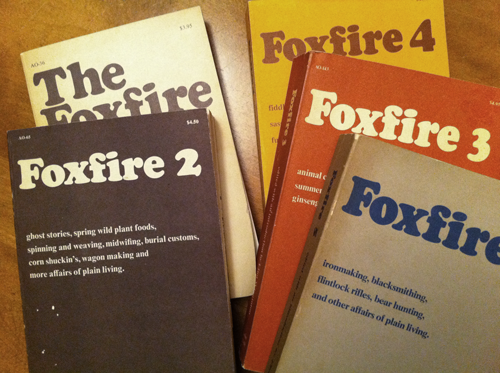
The Foxfire Magazine and the Foxfire series of books are some of the most fascinating works you will ever read on the culture and traditions of Appalachia. The Foxfire Magazine was started in 1966 in Rabun County, GA and was the result of a writing project by one of the teachers at Rabun Gap Nacoochee School in that county. The students were challenged by their teacher to interview local people about Appalachian customs and write an article about what they discovered. What happened was a phenomenon. The stories told to the students about different bits of Appalachian culture were so fascinating that by 1972 they were gathered together in book form and published. It became a bestseller and brought attention to the Appalachian region and the Foxfire project.

Before the books came the Foxfire magazine. It was a compilation of the stories told to the students assigned this project in Eliot Wigginton’s English class. This magazine has been in publication continuously since 1966. The name “foxfire” came from a naturally occurring bioluminescence in fungi in the mountains of North Georgia.

Gradually, there were so many stories about crafts, folklore, recipes, Appalachian history, and culture, that a series of books were developed. The first book was an immediate bestseller when it was published in 1972. Other books were published and the proceeds were used to develop the Foxfire Project. There are now eleven companion volumes to the original Foxfire book.

The Foxfire Project has been able to build an Appalachian Heritage Center in Georgia. It is the repository of material having to do with Appalachian culture and, of course, the Foxfire books and magazines. It also is a source of learning for teachers about experiential teaching and learning, which is what allowed the Foxfire Project to be born. Much later than 1966, experiential education became commonplace in high schools and colleges.

The Foxfire Project, books, and magazines are true Appalachian treasures. You can find how to subscribe to the magazine and donate to the project at FoxFire Project. You can find the fascinating Foxfire series of books wherever books are sold. #foxfire #amwriting #writing #blogging


Posted in Appalachia, Eastern Kentucky, Memorial Day, Mother's Day, Poverty, Smokehouse, Uncategorized

Roundup of Appalachian Blog Posts

Friday Fare to Appalachia

I have committed to writing about my native area, Appalachia, every Friday. Today, I want to do a roundup of the blog posts I’ve written on Appalachia to date. This is for the readers who may have missed a post. It is also for the members of the wonderful new group I have joined on Facebook, Appalachian Americans. Enjoy!

Introducing a Friday Blog Feature on Appalachia

Mother’s Day: Founded in Appalachia

Personality Traits of the Appalachian People

Appalachian Cultural Stereotypes: TV Show “Outsiders”

Appalachia and Food: Green Beans and Corn Bread

Recipe for Memorial Day: Corn Pudding

The Early Homes of the Appalachian Mountain People

Appalachia: Settlers of Eastern KY in the 1700s

The Smokehouse: Preserving Meat

Appalachia and Food: Potato Pancakes

Appalachian Folklore: The Jack Tales

Book Review: Clay’s Quilt

Appalachian Roots

Bluegrass Musician Ralph Stanley Dies

I will blog about Appalachia every Friday, and perhaps on other days, at Writings from the Heart. I look forward to your comments! #amwriting #writing #blogging #appalachia


Posted in Appalachia, Eastern Kentucky, history

Appalachian Folklore: The Jack Tales

image

Storytelling is a tradition in Appalachia. Down through the decades, many Appalachian children and adults have spent nights on the front porch, gathered around an elder, listening to stories that have seldom found a place in written forklore. Most of the stories have been in oral format only. This is true for the Jack tales though historians and some storytellers are making an effort to capture them in writing. Jack tales are seldom told in the same way twice which makes writing them down difficult. Different storytellers tell them in different ways. Even the same storyteller may change the telling of a Jack tale from telling to telling.

We’ve all heard of Jack and the Beanstalk, Jack and the Giant Killer, Jack and Jill, Jack Sprat, Jack Horner. There are many other Jack tales. All are examples of the Jack tales that originally came to America from the British Isles. The first Jack tales can be traced back as far as the fifteenth century in Great Britain. By the next two centuries, the first tellings of the Jack and the Giant Killer story can be found. That’s when the rhyme, “Fi-Fy-Fo-Fum, I smell the blood of an Englishman,” can be found in English literature for the first time, including in Shakespeare’s King Lear. Jack, who was supposedly located in Cornwall, England, trapped the Giant in a pit in order to kill him. Other giants were also present in the tale. By the eighteenth century, the Jack tales were found in the nursery as they had been turned into nursery rhymes.

As the British immigrated to America, along with the Scots and the Irish, each culture brought their own rendition of the Jack tales. The versions of the Jack tales were likely combined to become the Jacks that we know and love today. A book by Richard Chase, published in 1943, is a collection of at least some of the Jack tales. Chase alleged that many of the Jack tales were collected by a group of families in North Carolina and came into Southern Appalachia from that area. Chase did acknowledge that new Jack tales were surfacing in other parts of Appalachia, specifically in Virginia and Kentucky. In Harlan County, KY, Mrs. Sally Middleton of Martin’s Fork, knew versions of two of the Jack tales of North Carolina that she carried on. In all of the Jack tales, Jack is thrown into difficult situations. In the Appalachian versions, the themes reflect the problems of the area such as poverty and farming and the harsh conditions of life.

Jack is probably the first legendary hero in American literature. Counce Harmon was one member of the families in North Carolina that passed the Jack tales down for most of 200 years before they were ever written down. Here is a telling of a Jack tale for your enjoyment by a descendent of Counce Harmon, one of the original tellers of the Jack tales in America:


https://youtu.be/t3S5dry-IKk


Chase, Richard. (2015) The Jack Tales. HMH Books for Young Readers.