
Continue reading “#weekendcoffeeshare 11/5/2016”
Category: Appalachia

Appalachia: Recipe for Fall Apple Cake
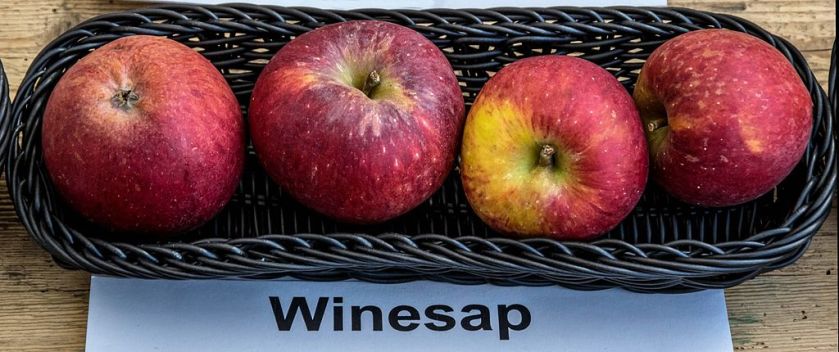
Hi everyone! This is a very old Appalachian recipe, handed down from my great-grandmother to my grandmother and finally to my precious Aunt Red, the lady I wrote about in the blog post, The Most Elegant Lady. It is so old that the writing is extremely faded on the paper I have. I have to get it typed up before it completely fades away! Since it is fall apple season, I thought it was time to share this with all of you!
Fall Apple Cake
*This cake was originally supposed to be made with Winesap apples. Winesap apples are very hard to find now. Granny Smith apples are the best substitute.
2 cups sugar
2 cups vegetable oil – Wesson oil or other oil
Mix sugar into vegetable oil
3 cups all purpose flour
1/2 tsps cloves
1/2 tsps cinnamon
1 tsps salt
1 tsps baking soda
3 cups finely chopped apples (Winesap or Granny Smith)
Optional: 1 cup finely chopped nuts or 1 cup raisins
Mix everything together
Bake at 350 degrees for 1 hour
Let cool on a baking rack before cutting it
ENJOY!!
Share this:

Storytelling Festivals
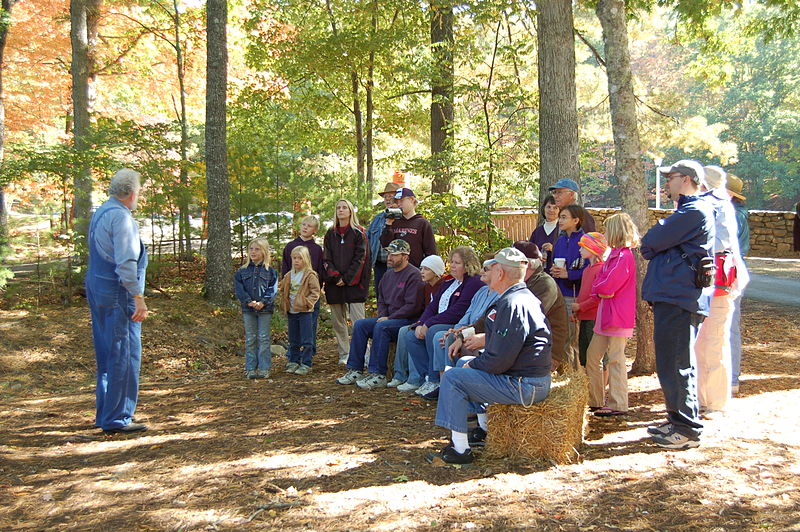
Storytelling is one of the ancient arts of communication, existing all the way back to prehistoric times. In Appalachia, storytelling has been perfected. This weekend, Cave run Storytelling Festival will be held on the banks of Cave run Lake, outside of Morehead, KY in northeastern Kentucky, a town on the northern fringes of the Appalachian region of Kentucky.
The Cave Run Storytelling Festival is held in large tents at the Twin Knobs Recreation area at Cave Run Lake, surrounded by the beautiful Daniel Boone National Forest. It is open to the public on September 23 and 24. The featured storyteller this year is Bil Lepp, a nationally renowned teller. Other famous storytellers will join Lepp including Geraldine Buckley and Kevin Kling among others.
The Cave Run Storytelling Festival is an offshoot of the National Storytelling Festival held every year in Jonesborough, Tennessee. Carolyn Franzini, a professor at Morehead State University, visited that festival with her daughter and brought the idea back to the Morehead community. Finally, the festival was organized on the banks of Cave Run Lake and the rest is history. It is attended by thousands of people each year.
Visit Cave Run Story Festival for ticket and more information. #storytelling #Appalachia
Share this:

Melungeons of Appalachia
Friday Fare to Appalachia
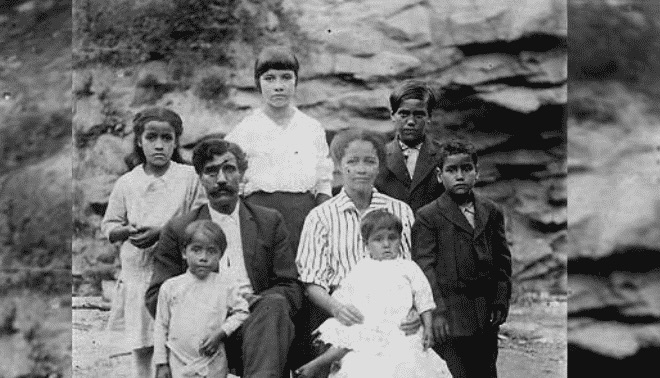
Since at least the 1800’s, there has been a mixed blood strain of people living in pockets of Appalachia called Melungeons. The groups of Melungeons are/were located near Carmel, OH USA and Magoffin County, KY, USA. One main pocket of Melungeons were located in Hancock County, Tennessee, USA. A group of about 40 families lived on the Tennessee/Virginia border.
The Melungeons would occasionally migrate to Carmel, Ohio, possibly to find work in the swampy onion fields in the area. In Magoffin County, Ky, there was very little work for them. They lived in an area where farming was difficult due to the mountains and very narrow valleys.
The Melungeons were thought to be a mixture white, actually some mix of European immigrant stock, African and Native American. They were sometimes called The Lost Tribe of Appalachia. The actual racial descent of these people was a mystery until the Melungeon DNA project was able to make a breakthrough which was published in the peer-reviewed journal of Genetic Genealogy in April 2021. They were found to have been a mixture of sub-Saharan Africans and white Europeans in the days before slavery.
Melungeon people had some particular physical characteristics. They had dark hair and skin with light-colored eyes. There were wide variations in appearance among family members. They had a bump on the back of their head, right above the neck, called the “Melungeon bump.”
As laws were put into place that forbade the mixing of races, the people known as the Melungeons had no choice but to inter-marry. After the results of the Melungeon DNA project were published, many were upset as their families had claimed Portuguese or Turkish ancestry for generations. Most thought Melungeons had some Native American characteristics, but the Melungeon DNA project found very little mixing with Native Americans.
The Melungeons faced extreme discrimination wherever they went. There are very few people of mixed race descent in most of the Appalachian region. It is a region primarily composed of white people of Scottish-English-Irish descent. People with a darker skin stand out and face discrimination. The Melungeons also had particular surnames that identified them. Some of those names were Gibson or Gipson, Nichols, and Colllins, among others.
I can speak first hand about the discrimination the Melungeon people faced. One side of my family came from Magoffin County, Ky. I can remember my grandmother cautioning the grandchildren “not to be like the Gipsons.” We did not know who or what “the Gipsons” were. We only knew that they were a family whose behavior was considered somehow “dirty” and we were not supposed to emulate it. This is the type of discrimination these people faced. In order to fit in with the general population, the Melungeons self-identified as white mixed with Native American. According to the results of the Melungeon DNA project, the females were primarily of white, Northern European descent and males were mixed African and white descent. There was very little Native American found in the Melungeon DNA project.
The current state of many of the Melungeons is that they have intermarried and moved out of their home areas and intermingled with the majority groups in society. Many people in and out of Appalachia are curious about the Melungeons and whether or not they could have Melungeon blood. They use services like Ancestry.com to try to locate any possible Melungeon ancestors. #Melungeon #amwriting #amblogging #Appalachia #writing #Melungeons #MelungeonDNAProject #Appalachia
Share this:

Appalachia: Hillbillies, Rednecks?
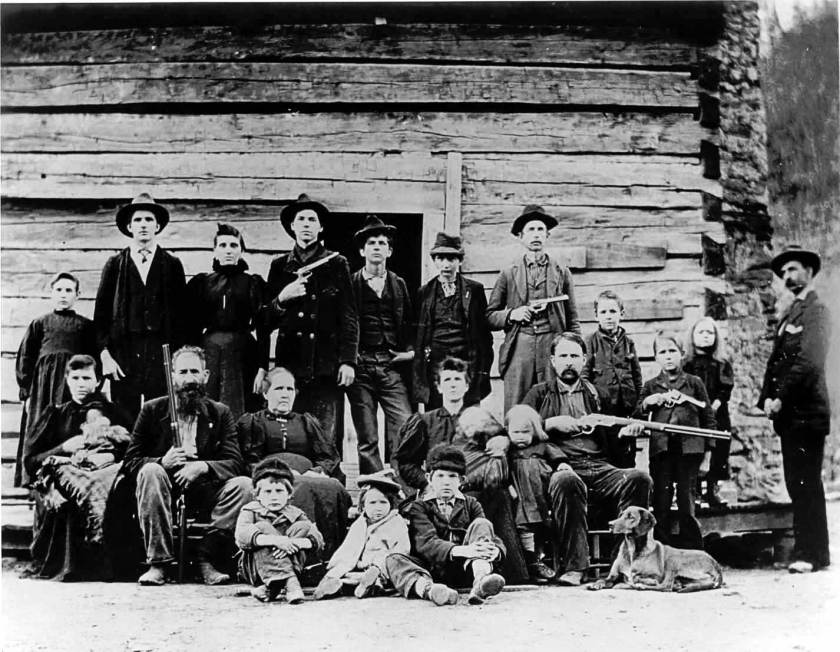
So are the terms hillbillies and rednecks, when used to refer to the people of Appalachia, considered derogatory? The short answer is yes, usually they are. If we explore where those terms originally came from, we’ll see that they were not necessarily meant to be derogatory terms but the American people took them and ran with them. Remember The Beverly Hillbillies TV show? The Dukes of Hazzard? Deliverance, the movie? These words were certainly derogatory in connection with these television shows and, in the case of the first show, gave the viewers something to laugh at. In the case of the movie, Deliverance, these words were more to frighten and horrify viewers.
It is unclear where the word “hillbilly” originated, but it may have been derived from similar words in the Scots-Irish culture. The Scots-Irish people were among the first settlers of Appalachia and may have brought this word with them. The word “hillfolk” was used by the Scots to describe those who preferred living in the mountains and isolation from society. The word “billie” was used to refer to a companion. After the Civil War, Appalachia became perceived as backward as the US moved westward and Appalachia was left isolated geographically and inbred because of that. During the Great Depression, and after, there was outward migration from Appalachia to the north in search of work. The poor whites who emerged from the mountains became figures in stories and the characterization of “hillbillies” emerged even stronger.
When “hillbillies” self-identify, they simply say they are people living in the mountainous regions. When “rednecks” self-identify, they refer to a time when union coal miners fought against mine operators who were trying to oppress them and wore red bandanas around their necks. Rednecks often tie themselves to an entire political and cultural movement in the US. Both terms tend to take on derogatory meanings when used by outsiders. This writer prefers the term “Appalachians” to reflect the proud heritage of the people of the region. #amwriting #writing #blogging #Appalachia
Share this:

Recipe for Cole Slaw
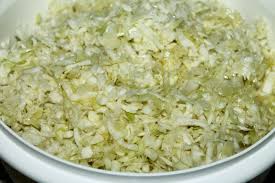
Here is a lightened up version of a old-fashioned recipe for cole slaw. It’s very easy and can be used just for supper at night or for big family dinners:
Ingredients:
2 cups shredded green cabbage (easy way is to shred in food processor)
1/2 cup both thinly sliced red bell pepper and red onion
2 tbsp both seasoned rice vinegar and extra virgin olive oil
1/4 tsps salt
1/8 tsps freshly ground black pepper
Toss all ingredients together, cover, and refrigerator for at least an hour. You can double or triple this recipe for bigger gatherings. #amwriting #blogging #diabetes #healthyeating
Share this:

A Thought on Extended Families
I know a woman who has a large extended family. Let’s call her Pat. Pat’s immediate family is gone. She was an only child who had no children. Her husband is still living. Pat has a large, but dwindling, extended family on her father’s side that she grew up with. They were all always close. Until one of Pat’s aunts passed away. Then, the family basically fell apart. The aunt was the glue that held them together.
The relationships within this extended family have gotten complicated. It makes Pat sad. She loved her extended family, particularly her cousins. But, I’m getting ahead of myself. I feel sorry for Pat. She assumed, for her entire life, that she could always depend on her extended family. Now she knows there are a few that she can depend on, but most of them don’t care about her anymore.
There were seven aunts and uncles in this family. All had one or more children. Pat’s cousins. The brothers and sisters were all close even though there were occasional squabbles. They saw each other frequently. That meant the children, Pat’s cousins, saw each other and were also close. Right or wrong, since Pat was an only child, she saw those cousins as her siblings. The older cousins were mentors. The younger cousins were her loves. She felt like they were her’s.
Everyone, of course, grew up and went on to live their lives. Of course, everything changed. Pat didn’t understand why their relationships with each other had to change. Just like in any family, there were quarrels. Everyone seemed to hold grudges instead of working it out. Emotional distances grew between the cousins. But not between all the cousins. Pat remained close to a cherished few of her cousins. Those cousins are the ones who live far away.
There is one aunt who is left in Pat’s family and she is treasured. Besides the one aunt, there are 17 cousins, including several first cousins, once removed. Pat loves them all. There are two cousins that Pat has no contact with for reasons she doesn’t know. That leaves 15 cousins. Out of those 15, Pat thinks there are about five she could depend on in a crisis. Earlier in her life, she felt she could depend on just about all of them. Worse yet, Pat misses her cousins.
Take my poll. How do you feel about your extended family? The poll is anonymous. #amwriting #writing #blogging #family
Share this:

Appalachia: The Foxfire Books and Magazine
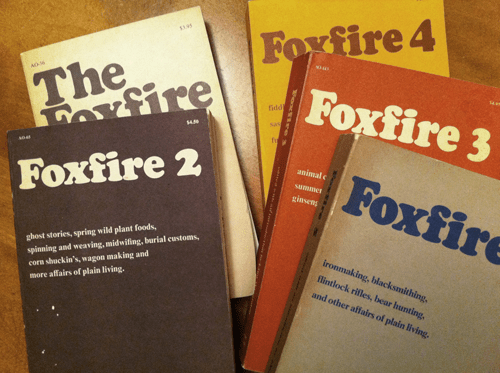
The Foxfire Magazine and the Foxfire series of books are some of the most fascinating works you will ever read on the culture and traditions of Appalachia. The Foxfire Magazine was started in 1966 in Rabun County, GA and was the result of a writing project by one of the teachers at Rabun Gap Nacoochee School in that county. The students were challenged by their teacher to interview local people about Appalachian customs and write an article about what they discovered. What happened was a phenomenon. The stories told to the students about different bits of Appalachian culture were so fascinating that by 1972 they were gathered together in book form and published. It became a bestseller and brought attention to the Appalachian region and the Foxfire project.
Before the books came the Foxfire magazine. It was a compilation of the stories told to the students assigned this project in Eliot Wigginton’s English class. This magazine has been in publication continuously since 1966. The name “foxfire” came from a naturally occurring bioluminescence in fungi in the mountains of North Georgia.
Gradually, there were so many stories about crafts, folklore, recipes, Appalachian history, and culture, that a series of books were developed. The first book was an immediate bestseller when it was published in 1972. Other books were published and the proceeds were used to develop the Foxfire Project. There are now eleven companion volumes to the original Foxfire book.
The Foxfire Project has been able to build an Appalachian Heritage Center in Georgia. It is the repository of material having to do with Appalachian culture and, of course, the Foxfire books and magazines. It also is a source of learning for teachers about experiential teaching and learning, which is what allowed the Foxfire Project to be born. Much later than 1966, experiential education became commonplace in high schools and colleges.
The Foxfire Project, books, and magazines are true Appalachian treasures. You can find how to subscribe to the magazine and donate to the project at FoxFire Project. You can find the fascinating Foxfire series of books wherever books are sold. #foxfire #amwriting #writing #blogging
Share this:

Roundup of Appalachian Blog Posts
Friday Fare to Appalachia
I have committed to writing about my native area, Appalachia, every Friday. Today, I want to do a roundup of the blog posts I’ve written on Appalachia to date. This is for the readers who may have missed a post. It is also for the members of the wonderful new group I have joined on Facebook, Appalachian Americans. Enjoy!
Introducing a Friday Blog Feature on Appalachia
Mother’s Day: Founded in Appalachia
Personality Traits of the Appalachian People
Appalachian Cultural Stereotypes: TV Show “Outsiders”
Appalachia and Food: Green Beans and Corn Bread
Recipe for Memorial Day: Corn Pudding
The Early Homes of the Appalachian Mountain People
Appalachia: Settlers of Eastern KY in the 1700s
The Smokehouse: Preserving Meat
Appalachia and Food: Potato Pancakes
Appalachian Folklore: The Jack Tales
Bluegrass Musician Ralph Stanley Dies
I will blog about Appalachia every Friday, and perhaps on other days, at Writings from the Heart. I look forward to your comments! #amwriting #writing #blogging #appalachia
Share this:

Women and Autonomy: Self-Determination
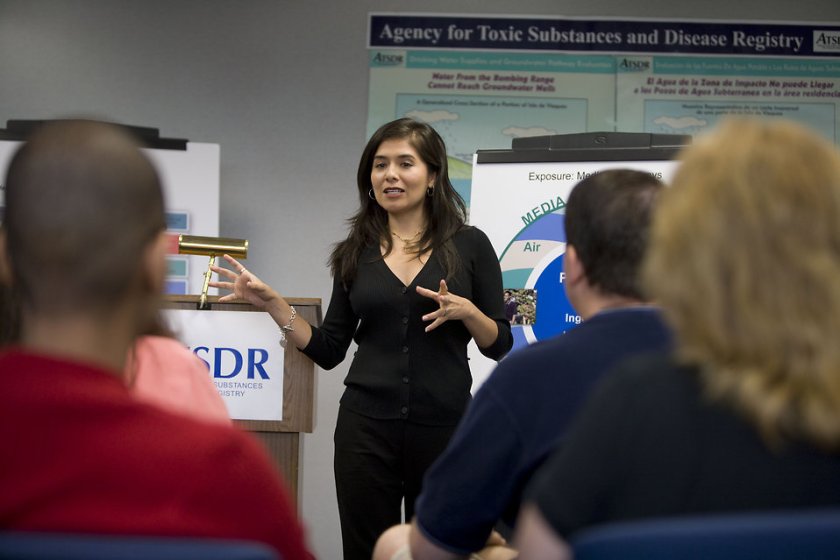
One of my passions is writing about women’s issues. Another one of my passions is thinking about the concept of women and autonomy. Why? Back in the 1970s and 1980s, I decided I wanted a professional career. Not only did I want a professional career, but I wanted a career in a male-dominated field. I wanted to get my doctorate in Business Administration and teach on a university level in a business school, specifically in finance.
During those years, there were very few women in the field of finance. Sorry, guys, but back then, that meant I was fighting an uphill battle. To be fair, I think the men of 2016 are far more accepting of women in previously dominated male professions than some of the men were in 1979, when I embarked on studying for my career.
If you look in the dictionary, you will find that the word “autonomy” has several different meanings that actually all mean the same thing. It is defined as “the freedom to determine one’s own actions” and it does not say one thing that is gender-specific. It isn’t just specific to men…..or women.
When I made the decision to study for and embark on my career, I didn’t feel the need to ask anyone, including my husband, if that was an acceptable decision. I felt like, as an individual human being, that I had the autonomy to make this decision myself. I did. It was my right.
I studied for and obtained my Master’s degree (Master of Business Administration or MBA) and then, I studied for my Doctor of Business Administration or DBA. It wasn’t easy. The coursework was hard. Writing the dissertation was hard. Not only did I work the entire time I was going to school, but I was also married and taking care of my mother. At first, I taught at the school from which I got my doctorate. Later, when I was working on my dissertation, I taught at a school 75 miles away and commuted to work. I always laughed and told my friends that my dissertation was written in the middle of the night because that is the only time when I had the time and quiet to do it.
I had a lot of friends who were also studying for their doctorates. Most of the other students in the program were men. There was only one other woman in my field of finance. We had friends, however, across disciplines — in marketing, management, etc. All the women had a similar life and similar schedule to mine. The men were a different story. Either they were single and could concentrate totally on their studies or they were with a supportive partner who carried the load while they studied. Not so with the women in the program. We had to continue on with our traditional roles as women. We saw this as unfair.
Back in those days, others saw it as fair. After all, we made the decision to seek out a non-traditional role for ourselves. It felt like punishment. Even though we had taken back our autonomy as human beings to seek out our careers, we were being punished for not pursuing our traditional roles as women.
The discrimination continued when we took our newly-minted degrees and started applying for jobs. Of course, the discrimination was unspoken and subtle because laws had already been passed before the 1980s prohibiting such discrimination. The women I knew in finance at my school and other schools were seen as odd to have pursued a degree in an all-male field. Lucky for us, universities needed us at that time. The concept of diversity was becoming important. Universities were being encouraged to have a more diverse faculty and hiring a woman for their finance department fit the bill. We all got jobs.
I could keep talking about this endlessly. About how women in male-dominated fields in universities have to work twice as hard for 3/4 of the pay. About how it is extra hard for us to get promotion and tenure. About how our portfolios for promotion and tenure have to be superior to any male colleagues’ portfolio. About how our salary increases never match those of our male colleagues. About how, by the time I retired, I still didn’t make as much money as male colleagues who had the exact same credentials as I did. About how the schedules I taught, semester after semester, were more difficult than any male colleague I had.
It all finally burned me out. I was tired of fighting. It was a fight. Right up until the end. When I reached the point where I could retire with most of my pension and my health insurance, I did just that. Retired.
I’ve never looked back. I’ve never been sorry I retired. I’ve never tried to get another teaching job even though I am more than qualified. I decided, 27 years before the time I retired, to reach out, take back my autonomy, and have a professional career. It was the most difficult thing I ever did……and, despite the hardships, the most rewarding. I loved teaching. I taught mostly Appalachian students. I loved seeing their eyes light up when they “got” a concept I was teaching. I miss those students. I miss teaching them.
I don’t miss the discrimination and the politics of academia. I don’t miss the service on unnecessary committees. I also loved to do the research that is required of college professors, but there is not enough time given to professors due to such heavy teaching loads to do good research. If I am going to do research in my field of finance, it is going to be good research or I’m not going to do it.
My point in writing this post is to encourage women to take back their autonomy. If you have a passion to do something — anything — do it! You won’t be a fulfilled person if you don’t. If you aren’t fulfilled, you won’t be any good to your family or your community. I urge you, as strong women, to think about what you want to do with your life, get the education you need to do it, and then go and do it. You will be a better, more fulfilled person for it. #amwriting #writing #blogging #womensissues

 The Write Scribe